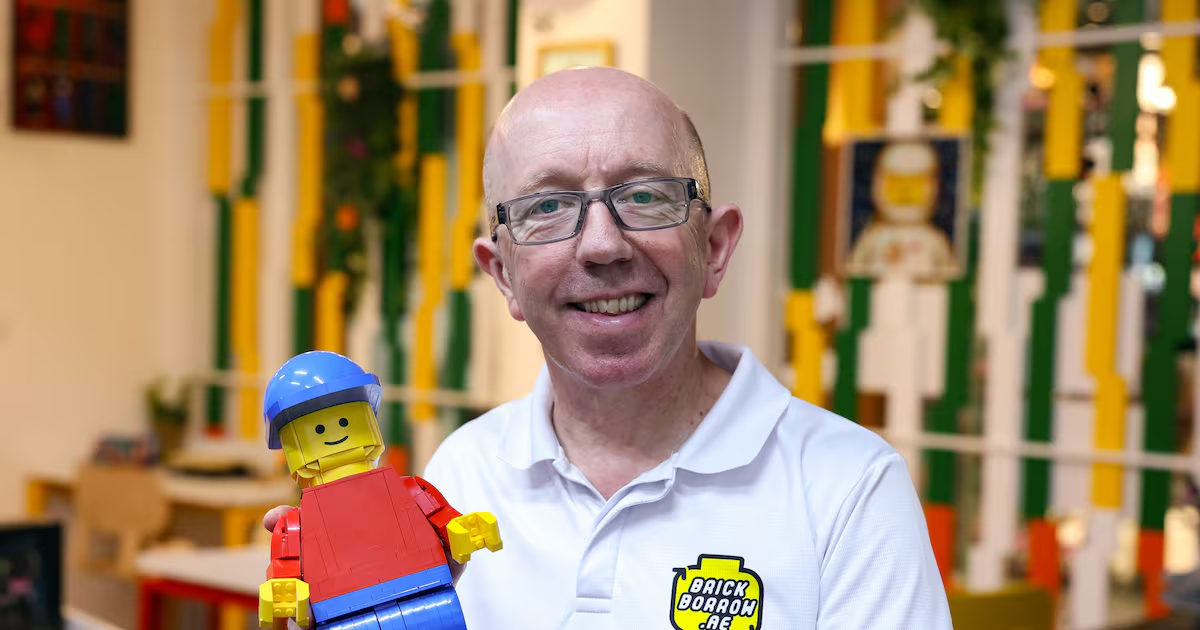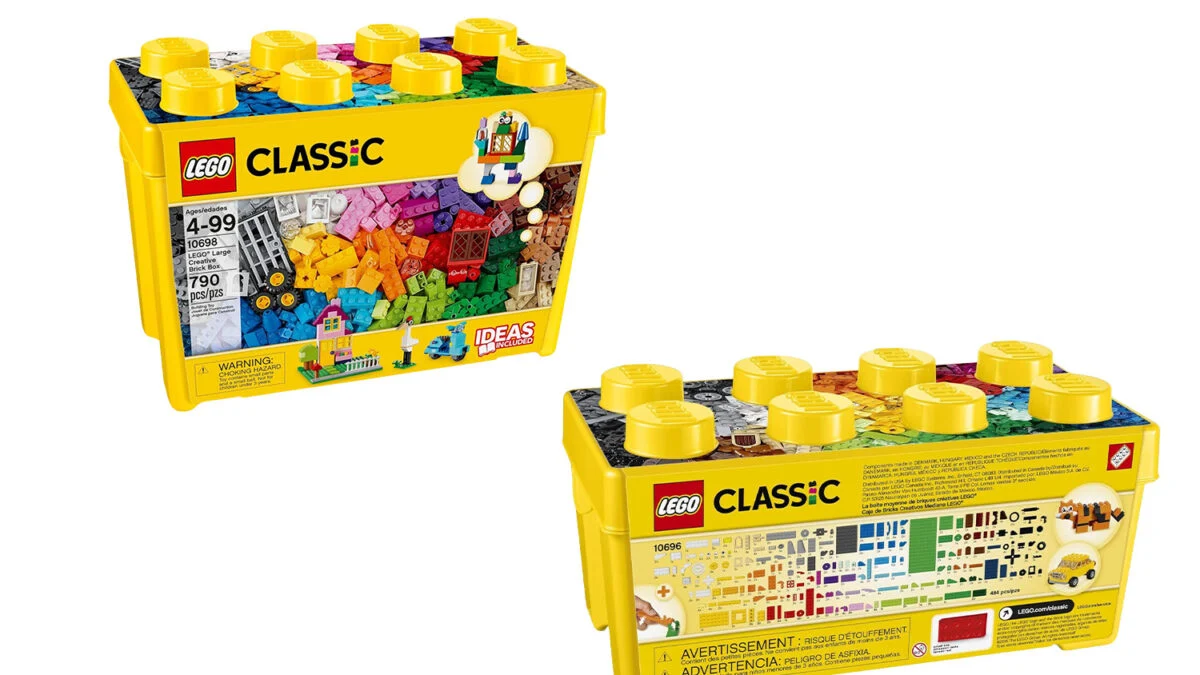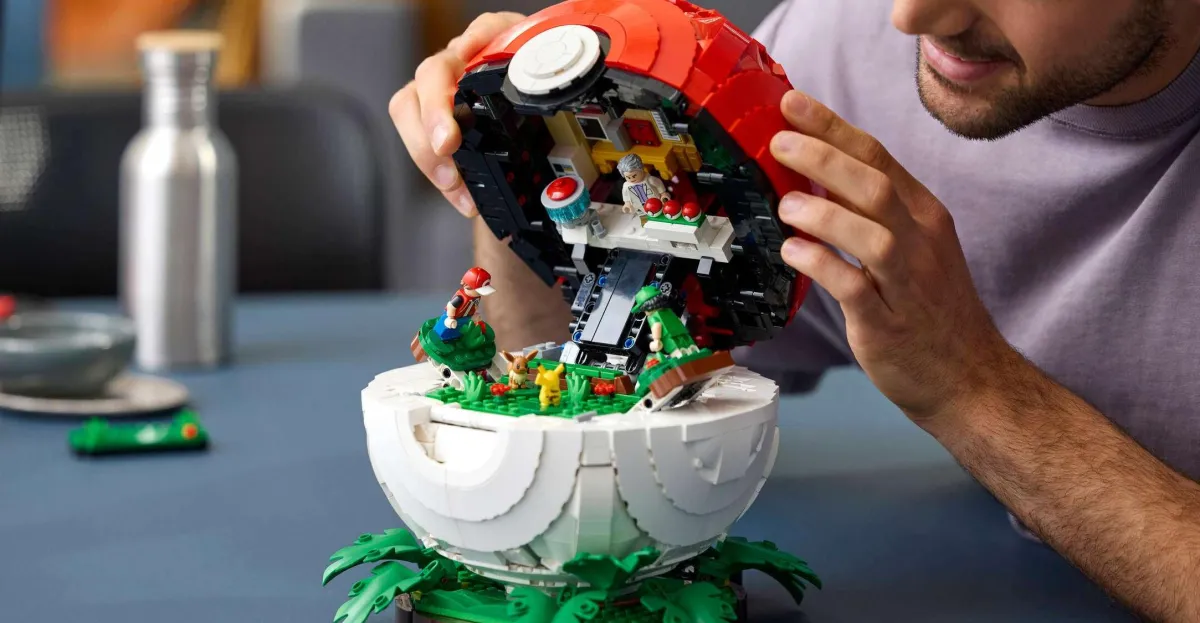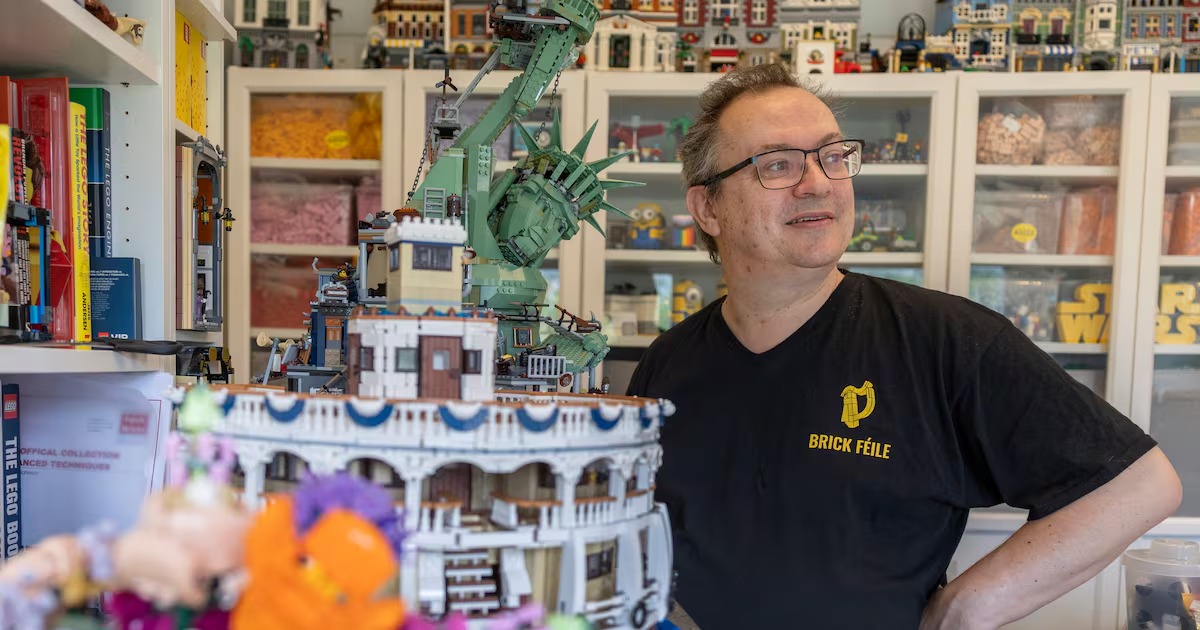
David Fennell is contemplating the qualities required of a Lego master. “There’s no official title or qualification, but I suppose if people think you’re good you might fit that description,” he says, smiling. “It’s really about practice, time and money. You need money to buy parts, and if you’ve got the motivation and drive to build something in the middle of winter – to come outside on cold, wet nights when you could put your feet up and watch the telly instead – that always helps.”We’re in a custom-built Lego “shed” in the garden of Fennell’s Kildare home, where he does most of his Lego building and stores his large-scale creations. There are plenty of shelves and worktops but not much free space: every available inch is crammed with colourful plastic bricks piled into containers or protective plastic boxes. There are many completed sets – which is to say the ones you buy off the shelf – on display amid the chaos, but Fennell is understandably more proud of the work that he has created from scratch. From the National Library of Ireland to a Luas tram, and from Heuston Station to Arnotts’ frontage on Henry Street in Dublin, he has turned his hand to many landmarks and icons of Irish culture. He gestures to a half-finished design on a nearby table. “That used to be a steamboat, but we’ve turned it into a birthday cake,” he says. “You can really build anything with Lego.”Fennell is also a founder of Brick.ie, the online community for adult fans of Lego – aka Afols – and of Brick Féile, the weekend-long showcase event for Irish Lego fans. The long-held misconception that Lego is only for children has been well and truly dispelled in recent years: the Thunder Road Cafe, in Temple Bar, stages regular adult-only Lego nights; Dublin Zoo has just launched its family-friendly Animal Bricktacular experience, which will run across the summer; and there are several other Irish Lego conventions and shows for all ages throughout the year. Almost a century since it was invented, Lego is more mainstream than ever.Brick Féile: some of David Fennell’s Lego creations. Photograph: Chris Maddaloni In 1932 a Danish carpenter named Ole Kirk Christiansen branded his new creation “leg godt”, meaning “play well”, and the family-friendly nature of the plastic construction toys has endured across the decades. Although most sets bear the famous “0-99″ age rating, in recent years there has been a boom in adult-oriented sets. Lego released its first 18+ set in 2020, and although Covid was somewhat responsible for the surge, by providing grown-ups with a new mindfulness-oriented hobby amid the turmoil of a pandemic, Fennell says it was popular with adults even before then. The release in 2014 of The Lego Movie, in which Will Ferrell played an adult fan of Lego, also gave a big boost to the company’s profile.The Lego Movie: one of 2013’s biggest box-office hits “There was a while when Lego lost their way a little bit in terms of design,” Fennell says. “Until the early 2000s they were very close to going bankrupt.” The licensing of Star Wars and Harry Potter sets helped to increase popularity, “but, also, the designs became so much better compared to what they were 30 years ago. So the quality is better, and Lego knows that the adults are the ones with the money, and they’re the ones making the decision what to buy.”Fennell’s day job, as a tax accountant, couldn’t be further from his hobby, but the meditative nature of building Lego is certainly a stress-buster. It helps, he says, to have a “sympathetic spouse” if you’re serious about building. He and his wife, Breda, have designed and built several big models together, including a replica of the National Library that they completed in 2022, and which is on display in the building’s front hall.Fennell was a Lego fan growing up, in the 1970s, but drifted away from it as he got older. When his now-adult children were younger, the spark was reignited. “I remember the Harry Potter sets came out around that time, and I said, ‘Hang on a second. These sets are too good [for kids]; I’d like to build some of these myself,’” he says, laughing. “And that’s where we started going down the slippery slope of buying sets.” His son is now living in Australia with his girlfriend, “but we still send him out the odd care package with Lego in it – little flower sets or something.”Brick Féile: some of David Fennell’s Lego creations. Photograph: Chris Maddaloni Fennell cofounded Brick.ie in 2008, when it became clear that he and Breda were far from the only Afols in Ireland. The online community was initially founded “to provide a safe space for people to meet up and talk”; it has grown exponentially over the years. Brick Féile came later: the first edition, in 2019, was designed to enable Irish Lego enthusiasts to collaborate on large-scale builds, exhibit their handiwork and meet other Lego fans. A ticketed event that is open to the public, it provides a glimpse into the wondrous world of what you can create with the little coloured bricks, as well as a chance to collaborate on a communal build. All profits go to the Fairy Bricks charity, which donates Lego sets to children in hospitals around Ireland and Europe.“We needed a big showcase event where we could celebrate what Irish builders can do,” Fennell says. “We also wanted an event where adult fans of Lego could be celebrated and looked after when they’re building; it wasn’t ever going to be a commercial event. “We have the space to run massive train layouts or to generate ball contraptions where Lego marbles are being moved around by mechanics. Last year we had Formula 1 cars racing each other; this year people will be able to drive Lego trains. It’s a chance to get as many members together into one place once a year, and also it allows us to invite international guests.”Brick Féile: David Fennell’s Lego Luas. Photograph: Chris Maddaloni Lego has been part of Jessica Farrell’s life since she was four, although she only began building in a more serious way around 2014, when she became a member of Brick.ie. “My first set was a basic building set, and after that Lego bricks were all I ever longed for,” she says. “At Christmas or birthdays, why ask for a toy train, or a car or dollhouse, when I could build them all from bricks?”If you had told the young Jessica, however, that five decades or so later she would be part of an exclusive global group of people renowned for their Lego-building skills, she probably wouldn’t have believed you. As one of only 26 “Lego certified professionals” in the world, she has both extensive experience as a builder and the official credentials to back it up.After qualifying as a horticulturist, Farrell, who is from Rathangan, in Co Kildare, ran her own garden centre for 20 years. Seven years ago she packed it in to become a full-time “brick artist”. She has competed on Channel 4’s Lego Masters series, has written several books about Lego and regularly runs building workshops.Her designation as a Lego certified professional – a stamp of quality, essentially – gives her extra kudos. “I’m licensed by the Lego Group but am not an employee, so I’m free to work independently,” she says. “It’s great, because I can take on an assortment of commissions, including ones that are of special interest to me.” Bringing people together and celebrating our collective heritage is particularly important to her, she says. “I often work with organisations where I can use Lego bricks as a form of communication for social good.”Brick Féile: Lego certified professional Jessica Farrell Her advice for anyone, adults and children alike, who may not know where to start on their Lego journey is simple. “Put aside the instruction booklets and look at your collection of Lego bricks like paints on a palette,” she says. “They can be used to make anything. “I’ll also pass on the advice that was given to me years ago by a good friend who is a Lego set designer: whenever you come across new or unusual Lego elements, experiment with them and try using them in different combinations, and see where creativity takes you.”According to David Fennell, the Creator and Classic sets are good starting points for beginner builders, and sites such as Rebrickable have thousands of fan-made designs to inspire. He points out that it’s easier than ever to get your hands on new Lego pieces via sites such as BrickLink and even the official Lego.com site, although he grimaces at the thought of how much money he might have spent over the years.“It’s not a cheap hobby,” he says, chuckling. “But, then again, if you went out playing golf every weekend, or if you went to the pub every night, as some people do ...” He shrugs. “There’s other ways you can spend your money, and maybe other people go on holidays more regularly. “I’m a stamp collector as well, but I get more enjoyment out of the Lego than I do stamp collecting, maybe because it’s a creative outlet. You are basically building something that didn’t exist beforehand. That’s the great thing about Lego: you can build whatever you can imagine.”Brick Féile is at CityNorth Hotel, in Gormanston, Co Meath, on Saturday and Sunday, July 11th and 12th
‘It’s not a cheap hobby’: Meet the adult Lego builders preparing for Brick Féile
Think Lego is only for children? Brick Féile, next weekend’s Irish model-building festival, puts paid to that idea
1,583 words~7 min read