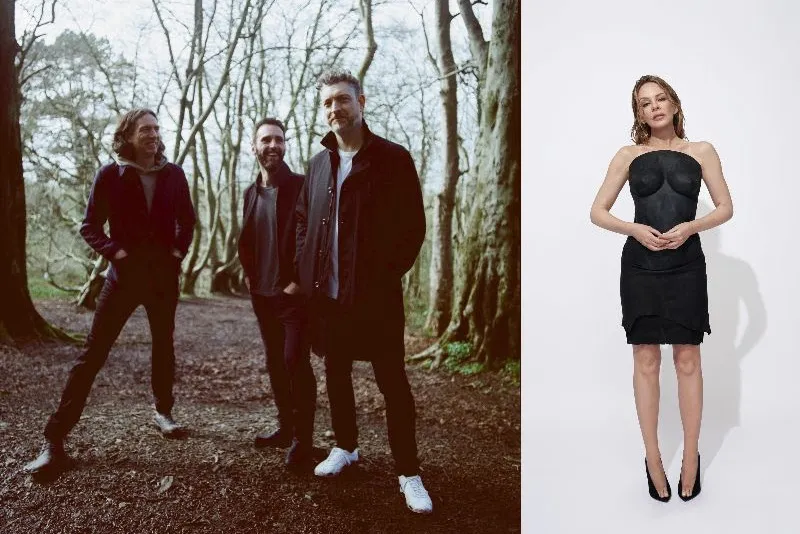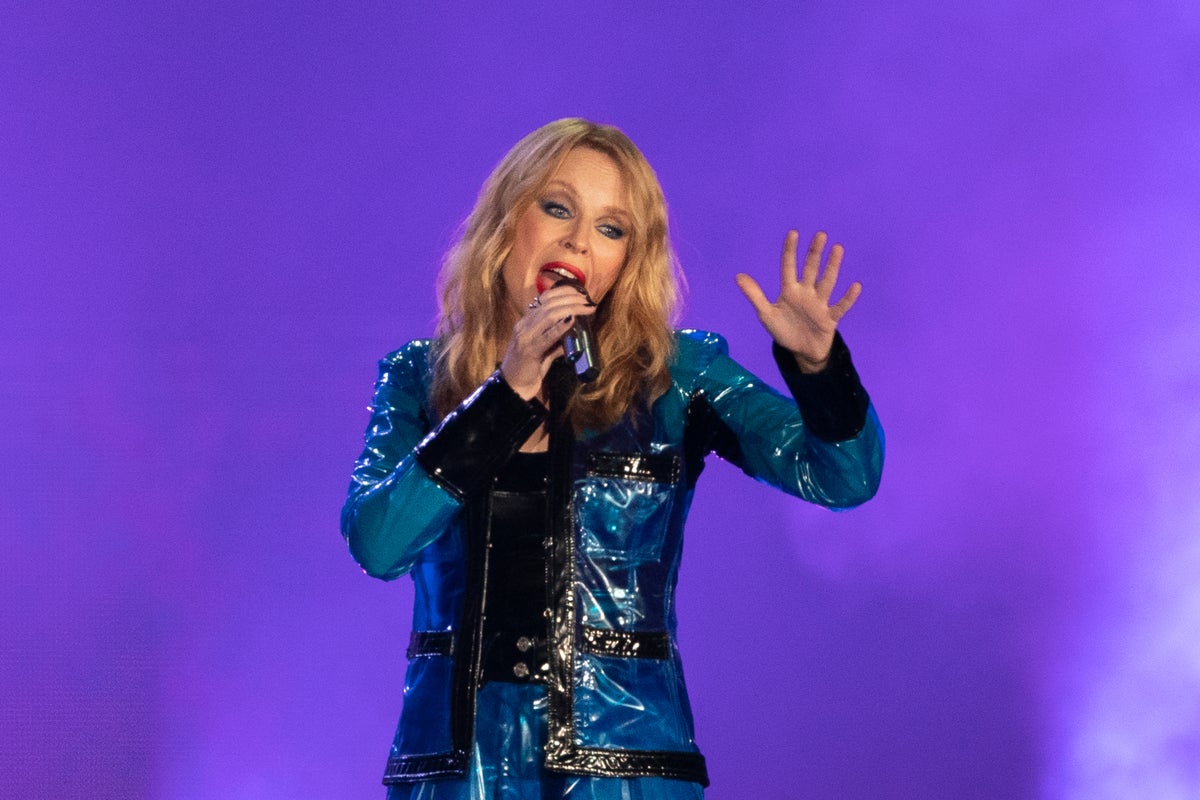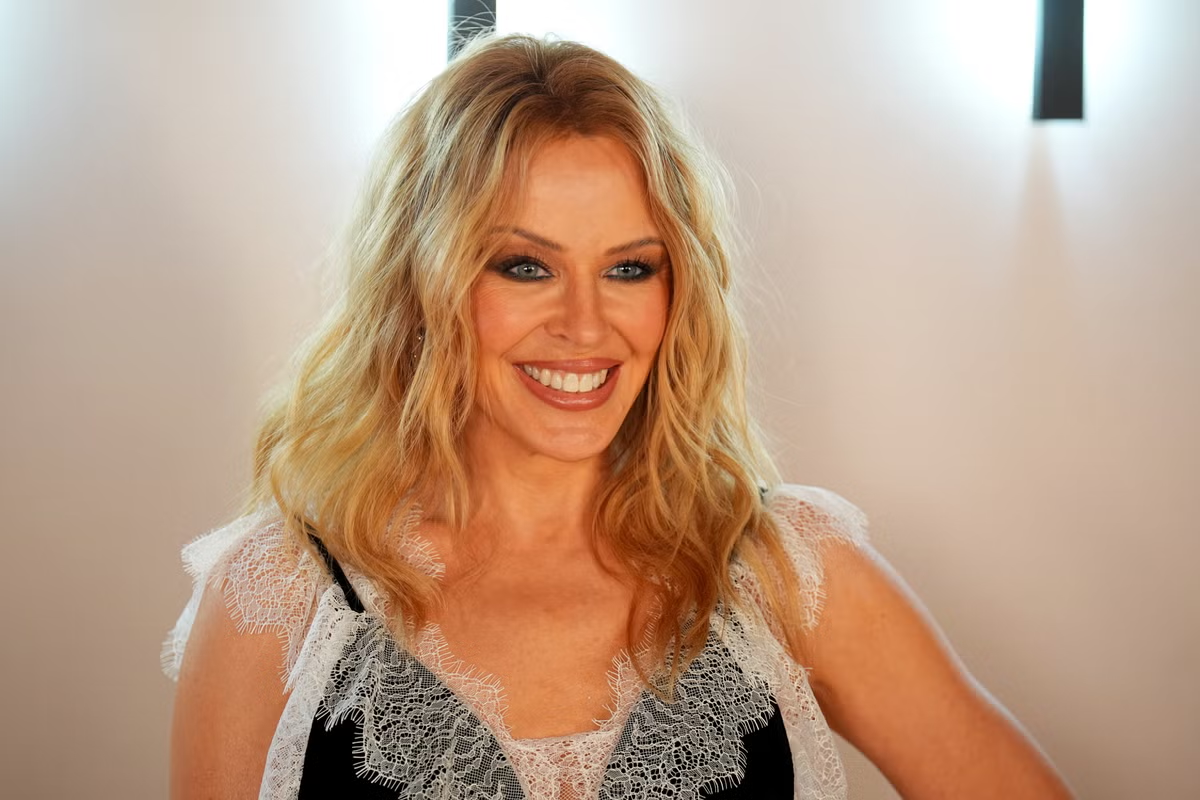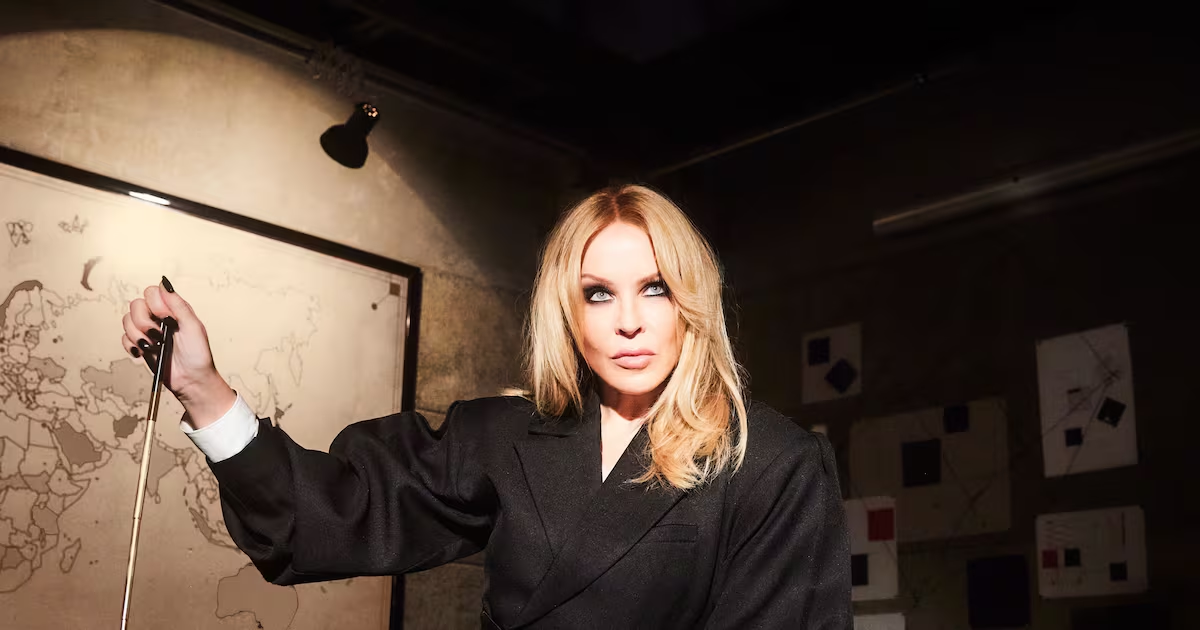
Has Kylie Minogue resurrected her short-lived “Indie Kylie” incarnation for another spin? The evidence is strong. This week brought the release of These Alarms, her collaboration with Snow Patrol. Definitions of “indie” vary, but some musical dictionaries just go with an image of the band in their pre-hit youth.Minogue also hinted to Attitude magazine in May that she might soon return to elements of her Impossible Princess era. This refers to her modestly alternative, genre-spanning 1997 album, though for arcane reasons both “Impossible Princess” and “1997” are contested descriptors here – full marks to anyone who knows this relates to a certain fatal Paris car crash in August of that year.“I like her energy,” Minogue said, when shown an image of herself on the cover of Attitude in September 1997. “Things from that time I’d like to somehow incorporate into now.” (It’s a relatable sentiment. The things I would choose are eyebrows and hope.)Indie Kylie, a term in regular use in the 1990s music press, received an official Minogue endorsement in the video for Did It Again, her fun single from the end of 1997, which presented a line-up of four personas: Cute Kylie, Dance Kylie, Sex Kylie and Indie Kylie.In Michael Harte’s wonderful Netflix documentary series on Minogue, Nick Cave offers some hilarious thoughts on this musical sidestep. “No one willingly wants to be indie,” he says. “They may say they do, but that’s not what Kylie is, you know. Kylie is this force that is there to affect thousands and thousands of people. It’s all outward, it’s all giving.”[ Michael Harte on Kylie Minogue: ‘She walked in with an energy. I was totally blown away’Opens in new window ]This is funny, largely because back then the opposite was the case. Everybody wanted to be indie. The term evolved beyond its original meaning – a way to categorise artists signed to independent record labels – and came to signify a certain fake-DIY aesthetic and guitar-based sound that, for a while at least, meant you weren’t crushingly uncool. Attitude: Kylie Minogue on the cover of the magazine's September 1997 edition You didn’t have to be moody and introspective – jangly, bouncy, wit-fuelled indie was often the best indie – but it sometimes helped. Popularity and indieness were no longer mutually exclusive.Indie was dealt a near-fatal blow in the Noughties with the advent of various unoriginal, uninspired and charisma-deficient bands who were just as unpopular and inward-looking as Cave’s quote implies. Naff “landfill indie” became the music industry’s stubborn stain. More recently, the genre-marker “indie sleaze” has been retrospectively applied to bands who were active in roughly the same period but had the good sense to be from New York.The prevailing verdict, which Minogue has occasionally perpetuated over the years, is that her indie foray was an ill-advised failure. For sensitivity reasons that also seemed bizarre at the time, the planned autumn 1997 release of Impossible Princess was delayed following the death of Princess Diana, with the record not emerging in Europe until March 1998, when, retitled Kylie Minogue, it flopped. [ Nick Cave: ‘How did I stay so young? Twenty years of drug addiction and a good face cream’Opens in new window ]Critics were harsh. Radio stations were indifferent. The debacle prompted a parting of ways with her independent label, Deconstruction, and in 1999 she signed a new deal with Parlophone with the intention of re-embracing pop. Her most personal album to date was also her most rejected.But I like it. Not in a “time for a reappraisal” sense. I own it, and I’ve always liked it. Here’s where I can get a bit territorial in my Kylie fandom. Whenever people latch on to her again in some way – praise her Glastonbury set, succumb to the pleasure of Padam Padam – I think, okay, but where were you when Breathe stalled at number 14 in 1998?That languorous song, more electronica than anything else, is the high point of an album of many delights, among them its frustration-laden drum-and-bass opener, Too Far, and the deliciously frenetic Limbo.With any luck, Minogue isn’t referring to Some Kind of Bliss or I Don’t Need Anyone, the Manic Street Preachers’ pleasant but underwhelming contributions to Impossible Princess, when she talks about revisiting things from her indie years. There’s plenty of other stuff to channel. What would be most thrilling would be a return to the spirit of avant-garde work such as her guest vocal on Towa Tei’s German Bold Italic, the 1997 curio on which she personifies a typeface, or the boldness that led to the trip-hop, range-testing experiment Confide in Me, her early Deconstruction-era hit, which sounded novel in 1994 and is still an enchanting centrepiece of her live performances today.As for These Alarms, on which Minogue duets with Snow Patrol’s frontman Gary Lightbody, it’s fine. The verses have a nice pulse to them, and her vocal is given precedence in the mix. It suggests that, while few humans with joy in their soul would ever trade in Pop Kylie for Indie Kylie permanently, it might be nice to have the latter back for a while.Buying stock in indie more generally, however, remains a risk.
Indie Kylie Minogue is back thanks to Snow Patrol. Can we keep her for a little while?
‘No one willingly wants to be indie,’ Nick Cave says. The good news for Impossible Princess loyalists is that Minogue just might
862 words~4 min read