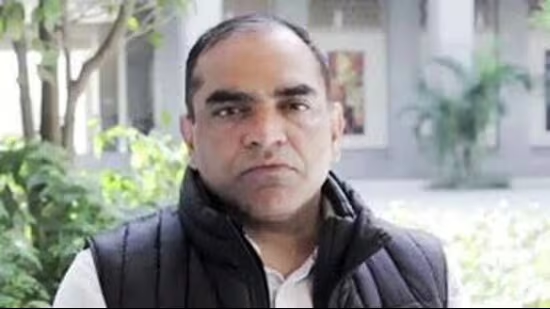
Himachal Pradesh chief secretary Kamlesh Kumar Pant on Friday stressed on strengthening the institutional mechanisms, community participation and technological interventions to build a disaster-resilient Himachal Pradesh.Himachal Pradesh chief secretary Kamlesh Kumar Pant . (File)He was presiding over the post disaster review seminar organised by the National Disaster Management Authority (NDMA) and the Himachal Pradesh State Disaster Management Authority (HPSDMA).Highlighting the importance of community-based disaster management, Pant said that local communities are always the first responders during any disaster. Therefore, empowering citizens through awareness programmes, capacity-building initiatives and volunteer networks is essential for creating resilient communities.He laid special emphasis on the Aapda Rakshak Yojana, stating that the initiative aims to develop a trained cadre of community volunteers capable of providing immediate assistance during emergencies until professional response teams reach the affected areas. He said that these volunteers can play a vital role in search and rescue, first aid, evacuation and assisting vulnerable sections of society during disasters.Emphasising the importance of resource mapping, he said that accurate and dynamic inventories of critical resources, including manpower, machinery, medical facilities, shelters, emergency equipment, transportation assets and communication infrastructure must be maintained at the District Disaster Management Authority level. Such resource mapping, integrated with Geographic Information Systems would significantly improve response planning and ensure optimal deployment of resources during emergencies.Schools better prepared for monsoon: Rohit Himachal Pradesh education minister Rohit Thakur on Friday said the state government has significantly strengthened disaster preparedness in schools and is adopting a safety-first approach to educational infrastructure.Nearly 1,200 schools had suffered damage during the devastating monsoon disasters of 2023 and 2025 with restoration carried out through departmental budgets, repair grants and other financial assistance.“The experiences of 2023 and 2025 have taught us valuable lessons. Based on those experiences, detailed guidelines have been issued to district administrations and the education department so that preventive measures are taken well in advance and risks to students and school infrastructure are minimised,” Thakur said.
Himachal chief secy calls for stronger community participation for disaster preparedness
Highlighting the importance of community-based disaster management, Pant said that local communities are always the first responders during any disaster
321 words~1 min read