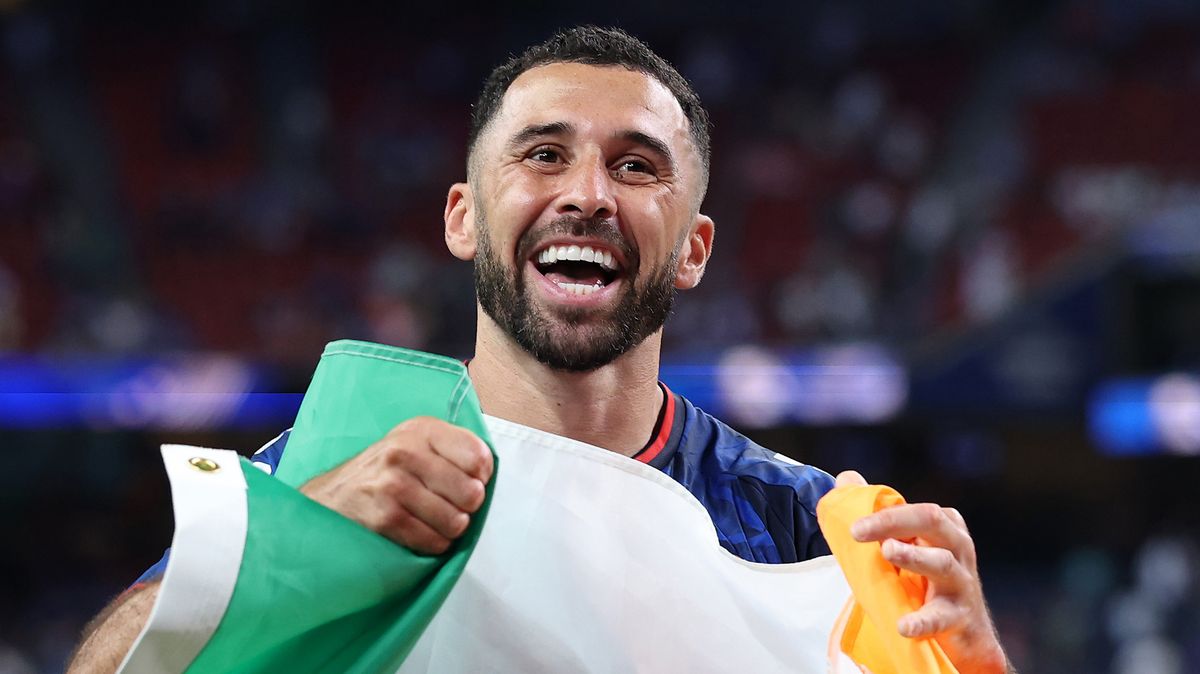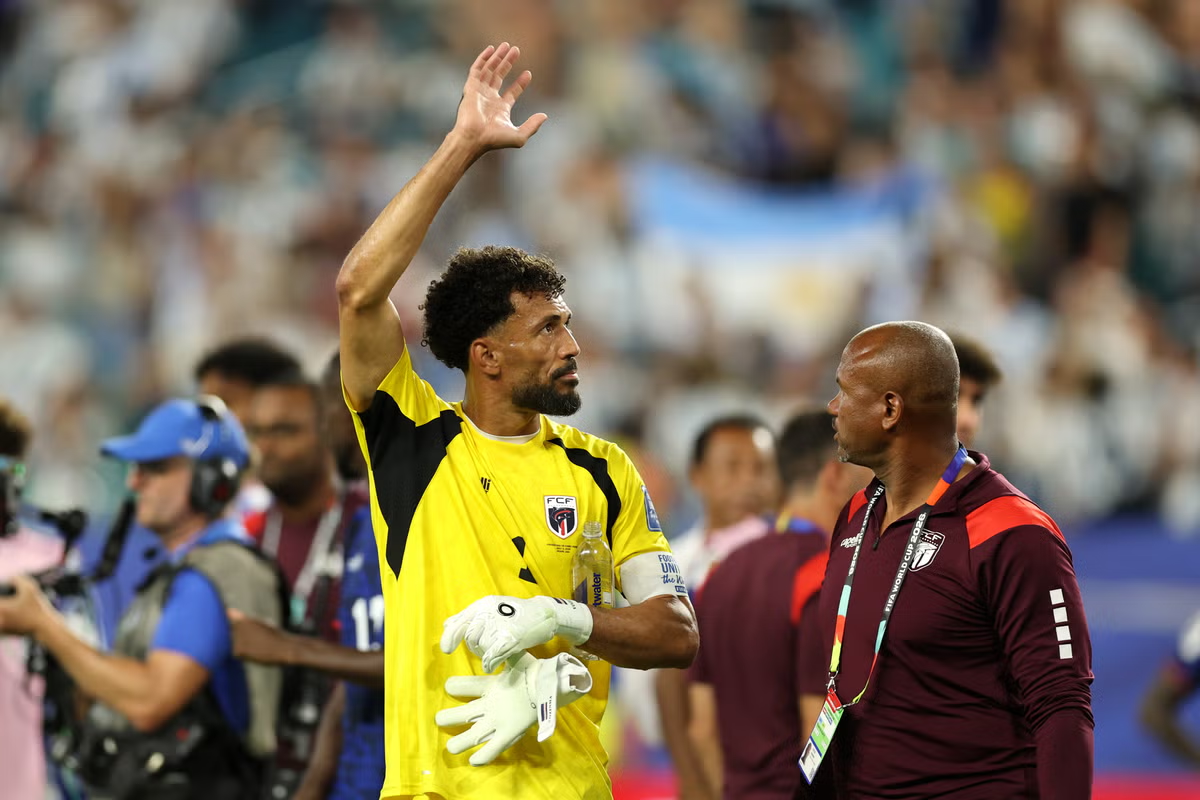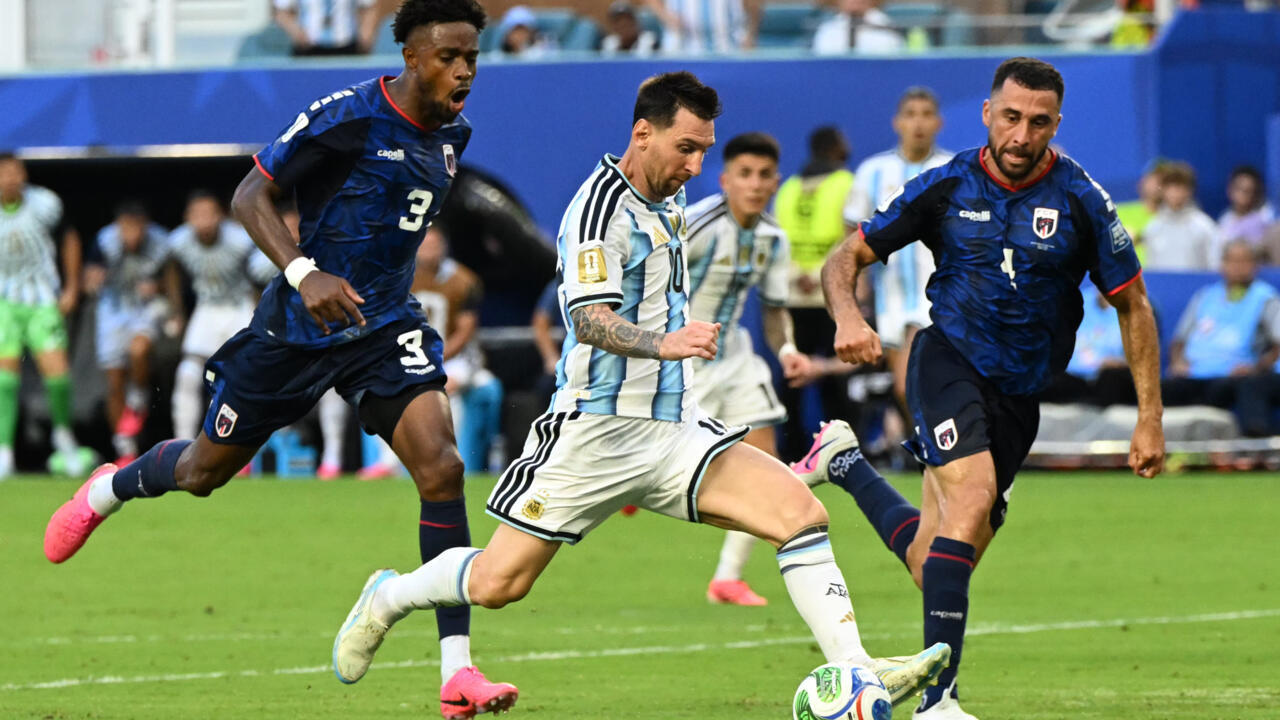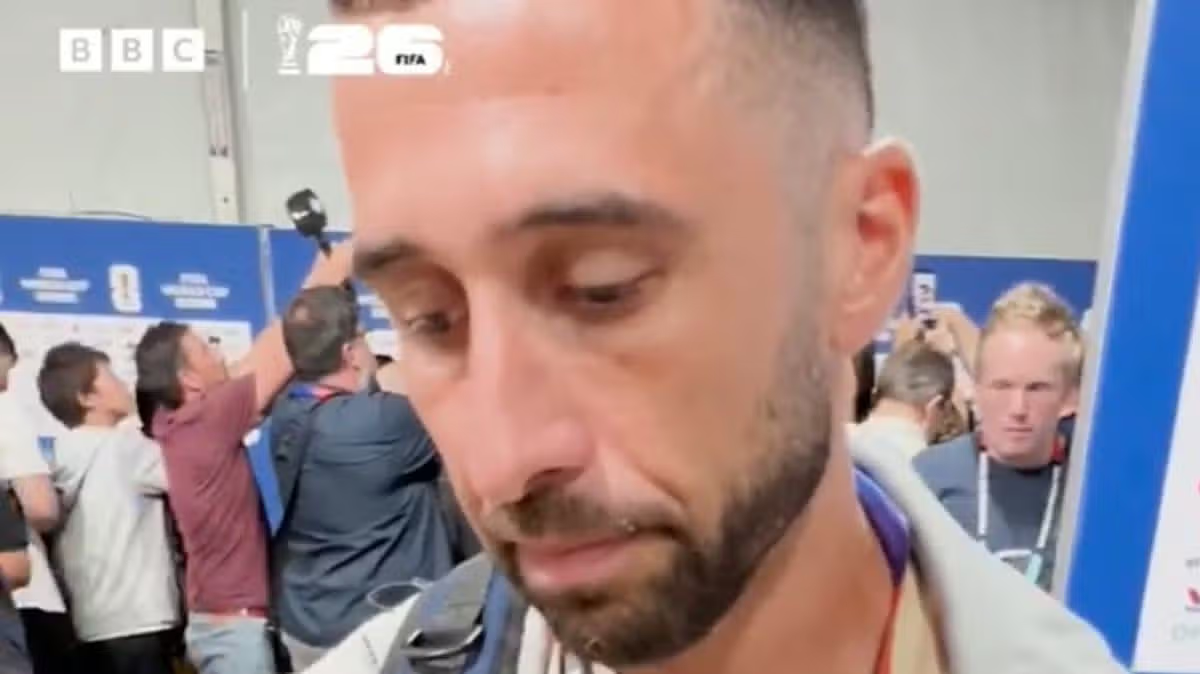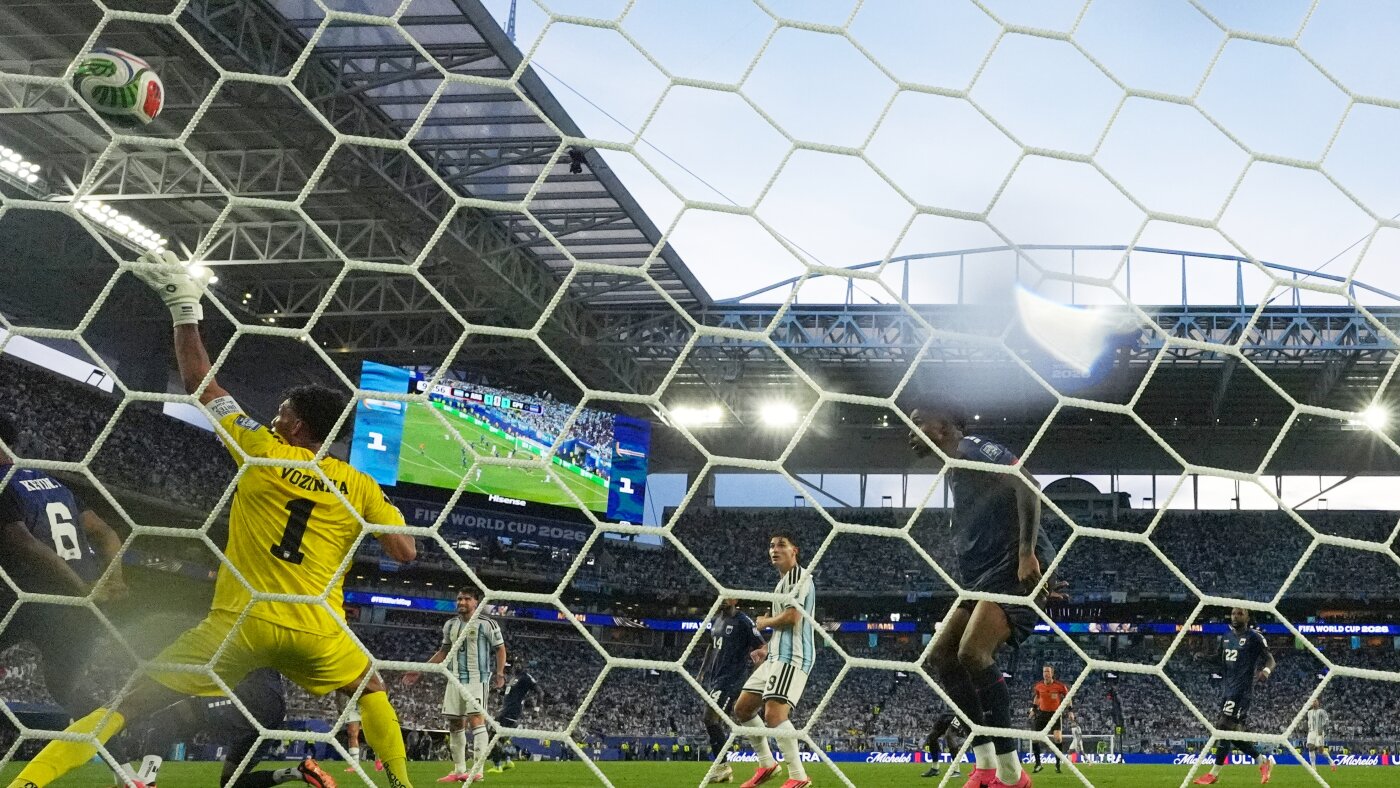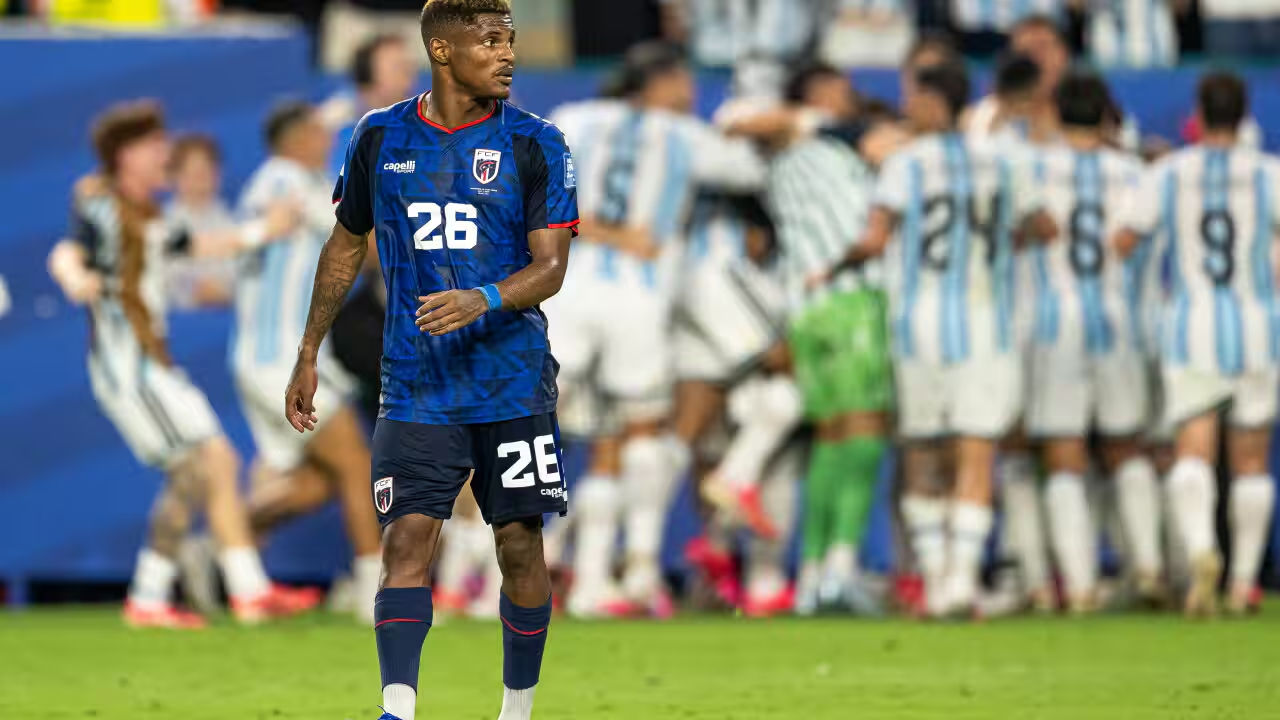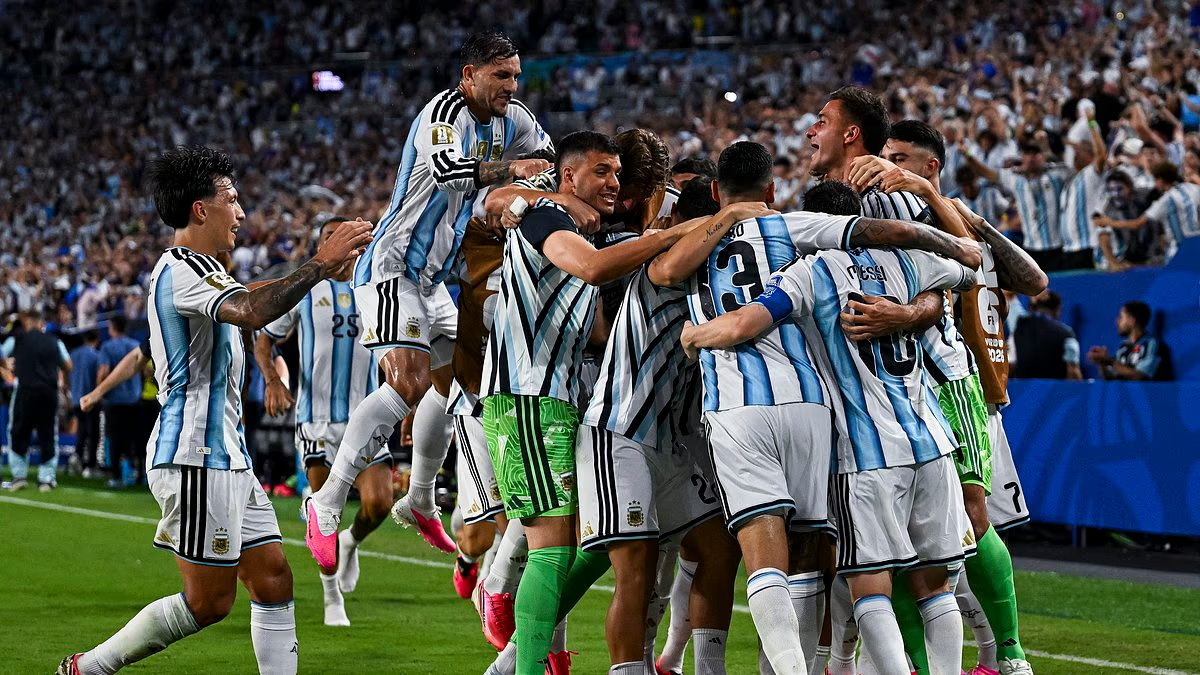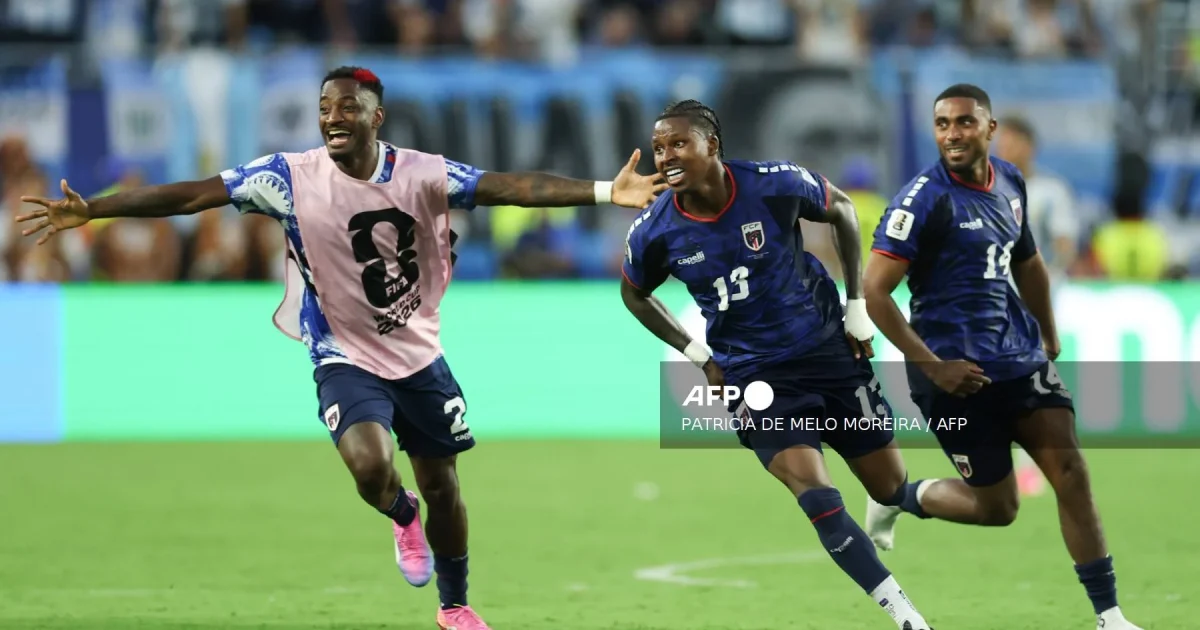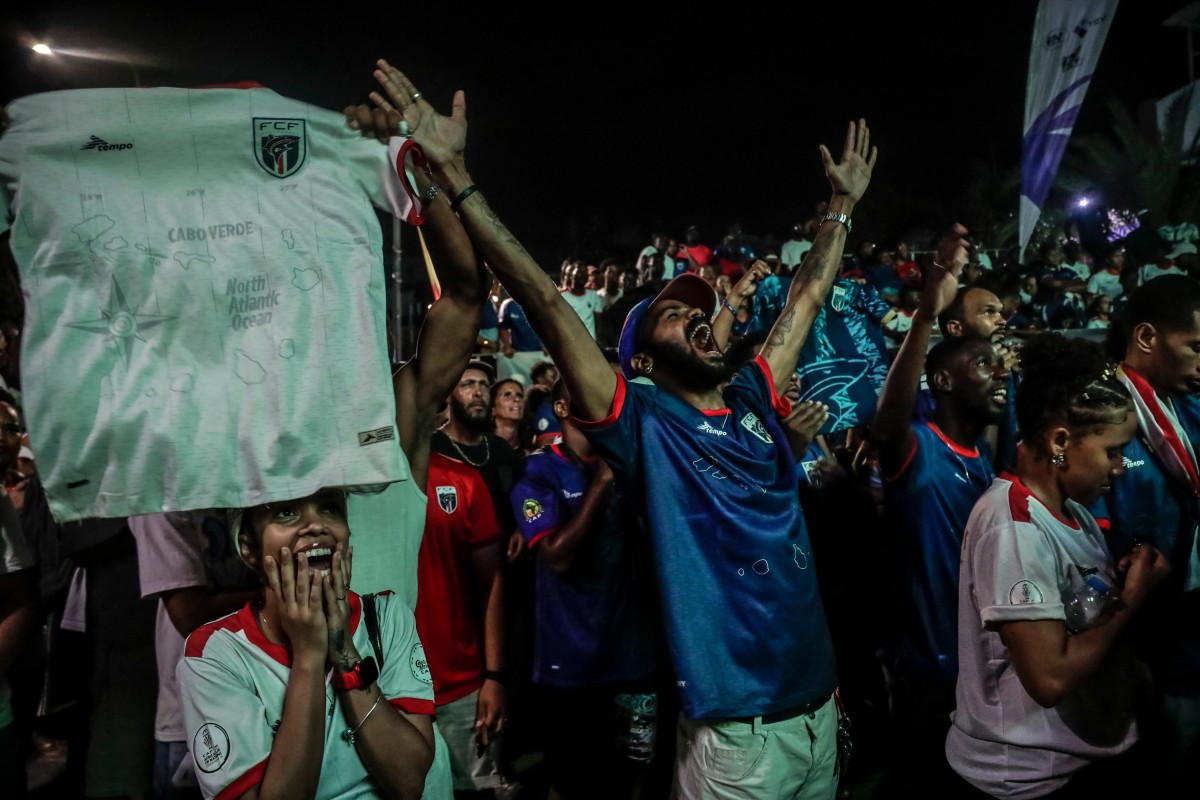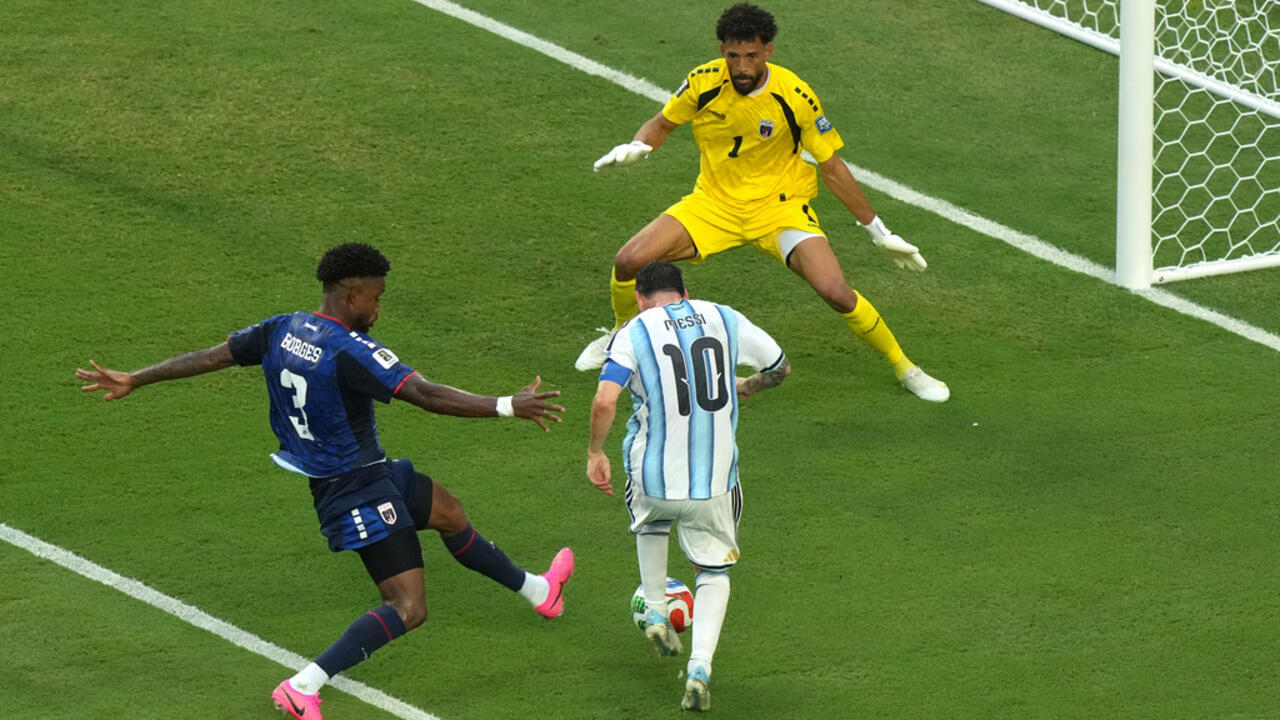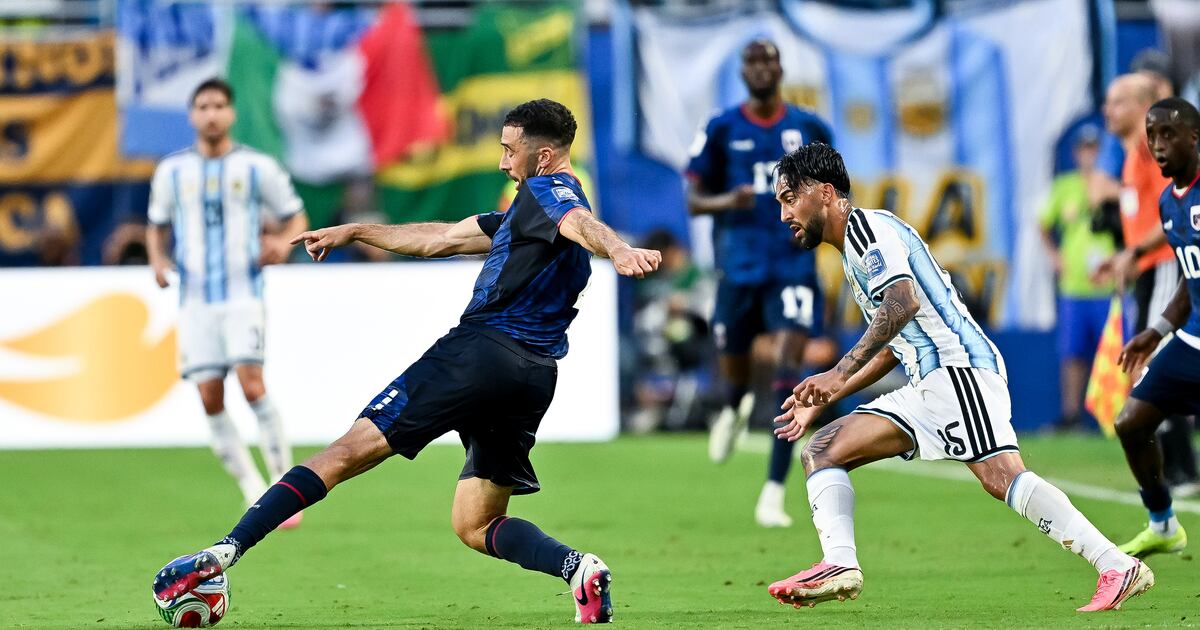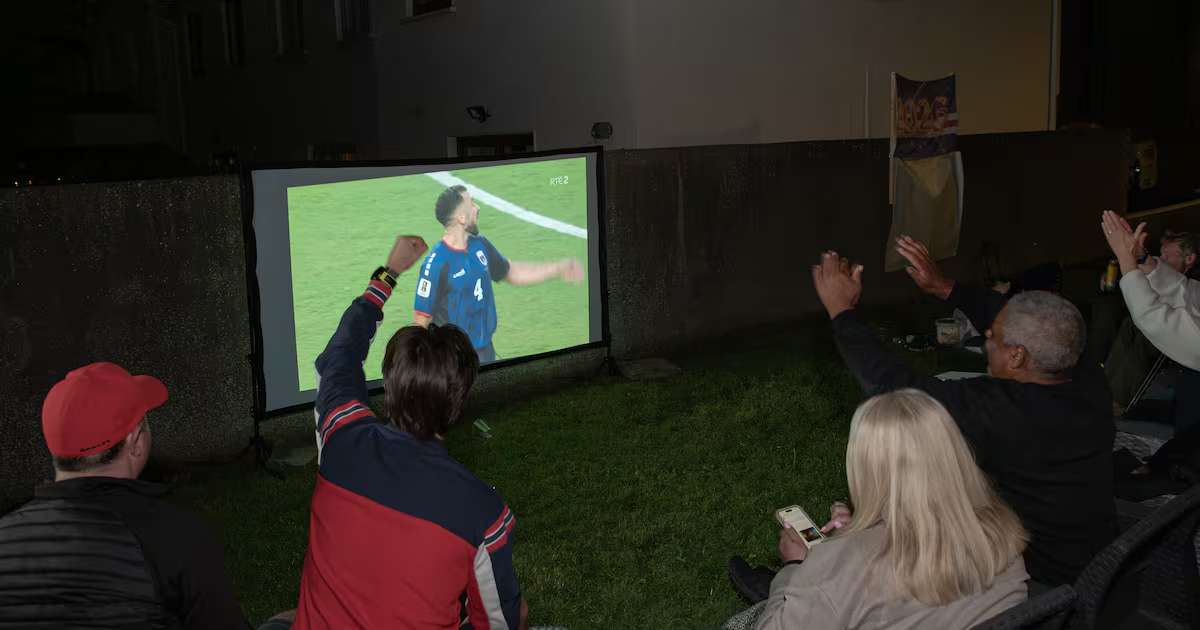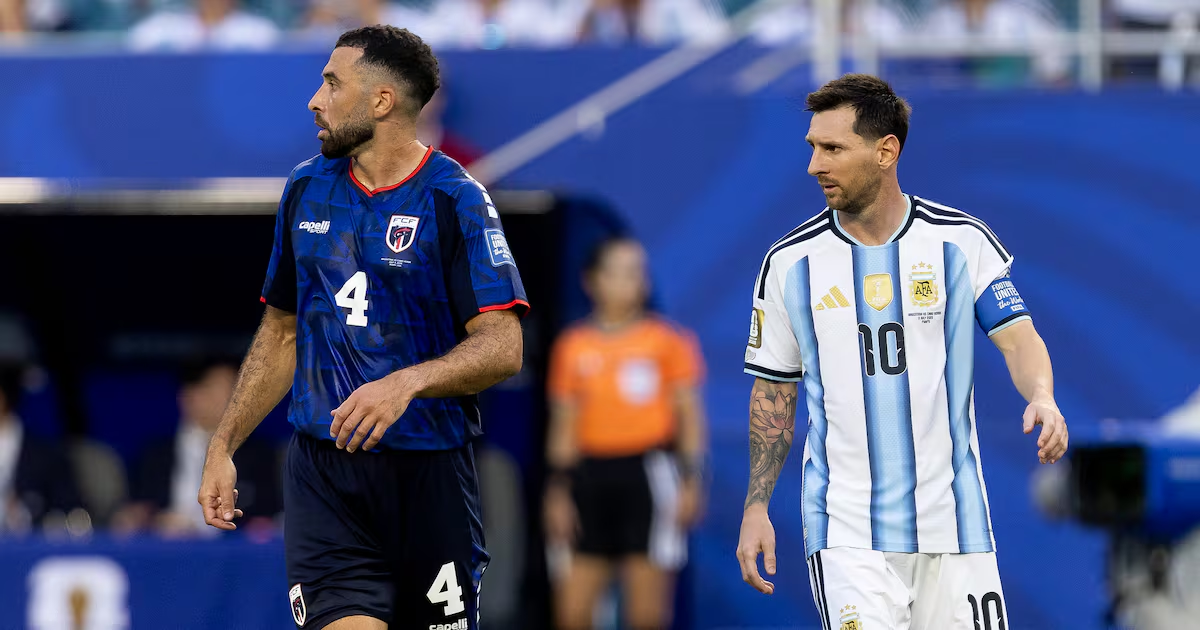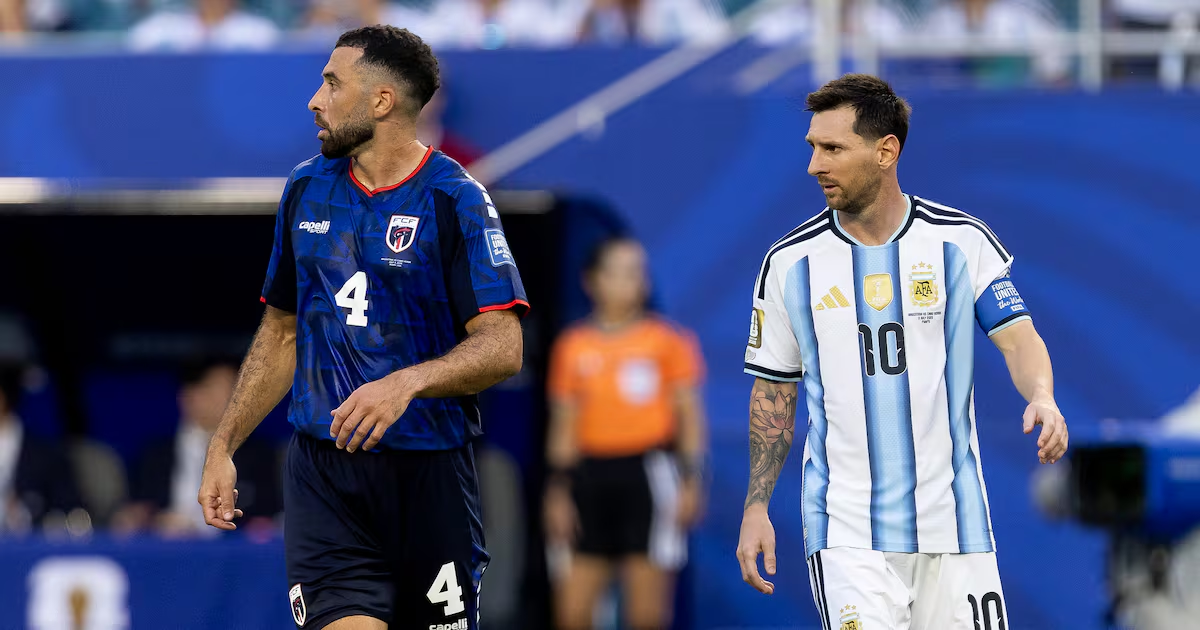
Round of 32, AET: Argentina 3 (Messi 29, Martínez 92, Diney 111 OG) Cape Verde 2 (Duarte 59, Lopes Cabral 103)What a game, what a series of moments, what a display of spirit and skill from Cape Verde, a tiny island nation with a far-flung diaspora team, who took Argentina right to the brink of one of the greatest sporting shocks in Miami.In short: For Dubliner Pico Lopes and his side, it’s the end of the road. But what a journey it’s been.How to tell the story of this game? Imagine being pounded around the head for 120 minutes, first slowly, then much more quickly, with moments of brilliance, narrative shifts, epic subplots and violent tonal contrasts, from the Messi-Vozinha double header, to the elite cinematic brilliance of Cape Verde’s second equalising goal deep into extra-time. Well, it was a bit like that.At the final whistle, the Argentinian players fell to their knees, the stands erupted with relief, joy and the familiar devotional celebrations. A 3-2 victory means Argentina will now play Egypt in Atlanta. But it was the Cape Verde players who held the attention in that moment, walking a little disconsolately about at one end, still ready to run, ready to play, but eliminated from this World Cup at the end of its most wonderfully dramatic game.Perhaps the greatest moment in this relentlessly thrilling game was that last few seconds of Cape Verde parity. The game had felt perfectly pitched as extra-time kicked off with the score 1-1, a note of destiny still circling. Two minutes in, Argentina scored, Lisandro Martínez picking the ball up from a corner on the edge of the box, cutting inside and shooting high into the roof of the net. The stands on that side burst with roars of relief, joy, affirmation of the narrative, of Messi-ism, the road to New York.But Cape Verde, once again, were not done. They pressed, won three corners in quick succession. And with 102 minutes on the clock made it 2-2, with a moment of startling brilliance from Sydney Lopes Cabral, a goal that felt like one of the great World Cup moments, shades of Josimar ‘86, mixed with François Omam-Biyik, 1990 and all that.Cabral took the ball way out on the left, nipped inside, measured his strides, and produced the most beautifully pure right foot shot into the far corner past Emiliano Martínez, the ball seeming to hang in the damp Florida air, a perfect white orb, following that delicious parabola into the far corner.Sidny Lopes Cabral scores Cape Verde's second goal against Argentina. Photograph: Darrian Traynor/Getty Images Small pockets of the stadium were sent rocking with delirious disbelief while entire stands fell to an abrupt silence. Cabral just ran, veering off back to the touchline, leaving the pitch, vaulting some stairs, waiting a bit, then embracing a loved one in the crowd.The Cape Verde players danced and hugged and looked impressively energetic with 15 minutes still to run. But it was Argentina who took the day, and in more prosaic fashion. With 111 minutes gone, Cristian Romero leapt highest to nod a Lionel Messi corner down and into defender and then across Vozinha into the net.Still Cape Verde were not done. They came back again, forced Martínez into a fine clawing save with 116 minutes on the clock and the into another in extremis at his near post, before the release of that final whistle.This was an extraordinary sporting occasion. For a while in the second half it seemed to clarify into an epic two-hander. One of those Messi, the greatest player of all time. The other, Vozinha, the 40-year-old Cape Verde goalkeeper who plays for Chaves in the Portuguese second division and whose career has meandered through the margins of professional football.The Miami Stadium is another massive throbbing concrete campuses, with a craning tubular semi-roof, and an endless acreage of baking tarmac on all sides that was thronged for hours before kick-off with the strolling ceremonial march of the blue and white shirts. Miami was crammed with mainly local Argentina fans for Boca Juniors at the club World Cup this time last year, a game that felt like a national flag day. And this was pretty much a repeat, the huge shallow stands filled with the devotional hordes, the sense of event glamour crackling around the pale blue Miami dusk.Lisandro Martínez celebrates scoring Argentina's second goal with team-mate Enzo Fernandez. Photograph: Steph Chambers/FIFA via Getty Images Lionel Scaloni set his team out with the classic midfield three, the De-Paul-Mac-Allister-Fernandes tripod. Lautaro Martínez came in to the centre of attack, replacing Julián Alvarez.And nothing happened for 14 minutes. Argentina strolled about keeping the ball. The crowd sang its songs of joy and praise. Then Messi did his first thing, making a lovely little run into a previously invisible channel of space, and shooting low past the far post. It felt like a moment of double take, a glitch in the show reel. Wait? What?Three minutes later he curled a free-kick over the wall but into the arms of Vozinha, with phones poised all around the stadium, moments there to be captured. And with 28 minutes gone the thing that was going to happen happened. There were three elite elements to the goal, the first an excellent flat diagonal pass from Lisandro Martínez into Messi’s run. The second belonged to the man whose name appeared in at least 50,000 shirts inside the stadium, although not before a sudden little flicker of that scurrying buried speed, feet twitching, back to the grand old amphetamine crazed mouse days of his youth, to take him clear of the retreating defence.The touch to control the ball was prosaically sublime, everyday brilliant, just another one of the Messi things. The touch was a back-spun half volley cushion on the run, just casually reeled off, keeping the ball in his stride. And from there the finish was a matter of choice, when, how, what angle. Messi chose to take it at the top of the bounce, too early for Vozinha to set himself, the ball whumped high into the net with recreational ease.Cape Verde's Pico Lopes and Diney Borges in action against Argentina's Lionel Messi. Photograph: Enzo Santos Barreiro/Inpho Vozinha has been one of the breakout characters of this World Cup. At his age, you can hardly blame him for milking it while he can. Midway through the World Cup he signed a deal to promote some kind of video game platform backed also by Cristiano Ronaldo, perhaps with this outcome from the bracket in mind. Messi, Ronaldo, Vozinha, a triple-tie-in.Cape Verde started well after half-time, getting closer to the Argentina midfield, pressing higher up the pitch, leaving more space in behind their own lines. With 53 minutes gone they had their first shot on target, a long period of pressure ending with the ball laid back for Deroy Duarte to shoot low and hard, bringing a low save from Martínez.And with 59 minutes gone Cape Verde equalised with a fine goal that also took advantage of some sleepy defending. Ryan Mendes, who is four years younger than Messi at 36, made it with a swift pass inside from the right. From there Duarte took two steps and smashed a right-footed shot across Martínez and low into the far corner.There was an instant mass leaping huddle by the corner flag, Cape Verdean fans burst into tears. How does it feel to be here, this close to what would be among the greatest shocks in World Cup history. Here we have a nation that only joined Fifa in 1986, and in the other corner the three time winners, led by Messi.Argentina kept pressing, kept throwing on attackers, kept piling ball into the box for Vozinha to repel. Those final acts played themselves out. And for Cape Verde this was still a wonderful moment to cap a fine tournament.In a way they are this World Cup, a place of shifting tides, mobility and postcolonial realignment. Almost the entire team is diaspora-based. What is Cape Verde anyway? An archipelago with a population of around 530,000, and scrolling back, an outpost, a trading point, passed between colonial powers, with outposts in the US, the Netherlands and France. Football has been a way of pressing the undo button, of piecing these parts of a nation back together.Argentina will now have only four days to rest before going again. Messi was on the field for 120 minutes in thick, sapping humidity, and had his least influential game of the tournament overall. They looked distinctly mortal here. – GuardianWorld Cup Wallchart
Pico Lopes’ World Cup dream with Cape Verde ends in extra-time defeat to Argentina
World champions made to look distinctly mortal in Miami
1,432 words~7 min read