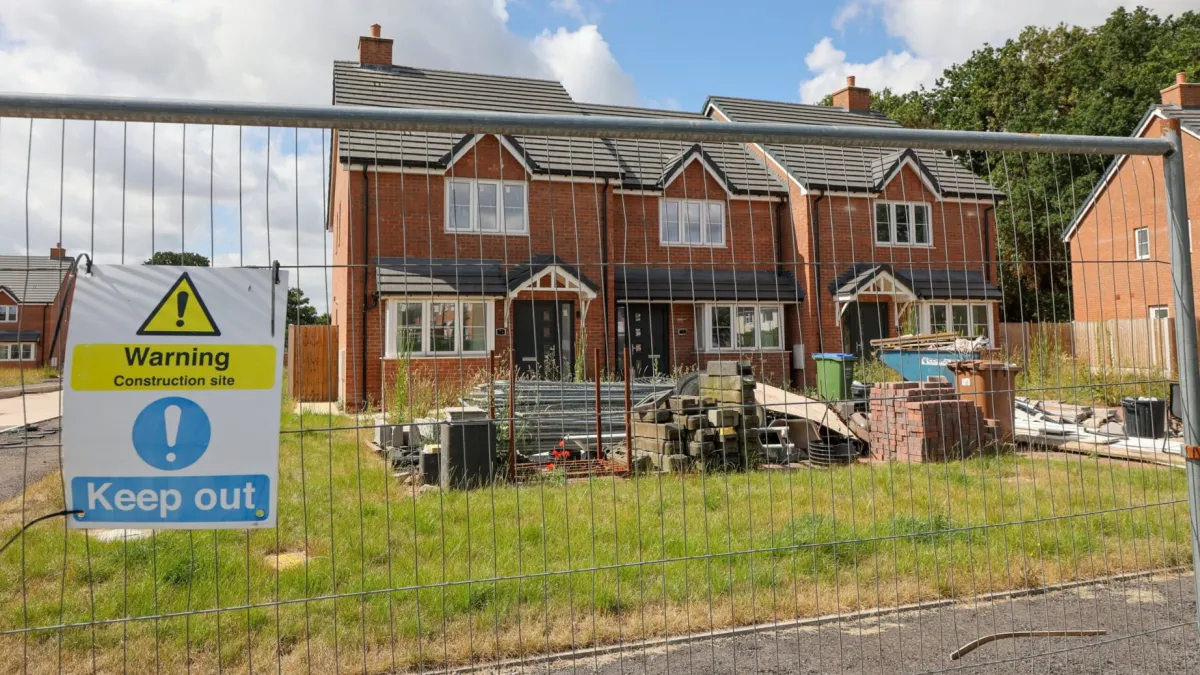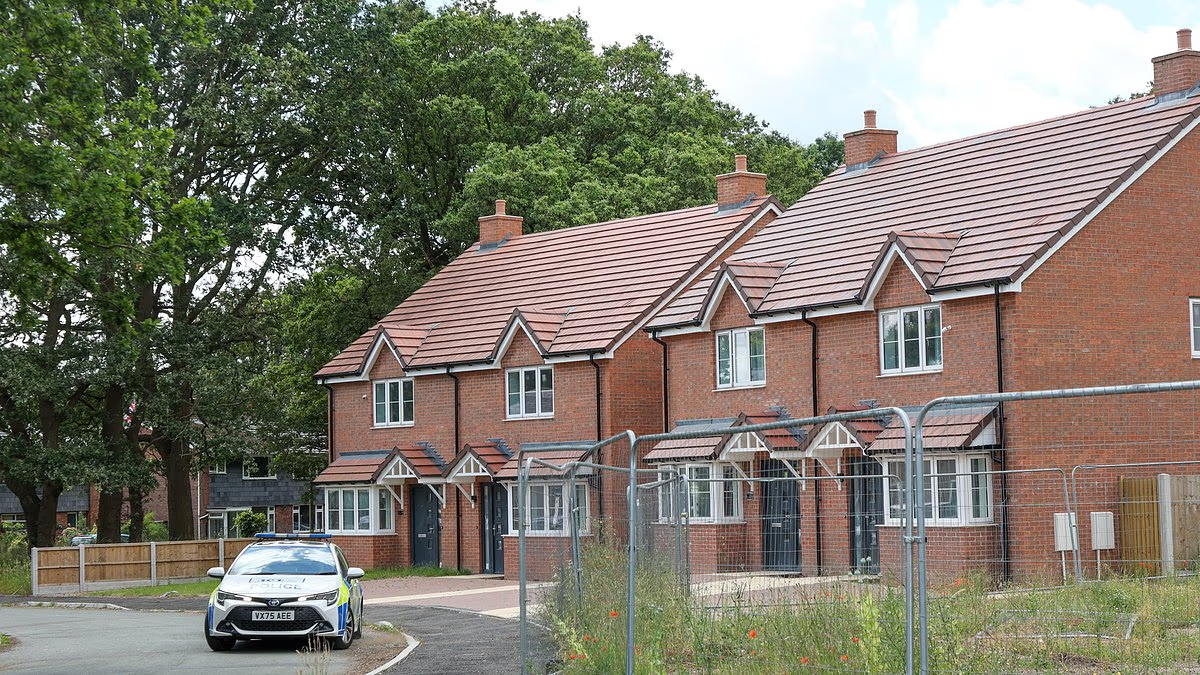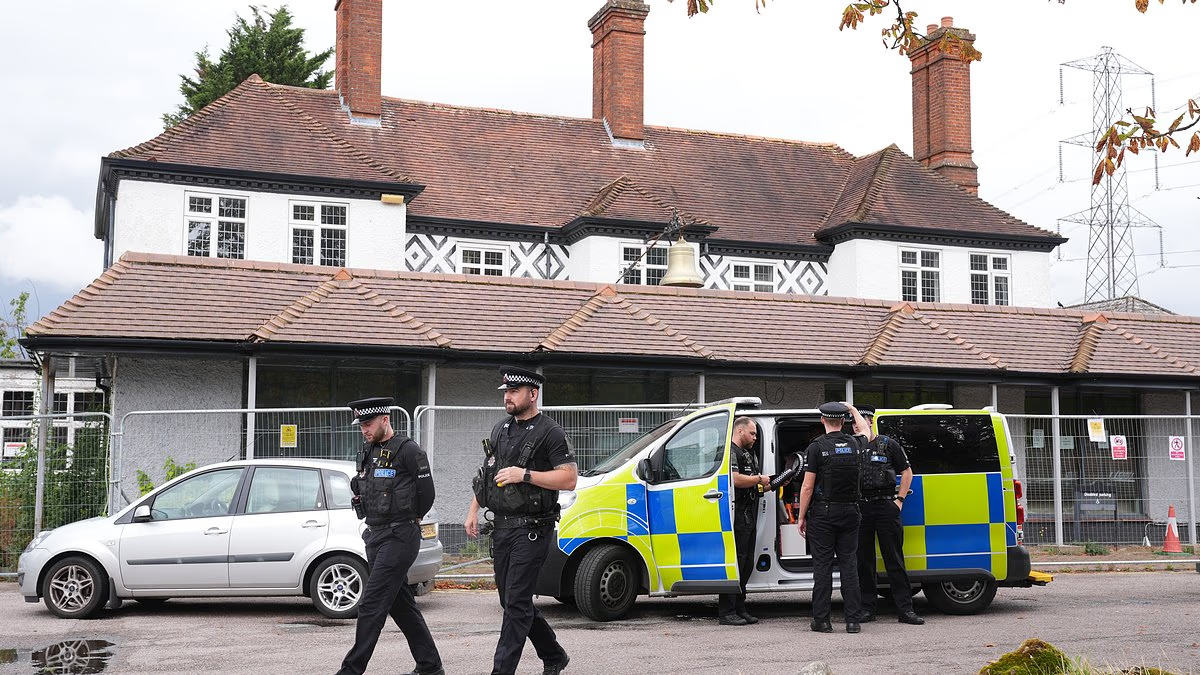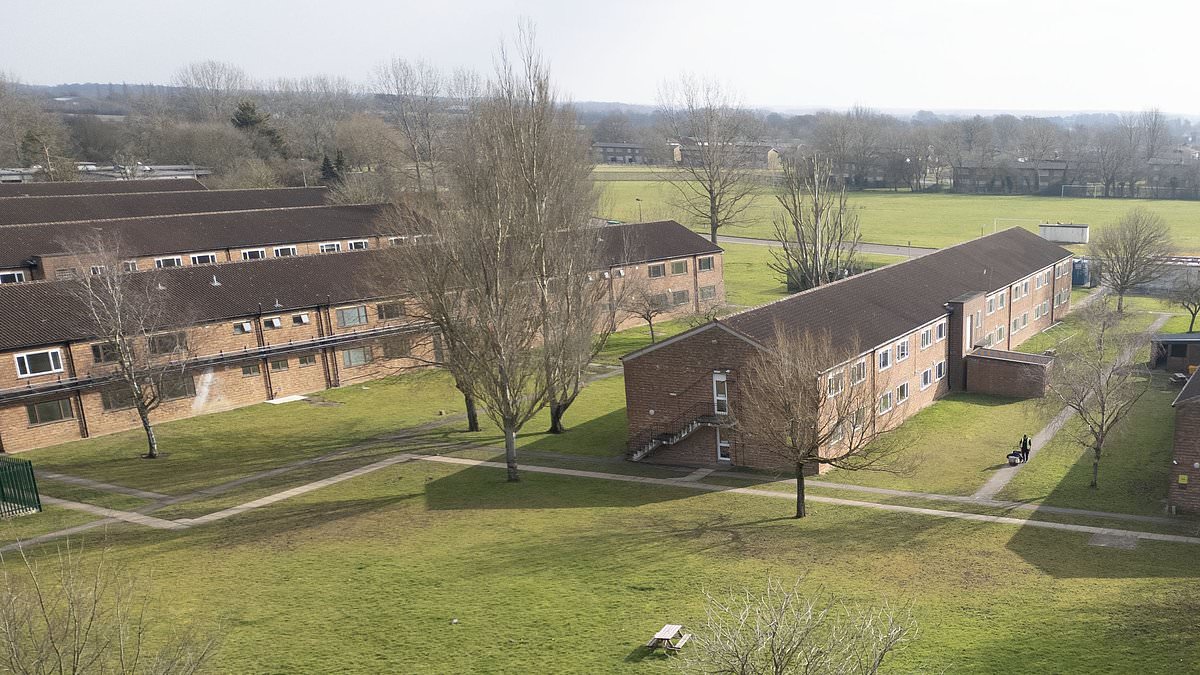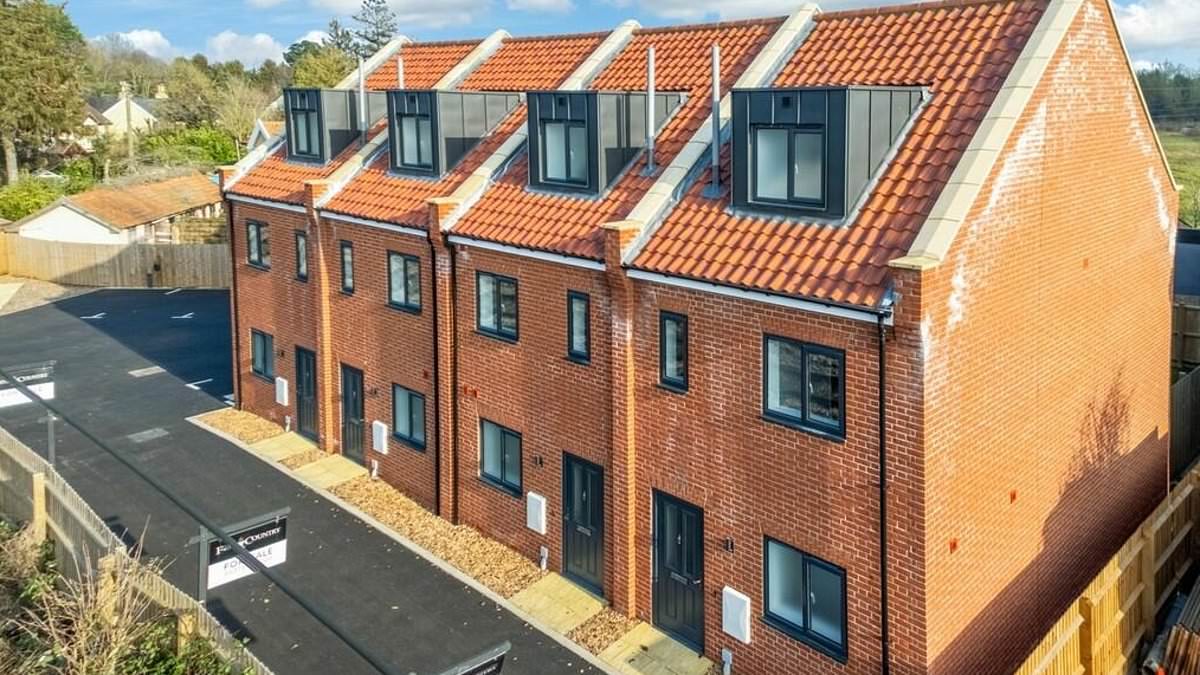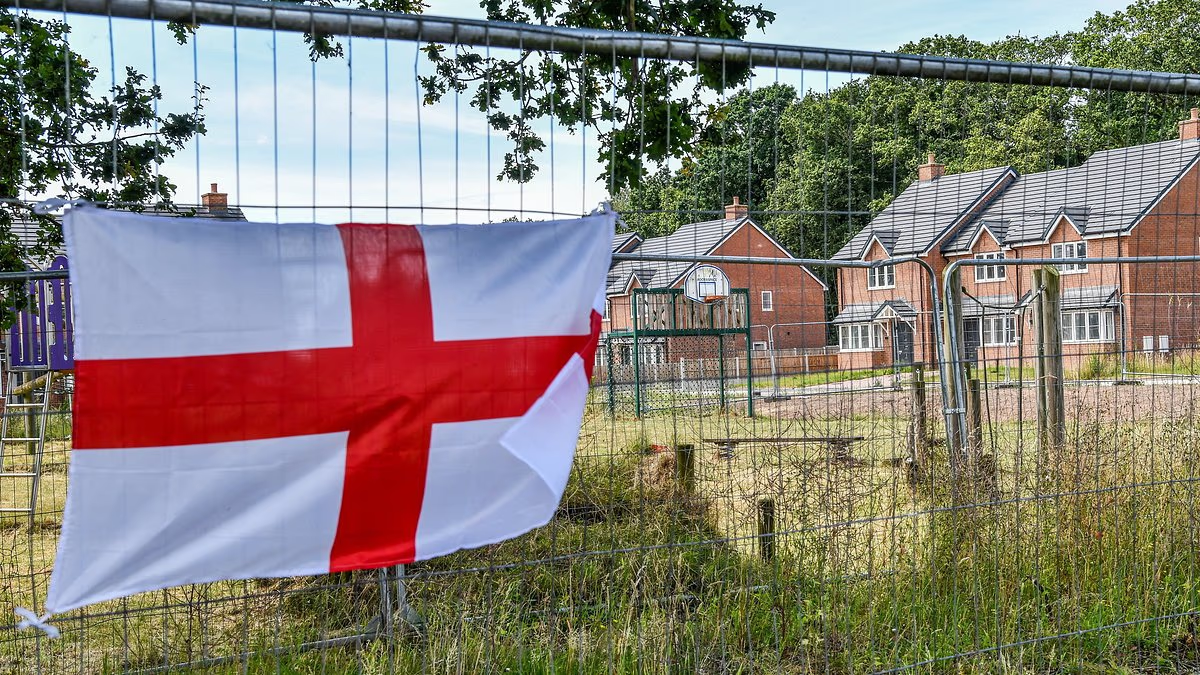
Semi-retired builder David Cooper can now take down the string of half a dozen Union Flags that he had pinned to the front gate of his home in Stoke Heath in protest at the news that no fewer than 83 asylum seekers were about to descend on his sleepy little corner of Shropshire.And, what's more, they were due to take up residence in 21 new homes worth £250,000 apiece that had initially been earmarked for much-needed social housing.'I put them up to show my disapproval,' says the 60-year-old. 'I just don't like them coming into the country illegally and then getting handouts.'It's like someone breaking into your house, helping themselves to the contents of your fridge and you being told to just accept it.'Other villagers had complained of feeling 'betrayed' by the Government, with one ordering Labour to 'give the homes to British people'.And on Friday, the Government finally saw sense and announced that not only would no more asylum seekers be sent to live in Stoke Heath but those who had already been housed there would be relocated.A Home Office spokesperson said: 'New homes should never house asylum seekers. The Home Secretary has directly intervened to stop migrants being moved into the Stoke Heath development and no asylum seekers remain on site.'Friday's U-turn was the cue for widespread rejoicing in the hamlet, which has narrowly avoided becoming the latest victim of the Home Office's determination to move asylum seekers out of expensive hotel accommodation. On Friday, the Government announced that not only would no more asylum seekers be sent to live in Stoke Heath but those who had already been housed there would be relocated David Cooper (pictured) had a string of half a dozen Union Flags pinned to the front gate of his home in Stoke Heath in protest at the news that no fewer than 83 asylum seekers would arrive Stoke Heath's 350 residents had feared that the influx of migrants would render their homes worthless, overwhelm local services and make it unsafe for their children to play outsideIts 350 residents had feared that the influx of migrants would render their homes worthless, overwhelm local services and make it unsafe for their children to play outside.But the Daily Mail can now reveal that the initial decision to turn the new estate in Stoke Heath over to migrants was made despite the fact that 131 veterans are waiting on Shropshire Council's register for social housing, with seven making homelessness applications.This total – obtained via a Freedom of Information request – far exceeds the number of asylum seekers who would have moved into the £250,000 homes in Stoke Heath.While ministers have now 'put a halt' to housing the asylum seekers in the village's new-builds, veterans have torn into the Government for seemingly prioritising asylum seekers over those who have served their country.Stu Mendelson, a former Royal Engineer, told the Daily Mail: 'The debate over Stoke Heath shouldn't overshadow the veterans already waiting for housing in Shropshire. Armed Forces Day has just passed.'Now is the time to ask whether we're doing enough for those who've already served.'Shadow Home Secretary Chris Philp said: 'This disgraceful decision is a slap in the face to veterans who served our country and defended our freedoms, yet are pushed aside for illegal immigrants who have no right to even be here.'Keir Starmer has presided over record small boat crossings and an asylum accommodation bill that keeps climbing. Labour do not have the backbone to tackle this issue.' The initial decision to turn a new estate in Stoke Heath over to migrants was made despite the fact that 131 veterans are waiting on Shropshire Council's register for social housing Reform's Zia Yusuf said it is a 'national disgrace' that veterans have been bumped to the back of the queue for housing in favour of asylum seekersLocal Conservative MP Mark Pritchard said Starmer and Liberal Democrat-led Shropshire Council need to 'start prioritising the housing needs of our brave veterans rather than colluding together to secretly place asylum seekers into new-build houses very close to Tern Hill, where many Army families live, but often in accommodation which is by comparison in need of refurbishment'.Reform's home affairs spokesperson Zia Yusuf added: 'It's a national disgrace that veterans who have risked their lives for this country have been bumped to the back of the queue for housing in favour of asylum seekers.' And Shropshire Council isn't about to take the rap for their treatment. A spokesperson said: 'We remain committed to ensuring veterans and their families are treated fairly.'It was the decision of the Home Office – with their partners Serco – to place asylum seekers at Dutton Close, Stoke Heath, not Shropshire Council's. 'Officers and cabinet members have strongly opposed the use of this site and have written to the Home Office to raise concerns while considering further action.'When permission was granted for 25 new properties to be built in that area of Stoke Heath in 2016, the residents took some persuading because it would mean the demolition of a bowling green, social club and football pitch. They were won round by the promise of affordable housing for the community. And so they felt bitterly betrayed when they heard that they were to be turned over to migrants instead.But it was never a suitable location for asylum seekers in the first place for it is not really a village at all but rather a small cluster of properties, which was originally built in the 1960s for the families of prison officers working in the nearby HMP Stoke Heath. A Home Office spokesperson said: 'New homes should never house asylum seekers''Villages have halls, they have pubs, they have churches, a shop and buses serving them, we have none of that,' says Amanda, who works for a local builders' merchants. 'We don't even have any signal for our phones. 'It takes over 30 minutes to walk to the nearest shop along a dangerous road without a proper pavement. You can't even get an Uber round here. We have nothing.'In other words, Stoke Heath is a wholly inappropriate location for asylum seekers who – without access to a car – would have become prisoners in their own homes. 'This decision could only make sense to someone sitting at a desk in London and looking at a map,' says parish councillor Jason Scott, 58. 'On paper, there's a shop just over a mile away but getting there would involve taking your life into your hands on a fast, straight country road where lorries race along serving the Muller yoghurt factory in Market Drayton.'I would never do it. It is far too dangerous, so without cars people are stuck here. There's been no bus service for years. 'We just don't have the infrastructure locally to cope. The majority of people here are not racist or against all immigration, but they know this is not the right place.'Before the Government had a change of tack, even local charity Shropshire Supports Refugees accepted there was a problem.While it stressed that 'the practical challenges of the location do not translate into the asylum seekers representing a risk to local residents', a spokesperson did acknowledge that there were issues.'In the case of Stoke Heath, the location presents some very real practical challenges,' they say. 'It is remote from local services, and asylum seekers will be reliant on public transport, which is itself some distance away.'While Stoke Heath was granted an 11th hour reprieve, other small communities have been less fortunate.Earlier this year, for example, the East Sussex village of Crowborough made headlines when – despite repeated protests – 540 asylum seekers were moved into a nearby army training camp where migrants could remain until 2030.As of March this year, there were 20,855 asylum seekers languishing in hotels and a further 72,768 in other forms of accommodation –including houses of multiple occupancy and military barracks – awaiting the outcome of their claims.The residents of Stoke Heath have been spared an influx of migrants but it remains to be seen if every town or village with vacant housing stock will be as lucky.
Labour U-turns on 'Migrant St' newbuilds
No fewer than 83 asylum seekers were due to take up residence in 21 new homes worth £250,000 apiece that had initially been earmarked for much-needed social housing.
1,353 words~6 min read