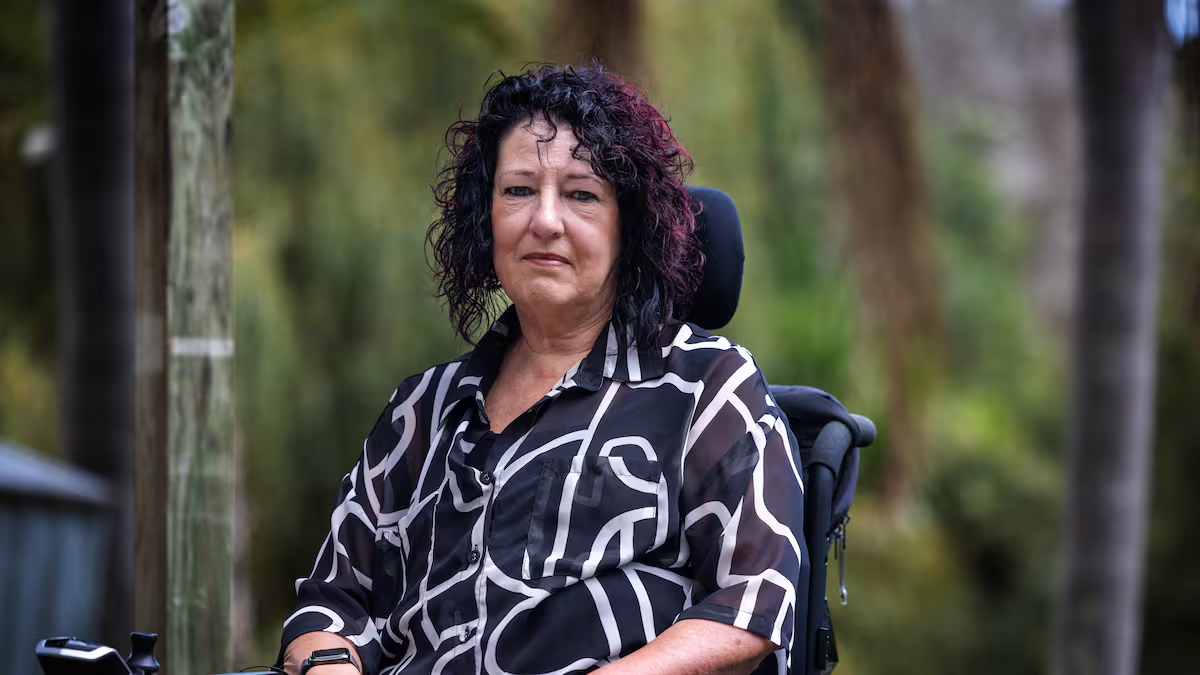
A woman who was left paralysed after spinal surgery is devastated by a health watchdog's decision to close her complaint."I'm angry and it's put me back into that grief stage, to be quite honest," Tracy Jarman said on hearing last week that the Health and Disability Commissioner (HDC) was closing her case, having found no breach in standards of health care or delivery."It's a slap in the face, and almost a 'sorry, but too bad' response."Jarman became wheelchair-bound after spinal surgery in 2021.After the operation at a private hospital in Auckland, she woke with 98 percent paralysis in her right leg and about 65 percent in her left leg.She was left having to wear a colostomy bag to compensate for the lost function of her bowel and bladder, and no longer had any feeling around her pelvic area.Jarman lodged a complaint with the HDC in January 2024.The office of the HDC has confirmed to NZME that following a thorough assessment, the commissioner has decided to take no further action on the complaint.It said a letter outlining its decision and reasons was sent to Jarman on 22 June.Tracy Jarman has strived to adapt to her new life after she emerged paralysed from spinal surgery.Supplied/ NZME - Mike ScottThe commissioner was able, by law, to close a complaint if they determined that any further action or investigation was unnecessary, unwarranted, or inappropriate based on the circumstances.'Absolutely gutted'Jarman went public with her grievance in May last year.She told NZME this week that on receiving the letter she was "absolutely gutted" that her voice was not heard, much as it wasn't when she was in hospital, she claimed."That's the feeling I got when I read the letter. I have struggled to read it and have shed many tears and had sleepless nights over it."It's really knocked me around, to be honest."She expected the HDC might have found breaches in her care and treatment and that medical people might have been held accountable for the alleged errors.Jarman was now preparing to launch a fresh fight in the form of a review.She alleged there were factual errors in the HDC's reasons for not pursuing the complaint further, according to her records, including medical notes she obtained at the time."I have filed a letter with them acknowledging receipt of the document, stating that I do not accept the findings and that there are factual errors in it," she alleged.Jarman was also concerned about what she considered to be a lack of overall fairness and reasoning behind the investigation.The Auckland woman who had always been fit and active told NZME last year her grief and despair had only then started to fade, as she learned to grasp at straws of hope, including her wish for accountability.Jarman said her worst moments, physically trapped in a body that no longer worked as it once did, made her feel terrified and alone."I've struggled - I've really struggled with grief. It's like I've lost the life I had and I've had to try and readjust to this new norm and it's been really, really hard, especially when I've always been so active."Jarman's complaint to the HDC had helped her process what had happened because of the amount of research required in forming the statement.'Things weren't right'It was her fifth surgery following the appearance in 2012 of the first sign of spinal cysts, a condition she said "happened randomly".She said the only way to stop any pressure on the spinal cord was to remove the cysts or fuse those bones so they didn't grow back again.Jarman underwent procedures known as laminectomy and discectomy to relieve pressure on the nerves and spinal cord.She said the same surgeon who had operated four times previously on her lower spine did the operation.The fifth time she was anaesthetised for what she said should have been a four- to five-hour operation but, allegedly, ended up much longer.She came around in the intensive care unit and was then transferred to a high-dependency unit.Jarman claimed she told the surgeon the next morning that she couldn't feel anything and "things weren't right".Her medical notes recorded the conversation that followed, including that her concerns were allegedly "anxiety-related".Jarman said last year the grief she suffered stemmed partly from thinking there was a chance her situation might have been improved if action had been taken sooner.Her symptoms turned out to be what she said were crushed cauda equina nerves, which send and receive messages to and from the lower limbs and pelvic organs.An MRI was performed, but Jarman alleged that specialists struggled to see anything because of the swelling and scar tissue from the previous operations.Jarman had strived to adapt to her new life. She tried to keep fit and healthy, within her ability, as a way to ensure her condition did not regress, which she was warned was a possibility.She was scheduled to undergo a hip replacement in August to address deterioration from being in a wheelchair."They [doctors] believe that will hold me in good stead. It should just sort of stabilise me a little bit for a little bit longer."Assistance from ACC had allowed the 61-year-old to live with some independence.She reached a main goal last November by completing the Auckland Half Marathon on her hand cycle - a form of tricycle powered using her arms.Jarman was on target to finish a degree next year in health and well-being, majoring in disabilities, and was involved in peer support for others in a similar situation.She conducted online and phone meetings and occasionally went into the spinal unit to meet new arrivals."It's very helpful for me because having that lived experience and being able to help others, that's really lifted me," Jarman said.She has since dropped her bid challenging ACC to fund medicinal cannabis she had been using to address pain symptoms associated with her condition."I gave up on it. It was never going to happen."ACC told NZME last year that applications for cover for medicinal cannabis were handled on a "case-by-case basis".*This story originally appeared in the New Zealand Herald.Open Justice
Paralysed woman Tracy Jarman devastated as HDC closes complaint
A woman who was left paralysed after spinal surgery is devastated by a health watchdog's decision to close her complaint.
1,008 words~5 min read