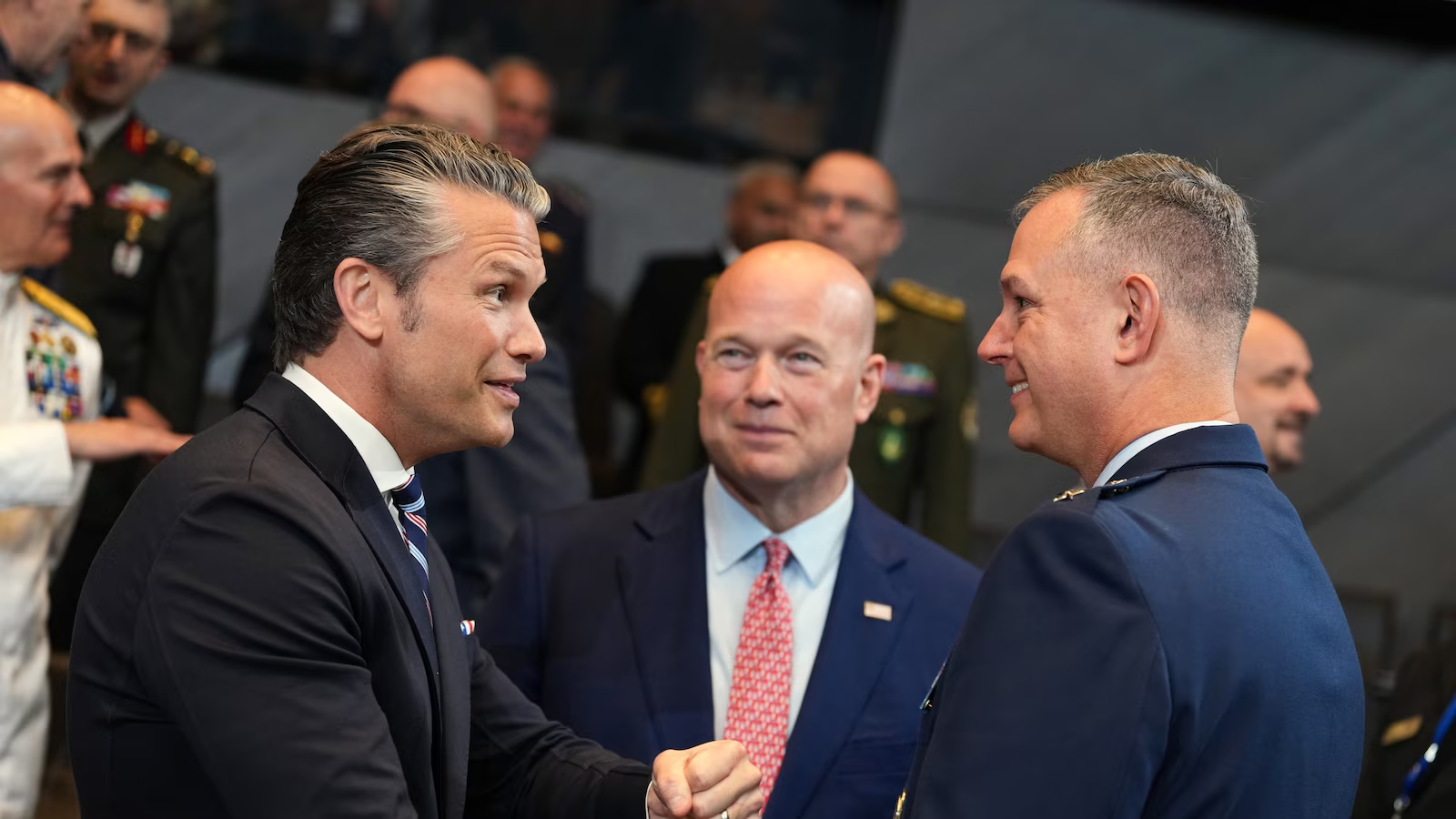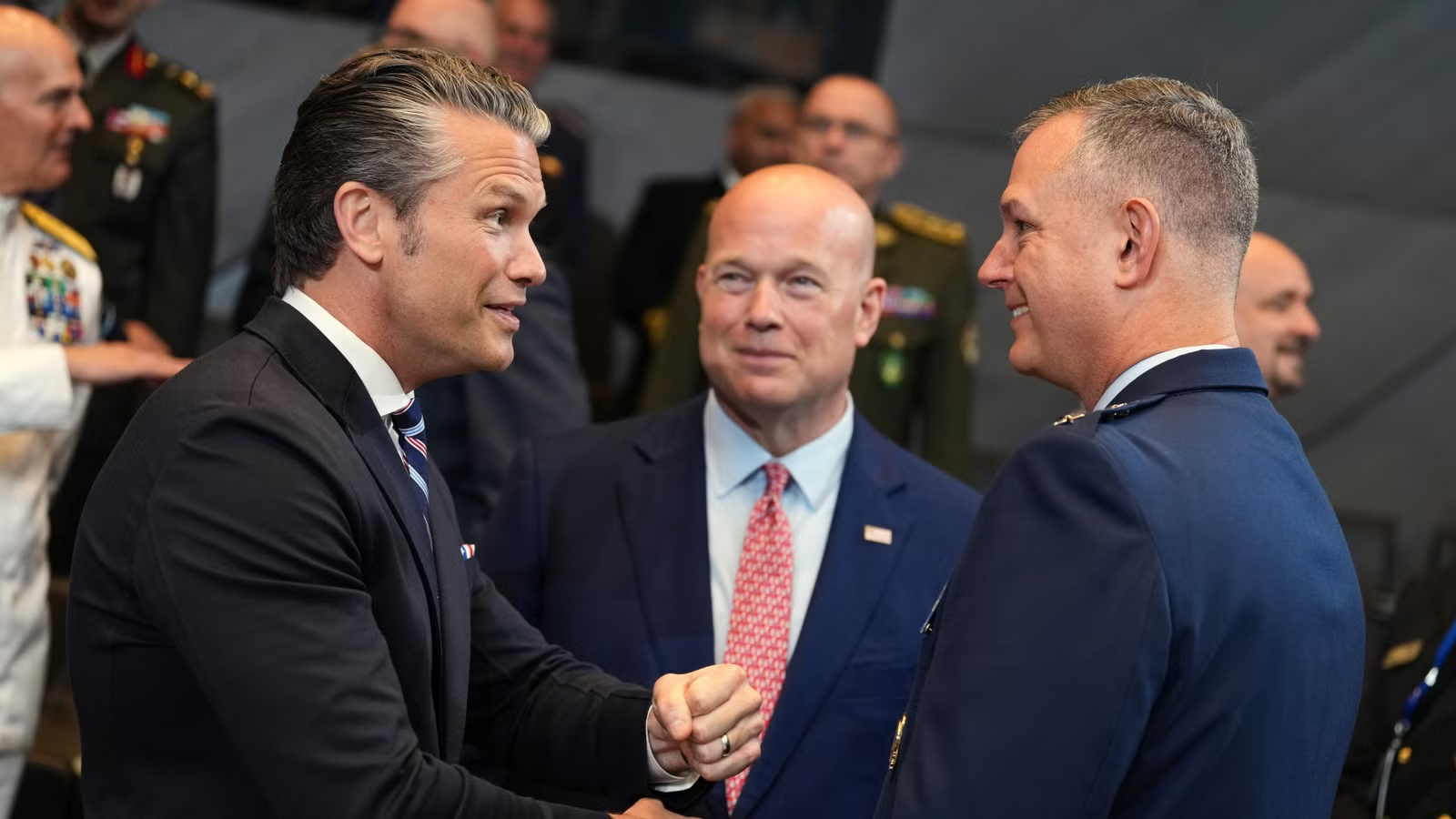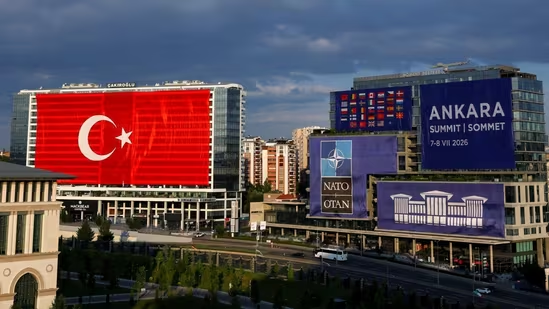
Skip to Content News Archives Economy Energy Oil & Gas Renewables Electric Vehicles Mining Commodities Agriculture Real Estate Mortgages Mortgage Rates Finance Banking Insurance Fintech Cryptocurrency Work Wealth Smart Money Wealth Management Investor Personal Finance Family Finance Retirement Taxes High Net Worth FP Comment Executive Women Puzzmo Newsletters Financial Times Business Essentials More Innovation Information Technology FP500 Podcasts Small Business Lives Told Tails Told Shopping Financial Post Store Obituaries Place a Notice Advertising Advertising With Us Advertising Solutions Postmedia Ad Manager Sponsorship Requests Classifieds Place a Classifieds ad Working Profile Settings My Subscriptions Saved Articles My Offers Newsletters Customer Service FAQ News Economy Energy Mining Real Estate Finance Work Wealth Investor FP Comment Executive Women Puzzmo Newsletters Financial Times Business Essentials HomeNewsEconomyEurope has replaced most U.S. cuts within NATO, top Commander saysThe need to rebalance has been a factor for years and Europeans have stepped upAuthor of the article: You can save this article by registering for free here. Or sign-in if you have an account.Trump’s rhetoric toward NATO since his return to the White House has unnerved allies and prompted a rethink of defence spending in Europe. Photo by JOHN THYS/AFP via Getty ImagesEuropean NATO allies have mostly replaced the assets that the United States has cut from its rescue plans in case of a war in Europe, Deputy Supreme Allied Commander Europe Sir John Stringer said in an interview.Subscribe now to read the latest news in your city and across Canada.Exclusive articles from Barbara Shecter, Joe O'Connor, Gabriel Friedman, and others.Daily content from Financial Times, the world's leading global business publication.Unlimited online access to read articles from Financial Post, National Post and 15 news sites across Canada with one account.National Post ePaper, an electronic replica of the print edition to view on any device, share and comment on.Daily puzzles, including the New York Times Crossword.Subscribe now to read the latest news in your city and across Canada.Exclusive articles from Barbara Shecter, Joe O'Connor, Gabriel Friedman and others.Daily content from Financial Times, the world's leading global business publication.Unlimited online access to read articles from Financial Post, National Post and 15 news sites across Canada with one account.National Post ePaper, an electronic replica of the print edition to view on any device, share and comment on.Daily puzzles, including the New York Times Crossword.Create an account or sign in to continue with your reading experience.Access articles from across Canada with one account.Share your thoughts and join the conversation in the comments.Enjoy additional articles per month.Get email updates from your favourite authors.Create an account or sign in to continue with your reading experience.Access articles from across Canada with one accountShare your thoughts and join the conversation in the commentsEnjoy additional articles per monthGet email updates from your favourite authorsSign In or Create an AccountorStringer made the assurance to Bloomberg Television ahead of the alliance’s summit in Ankara next week, at which allies will try to smooth over recent announcements by the U.S. signalling that it is pivoting away from the continent.“European allies have definitely stepped up in terms of backfilling the adjustment in the U.S. forces in Europe,” said Stringer, adding this was a demonstration of “a stronger Europe in a stronger NATO.”SUBSCRIBER EXCLUSIVE: FP West: Energy Insider brings you behind the oilpatch’s closed doors with exclusive insights from insiders every Wednesday morning.By signing up you consent to receive the above newsletter from Postmedia Network Inc.A welcome email is on its way. If you don't see it, please check your junk folder.The next issue of FP West: Energy Insider will soon be in your inbox.We encountered an issue signing you up. Please try againThe U.S. recently announced massive cuts to the forces it would send to Europe in case of war or crisis, prompting the North Atlantic Treaty Organization’s military command to ask European countries to make the forces they hadn’t yet committed to the alliance known.Stringer, a former Royal Air Force fighter pilot, said that in the categories in which Europe couldn’t provide equivalent forces, they’d be looking to match the effect with different assets. Delegates attend the meeting of North Atlantic Council in Defense Ministers at the NATO headquarters in June. Photographer: Omar Havana/Getty ImagesBurden-sharing and burden-shifting “is now being done in a sensible, proportionate way, absolutely driven by military logic,” he said, emphasizing the preparedness of European allies for the shift in U.S. priorities and commitments.The need to rebalance has been a factor for years and Europeans have stepped up, he said.Trump’s rhetoric toward NATO since his return to the White House has unnerved allies and prompted a rethink of defence spending in Europe.U.S. Secretary of Defense Pete Hegseth shocked allies at NATO headquarters in June by announcing a six-month review of the U.S. forces in Europe, a signal that more cuts may be ahead.“In the air and maritime domain, Europeans can and have stepped up” and even gone beyond 100 per cent, said Colonel Martin L. O’Donnell, spokesperson at NATO’s military command. In certain cases, European allies have the same kit or better equipment than the U.S. inventory, he added, citing the example of a type of F-16 fighter jet to be received by Bulgaria. US Defense Secretary Pete Hegseth during the North Atlantic Council meeting of Defence Ministers in Brussels in June. Photographer: Omar Havana/Getty ImagesStringer was appointed as NATO’s second in command of operations in Europe this year as the alliance grapples with the war in Ukraine on its borders and an increasingly isolationist U.S.Asked about the recent resignation of British Defence Secretary John Healey over what he said was inadequate spending by the United Kingdom, Stringer said that all “all the nations, all 32 agreed that they would get to 3.5 per cent by 2035 and have a credible path to get there.”“Nobody gets an opt out on that one,” he said, referring to NATO’s target for governments to spend at least 3.5 per cent of gross domestic product on core defence. “That’s what we agreed and that obviously includes the U.K.”Areas of investment announced by the U.K. in recent weeks are “absolutely aligned with where NATO sees our forces needing to go to be able to be credible in deterring and defending the billion people under the NATO umbrella,” he said.“NATO will expect all nations, including the U.K., to live by their commitments,” he said. Join the Conversation This website uses cookies to personalize your content (including ads), and allows us to analyze our traffic. Read more about cookies here. By continuing to use our site, you agree to our Terms of Use and Privacy Policy.
Europe has replaced most U.S. cuts within NATO, top Commander says
European NATO allies have mostly replaced the assets that the U.S. has cut from its rescue plans in case of a war in Europe. Read here now
1,092 words~5 min read