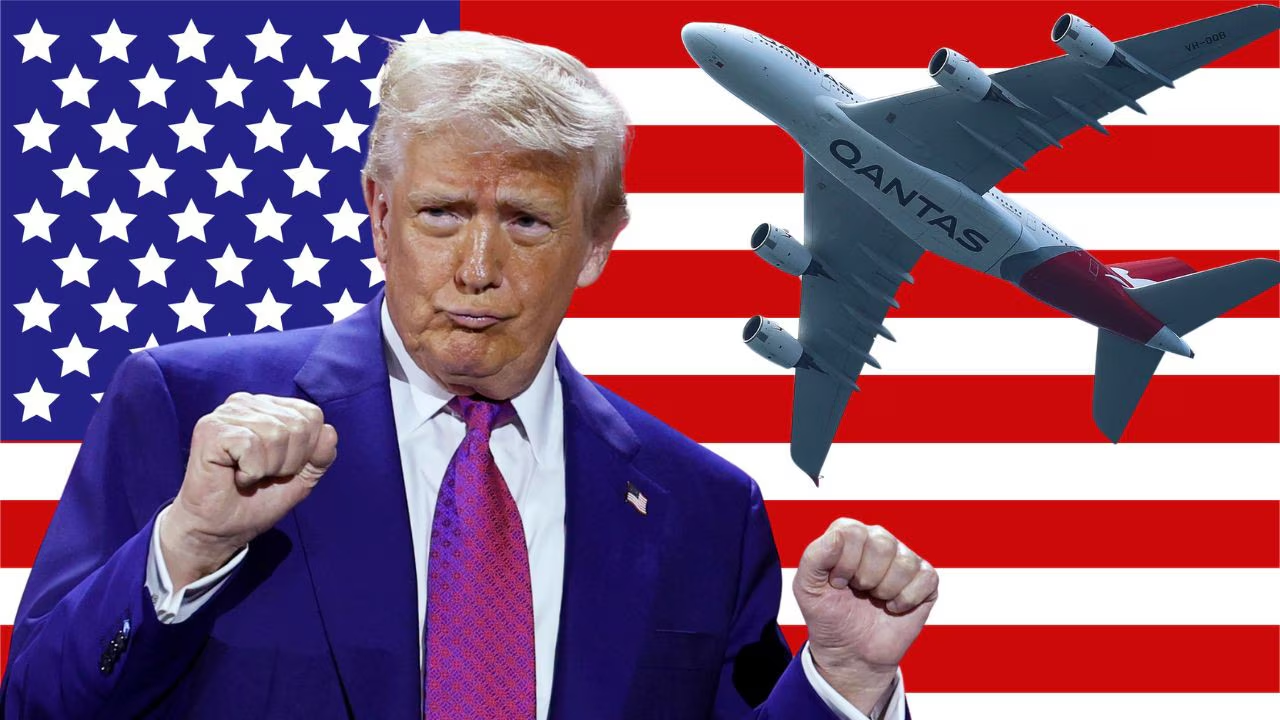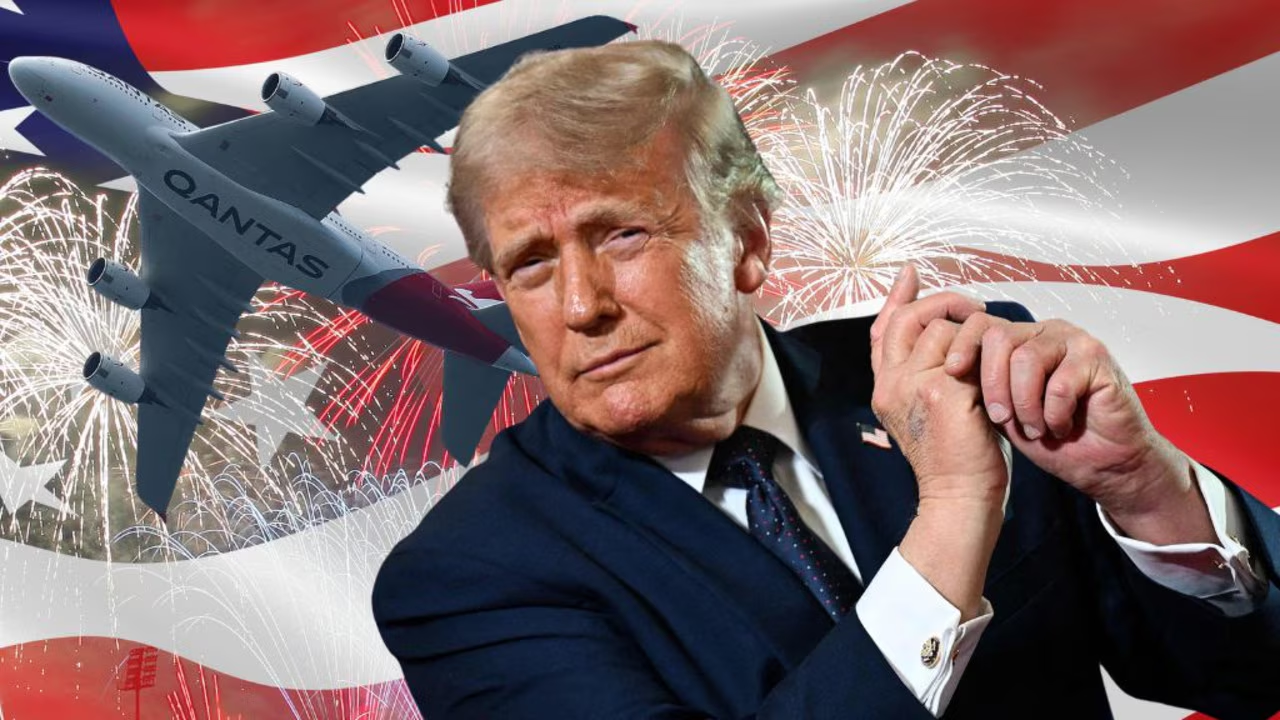
Here’s a 250th birthday present for you, America.It seems the United States is back on Australian travellers’ radars.Aussies had been turning away from the States with the latest Australian Bureau of Statistics data, analysed by the Australian Travel Industry Association, showing outbound travel to the US fell 6.3 per cent for the year to April 2026 – the only destination in Australians’ top 10 most visited countries to see a decline.The US travel industry has been fighting to keep Aussies coming back as numbers drop and there is talk of proposed changes to the ESTA application, which could make it mandatory for Australian tourists to disclose five years of social media history.While the official ABS travel figures that show where Australians have travelled in June and July will not be available until August and September, the FIFA World Cup and travel disruption through the Middle East to Europe appear to be giving the US a much-needed boost from Down Under.news.com.au reported last month that Expedia and Booking.com data showed a sudden surge in interest from Aussies amid the World Cup. Even Qantas had seen a 13 per cent jump on bookings to the US and Canada in June and July compared to the same period last year.Expedia’s Australian senior director Darren Karshagen explained that given the distance Aussie fans have to travel, they tend to turn sporting events into extended, multi-stop holidays, benefiting the host country beyond the locations actually hosting the events.Now, the tourism industry is hoping Aussies’ reignited interest in travelling there will continue after the final siren on July 19 (July 20 in Australia).Melbourne-born global travel company Intrepid Travel saw a 156 per cent increase in Aussies booking trips to the US in June compared to the same month last year. A lot of those bookings were for September.The company’s Australian and New Zealand managing director Brett Mitchell said there seemed to be a lot of pent-up demand after people held off booking both domestic and international trips due to uncertainty created by conflict in the Middle East.In mid-June, the United States and Iran signed a memorandum of understanding to end the war. Subsequent negotiations between the two countries are ongoing.Mr Mitchell said Australians are not stopping travelling altogether, they are simply changing where they are going.“What we did start to see in the last probably three weeks in particular is people fed-up of waiting and they started to just book holidays,” Mr Mitchell told news.com.au. “But they were avoiding the Middle East and they were avoiding Europe.”He said bookings for domestic travel in Australia, Southeast Asia, South America and North America all jumped.“I think a lot of that has to do with thinking ‘OK, this year I’m not going to travel to Europe or the Middle East, I’ll choose somewhere else’. And some destinations benefited hugely, and I think North America has been one of those,” he explained.Like the broader industry, Intrepid Travel has seen a dip in US bookings and Australian travel to the US this year is still tracking below 2025 figures, but the June sales result is promising.Mr Mitchell suspects the US jointly hosting the World Cup has also influenced travel to the States beyond the tournament, and Aussies returning home will continue to create buzz and increase demand through word-of-mouth marketing.“It’s in people’s psyche and I think sometimes that does get people a bit more excited about the country,” he said.Australian travel company Luxury Escapes said in recent weeks, website searches for US destinations including Seattle, San Fransico and Los Angeles had seen a significant uplift, “likely driven by the afterglow of the Soccer World Cup matches”.Expedia data shows that accommodation searches for stays between August and October this year in World Cup host city Philadelphia are up 35 per cent on the same period last year.Cities nearby tournament host cities have also seen increased demand – Nashville (near Atlanta) and Chicago (near Kansas City) are both up 30 per cent.Brand USA, which promotes international tourism to the US, has been thrilled to see the regained interest.“We’re certainly encouraged by the strong interest we’re seeing from Australian travellers,” Brand USA chief communications officer Chris Heywood told news.com.au, explaining Australia is an “incredibly important” long-haul market for the country.“We’re seeing a proliferation of positive social media content from international travellers sharing their experiences across the US such as regional cuisine, hidden gems and places that may not have been on their radar before,” he added.“That authentic, first-hand storytelling is incredibly powerful because it’s inspiring others to see a different side of the US and adding new destinations to their travel wish lists.”While Brand USA is celebrating the excitement generated by the FIFA World Cup, it wants Aussies to know that the appeal of the US as a destination goes beyond the major event.“From iconic cities, a world-class dining scene, national parks, and vibrant music and culture, the US offers countless reasons to visit,” Mr Heywood said.“Looking ahead, the upcoming Route 66 Centennial in November provides another compelling reason to explore America by road, celebrating one of the world’s most iconic driving routes. “Together, these experiences will continue to drive Australian interest in visiting the United States well beyond this landmark year.”‘America wants you here’: The perception problemUS Travel Association president and chief executive Geoff Freeman told news.com.au in an exclusive interview in May that perception was the problem hurting US tourism, insisting to Australians that “America wants you here”.“The policies most have heard about have not actually been implemented and data shows border incidents remain rare, yet high-profile stories can quickly shape what millions of potential travellers believe,” he said.Incidents spooking Aussies include travellers being denied entry (and at times, strip searched and thrown in prison). The more intense airport checks have involved inspections of emails, text messages or social media accounts. The latest high-profile case in Australia was musician Keli Holiday being denied entry back into the US during his North American tour.But according to US government figures cited by Mr Freeman, 68 million international visitors travelled to the US last year and 99.9 per cent of international air travellers were admitted.“We understand why those stories are concerning, and we do not dismiss any traveller’s experience,” Mr Freeman said.“But the data shows these incidents remain exceptionally rare.”He added: “The larger issue is the gap between perception and reality — and that gap matters because perception shapes travel decisions.”According to research released in June from the World Travel & Tourism Council (WTTC), more than 5.9 million US Electronic System for Travel Authorisation (ESTA) applications were submitted in the lead-up to the 2026 FIFA World Cup tournament and there were over 5 million approvals enabling visa-free travel.Those who didn’t qualify for an ESTA who had purchased tickets to the World Cup directly from FIFA had the opportunity to opt-in to the FIFA PASS initiative for priority visa appointments to apply for a B1 or B2 visitor visa.Over in Canada, applicants for a visitor visa or an Electronic Travel Authorisation (eTA) were encouraged to reference “FIFA World Cup 26” to support timely processing.And while travellers from 65 countries to Mexico, including Australians, can enter visa-free for up to 180 days, travellers holding valid visas or residency for the US, Canada, Japan, the UK or the Schengen Area were also made exempt from Mexican tourism visa requirements.WTTC president and chief executive Gloria Guevara said we were “witnessing the emergence of a new model for travel” that is “digital, secure, and seamless at scale”.“The lessons from these tournaments show that digital identity and strong pre-travel screening can enhance both entry processes and the overall traveller experience,” she said.“Developing interoperable, multi-jurisdictional systems will be the next frontier. Not only for mega-events, but for global travel, helping deliver safer, faster and more seamless journeys for everyone.”
America rejoices as Aussies like it again
Here’s a 250th birthday present for you, America.
1,297 words~6 min read