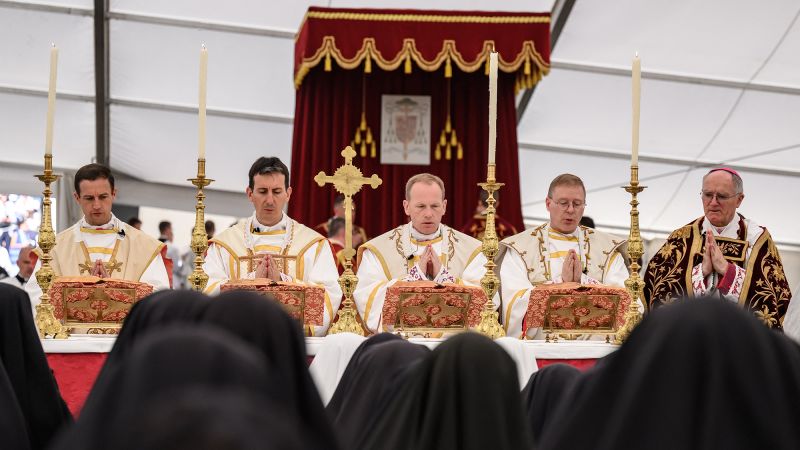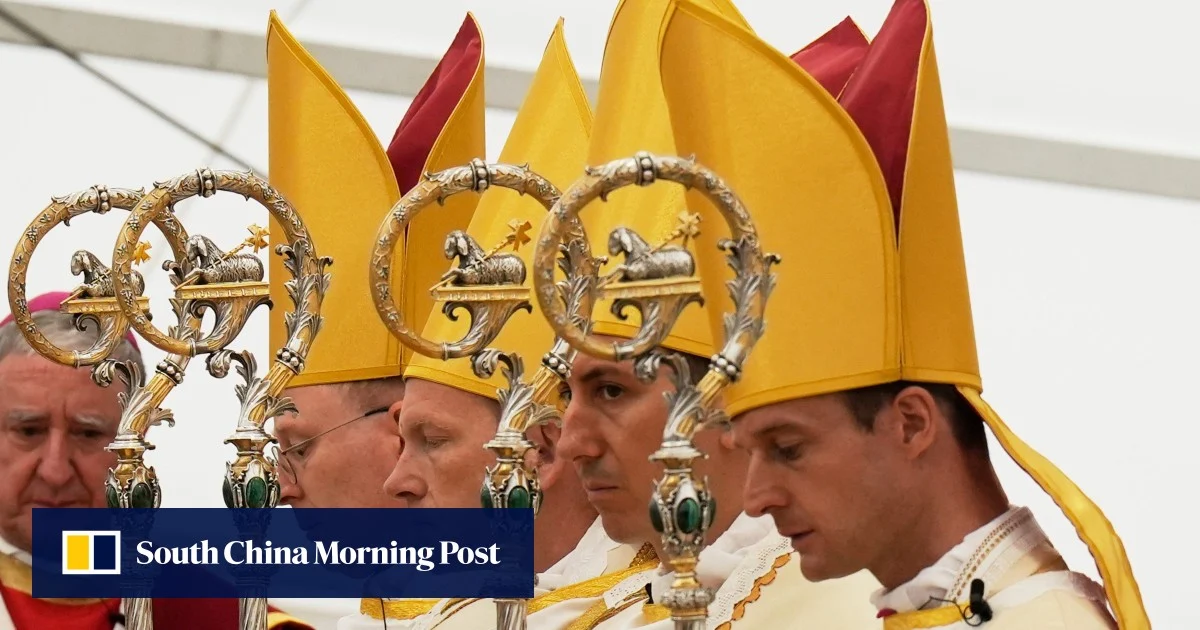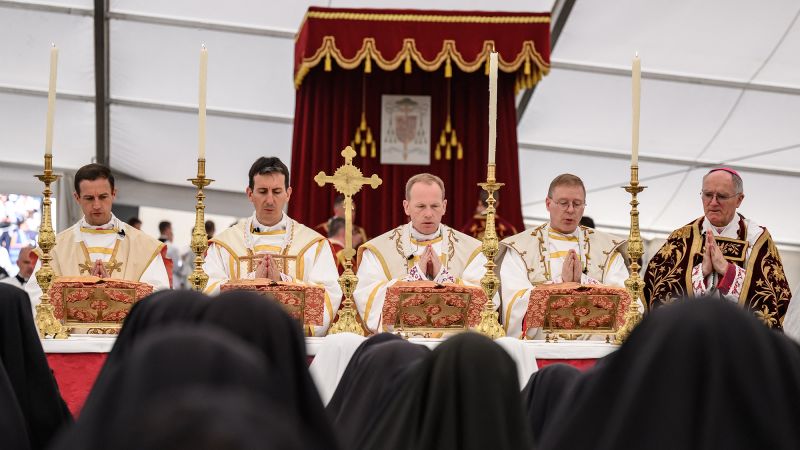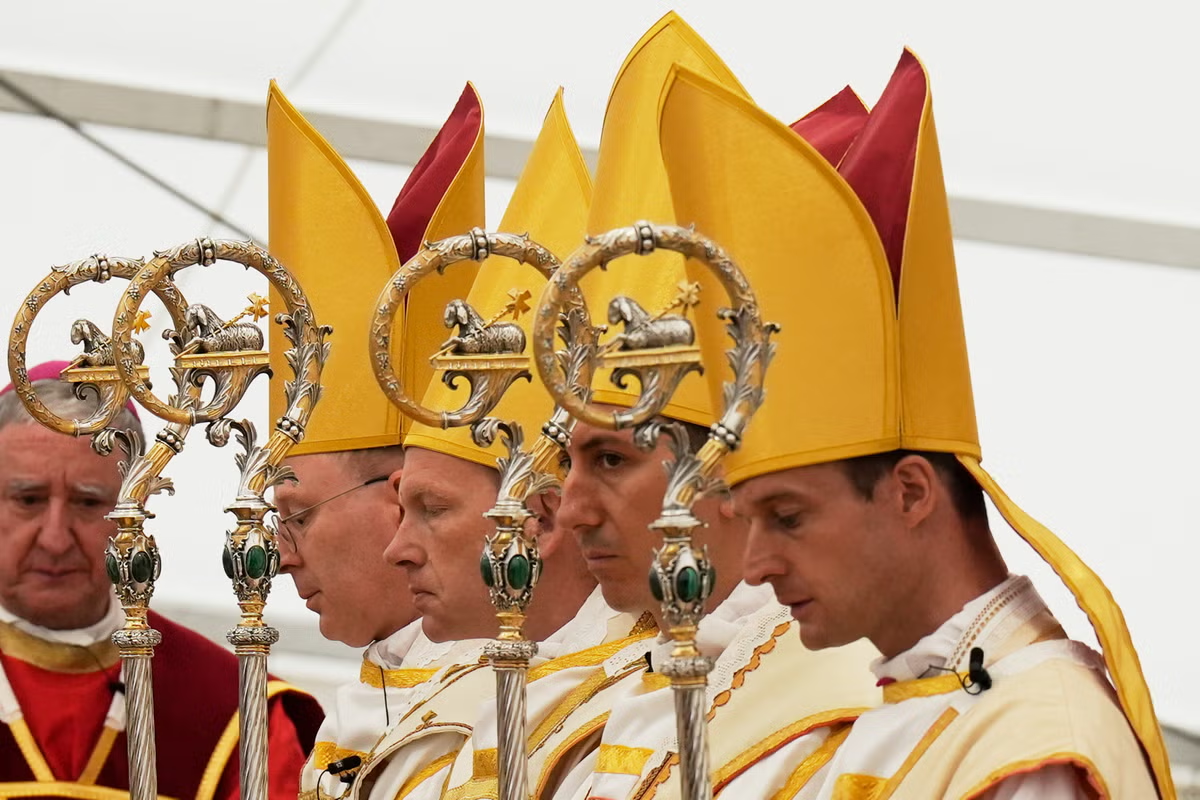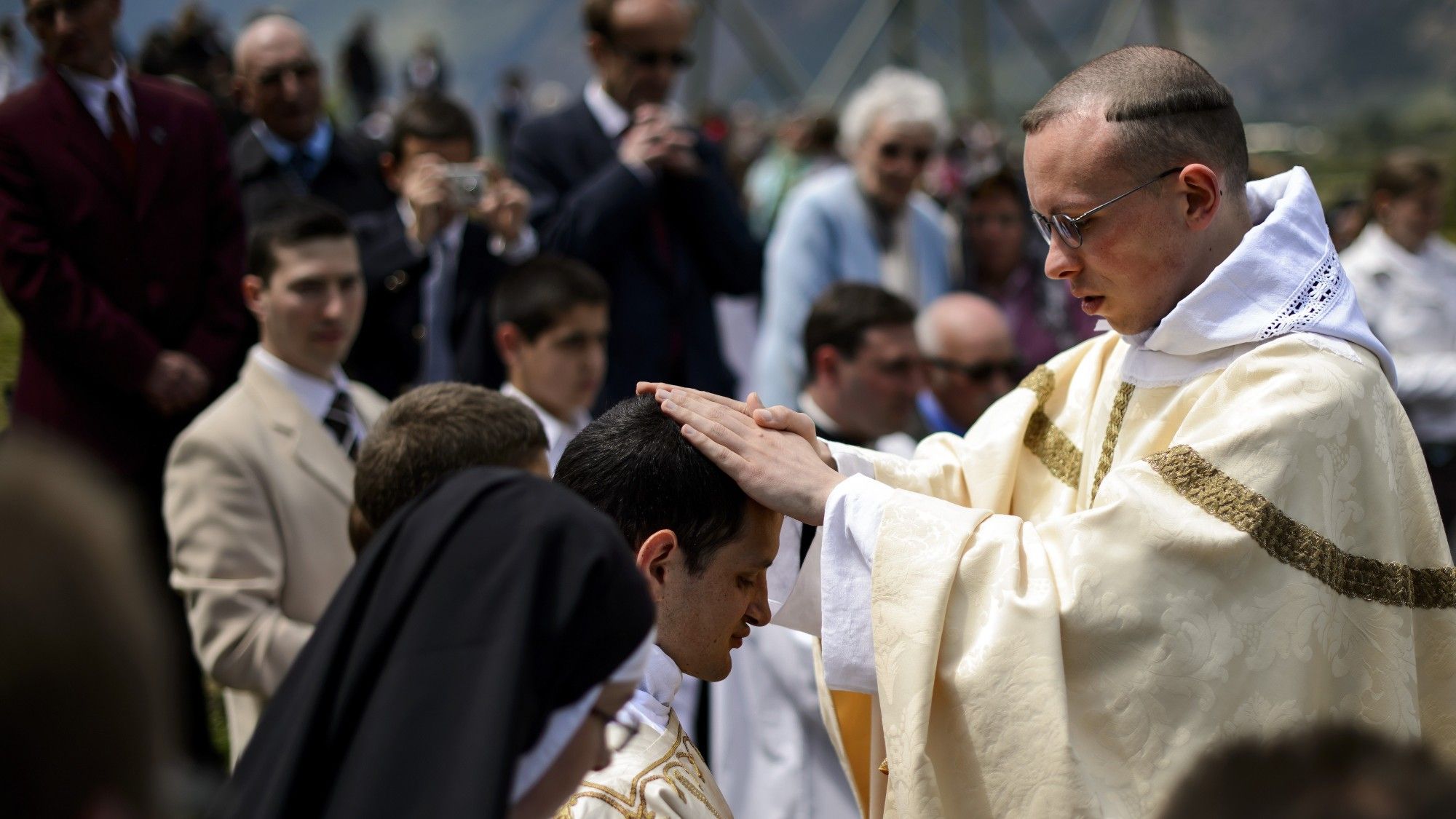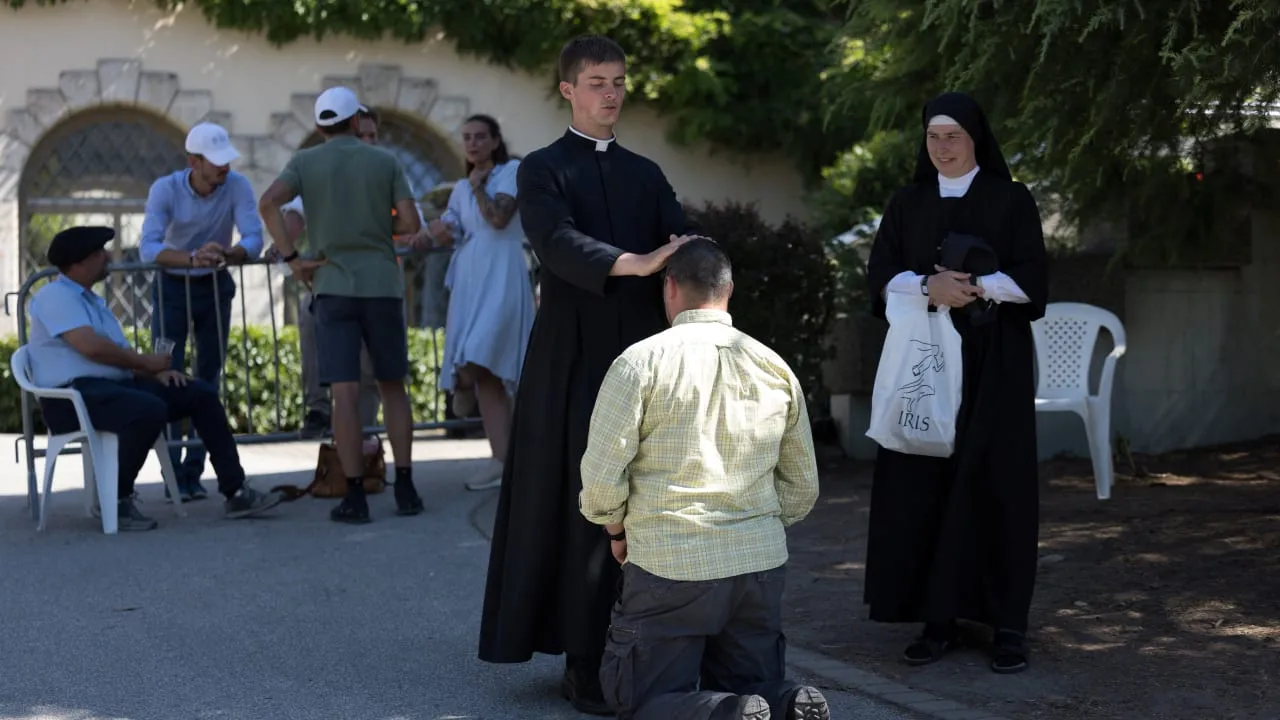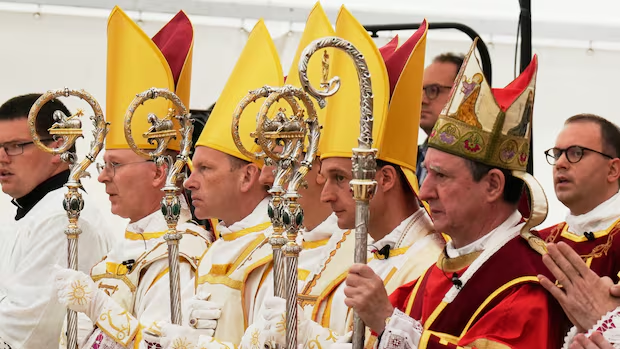
World·AnalysisAs the Vatican excommunicated four bishops of the ultra-traditionalist Society of Saint Pius X this week, notice was also served that the society’s priests and lay Catholics who formally adhere to it are also considered cut off from the Roman Catholic Church — a move that raises the spiritual stakes for thousands of followers worldwide.Vatican excommunicates formal SSPX followers, not just bishopsMegan Williams · CBC News · Posted: Jul 03, 2026 4:48 PM EDT | Last Updated: 1 hour agoListen to this articleEstimated 5 minutesThe audio version of this article is generated by AI-based technology. Mispronunciations can occur. We are working with our partners to continually review and improve the results.Four bishops lie on the floor as they are given episcopal consecration during a mass in a tent set up outside the Society of Saint Pius X seminary in Écône, Switzerland, on Wednesday. (Cyril Zingaro/Keystone/The Associated Press)For years, the ultra-traditionalist Society of Saint Pius X, or SSPX, existed in a kind of Catholic limbo. It was formally outside the Roman Catholic Church, yet tolerated by it. Its priests heard confessions, its communities multiplied and its bishops grew bolder.On Thursday, Rome evicted them from that limbo.The Vatican’s Dicastery for the Doctrine of the Faith, the body that oversees matters of Catholic teaching and discipline, issued a decree declaring the SSPX in formal schism — a rupture with the authority of the pope and communion with the wider Catholic Church — after it ordained four new bishops without Pope Leo XIV’s permission.The starkest part of the decree, say Vatican observers, was not only the excommunication of the bishops involved. It was the notice that SSPX priests and lay Catholics who formally adhere to the society are also considered cut off from the church — a move that raises the spiritual stakes for thousands of followers worldwide.Newly consecrated bishop Hanappier receives the mitre from Bishop Alfonso de Galarreta during the ceremony on Wednesday. (Baz Ratner/The Associated Press)The Vatican’s action came in the wake of Wednesday’s consecration ceremony in Écône, Switzerland. On a verdant mountainside, SSPX bishops laid hands on four priests under a white tent, before rows of clergy and thousands of supporters gathered in the alpine valley with bells ringing out.The society says 15,500 people attended the ceremony. It also claims roughly 800 communities across 77 countries and more than 700 priests.The church of Écône is seen in the background as worshippers attend the episcopal consecration of four bishops in Écône on Wednesday. (Cyril Zingaro/Keystone/The Associated Press)It’s been six decades since the modernizing reforms of the Second Vatican Council, which opened new relations with Jews and other Christian denominations and permitted mass in local languages instead of only Latin. The SSPX rejected those reforms outright. According to Elise Ann Allen, a Vatican expert with the Catholic online magazine Crux, church efforts to bring them back went nowhere.'Down to individual bishops'What Thursday’s decree means in practice, she says, is another matter.“The enforcement is going to be messy,” she said.“It comes down to individual bishops in their areas, if they're aware of people who frequent an SSPX church but then come to parishes in their diocese wanting sacraments. It’s hard to keep track of all of that.”Newly consecrated bishops, from left, Pascal Schreiber, Michael Goldade, Michel Poinsinet de Sivry and Marc Hanappier, stand at the end of their consecration ceremony in Écône on Wednesday. (Baz Ratner/The Associated Press)Hours after excommunicating SSPX clergy and lay people on Thursday, the Vatican offered an olive branch to the more moderate in the mix.It posted a statement on the Dicastery for the Doctrine of the Faith’s website inviting priests and followers caught up in the schism to return to full communion with the church — citing a 1996 note from the Pontifical Council for Legislative Texts saying that, for lay Catholics, formal adherence to schism depends on “the person’s intention.”John Lydon, an Augustinian priest who grew up in Toronto and now runs the Mother Cabrini Institute on Immigration at Villanova University in Pennsylvania, worked alongside the now Pope when he was Father Robert Prevost for a decade in Peru.'The norms of the church'“I don't think it's the Pope doing anything to them. It's the norms of the church and has been the norms for a very long time. He was trained in canon law, so he's just applying what the rules of the church are,” said Lydon. “He's a compassionate person. He wrote to them and tried everything he could to avoid the consequences. Now he’s saying, ‘You can come back, you're always welcome back,’ because only a couple of people are responsible.”That is why the Vatican’s use of the word “schism” matters. Lydon says the aim is not to deepen the divide, but to clarify where Rome believes the line lies.Hanappier, left, Poinsinet de Sivry, Goldade and Schreiber pray during their consecration ceremony in Écône on Wednesday. (Baz Ratner/The Associated Press)The word carries centuries of weight. Christianity’s great ruptures include the split between Rome and Eastern Orthodoxy in 1054, and the Protestant Reformation in the 1500s, which permanently reshaped Christianity in Europe.The SSPX schism, with a small outlier group, is nowhere near as consequential, observers say. But the Vatican’s choice of language makes clear it no longer sees the dispute as being only about liturgy, nostalgia or the Latin mass. It is a formal break in communion.The society was founded in 1970 by the late French archbishop Marcel Lefebvre. In 1988, Lefebvre consecrated four bishops without Rome’s permission, triggering automatic excommunication.Pope Leo identifies AI as a main challenge for humanityAnalysisIn meeting with Pope Leo, Rubio tries to minimize Trump's attacksDecades of uneasy coexistence followed, with Pope Benedict XVI lifting the excommunications of the four surviving bishops in 2009 in an attempt to bring the group back.Pope Francis later allowed SSPX priests to hear confessions and officiate at marriages for the Holy Year of 2025, but saw giving mass in Latin as divisive and required bishops to ask for permission to do so.A priest, left, hears the confession of a worshipper, right, in a vineyard on the sidelines of the consecration of the four bishops in Écône on Wednesday. (Cyril Zingaro/Keystone/The Associated Press)Longtime Vatican observer Francis X. Rocca says when Leo was elected, some traditionalists had hoped he might go further than his predecessors, perhaps bringing SSPX formally back into the institutional church.Instead, Leo went further than Francis.“Traditionalist Catholics who have remained in the church are asking why Leo didn’t meet with the SSPX when he’s met with those who don’t conform to church sexual morality or with the archbishop of Canterbury, who’s a woman,” Rocca said.“Now he’s taken a strong line with the breakaway traditionalists, though he might be more lenient with the traditionalists who have remained in the church.”ABOUT THE AUTHORMegan Williams has been covering all things Italian, from politics and the Vatican, to food and culture, to the plight of migrants in the Mediterranean, for more than two decades. Based in Rome, Megan has also told stories from other parts of Europe and the world and won many international prizes for her reporting, including a James Beard Award. Her radio documentaries can be heard on Ideas and The Current. Megan is also a regular guest host on CBC national radio shows.
ANALYSIS | Pope Leo draws hard line on breakaway traditionalists, but it could get messy | CBC News
As the Vatican excommunicated four bishops of the ultra-traditionalist Society of Saint Pius X this week, notice was also served that the society’s priests and lay Catholics who formally adhere to it are also considered cut off from the Roman Catholic Church — a move that raises the spiritual stakes for thousands of followers worldwide.
1,206 words~5 min read