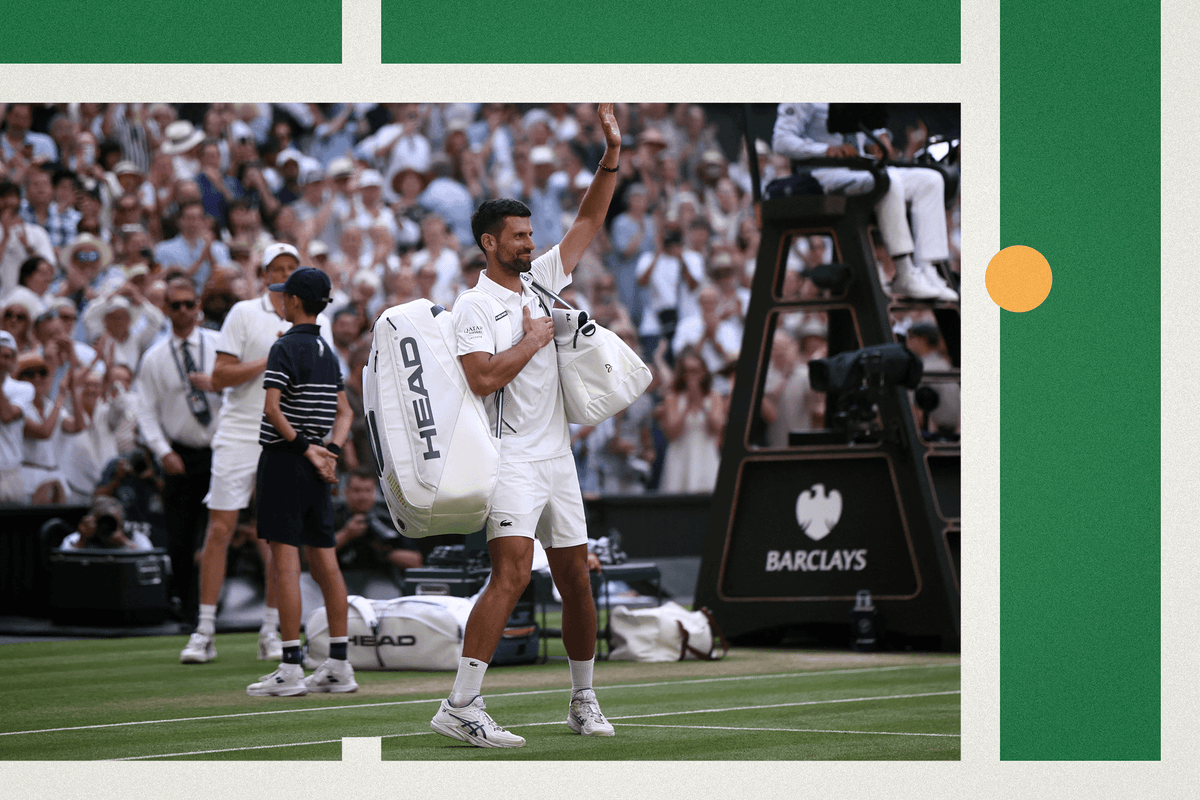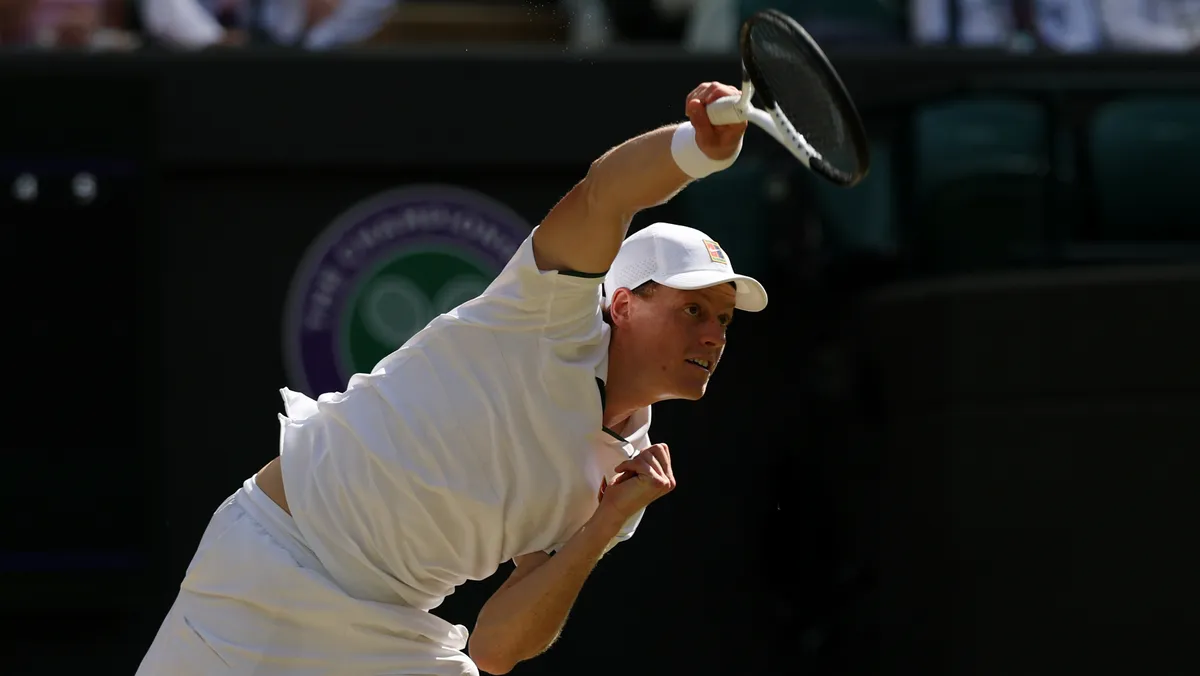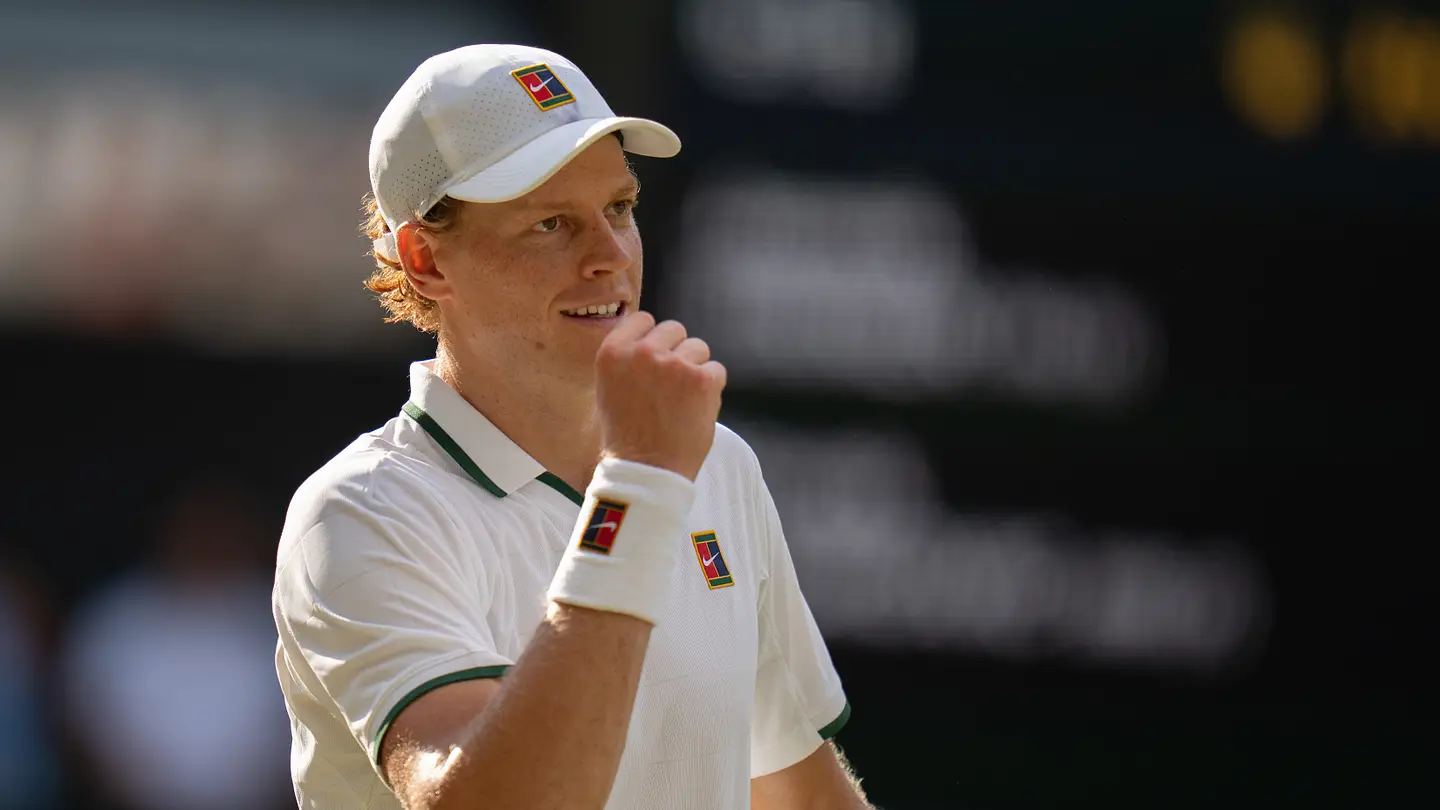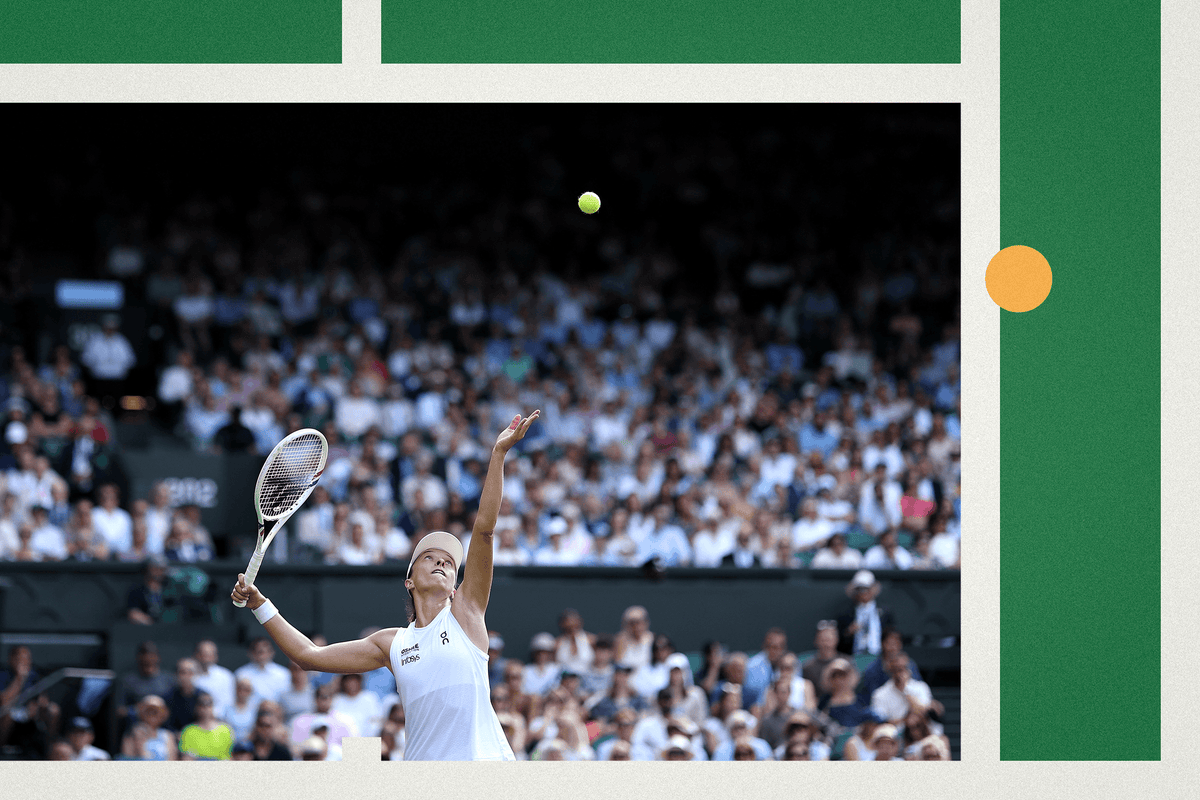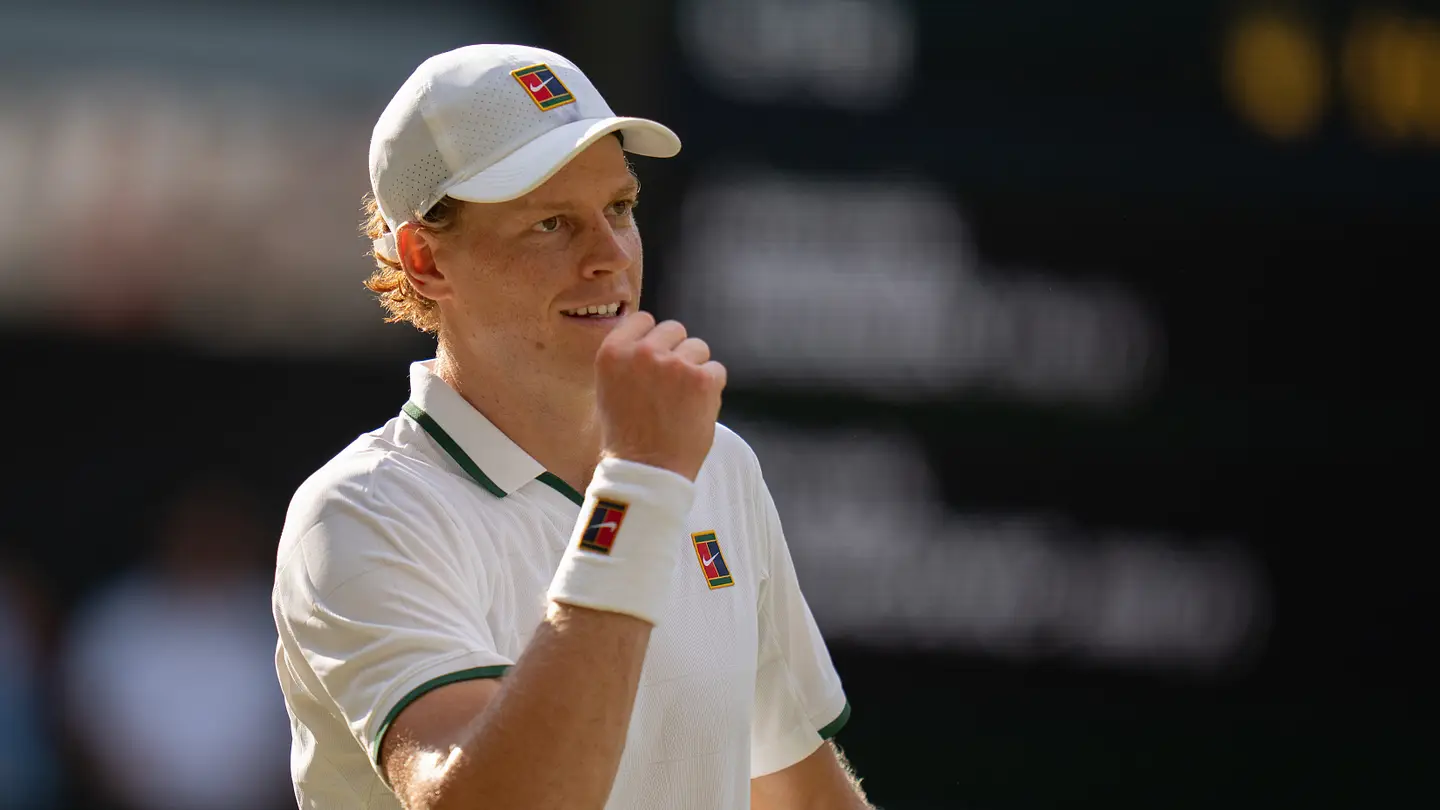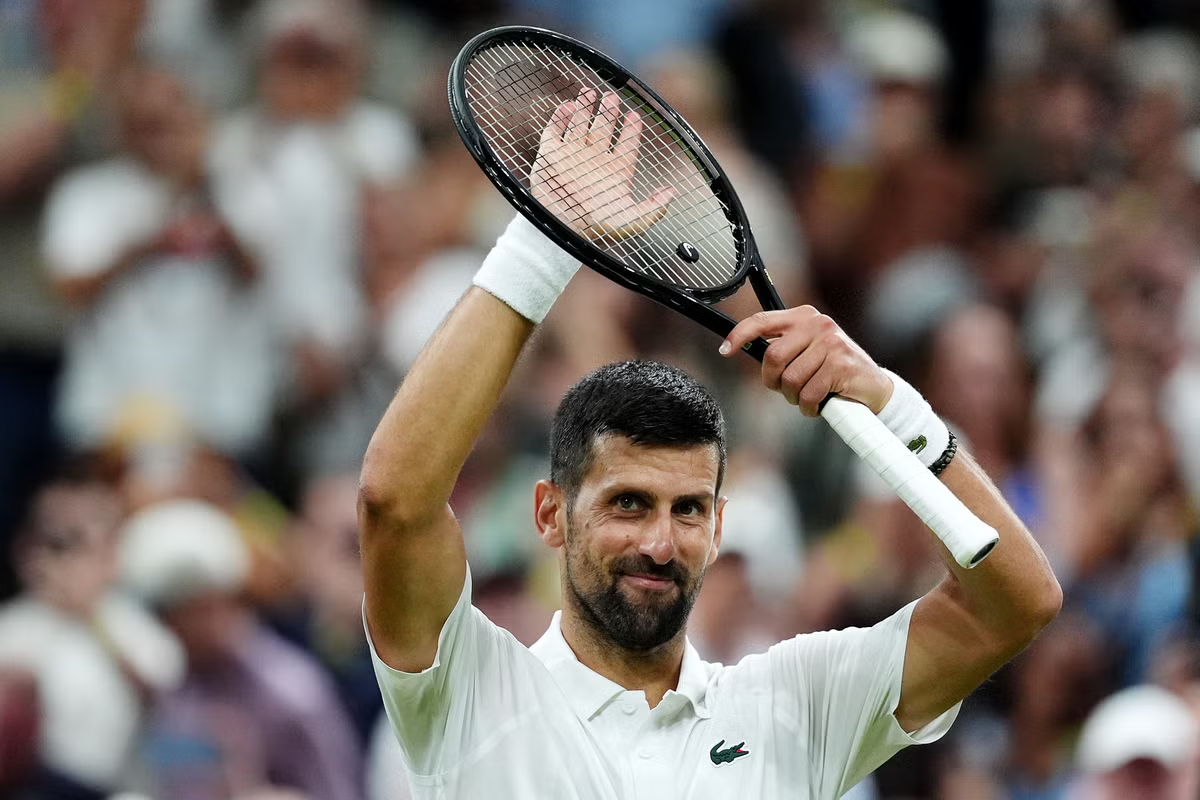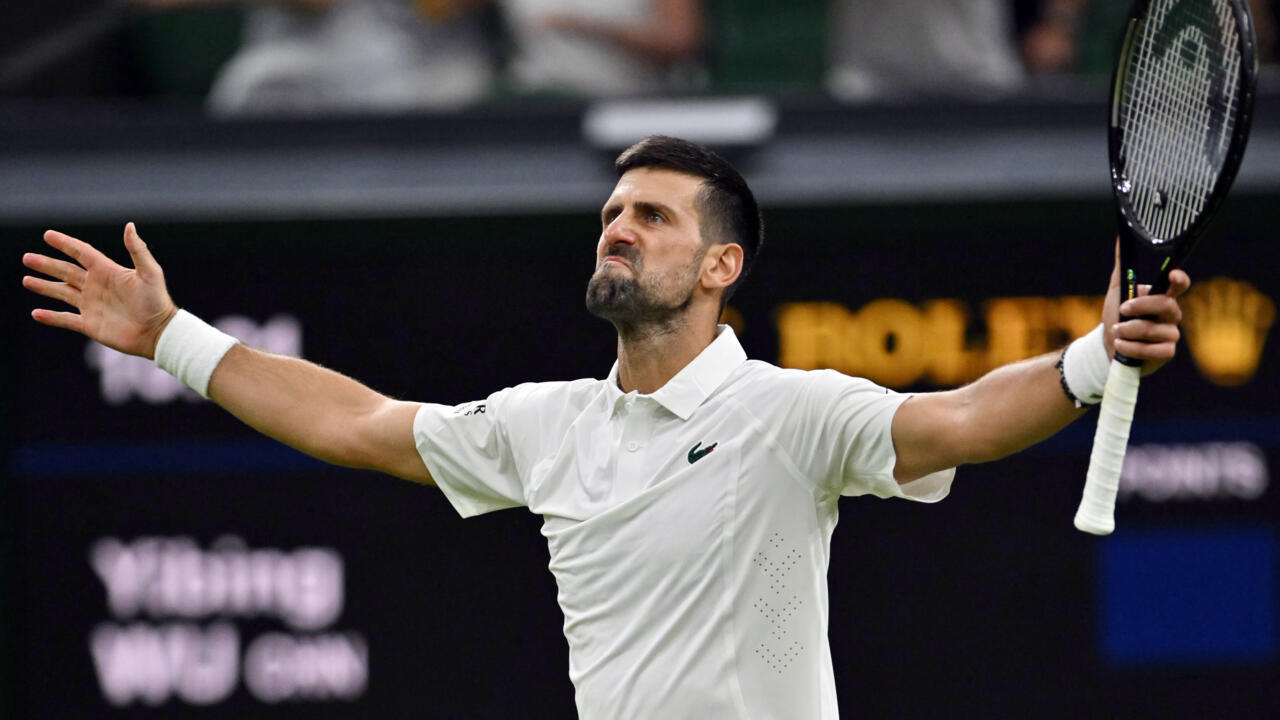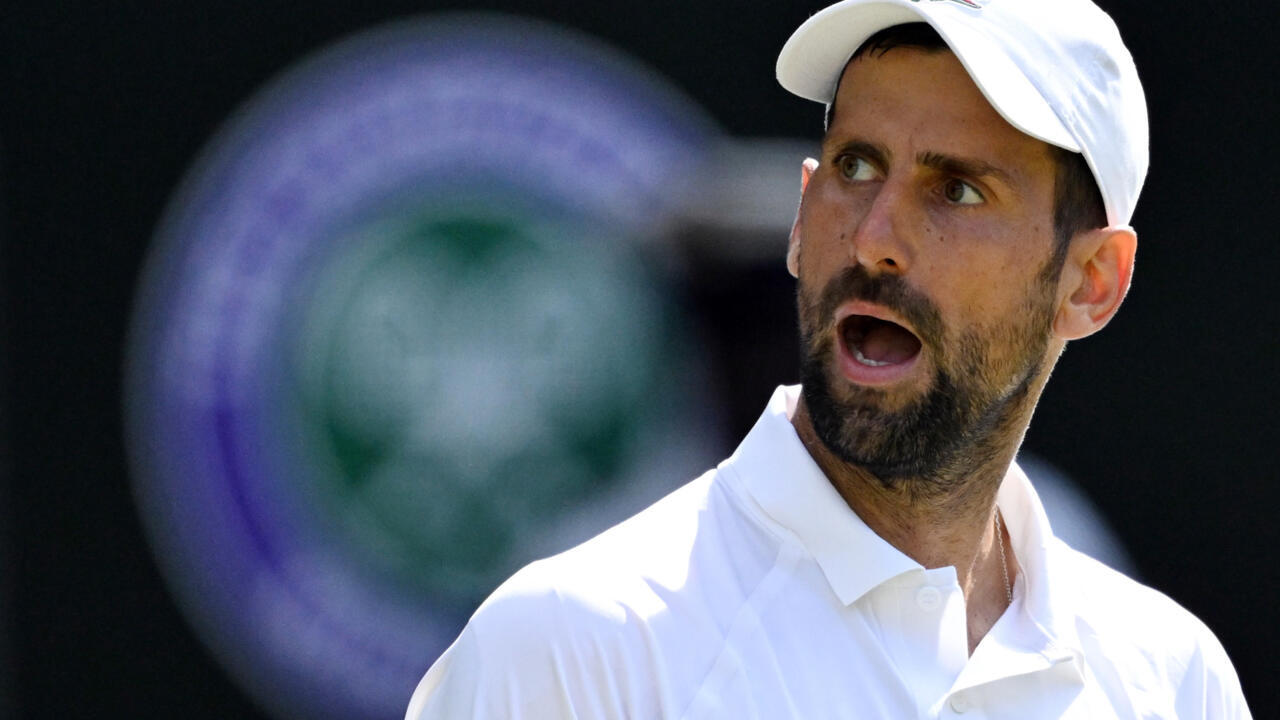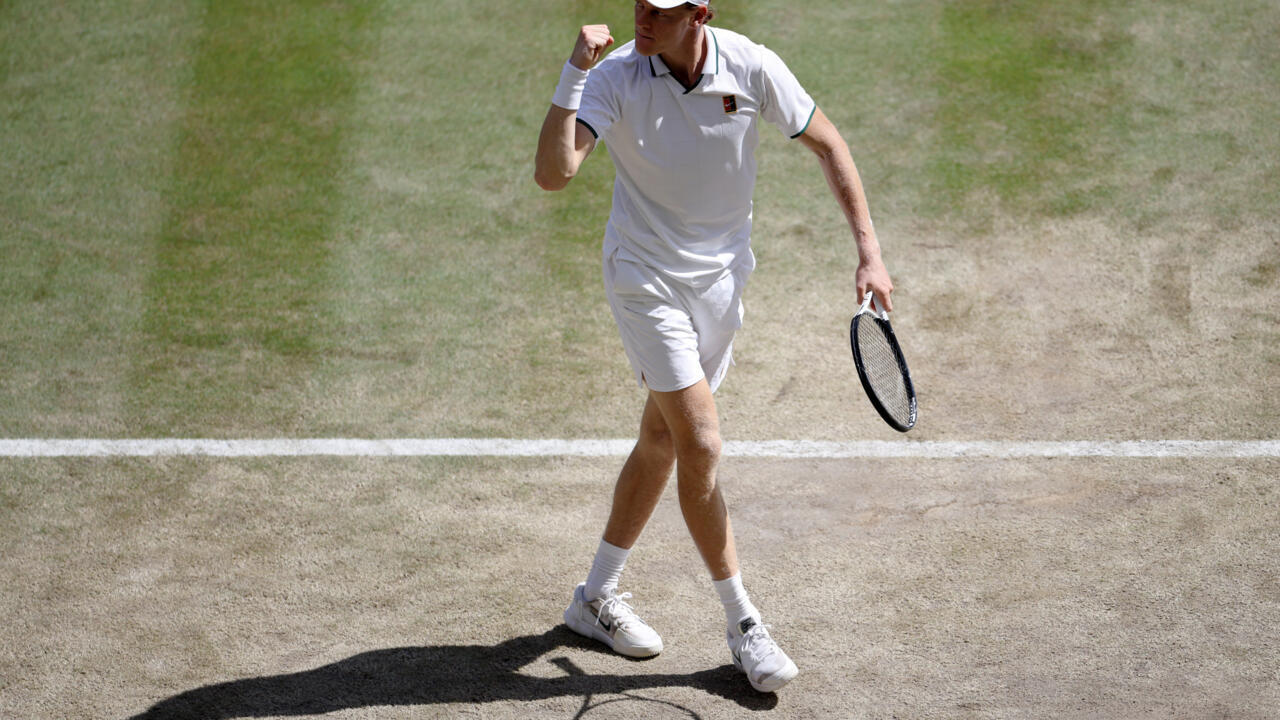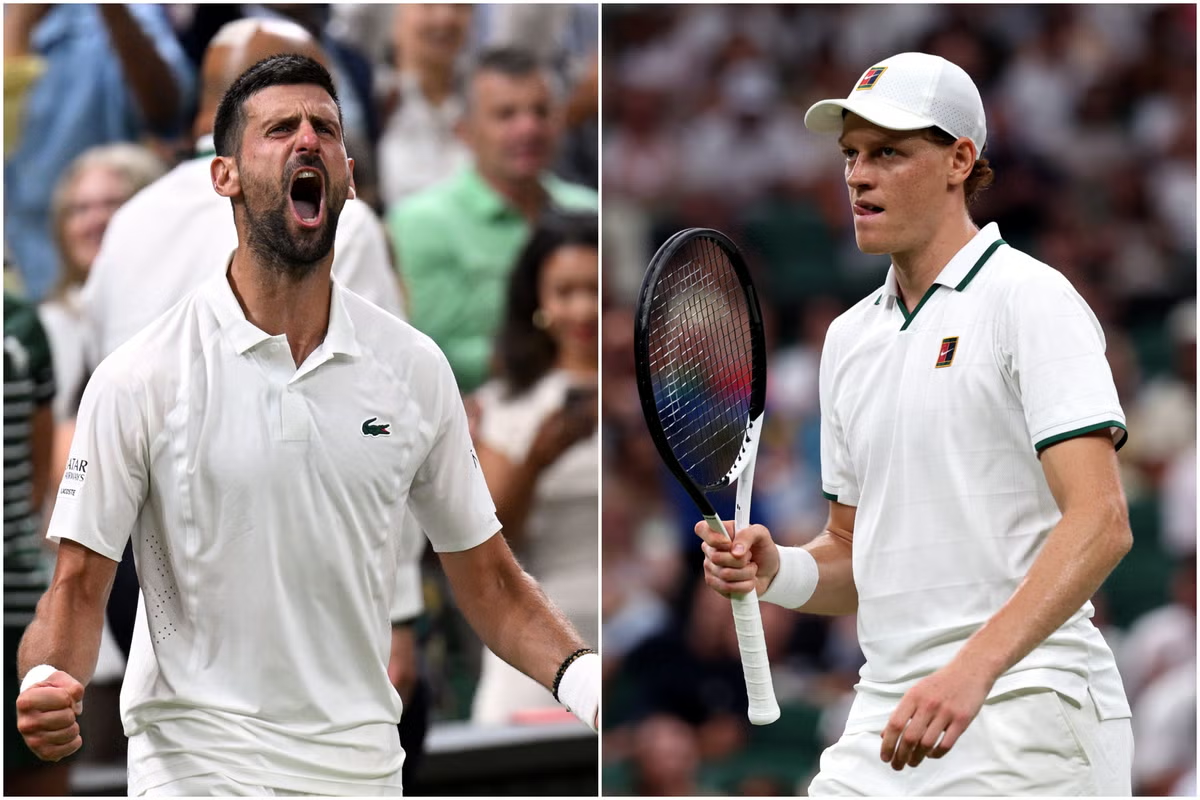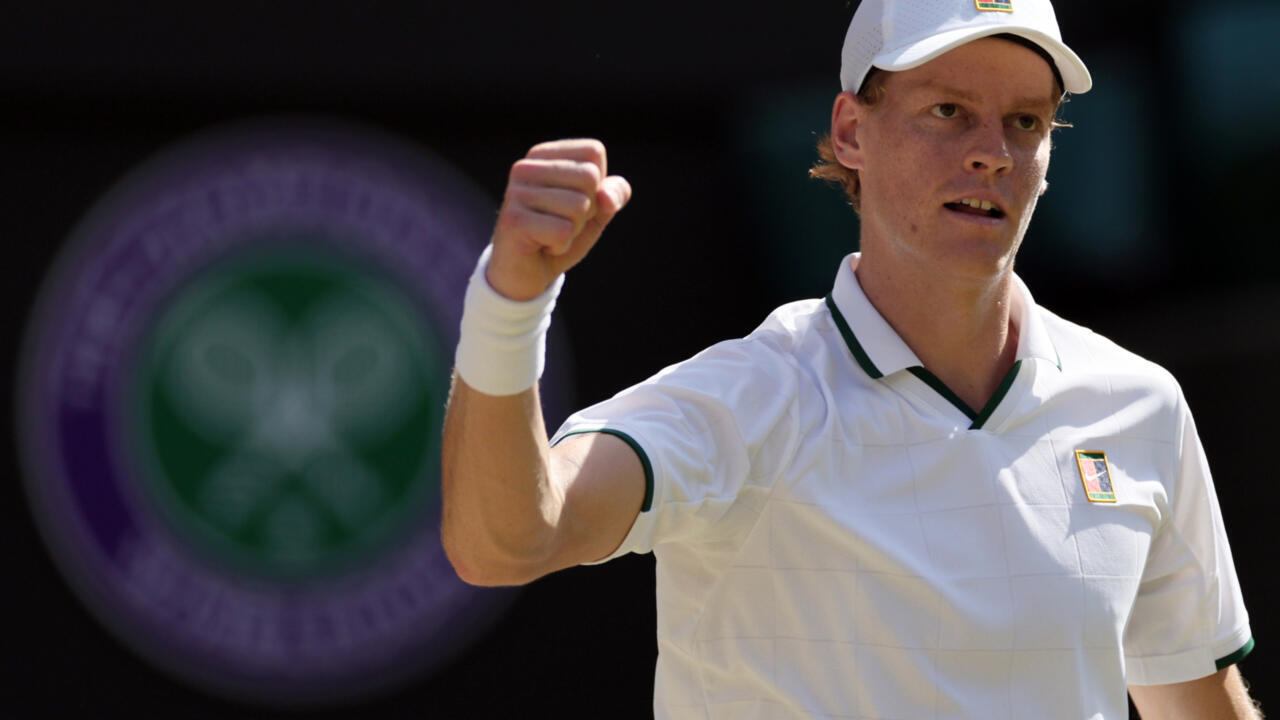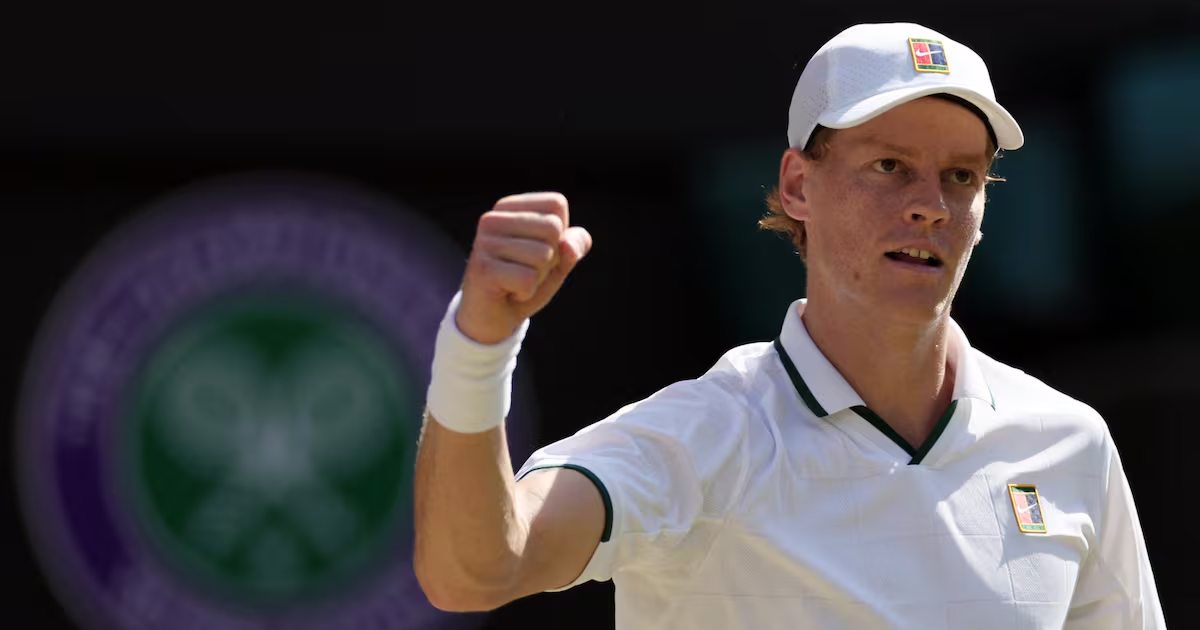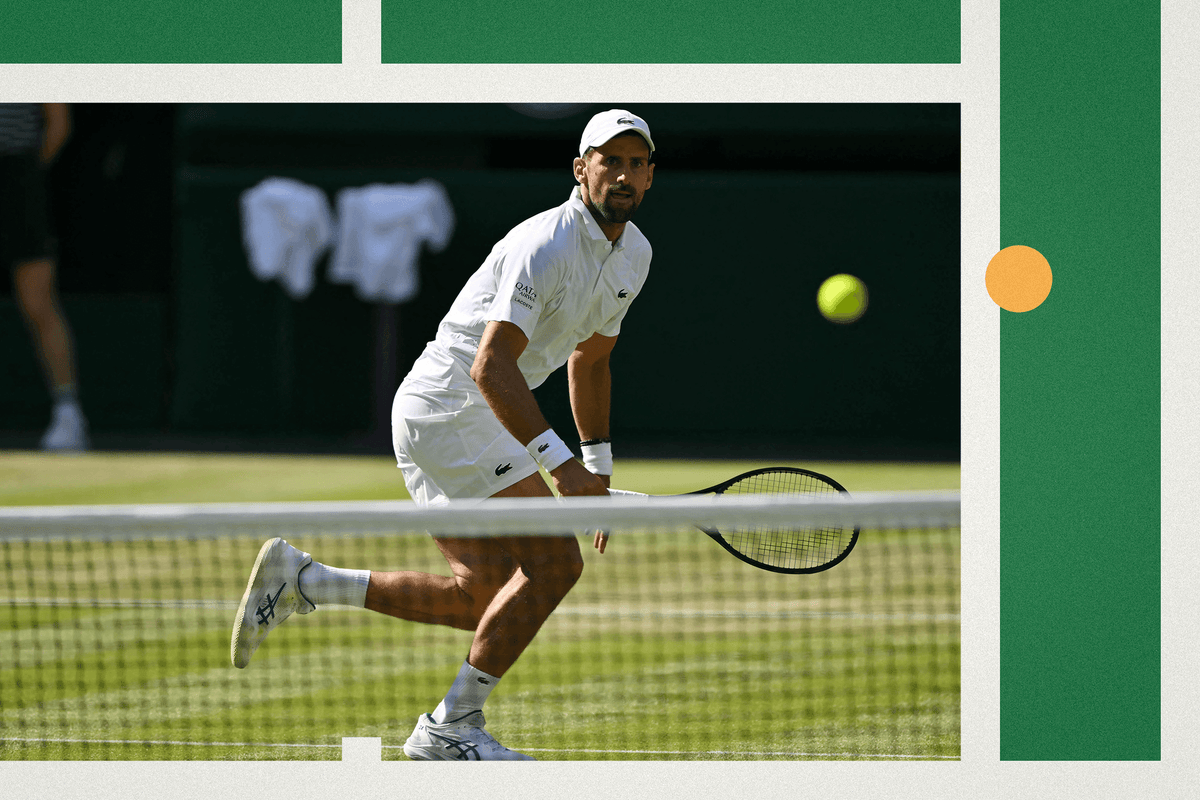
Follow The Athletic’s Wimbledon coverageWelcome to the Wimbledon briefing, where The Athletic will explain the stories behind the stories on each day of the tournament.On Day 5, the two alpha dogs in the men’s draw rolled on, a great champion broke new ground and it was time to look deeper into a surprise result.How did the top men in the top half take care of business?A Wimbledon semifinal between defending champion and top seed Jannik Sinner and seven-time winner Novak Djokovic feels increasingly inevitable.The main obstacles in front of them are not their next couple of opponents, but extraneous factors. In Sinner’s case, it’s the potential for warmer weather next week, which has been his kryptonite previously. In Djokovic’s case, it’s the fact that at 39, he needs to keep his matches relatively quick lest he run out of energy in the latter rounds.Italy’s Sinner, 24, hasn’t been at his devastating best yet and was uncharacteristically up and down again against Jenson Brooksby on Friday. Sinner was broken twice in the third set, but returned well enough to get the match done, 6-4, 6-3, 6-4.“A small step forward,” Sinner said of his performance in a post-match news conference.Why are there no pigeons at Wimbledon?Tifo SportsSerbia’s Djokovic had a trickier time of it against France’s No. 25 seed Arthur Rinderknech, but won 7-5, 6-4, 1-6, 7-6(4) in just over three hours. The length of the match was significant given the need for energy preservation that Djokovic spoke about at the French Open in May and last year. The relative speed of the match for a four-setter was in part down to a rapid third set that took barely 20 minutes, and which Djokovic seemed pretty uninterested in after Rinderknech had raced to a 4-0 lead.He was impressively able to lock back in for the fourth set, which he took on a tiebreak. Djokovic also said in his post-match news conference that he feels fresher than he did in Paris, and that the grass takes less out of him than the clay,Not that they especially need it, but the draws for their next round matches have been kind to Sinner and Djokovic. Both are up against qualifiers, which is a rare occurrence for the fourth round of a Slam. Sinner takes on Japan’s world No. 151 Shintaro Mochizuki, while Djokovic is up against Roman Safiullin, the Russian 2023 Wimbledon quarterfinalist now ranked No. 132 after a string of injuries.Sinner would then have an unseeded opponent in the quarters — either Poland’s Hubert Hurkacz or Germany’s Jan-Lennard Struff. While for Djokovic it would be either Félix Auger-Aliassime, the Canadian No. 3 seed who has little grass-court pedigree, or the No. 22 seed Alejandro Davidovich Fokina of Spain, who last month won his first ATP Tour title on the grass at the Mallorca Championships.— Charlie EccleshareHow did Naomi Osaka reach a grass milestone?A year ago, when Naomi Osaka lost in the third round of Wimbledon, she was seriously annoyed.It didn’t matter that grass had troubled her throughout her career. Her section of the draw was wide open. She had an opportunity. She felt like she had lost something.Maybe that was the beginning of Osaka’s evolution on grass. She made the fourth round of Wimbledon for the first time Saturday, beating Australia’s Daria Kasatkina 6-1, 6-3.“Every time I was going to return serve, like 120 mph was coming, so I mean it makes it difficult,” Kasatkina said in a news conference. “You have a lot of pressure on yourself because if you will lose your serve it’s basically, you’re in a very tough situation.”Naomi Osaka reached a grass milestone at this year’s Wimbledon. (Adrian Dennis / AFP via Getty Images)Opponents haven’t historically felt that sort of pressure against Osaka on grass. They do now. She said in her news conference that she has finally started getting used to the free-flowing nature of grass-court tennis. She’s using the surface to help her, not fighting it.It’s working — almost as well as those walk-on outfits that have become the talk of the tournament.She faces world No. 1 Aryna Sabalenka, who beat Latvia’s Jelena Ostapenko 6-4, 6-4, next. That should be a big moment on Centre Court, for their fourth meeting of the year.“I think the Centre Court here for some reason might be the scariest Centre Court to me,” she said. “Going down those stairs, it’s the opening, like this huge dome. I feel more aware of it than any other Centre Court that I’ve ever played on.”— Matt FuttermanWhen is an upset not an upset?At first glance, elder qualifier beats highly rated teenage seed is the recipe for a huge upset. In the case of Safiullin’s defeating No,. 24 seed João Fonseca 6-3, 6-3, 6-3? Not so much.Safiullin, 28, was world No. 36 as recently as 2024, and made the Wimbledon quarterfinals in 2023. He hit over 40 winners against Fonseca and made just 18 unforced errors, saving several break points as the 19-year-old Brazilian tried to find a way back into the contest.“He was playing very aggressive, going for the shots, going for the net. He was courageous in the important points. Most of the important points he went to the net, went for the ball, and I couldn’t get the opportunities,” Fonseca said in a news conference.“Of course sometimes was my fault, but it happens. … I mean, even on grass, which is faster, the serves are difficult to return. I don’t think it was all my fault.”Roman Safiullin reached the Wimbledon quarterfinals in 2023. (Adrian Dennis / AFP via Getty Images)Before Safiullin turned pro, he won the Australian Open junior title, and promptly suffered severe injuries to his shoulder and ankle that stayed his development. More recently, the Russian was out between last September and this February. There is little wonder that he was in tears on No. 2 Court after beating Fonseca, to set up a fourth-round match against Djokovic.“After U.S. Open, I had to stop to treat my injury. That time was super tough. Even half a year ago I didn’t know if I’d be able to be back,” he said in his on-court interview.Fitness comes and goes but talent does not go away.That doesn’t mean there were no upsets. Jan-Lennard Struff, the 36-year-old German who came through five sets in both his first- and second-round matches, stunned No. 8 seed Daniil Medvedev 7-6(4), 7-6(5), 7-5, despite Medvedev leading by a break of serve in each of the first two sets and by two breaks in the third. And Shintaro Mochizuki, the qualifier from Japan, defeated one of Fonseca’s peers, Spanish No. 23 seed Rafael Jódar, 1-6, 7-6(5), 6-4, 6-4. Mochizuki will meet Sinner in the fourth round, while Struff will face Poland’s Hubert Hurkacz, who defeated No. 21 seed Tommy Paul of the U.S. 4-6, 7-6(5), 7-5, 6-2.— James HansenHow does playing against a compatriot change a match?While it isn’t rare in tennis to play against a compatriot, most players agree sharing nationality with an opponent adds meaning to a match.There’s often a level of intimacy, which if the players are close in age can stem from having grown up together within a national federation. If they’re not, odds are they’ve gotten to know each other playing team competitions such as Davis Cup or the Billie Jean King Cup.U.S. tennis is so well represented at major tournaments these days that facing another American is motivating for Wimbledon No. 4 seed Jessica Pegula, because it activates her competitive side. She wants to come out the top American — and beyond that, she wants to represent U.S. tennis well and give the fans a good match.“I’m always motivated to beat the other Americans in a way that’s different,” she said in a news conference after beating Jéssica Bouzas Maneiro 6-1, 6-3 in the third round. “Not like I don’t like them or anything like that. … There’s so many of us that there is always like this push-and-pull kind of battle in a fun way.”Pegula should be feeling extra fiery for her next couple of matches. She faces Iva Jović in the fourth round, a fast-rising 18-year-old who was born in California to a Serbian father and Croatian mother.Jovic is a natural mover on grass and self-assured, with an aggressive game and preternatural poise that make it easy for her to move on when she makes mistakes on court — her go-to move when her serve abandoned her Thursday in a tight 6-3, 3-6, 6-4 third-round win against No. 18 seed Ekaterina Alexandrova was to shoot a glare and a spectacular eye-roll at her coaching box, then promptly reset.Jović plans to rely on that same short-term memory in Sunday’s match against Pegula, to whom she’s lost twice this year.“I think it’s just kind of how it is. Early in your career, you’re probably going to lose your first couple meetings against players who are already at the top, until you find your groove,” Jović said in a news conference. “And I think I have been proving in general that I’m getting closer, that I’m climbing, and playing better and better tennis. I hope that that can show.“I don’t take too much weight to the fact that she’s beaten me twice, because I’m at a stage where I feel like I’m constantly changing as a player.”Pegula’s changing, too, growing more comfortable on Wimbledon’s grass after a first-round exit last year and a second-round exit in 2024. She’s well aware of the dangers of facing a fellow American — a younger, hungry American, at that — playing freely, with little to lose.“I know she’s going to come after me hard,” Pegula said. “I’ll use that as motivation and try to be ready for as much as I can.”— Ava WallaceOther notable results on Day 5:
Wimbledon recap Day 5: Novak Djokovic and Jannik Sinner stay on collision course
Sinner and Djokovic both won with little drama as they try to push toward a semifinal meeting.
2,168 words~10 min read