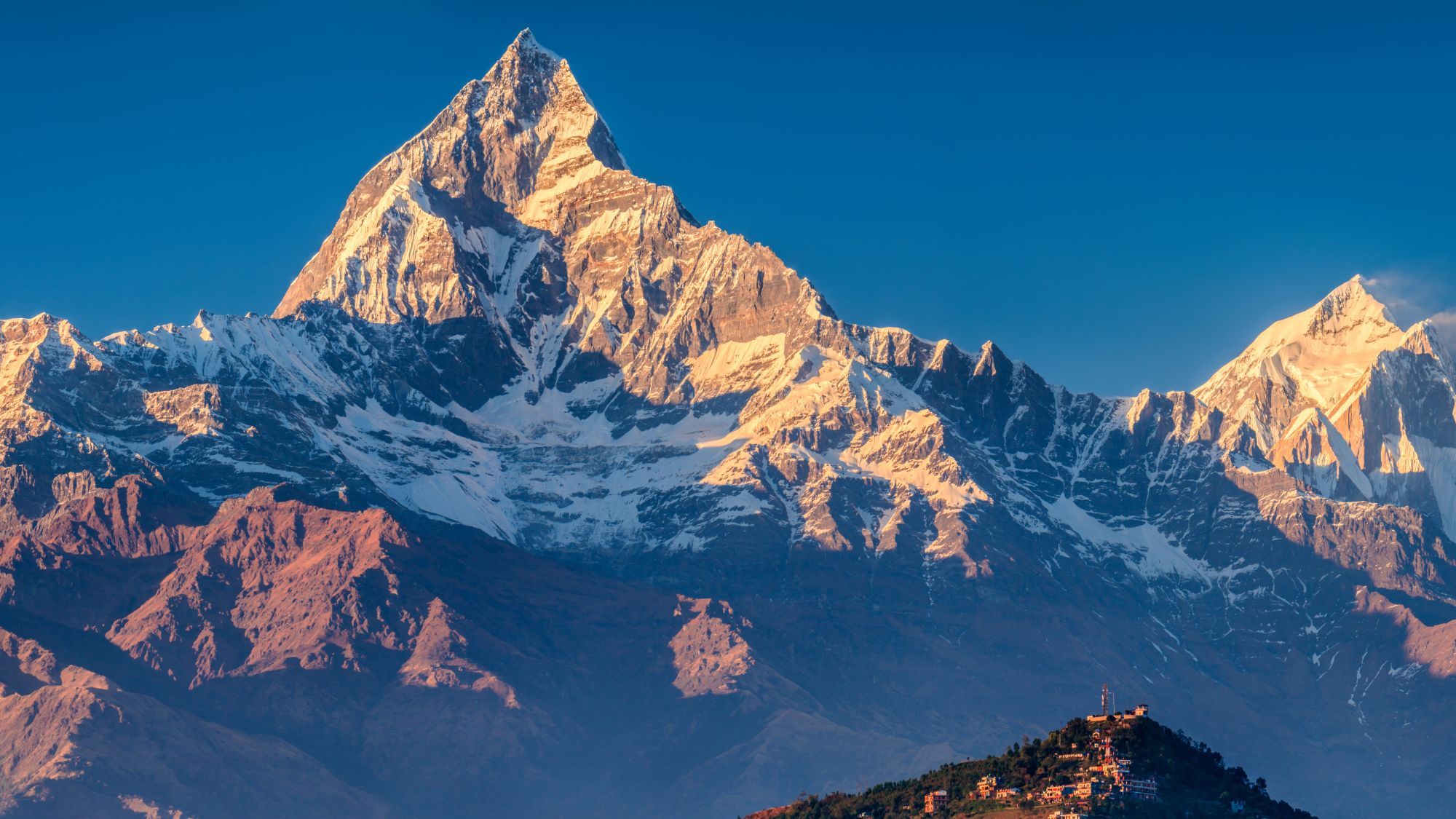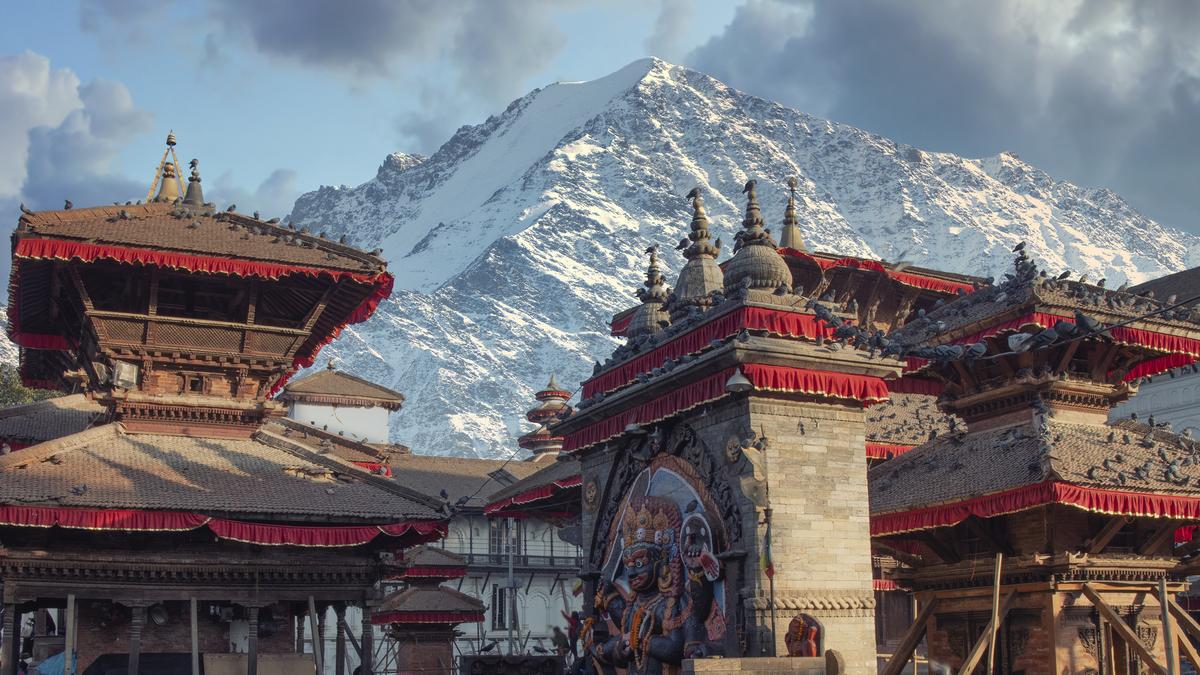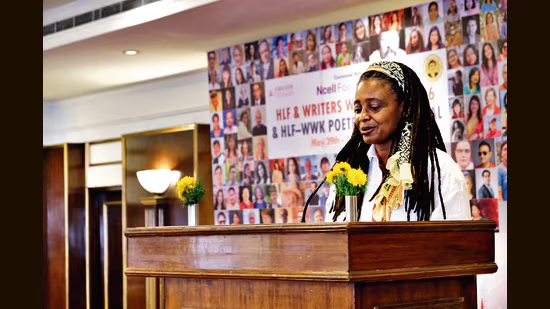
This year’s edition of the festival featured masterclasses, poetry readings, film screenings, and discussions with a range of international authors and poets Wandering through Kathmandu’s winding lanes, browsing in Thamel’s colourful shops, tucking into carrot cake at one of the area’s many trendy cafes, and caught amid the crush of devotees at the Pashupatinath temple, you are filled with admiration for Nepal and its doughty people. It’s no surprise that this ancient capital was the epicentre of the GenZ revolution of 2025. Young people are everywhere: in the restaurants serving excellent Maithili and Thakali thalis, at homey bars overlooking old step wells, plying motorbike taxis, and affectionately hugging happy street dogs. Plenty of them are also in attendance at the Himalayan Literature Festival & Writers’ Workshop organised by the city’s White Lotus Book Shop and poet Yuyutsu Sharma. Held from May 29 to June 5 at Hotel Malla and other venues in Kathmandu, the event, organised around the theme of Ecstasy, Healing, and Creative Writing in the New World Order, hosted workshops, masterclasses, poetry readings, film screenings, and discussions with a range of authors and poets from Nepal and across the world, including Paul Muldoon, Anne Casey, Kathleen Willard, Inderjeet Mani, and more.Pulitzer Prize winning American poet, Tracy K Smith at the Himalayan Literature Festival in Kathmandu. (Himalayan Literature Festival & Writers’ Workshop)Particularly interesting was the Poetry Film Festival segment that showcased, among others, the work of poet and author of the novel, A Ghost in the Throat, Doireann Ní Ghríofa, who writes in both Irish and English, and is the subject of Clouded Reveries (2022), a documentary by Ciara Nic Chormaic.Festival director Yuyutsu Sharma (Courtesy Himalayan Literature Festival & Writers’ Workshop)Carola Mair’s Wide Awake (2025), a documentary on the life, philosophy and legacy of Austrian author Bodo Hell, who disappeared in a remote area of the Alps in 2024, presents the man as he was – vital, inspirational, and deeply connected to the land.Such connections have inspired great art and also terrible violence as the Indian subcontinent knows. This has been the case too in another partitioned corner of the world. In the Mapping & Memoir Writing session, Books Editor at The Irish Times, Martin Doyle spoke movingly about growing up in Northern Ireland in the 1970s and ’80s. “I grew up in a small rural village. The most important part of my identity was that I was Catholic and Irish. That meant I was discriminated against, called names, and abused, basically, just for being who I was,” he says. His memoir, Dirty Linen, also recalls the violence and many killings in his fractured neighbourhood. But Doyle doesn’t hold on to hatred. “It isn’t just a conflict memoir, it’s a grief memoir. It’s about how people cope with terrible loss. To me, people who cross the divide, whether Catholic to Protestant or Protestant to Catholic, they are the mortar that holds the bricks of society together. They are the best of us. That’s my point. Even though all these terrible things were happening, there were still friendships,” he said.While conflict might have been dialled down in Doyle’s part of the world, it rages on elsewhere. “I come to you from the United States, a place where I believe that there is great conflict right now, and I believe the greatest conflict that we have ever experienced in our US history,” said Tina Chang, American poet and co-editor of the Norton anthology, Language for a New Century: Contemporary Poetry from the Middle East, Asia, and Beyond. She then read from her friend Pulitzer Prize-winning poet Tracy K Smith’s The Goddess Speaks of Union: “…Meet me where struggle falls away. / Meet me where the blade of reason and the knife of pride shatter into mist. / My child loves creation./ You who believe yourself small at my feet, be large, open wide like a road, wider, a field. / Flood yourself, / pour through us and into us.”All of which brings you to the question, in a world of constant conflict, does art, culture, literature and poetry matter?At the inauguration: (From left) Martin Doyle, Yuyutsu Sharma, Tracy K Smith, Nepal’s Minister for Communication and Information Technology, Bikram Timilsina, British ambassador to Nepal, Rob Fenn, Tina Chang, and Paul Muldoon. (Courtesy HLF & Writers’ Workshop)“I am always perplexed by the indefatigable question: Does poetry matter? Why not ask, does memory matter? Does resilience matter? Do anxiety, hope, courage, wisdom, and emotional stamina matter? Does disaster matter and our ability to withstand it? Does joy? How much of a matter is grief in the course of a life, a nation, a world?” wondered Tracy K Smith herself during her keynote address. “Engaging with a poem is one way of strengthening our ability to do something with these powerful feelings. Not to freeze or recoil, not to shun or deny, but to admit, withstand, rethink, even to act. It’s possible that the motivation behind a question like “Does poetry matter?” arises out of the conception that poetry is a narrow niche, a selfish respite from the practical demands of day-to-day life. But to care about poetry is to listen in earnest to another person’s testimony and to draw that awareness in toward your own emotional fortitude, imagination, patience, and empathy. To care about poetry is to attend to a host of complex faculties that equip you to consider yourself alongside and in light of equally worthy others,” she said.In the unforeseeable future those equally worthy others just might include AI.“You, young people in the room, you are already cyborgs. You don’t remember any phone numbers; You don’t go off to see your friend; You FaceTime them because it’s a lot easier. [People] will be raised as cyborgs. They won’t care, as much as we do, whether art is organic,” said poet and academic Tony Barnstone during his lecture on Androids, Robots and Cyborgs: Creativity in the Time of AI.“We cannot tell what the art of the future will be… but we’re human. We need creativity,” he said adding that trouble and dissatisfaction is what makes humanity create. “We’re in a hell of a lot of trouble. Maybe more trouble than the human race has ever been in. That means we have to be creative. Trouble is the gift that’s going to force us to be creative in ways we’ve never imagined before. If modernism was great because of photography, just imagine what the new art will be,” Barnstone said.It’s an optimistic thought to hold on to as you leave the festival behind, your head still full of lines of poetry, ideas about robot assisted creativity, visuals of Bodo Hell following his lowing cattle into the mountains, and many, many pictures of Kathmandu.Manula Narayan is National Books Editor at Hindustan Times. She writes on literature and popular culture.
Report: Himalayan Literature Festival & Writers’ Workshop 2026
This year’s edition of the festival featured masterclasses, poetry readings, film screenings, and discussions with a range of international authors and poets
1,134 words~5 min read