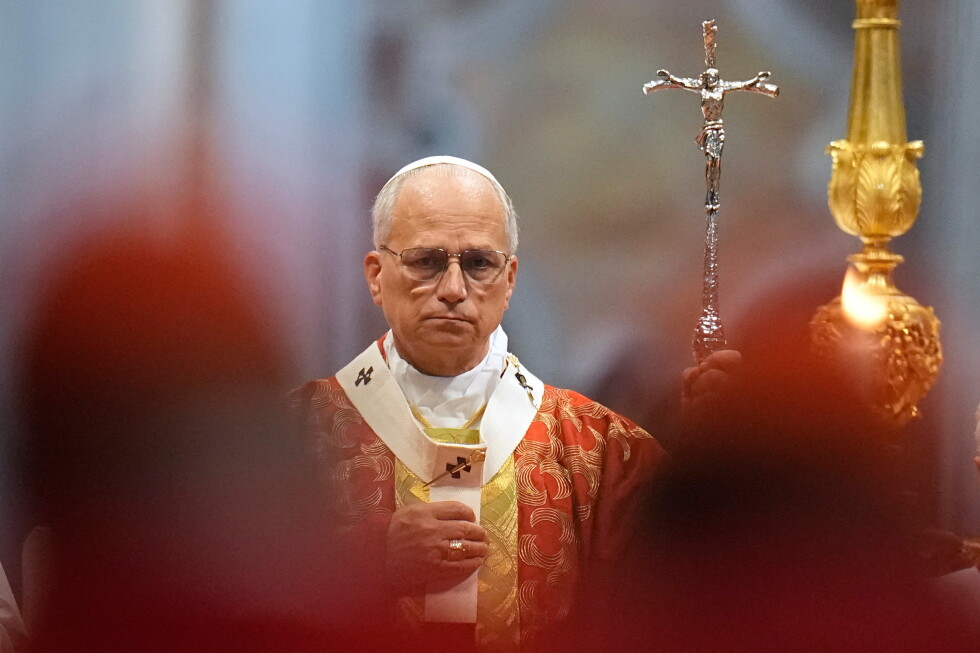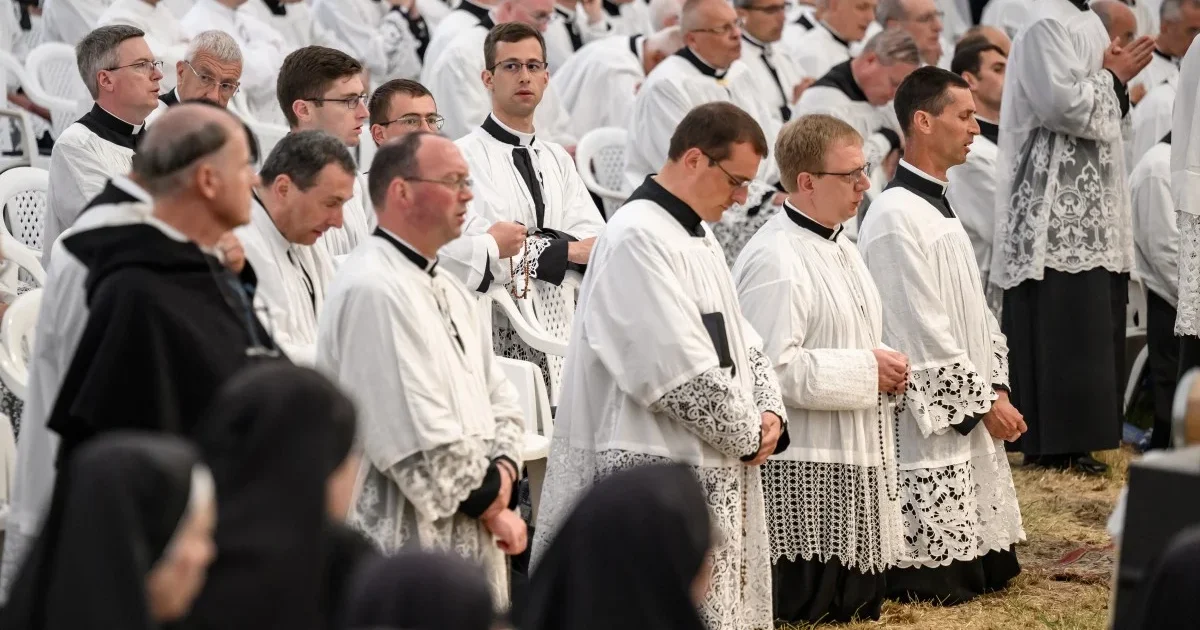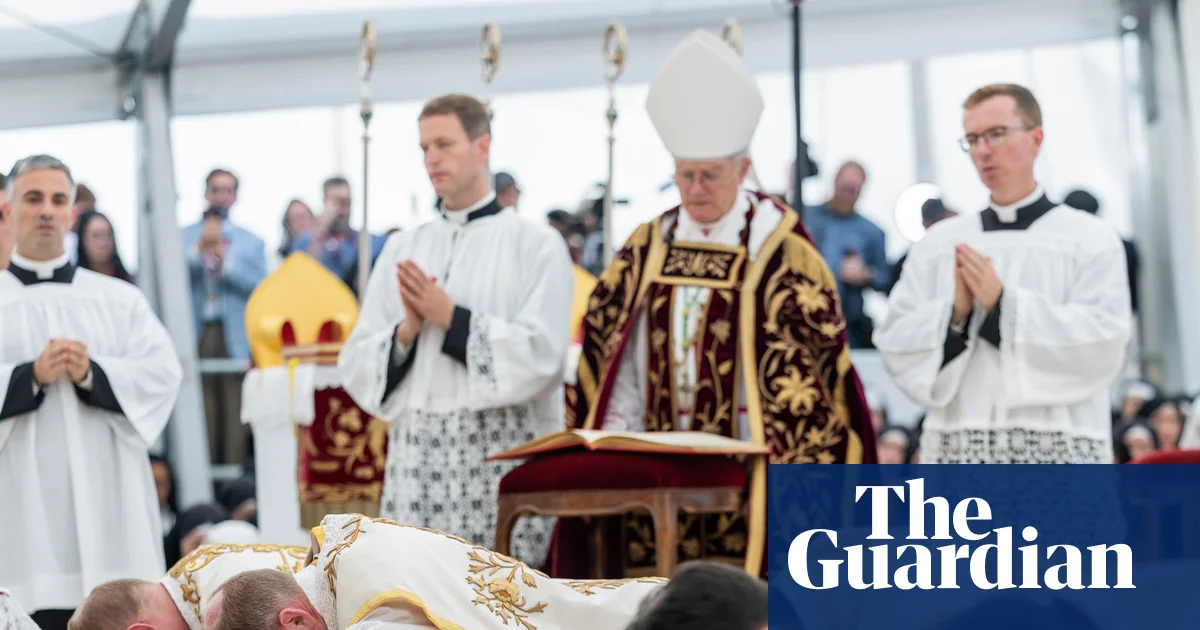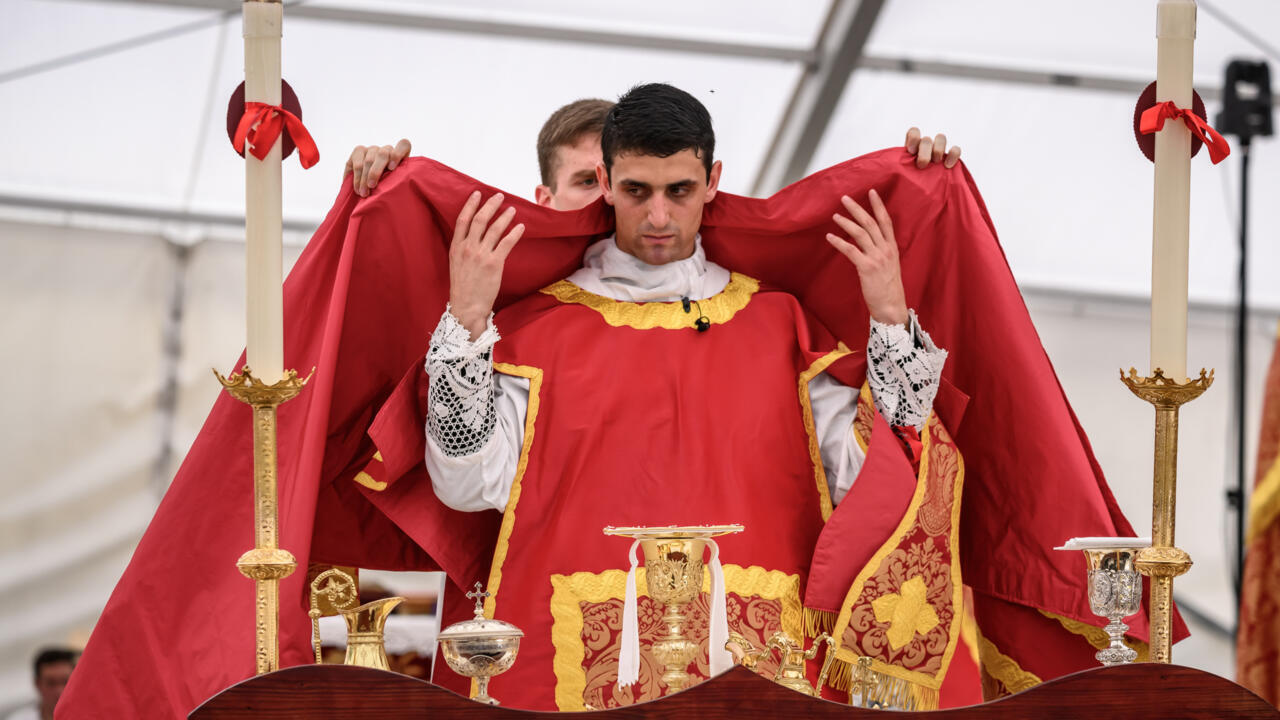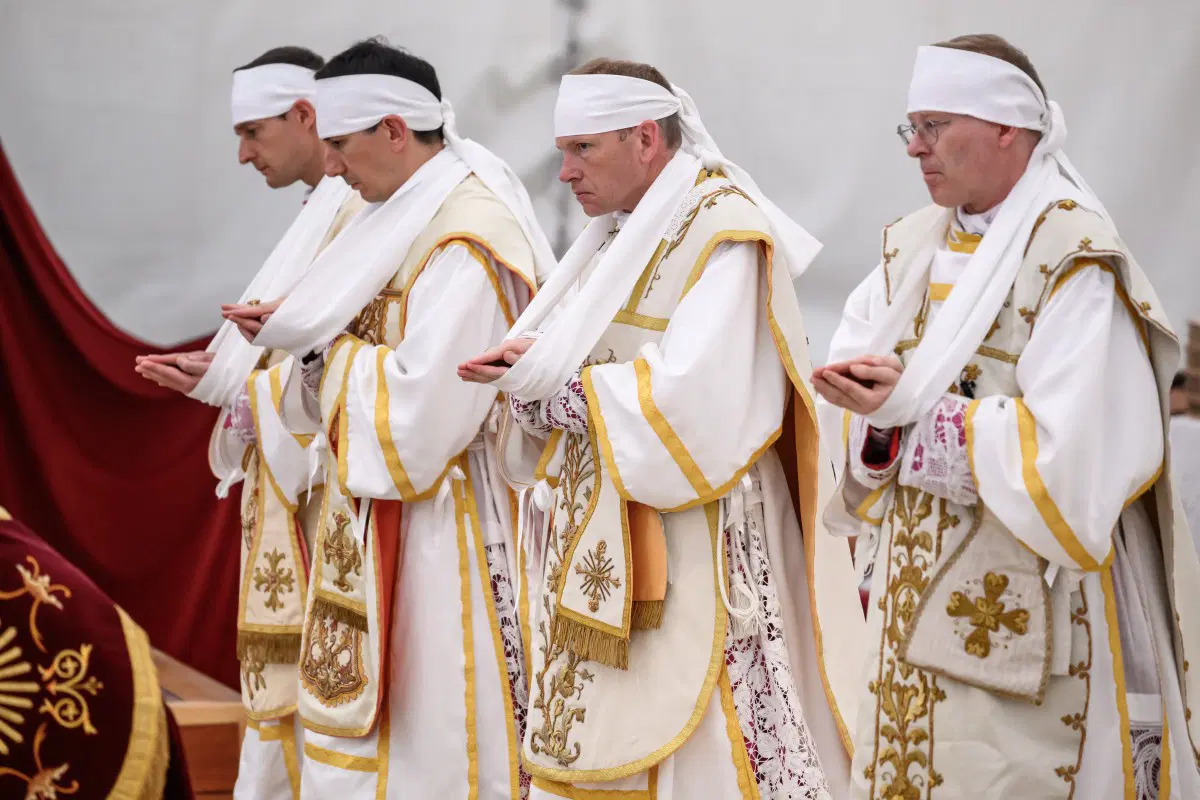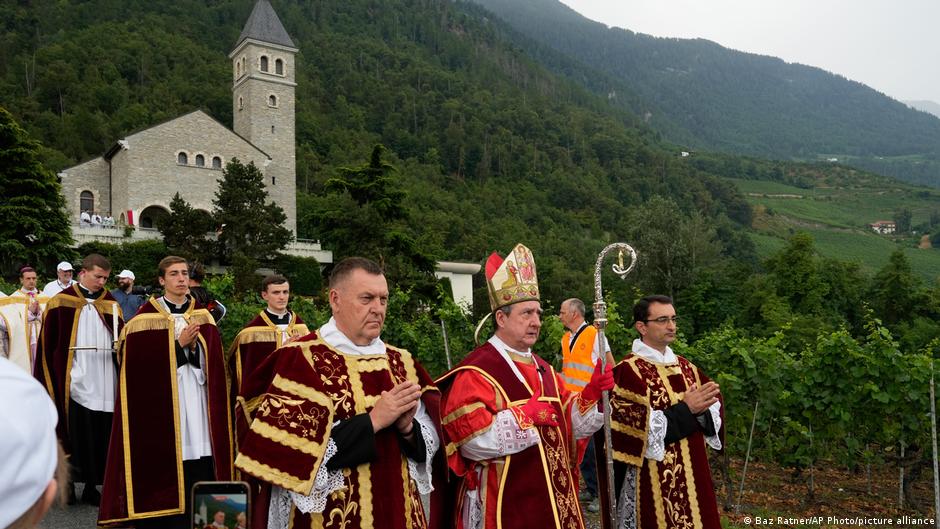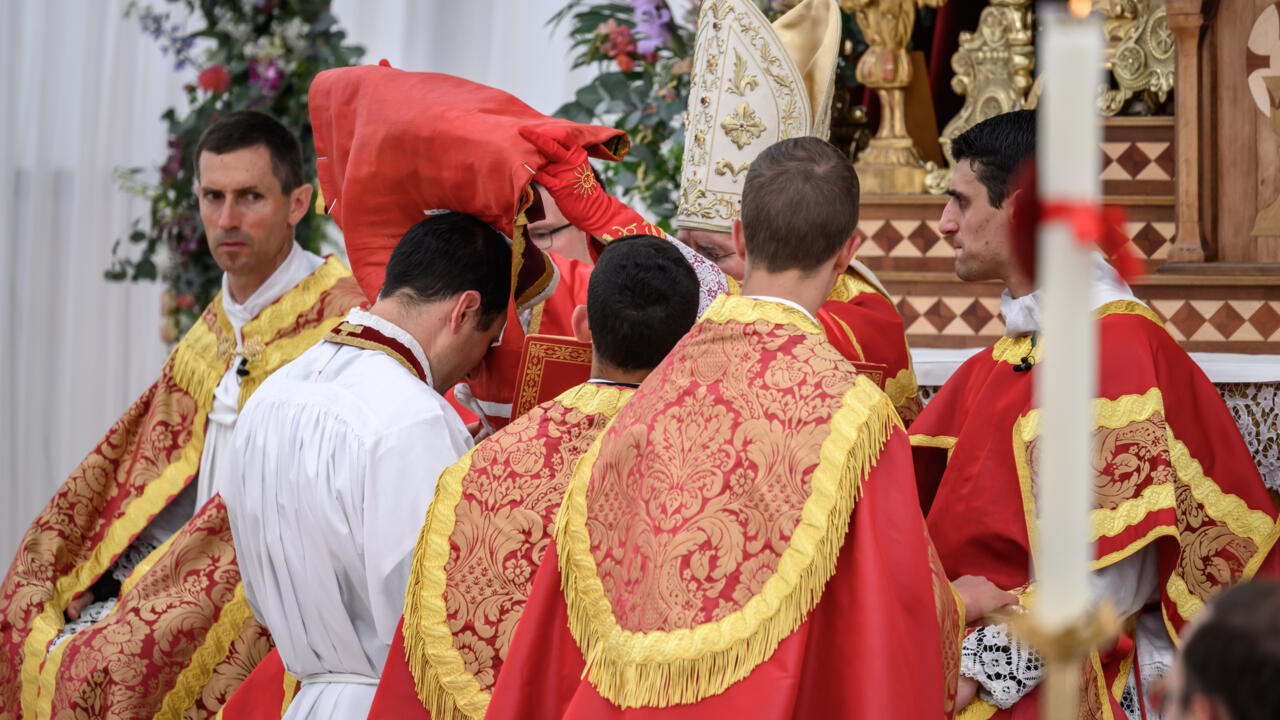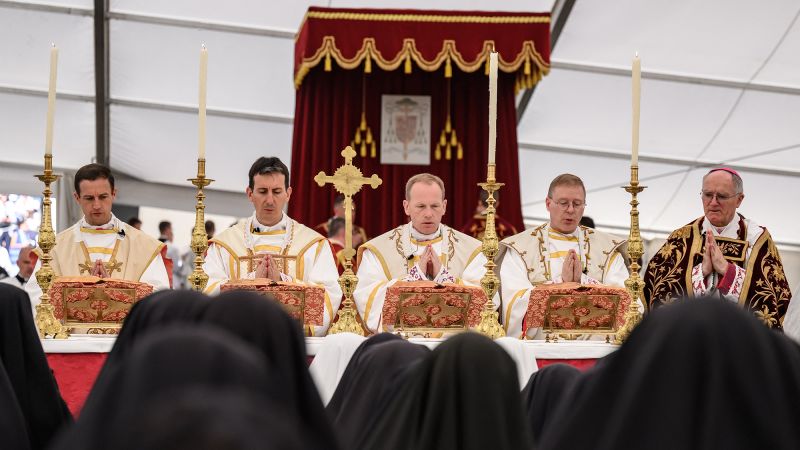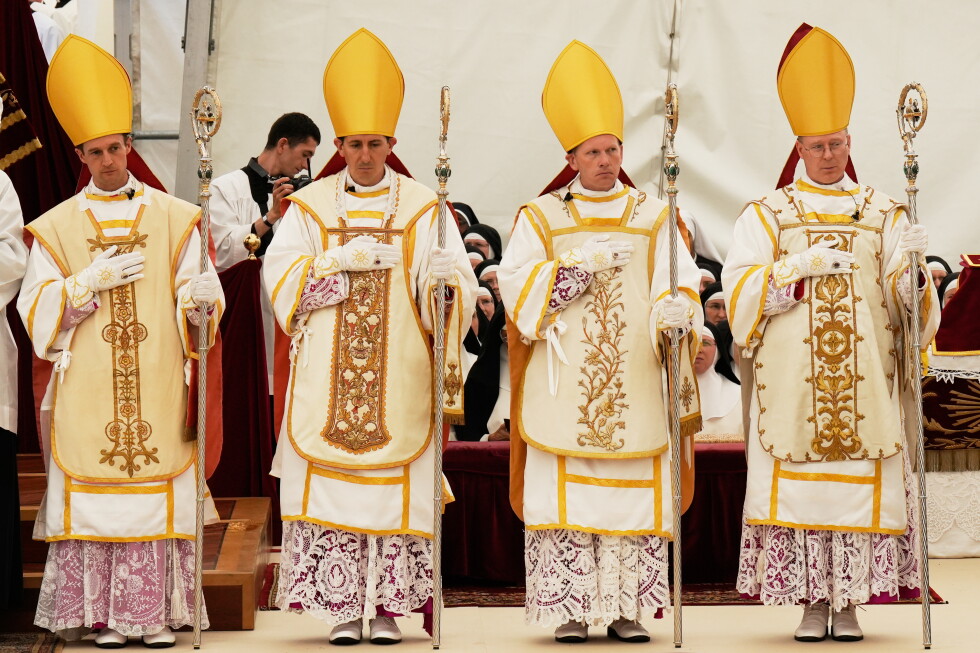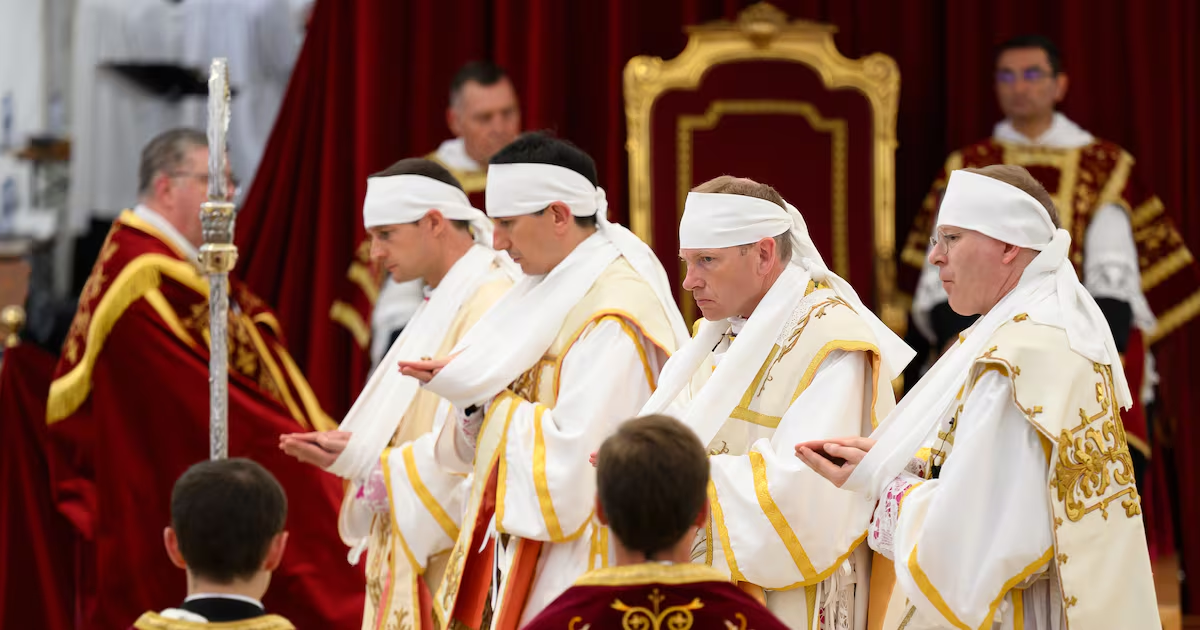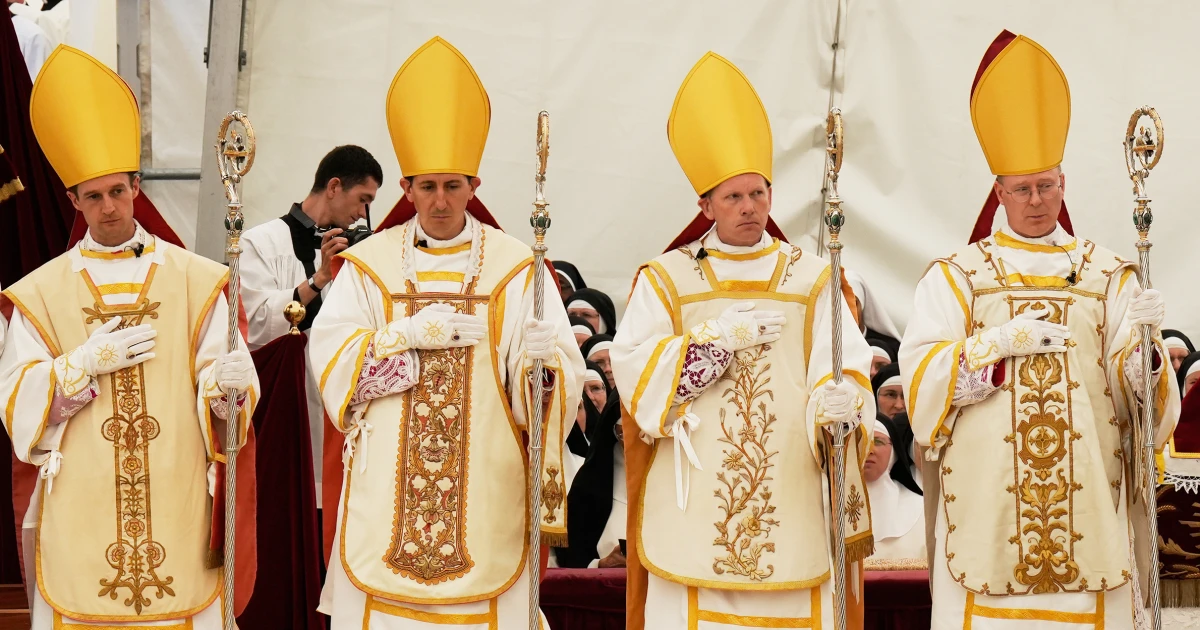
July 3, 2026, 2:58 PM EDTBy Claudio Lavanga and Deborah LubovROME — A picturesque Swiss settlement surrounded by vineyards and tall mountains was the site of an act that this week rocked the Catholic Church.In a five-hour, ritual-filled ceremony attended by hundreds of robed priests and beamed around the world, an ultraconservative Catholic society consecrated four new bishops in direct defiance of the church’s in-house canon law and despite Pope Leo XIV’s pleas for unity.After the ceremony, which was attended by around 15,000 people, the Vatican excommunicated the Society of St. Pius’ six bishops.Here, NBC News looks at the sect, also known by its acronym SSPX, and what led to the new schism within the Catholic Church. What happened this week?During the ceremony on Wednesday, SSPX consecrated as bishops Pascal Schreiber of Switzerland, Michael Goldade of the United States and Michel Poinsinet de Sivry and Marc Hanappier of France.Midway through the service, Bishop Alfonso de Galarreta, himself consecrated without papal consent in 1988, placed his hands on the heads of the four new prelates. This ancient ritual, common in most branches of Christianity, recalls that Jesus Christ chose his apostles and that bishops are their successors.Consecrating a bishop in the Catholic Church without a papal mandate constitutes a grave breach and incurs the harshest penalty under canon law: automatic excommunication for those involved.Ahead of the ceremony in Econe, Switzerland, Leo wrote a letter to the Rev. Davide Pagliarani, the superior of the society, asking him to hold off holding the ceremony for the sake of church unity. Leo also warned that it would amount to a “sin of extreme gravity.”“I urge you to consider carefully the spiritual good of the faithful, because the schismatic act you are about to undertake would deprive them of the licit and, in some cases, even valid reception of the Sacraments, which they love and seek for their sanctification,” the U.S.-born pontiff wrote.Alfonso de Galarreta, a bishop of the Society of St. Pius X, walks during a procession in Econe on Wednesday.Fabrice Coffrini / AFP via Getty ImagesThe warning was ignored, and the following day hundreds of robed priests joined thousands of members of a congregation who prefer the traditional Latin Mass over modern liturgies. The ceremony was livestreamed on the society’s YouTube channel with simultaneous translation into several languages.Founded in defianceNamed after Pope Pius X, who served from 1903 to 1914 and was known for his opposition to theological modernism, the Society of St. Pius X was founded by French Archbishop Marcel Lefebvre in 1970 in opposition to the modernizing reforms of the Second Vatican Council, also known as Vatican II. The society’s followers are also known as Lefebvrists or Lefebvrians, after its founder.Vatican II meetings, held between 1962 and 1965, revolutionized the church’s relations with other Christians and people of other faiths, including improving ties with Judaism.It also allowed for Mass to be celebrated in local languages — a move the SSPX is particularly opposed to. Instead, the society has expressed a strong preference for the use of the preconciliar Tridentine Latin Mass, which it says maintains a sense of mystery and formality.Rejecting Vatican II as a “neo-Modernist and neo-Protestant tendency,” Lefebvre wrote in 1974 that the reforms had “contributed and continue to contribute, to the demolition of the Church.”The following year, the Vatican suspended him and suppressed the society, although the group continued to grow. It currently operates seminaries, schools, retreat centers and chapels in dozens of countries.SSPX says it now has six bishops, 751 priests, 264 seminarians training in five seminaries, 145 religious brothers, 88 oblates and 250 religious sisters representing 50 nationalities.In 1988, after Lefebvre consecrated four bishops without papal consent, he was excommunicated by the Vatican along with those four bishops.The SSPX did not consecrate any other bishops until this week.According to Gemma Simmonds, a Catholic nun who serves as the director of the Religious Life Institute at the Margaret Beaufort Institute of Theology in Cambridge, England, the society would have known that consecrating new bishops would provoke a grave response.The group has effectively excommunicated itself, she said, “choosing to take a stand, which they know is in direct contradiction to the church’s teaching.”Simmonds said in a phone interview Friday that the SSPX was saying, “We like the old rules and not the new ones, and we do not accept that you have any right to adapt or modify the rules.”Reconciliation attemptsSeveral pontiffs have tried to reconcile with the SSPX, including Pope Benedict XVI, who in 2007 liberalized celebration of the old Latin Mass before lifting the excommunications of the four SSPX bishops two years later.The move ended in embarrassment for the pope when one of the four, British Bishop Richard Williamson, told Swedish television shortly before Benedict’s decree was made public that he didn’t believe Jews were killed in gas chambers during World War II.Benedict later acknowledged that a simple internet search would have turned up Williamson’s views.Newly consecrated bishops in Econe on Wednesday.Harold Cunningham / Getty ImagesPope Francis softened the Vatican’s stance toward the SSPX too, reauthorizing its priests to hear confessions on behalf of the church. He also made a provision to allow SSPX priests to celebrate marriages legitimately.Those concessions were reversed by the Vatican on Thursday when it declared the sacraments of confession and marriage administered by SSPX priests to be invalid.On becoming pope, Leo made clear he wanted to build bridges, “but equally, as he’s amply proved in his dealings with the United States of America, is nobody’s pushover,” Simmonds said, referring to his recent criticism of the Iran war.He had offered the SSPX a choice, she said, and when the society made its decision, Leo effectively said, “I accept that choice, but so must you also accept the consequences of the choices you have made.”Other schismsThere have been numerous rifts in the Catholic Church, the most serious of which was the East-West Schism when the Catholic Church and the Eastern Orthodox Church split.Amid tensions between Rome in the West and Constantinople in the East, Pope Leo IX in 1054 dispatched Cardinal Humbert to the eastern capital as an emissary to reconcile with Patriarch Cerularius. Instead, the pair excommunicated each other, marking the start of what is also known as the Great Schism, which has never been fully reconciled.Hundreds of years later, in the 16th century, came the Reformation. Led by Martin Luther, a former Augustinian friar, and the French theologian John Calvin, it became the basis for the founding of Protestantism, one of the three major branches of Christianity.
Who are the ultratraditionalists rebelling against Pope Leo and triggering a rupture with the Vatican?
The Society of St. Pius X was founded in opposition to the modernizing reforms of the Second Vatican Council, also known as Vatican II.
1,086 words~5 min read