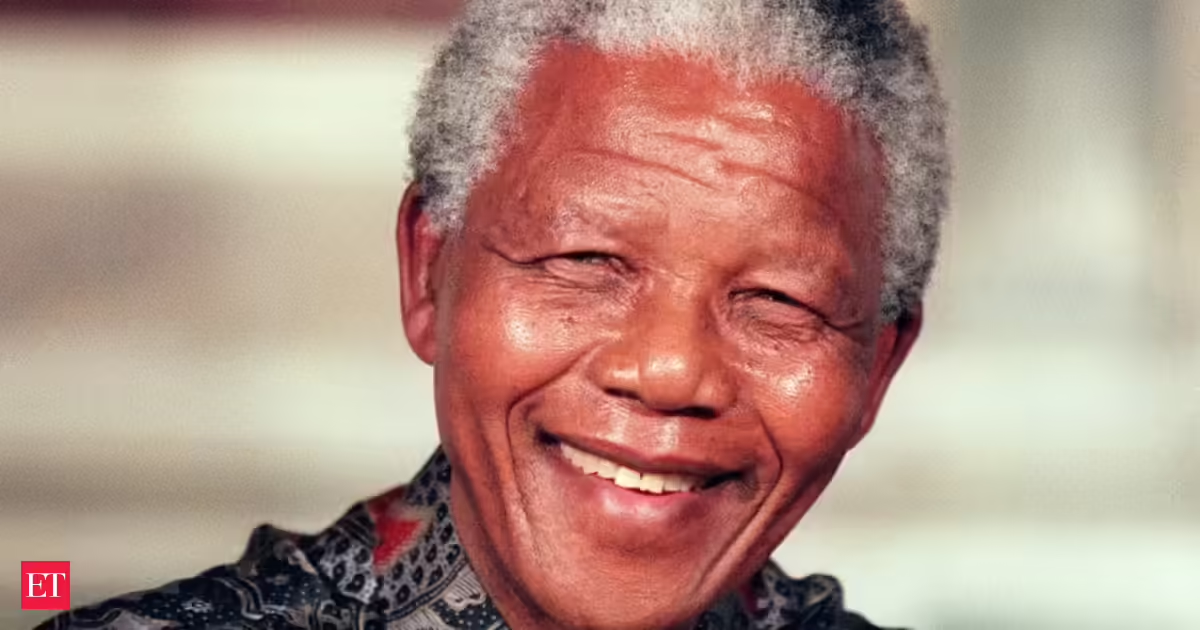
Best Life Advice of the Day by Nelson Mandela: Resilience and perseverance are among the most powerful qualities that shape a meaningful life. True strength is not defined by avoiding failure, but by the ability to rise again each time we fall. Life often presents challenges, setbacks, and moments of doubt, but these experiences are what build character and inner strength over time.His powerful quote, “Do not judge me by my successes, judge me by how many times I fell down and got back up again,” highlights the importance of resilience and determination in life. It suggests that a person’s true value is not measured only by achievements, but by their ability to recover from failure and continue moving forward despite difficulties.Best Life Advice of the Day Today: Nelson Mandela on courage, determination and never giving upBest Life Advice of the Day By Nelson Mandela: “Do not judge me by my successes, judge me by how many times I fell down and got back up again”Meaning of Nelson Mandela’s Quote About ResilienceNelson Mandela’s quote, “Do not judge me by my successes, judge me by how many times I fell down and got back up again,” explores the deep importance of resilience, perseverance, and inner strength in life. The phrase “fell down and got back up again” symbolizes failure, setbacks, and the ability to recover after difficulties. Mandela suggests that true character is revealed not through achievements alone, but through the courage to continue despite repeated challenges.However, the deeper meaning of the quote emphasizes that failure should not be seen as an endpoint, but as a part of growth and learning. Instead of measuring a person only by success, it is more meaningful to recognize their persistence, determination, and willingness to keep moving forward. A strong life is built through resilience, where each setback becomes a step toward greater strength and understanding.Why true success is defined by the courage to rise after every setbackTrue success is not measured by how often a person achieves without failure, but by how they respond when failure occurs. Setbacks are an inevitable part of life, and they test patience, determination, and emotional strength. What truly defines success is the courage to rise again after falling, learning from mistakes, and continuing forward despite difficulties. Each setback carries lessons that help build resilience and character over time. People who develop the strength to keep going, even after disappointment, often grow stronger and more capable than before. This mindset transforms failure into progress and struggle into experience. Ultimately, success is not a straight path but a journey shaped by persistence, where the willingness to stand up again after every fall becomes the most powerful indicator of true achievement.Nelson Mandela was born on July 18, 1918, in Mvezo, a small village in South Africa. He belonged to the Thembu royal family of the Xhosa people. His father, Gadla Henry Mphakanyiswa, was a chief and counselor to the Thembu king, while his mother, Nosekeni Fanny, was a deeply respected figure in his early life. Growing up in a traditional rural setting, Mandela was exposed to African customs, leadership values, and community responsibility from a young age. His early experiences shaped his sense of justice, dignity, and equality.Education and Academic DevelopmentMandela studied at local mission schools and later attended Clarkebury Boarding Institute and Healdtown, where he received formal education in a structured environment. He went on to study at the University of Fort Hare, one of the few higher education institutions available to Black South Africans at the time. Although he was later expelled for participating in student protests, his time there played a key role in developing his political awareness. He eventually moved to Johannesburg, where he completed his law studies and began working as an advocate, gaining deeper insight into the inequalities of the apartheid system.Rise as a Leader and Political ActivistNelson Mandela became a central figure in the fight against apartheid through his involvement in the African National Congress (ANC). He co-founded the ANC Youth League, which aimed to bring stronger resistance against racial segregation and injustice. His leadership, speeches, and activism made him a powerful symbol of resistance. Mandela believed in equality, human rights, and non-racial democracy, and he dedicated his life to challenging an unjust system. His commitment led to his arrest and a 27-year imprisonment, during which he became a global symbol of courage and resistance.Imprisonment, Freedom, and PresidencyMandela spent 27 years in prison, primarily on Robben Island, where he continued to inspire others through his resilience and dignity. Despite harsh conditions, he remained committed to the vision of a free and equal South Africa. He was released in 1990, a moment that marked a turning point in world history. After negotiations to end apartheid, Mandela became the first Black President of South Africa in 1994, serving as a leader of reconciliation and national unity.Legacy and Lasting InfluenceNelson Mandela passed away on December 5, 2013, but his legacy continues to shape the world. He is remembered as a global icon of peace, justice, and forgiveness. His leadership helped transform South Africa from a divided nation into a democratic society. Today, Mandela’s life inspires movements for human rights, equality, and freedom across the globe, reminding people that resilience and forgiveness can change the course of history.Life Lessons from Nelson Mandela’s Famous QuoteNelson Mandela’s quote teaches that resilience, perseverance, and inner strength are essential qualities for navigating life’s challenges. True growth is not defined by avoiding failure, but by the ability to rise again after every setback. The quote highlights that life is not about perfection or constant success, but about learning, adapting, and continuing forward despite difficulties. In real life, this message is especially important because everyone faces struggles, but what matters most is how we respond to them. Mandela’s words remind us that strength is built through experience, and each fall becomes an opportunity to grow, improve, and develop deeper emotional resilience.Why This Quote Still Matters TodayNelson Mandela’s quote remains highly relevant today because modern life is filled with pressure, competition, and constant comparison. In a world where success is often displayed and failure is hidden, people can easily feel discouraged by setbacks. This quote reminds us that failure is not something to fear or hide, but a natural part of progress and personal development. Today, emotional resilience and mental strength are more important than ever, especially in fast-changing environments. Mandela’s message continues to encourage people to embrace challenges, learn from mistakes, and understand that every setback is a step toward growth, not the end of the journey.Life WisdomNelson Mandela’s quote, “Do not judge me by my successes, judge me by how many times I fell down and got back up again,” reflects a timeless truth about resilience and human strength. Real success is not defined by achievements alone, but by persistence, courage, and the ability to keep moving forward despite failure. Life should never be measured only by outcomes, but by the effort and determination behind them. This wisdom continues to remain relevant because it highlights the importance of emotional strength and perseverance in everyday life. True character is built not in moments of success, but in moments of struggle, recovery, and determination to rise again.
Best Life Advice of the Day By Nelson Mandela: “Do not judge me by my successes, judge me by… — Inspiring lessons on perseverance, failure, strength and why every setback is a comeback by the former President of South Africa known for his fight against apartheid, leadership in ending racial segregation and deep insights into peace and justice
Best Life Advice of the Day by Nelson Mandela: Nelson Mandelas quote, “Do not judge me by my successes, judge me by how many times I fell down and got back up again” explores the importance of resilience, perseverance, and personal strength in life. The quote suggests that true character is not defined by achievements alone, but by the ability to rise again after every failure and keep moving forward despite challenges.
1,202 words~5 min read