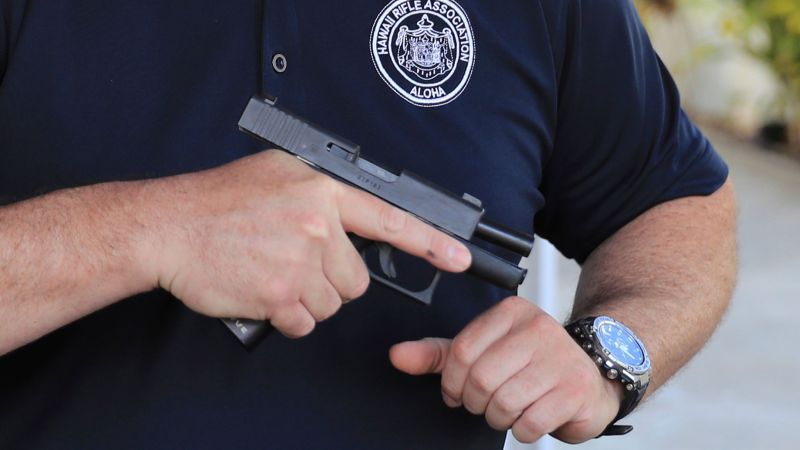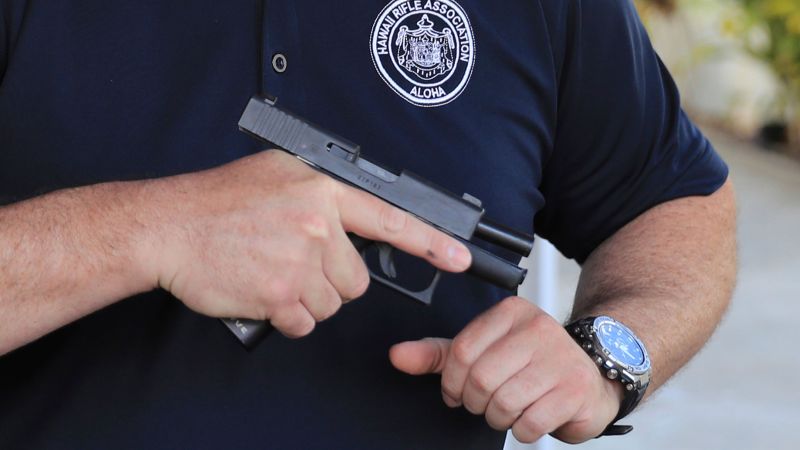
In Focus delivers deeper coverage of the political, cultural, and ideological issues shaping America. Published daily by senior writers and experts, these in-depth pieces go beyond the headlines to give readers the full picture. You can find our full list of In Focus pieces here.The Supreme Court struck down Hawaii’s concealed carry law last week in Wolford v. Lopez, and the law’s defenders have been long on outrage, attacking the decision without a care for accuracy or honesty.Start with the claim that spread fastest online: The ruling is an attack on private property itself. “The right-wing justices do not actually believe in private property,” wrote Jonathan Cohn, political director for the progressive advocacy group Progressive Mass, in a post that circulated widely after the decision came down. “They believe in rule of the rich. This is such a clear attack on private property.”
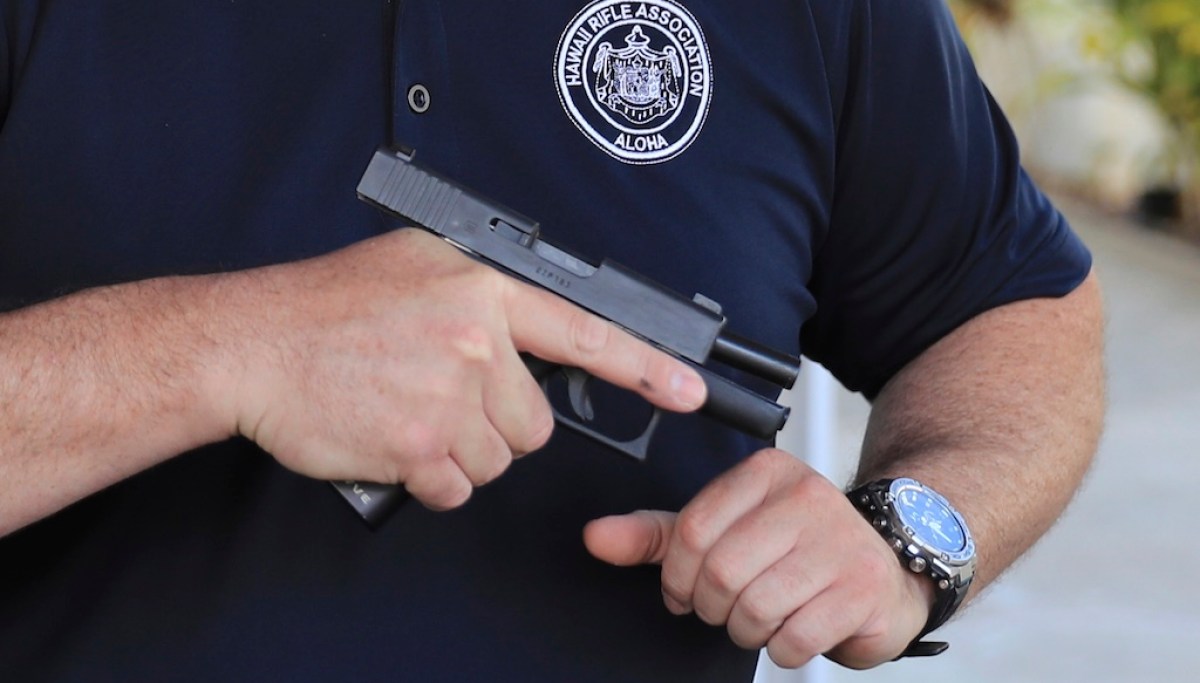
Justice Ketanji Brown Jackson‘s dissent makes the same legal claim, insisting Hawaii’s law “vindicates its residents’ property rights” and that the majority wrongly recast a property dispute as a gun rights case.It’s wrong. Nothing in the ruling touches a property owner’s authority over their own property. National Review’s Charles C.W. Cooke corrected a New York Times post making the same claim: “This is a touch misleading. The Court didn’t say that the owners of that property can’t deny permission; it said that Hawaii can’t invert the common law presumption, only for guns, in an attempt to undermine the Second Amendment.” That’s what the opinion says. Justice Samuel Alito writes that “owners of establishments that are open to the public can admit or exclude persons who are carrying guns for self-defense under either the common-law rule or Hawaii’s law.” A shop owner in Honolulu can still post “No Firearms” at the door today, and every permit holder in the state has to respect it. No one’s property rights were stepped on. What changed is the rule that applies when an owner says nothing, and Hawaii tried to turn that silence into criminal behavior. This was the state of Hawaii trying to dress up a gun control law as a property rights statute.Hawaii’s own congressional delegation was just as ridiculous. Rep. Jill Tokuda (D-HI) compared the law to a restaurant dress code: “Businesses and property owners set basic rules every day about what is allowed on their property and what is not, no shirt, no shoes, no service.”Naturally, in reading the decision, that claim doesn’t hold up under scrutiny. Alito‘s opinion spends several pages on it: A permit holder who pulled into a parking lot with a concealed handgun was already violating the statute unless the store had posted a sign or someone with authority had verbally consented and finding that person wasn’t guaranteed. Disarming meant storing the gun before entering, and if the gun was visible for a second in that time, the law allowed prosecution for “recklessly” alarming someone. Alito methodically went through a person’s everyday life — going to a gas station, a lunch spot, a drugstore, a dry cleaner, and a grocery store — and found she could rack up six criminal exposures before dinner. No dress code does that.Sen. Mazie Hirono‘s (D-HI) statement was short on specifics but no less misleading, accusing the “out-of-control” court of “expanding the presence of firearms” in Hawaii, when the ruling does nothing more than restore the default rule that every other kind of visitor to private property has operated under since the founding.The more absurd part is what Hawaii’s own legal team reached for when they tried to defend the law with history. The Bruen framework requires a state to show a genuine tradition behind a modern gun restriction, not manufacture one after the fact. Hawaii’s “best” argument rested on 18th-century anti-poaching statutes aimed at stopping people from hunting deer on someone else’s farm, which the court correctly found had nothing to do with a woman buying groceries while legally carrying a pistol. The one example that actually matched Hawaii’s law — a flat requirement of express consent before entry — was an 1865 Louisiana statute pulled from the state’s Black Codes, the laws southern legislatures passed after the Civil War to keep freed black Americans as close to enslaved as the law would still allow. That statute barred anyone from carrying a firearm onto another person’s property without the owner’s consent, and it existed, in Alito’s words, “to disarm blacks and leave them defenseless against attacks.” Kainoa Kaku, president of the Hawaii Rifle Association, checks one of his personal firearms as he discusses the recent Supreme Court Ruling at his home, June, 23, 2022, in Honolulu. (AP Photo/Marco Garcia, File)