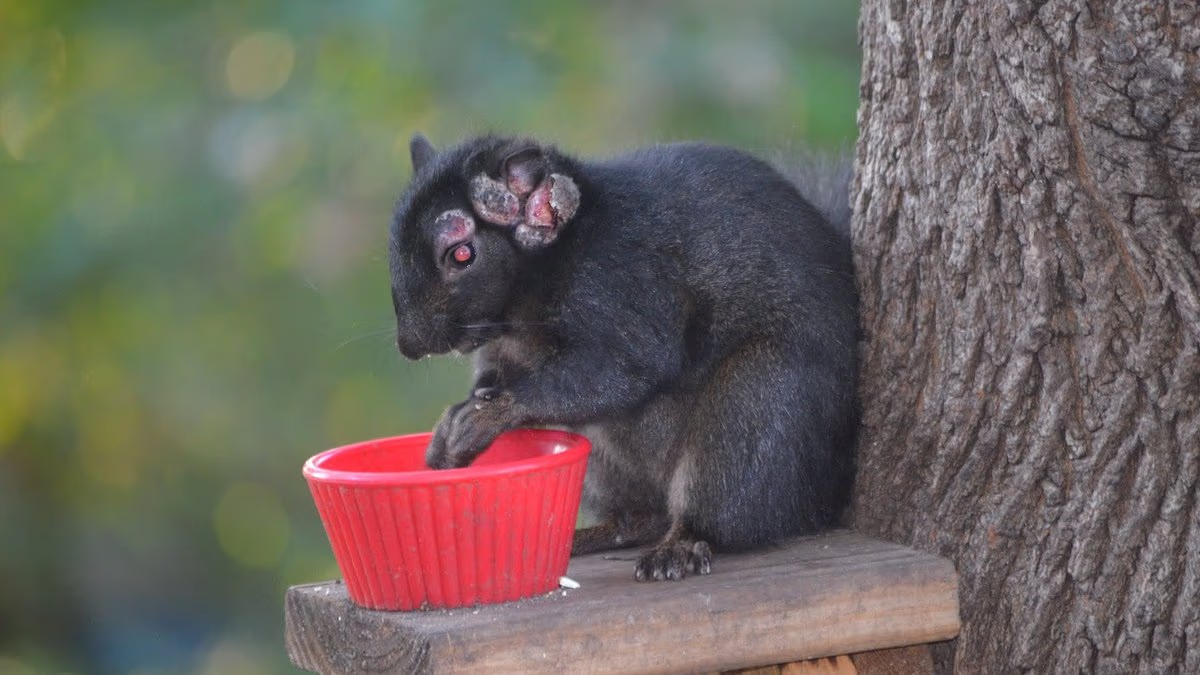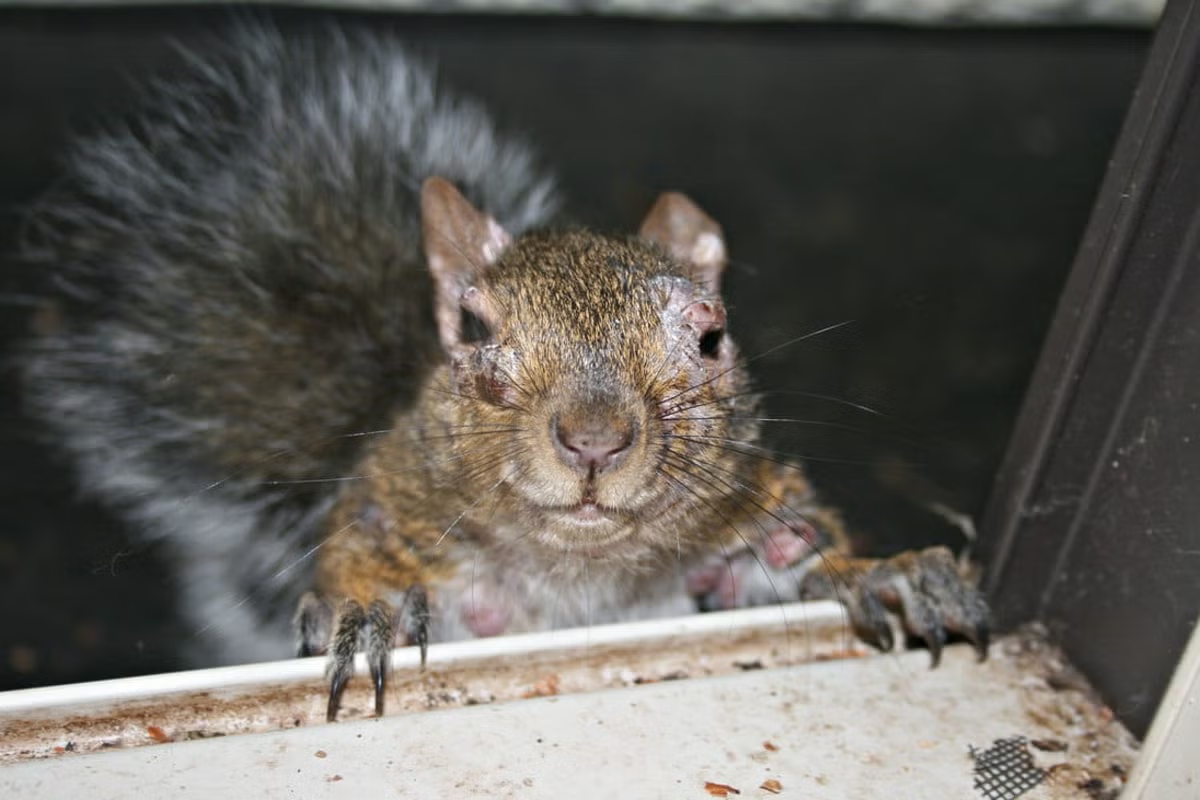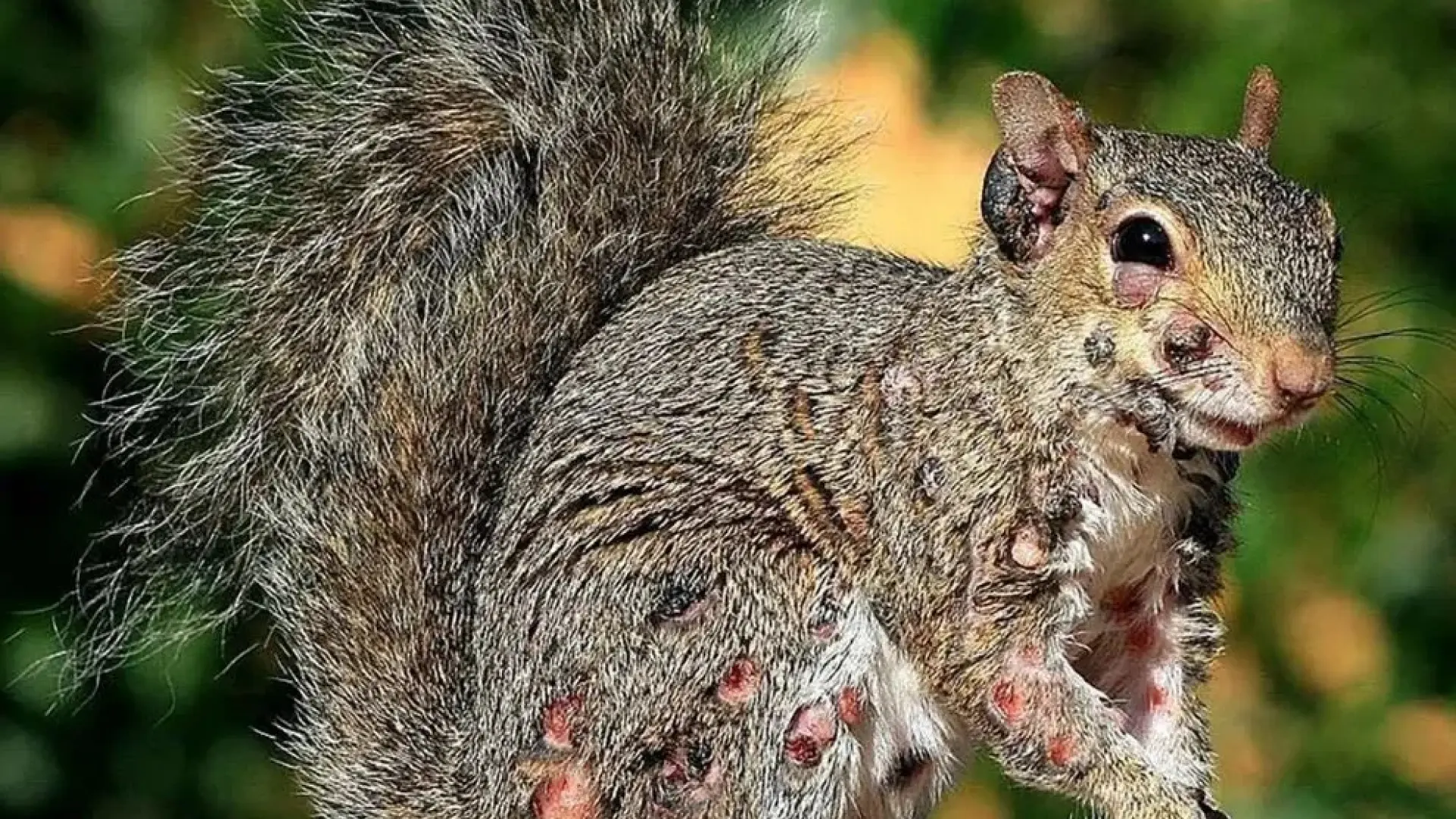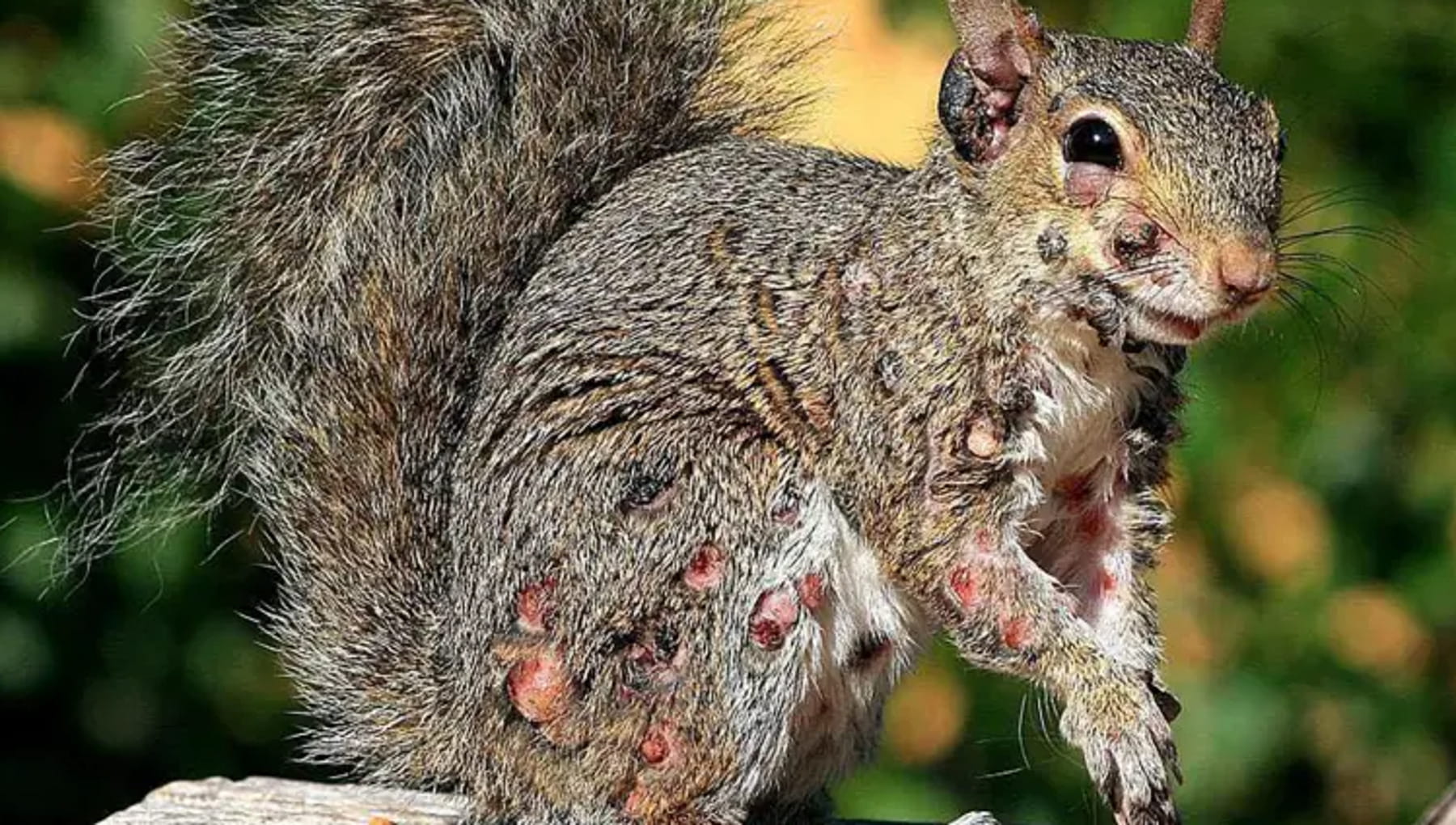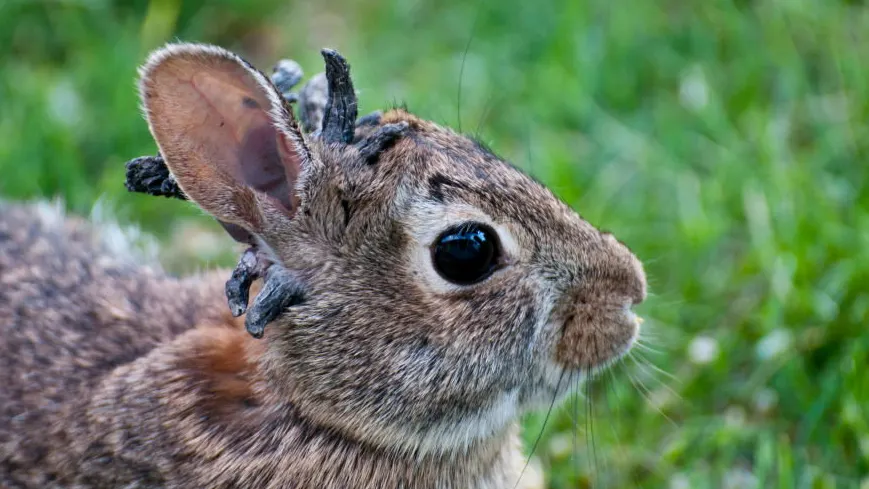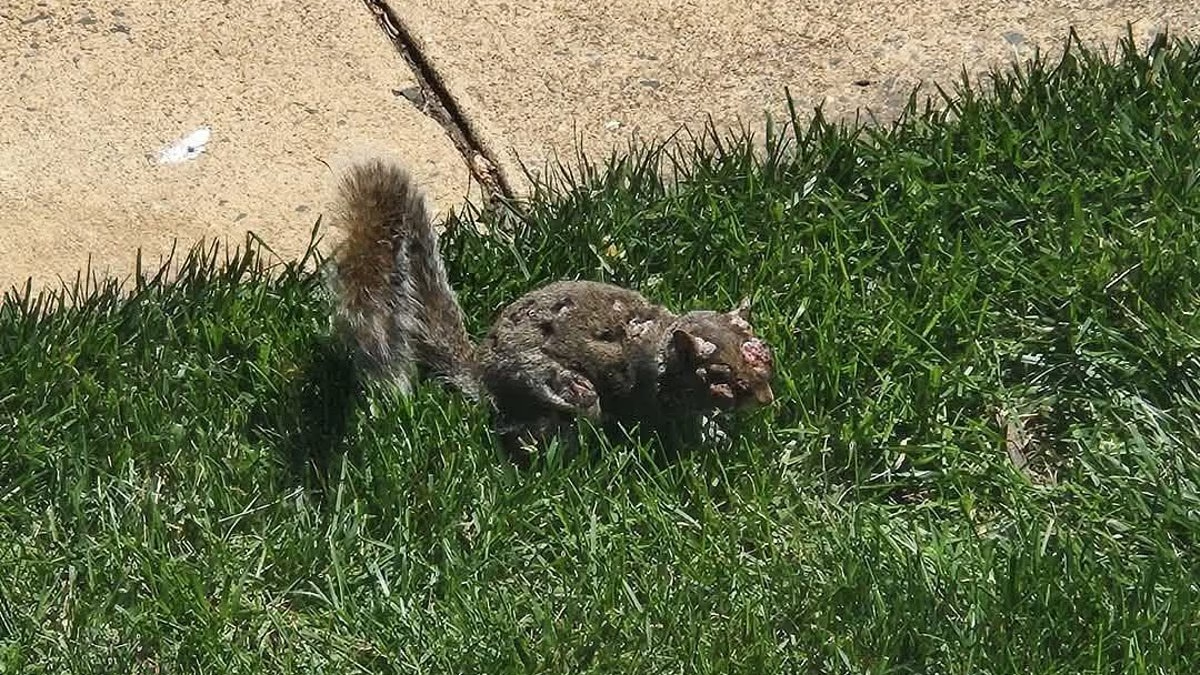
Reports of squirrels covered in oozing sores have increased across the US.Americans from Florida to North Carolina to Ohio and Michigan have shared images online of the disfigured creatures this month, with some calling them 'zombie squirrels.'Halfway Home Wildlife Rehab in Michigan has taken in several squirrels in the last month, infected with a deadly poxvirus that creates wart-like growths or tumors on the skin. The virus is not known to transfer to humans or other animals.The animal rehab center has at least three infected squirrels, Phlox, Bubbles and Bugsy, which are covered in lesions from head to toe.There are many more in the wild, as Jessie Crislip in Ashtabula, Ohio spotted a squirrel with warts on its eyes and head in her backyard.'That poor squirrel suffered,' Crislip said, sharing photos of the animal. A North Carolina native spotted one of these creatures on June 9, saying on Facebook: 'What is going on with the squirrels lately?! This is the third one I’ve seen looking like this, and it’s honestly freaking me out.'Wildlife experts believe homeowners who put bird feeders in their yards may unintentionally be spreading the virus to more squirrels throughout North America. Halfway Home Wildlife Rehab in Michigan has taken in several squirrels in the last month, including a gray squirrel named Phlox that arrived at the center in June Another gray squirrel, named Bugsy, remains in the center's care and is slowly recoveringShevenell Webb from the Maine Department of Inland Fisheries and Wildlife said: 'It's like when you get a large concentration of people. If someone is sick and it's something that spreads easily, others are going to catch it.' Squirrel fibromatosis may look terrifying, but it is a common skin disease among gray squirrels in the US.It is caused by the leporipoxvirus and is spread through direct contact between healthy squirrels and the lesions or saliva of infected squirrels, similar to how herpes is transmitted in humans.The disease causes hairless growths or tumors that can break open and leak clear fluid, just like an open wound.A gray squirrel named Phlox arrived at the wildlife rehabilitation center in early June covered in wart-like growths caused by squirrel pox. After several weeks of treatment and showing significant improvement, Phlox was released back into the wild in late June.Another gray squirrel, named Bugsy, remains in the center's care and is slowly recovering. Staff said he is eating well and continues to make gradual progress toward an eventual release. Another squirrel at the center, Bubbles, has the pox onher eyes and her genitalsA third squirrel, Bubbles, arrived in even worse condition. In addition to being covered in sores, rehabilitators discovered a maggot embedded in her fur, highlighting the severe toll the disease can take on infected animals.Florida local Randy Ellen Kessler spotted an eastern gray squirrel in his backyard, with 'patchy fur and reddish bumps.' A Michigan local posted an image on Facebook, showing a squirrel with the virus.'This is the sibling to the one that passed away,' they said. Jessie Crislip of Ohio shared an image of a squirrel in her backyard last month, saying: 'Found this poor squirrel in my back yard really scared the crap out of me because I could tell it looked deformed' Florida local Randy Ellen Kessler spotted an eastern gray squirrel in his backyard, with 'patchy fur and reddish bumps''It's a fascinating virus for the fact that it affects every squirrel so differently... some cases are more focal and affect only a part of the body (this has remained limited to her ears and head), and others are systemic and affect the whole body, which ultimately results in death in most cases.''I would not recommend trying to capture a squirrel that has the virus,' Webb told the Bangor Daily News. 'It is naturally occurring and will run its course in time.'To Webb's point, while the growths can look alarming, they typically heal without the need for medication and are rarely fatal.However, some severe cases of squirrel fibromatosis may affect the animal's internal organs and lead to death. Another squirrel spotted in North Carolina this month had bubbles on its headWildlife officials noted that sightings tend to rise during the summer when more animals are out gathering food, especially from homes that put out bird feeders.'Like a lot of people, I love watching birds,' Webb said. 'Unfortunately, you can attract multiple [squirrels] to that feeder and risk exposure if one has the virus.'The expert explained that squirrels with fibromatosis can leave their saliva on uneaten bird seed at these feeders, which healthy animals can then ingest and contract the virus.
'Zombie squirrels' carrying deadly virus are appearing across US
WARNING - GRAPHIC CONTENT: There has been a surge in 'zombie squirrel' sightings across the US, with the animals covered in oozing sores caused by a deadly virus.
767 words~3 min read