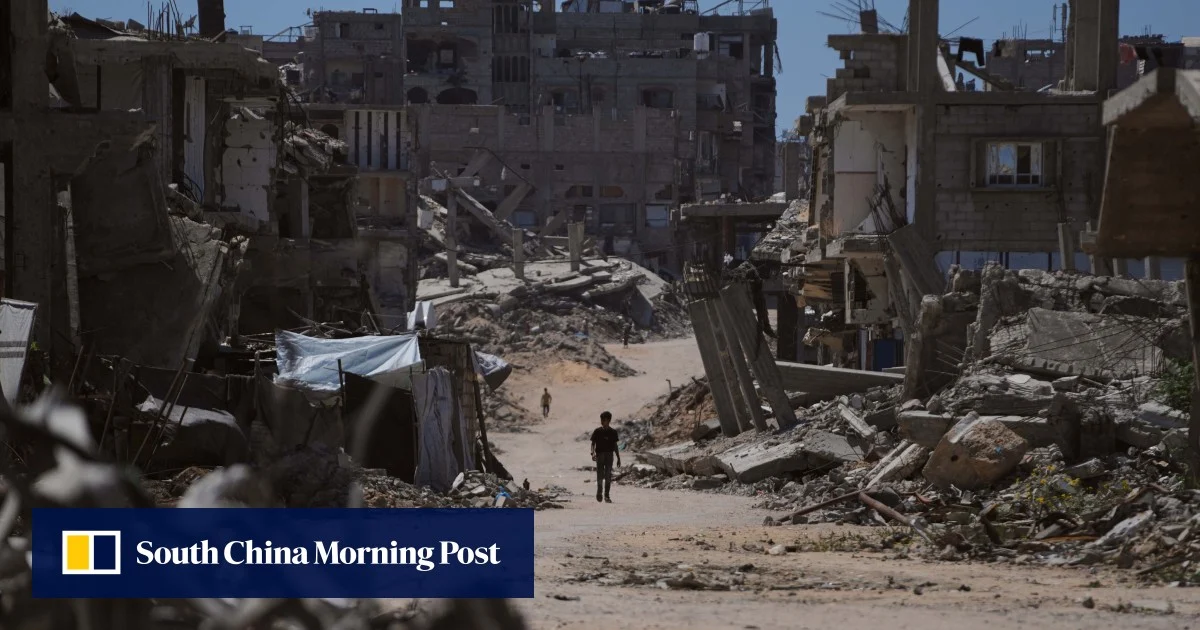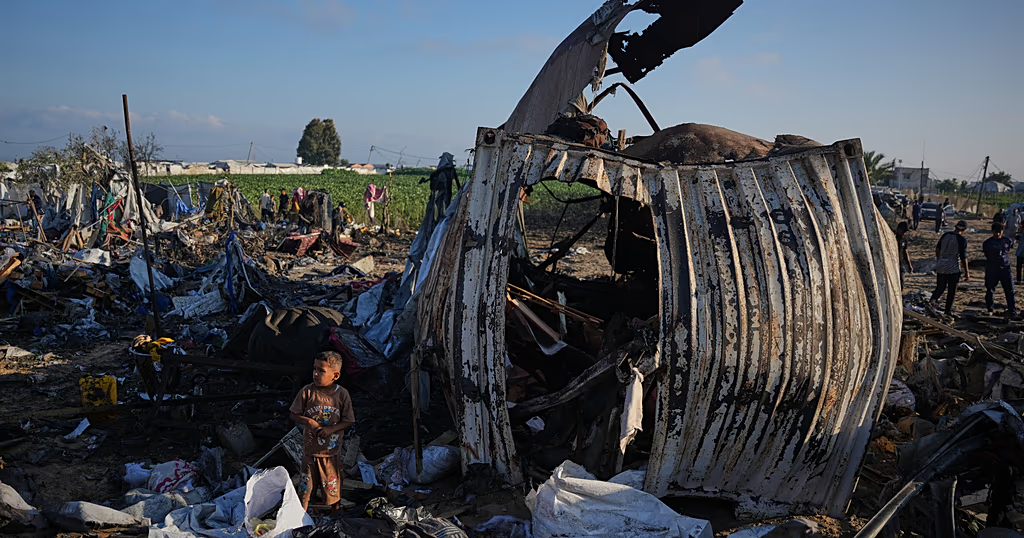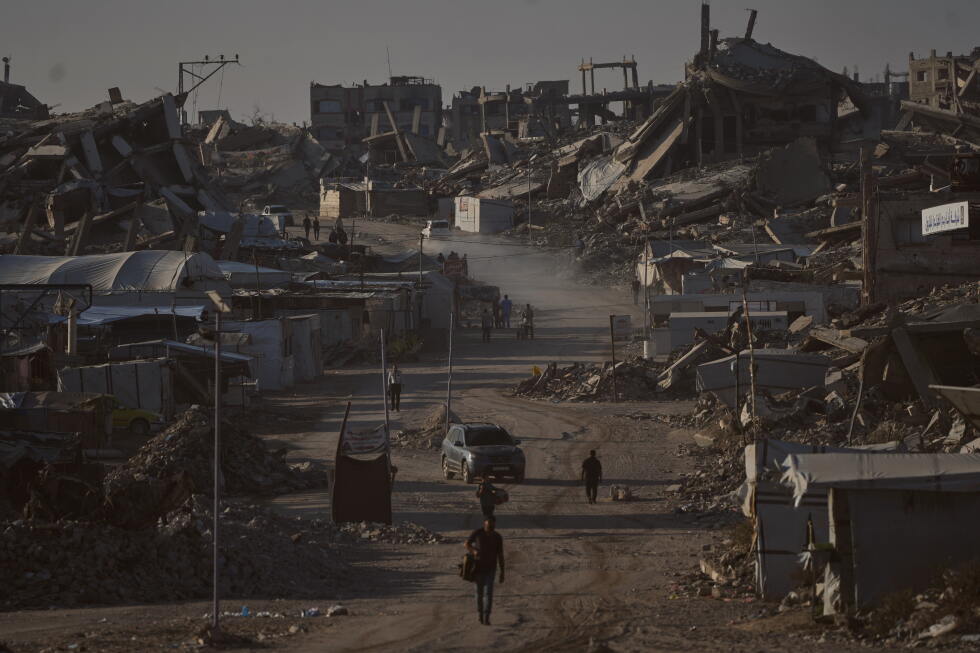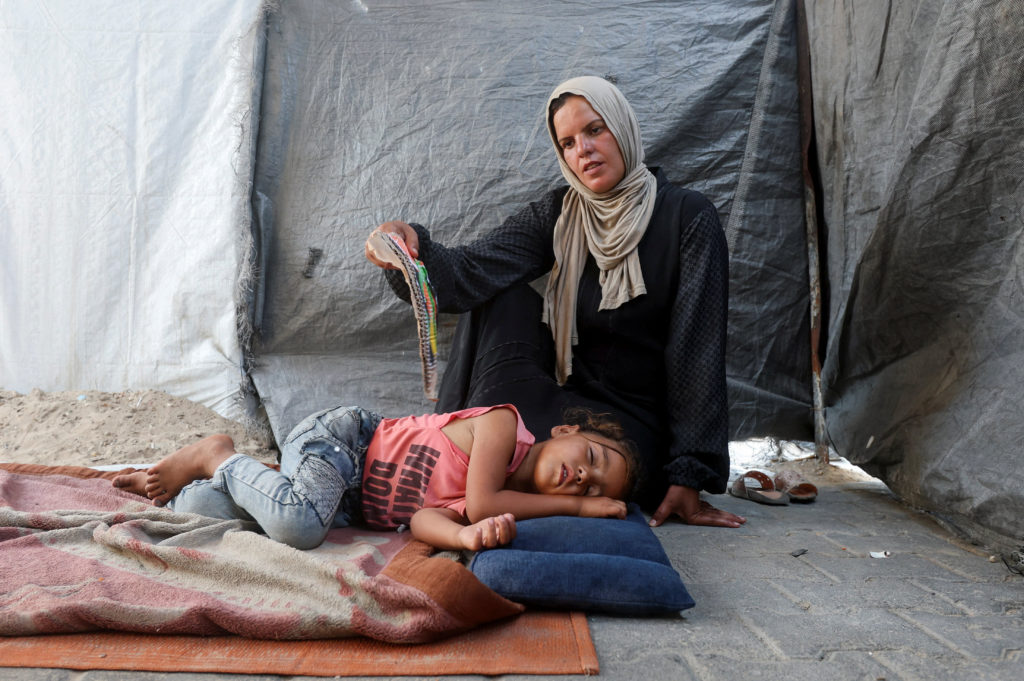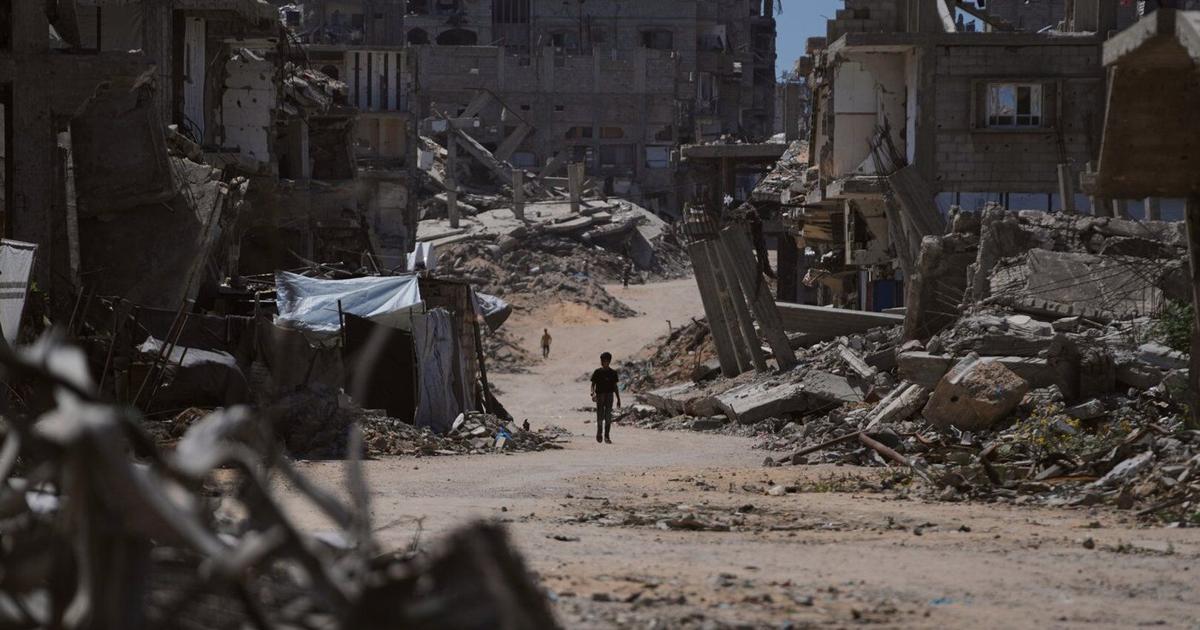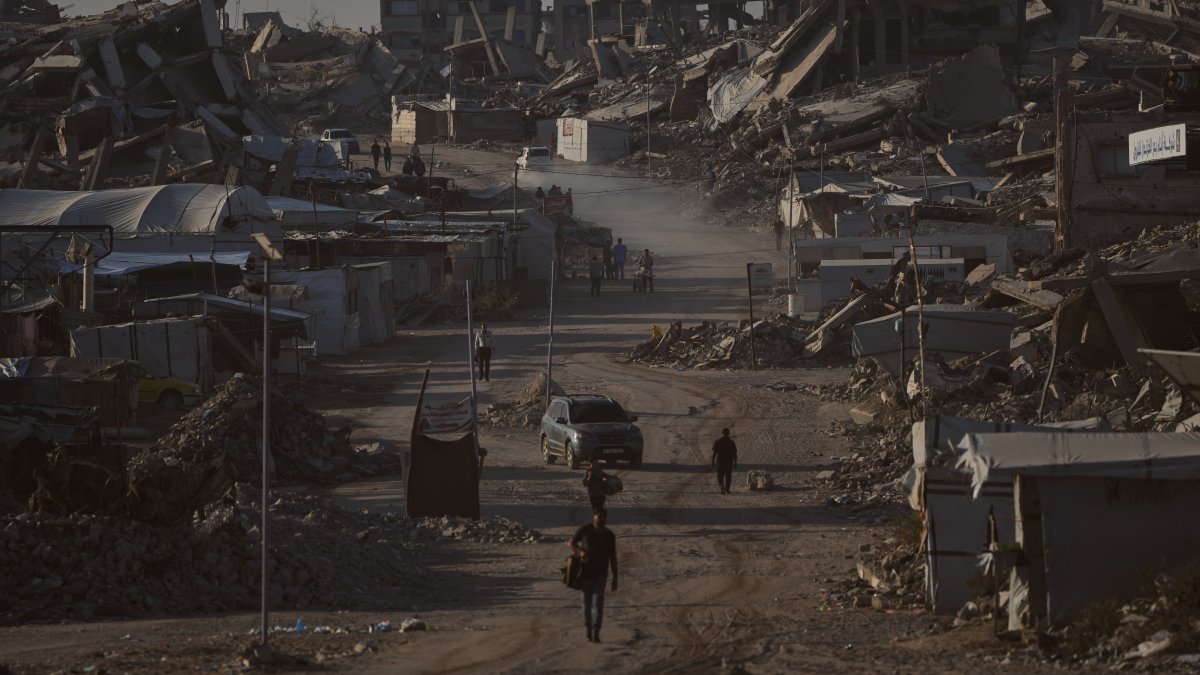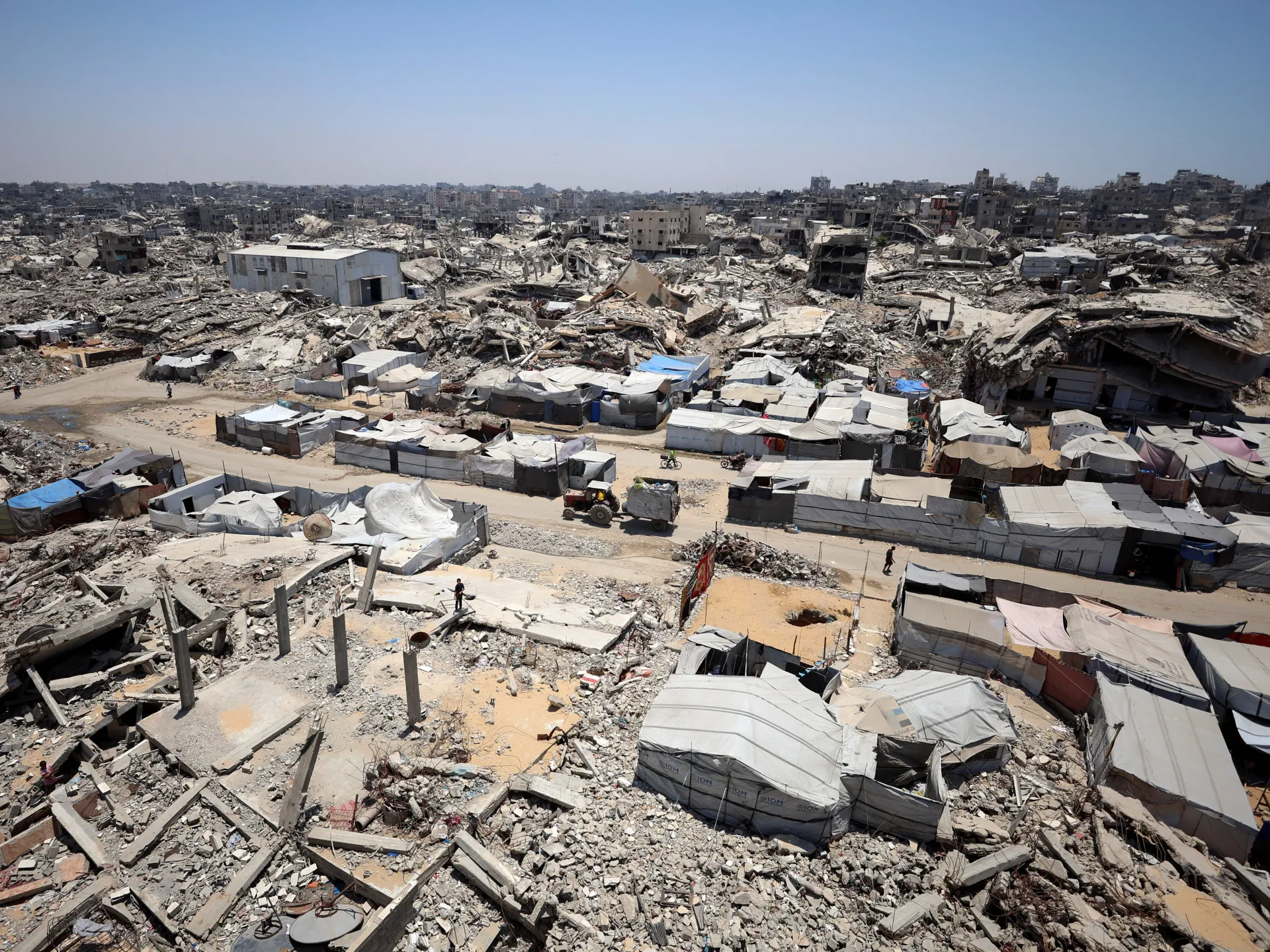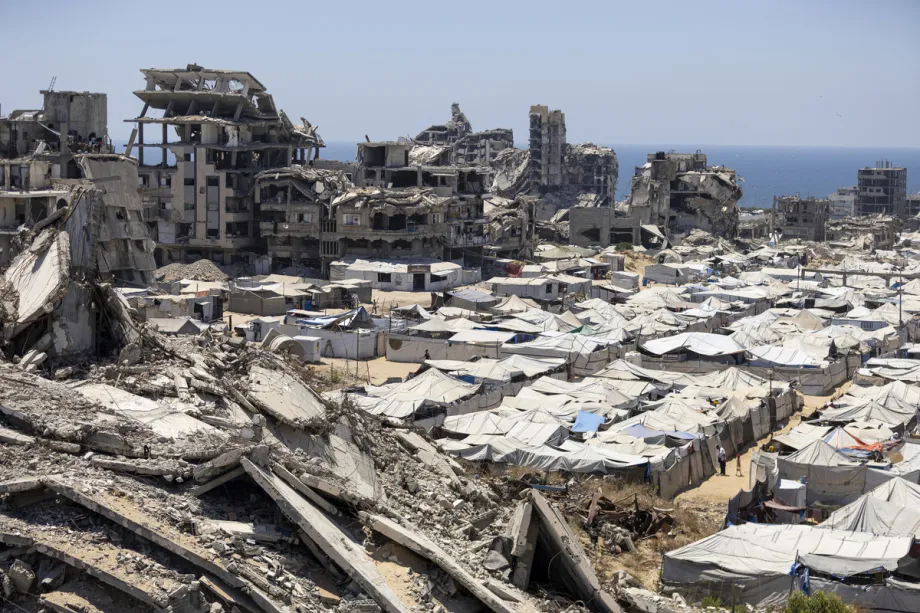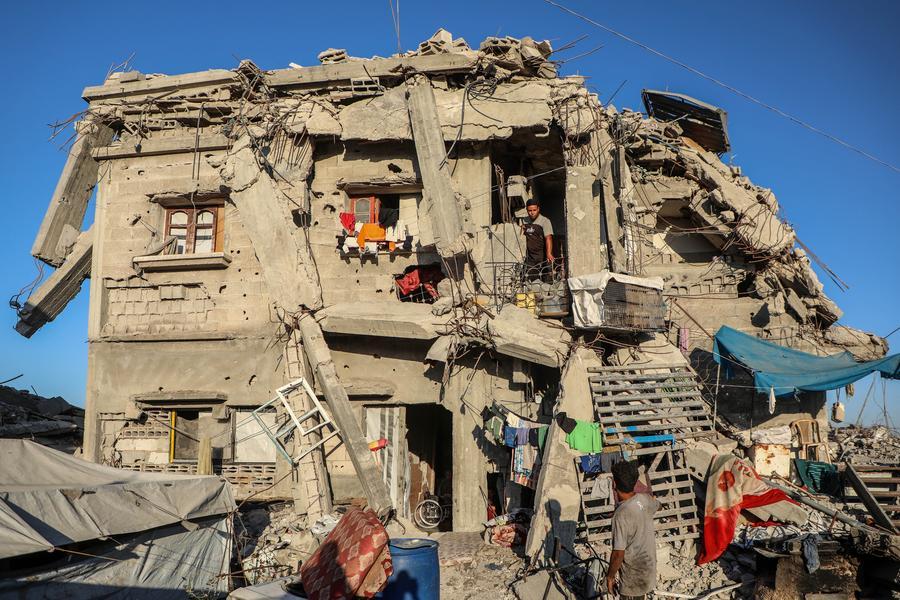
Displaced Palestinians are pictured in Jabalia refugee camp, northern Gaza Strip, on June 23, 2026. (Photo by Rizek Abdeljawad/Xinhua)GAZA, July 3 (Xinhua) -- As the Gaza Strip marked 1,000 days since the outbreak of the Israel-Hamas conflict on Oct. 7, 2023, many Palestinians say their daily struggle has shifted from surviving bombardment to coping with prolonged humanitarian and economic hardship.Although a ceasefire between Israel and Hamas took effect in October 2025, living conditions in the Gaza Strip have shown little improvement, with shortages of food and water, widespread displacement, and stalled reconstruction continuing to dominate daily life.Across Gaza City, people lined up for water deliveries, searched markets for scarce food supplies, and continued to live in makeshift shelters amid stalled reconstruction efforts."In the early days, we feared the airstrikes," said Emad Abu Madlala, who has been living in a tent since his home was destroyed during the war. "Today, we are searching for the necessities of life. Getting clean water or a simple meal requires hours of waiting."This photo taken on June 18, 2026 shows a girl from Beit Hanoun in the northern Gaza Strip, who is displaced and sheltering in a building in Gaza City. (Photo by Rizek Abdeljawad/Xinhua)Rawya Harara, a Gaza City-based mother of five whose husband was killed during the conflict, told Xinhua that providing food and water for her children has become an overwhelming daily challenge."Every morning begins with the same question: How will I secure food and water? The suffering has become more than we can bear," she said.The scale of destruction remains immense. According to Ismail al-Thawabta, director of the Hamas-run government media office in Gaza, more than 73,000 people have been killed since the war began, while around 9,500 remain missing and nearly 2 million Palestinians have been displaced.Data released by the government media office and the United Nations Relief and Works Agency for Palestine Refugees in the Near East (UNRWA) show that about 371,888 housing units, or 76.6 percent of Gaza's total housing stock, were damaged, while around 68 million tons of rubble remain across the territory.The United Nations Office for the Coordination of Humanitarian Affairs said areas controlled by Israeli military now account for around 53 percent of Gaza's territory, leaving the population concentrated in less than half of the enclave.Palestinians fetch water at a temporary shelter near the Gaza port in Gaza City, on June 21, 2026. (Photo by Rizek Abdeljawad/Xinhua)The economic impact of the war continues to be felt across Gaza, where commercial activity remains limited despite the ceasefire, as declining purchasing power and widespread unemployment continue to reduce household spending.Mohammed Abu al-Rous, 35, a father of two who lost his main source of income during the conflict, said his family has become increasingly dependent on humanitarian assistance."Since the beginning of the war, I have not been able to return to work regularly," he said. "Today we depend on aid, and any reduction in assistance will make life even harder."According to the General Union of Palestinian Industries, losses in Gaza's industrial and commercial sectors have reached approximately 8.8 billion U.S. dollars, with more than 4,500 industrial facilities destroyed and unemployment climbing to around 85 percent. The Hamas-run agriculture authorities estimated losses from damage to agricultural land at about 3.49 billion dollarsAlongside humanitarian and economic concerns, discussions have intensified over Gaza's future administration and the delivery of aid.During a recent UN Security Council meeting, the United States called on donor countries to support alternative approaches to Gaza's administration instead of continuing to fund UNRWA, the main aid provider in Gaza.Palestinian factions, however, rejected any foreign role in governing Gaza, saying the territory's future is an internal Palestinian matter. Hamas also said UNRWA continues to play an indispensable humanitarian role and opposed attempts to replace the agency while the humanitarian situation remains critical.Palestinians carry the body of a victim killed in an Israeli airstrike, at Al-Shifa hospital in Gaza City, on June 14, 2026. (Photo by Rizek Abdeljawad/Xinhua)Ahed Ferwana, a Gaza-based political analyst, said the conflict has entered a new stage in which the priorities extend beyond ending military operations."The priorities today are reconstruction, economic recovery, restoring basic services and creating conditions for displaced people to return," he told Xinhua, warning that prolonged uncertainty would deepen the humanitarian crisis and require simultaneous efforts on humanitarian, economic and political fronts.Looking back on the 1,000 days of conflict, many Gaza residents say their lives have been fundamentally changed. Beyond the loss of loved ones, homes and livelihoods, many say the greatest hardship now is the absence of any realistic prospect for improvement in the near term."Officials are discussing governance models and political arrangements, but we care about only one thing: when we can go home and when we can return to a normal life," Madlala said. "A thousand days have passed, and we don't know how much longer we'll have to wait."■
1,000 days after outbreak of war, Gazans still face humanitarian hardship despite ceasefire
1,000 days after outbreak of war, Gazans still face humanitarian hardship despite ceasefire-
809 words~4 min read