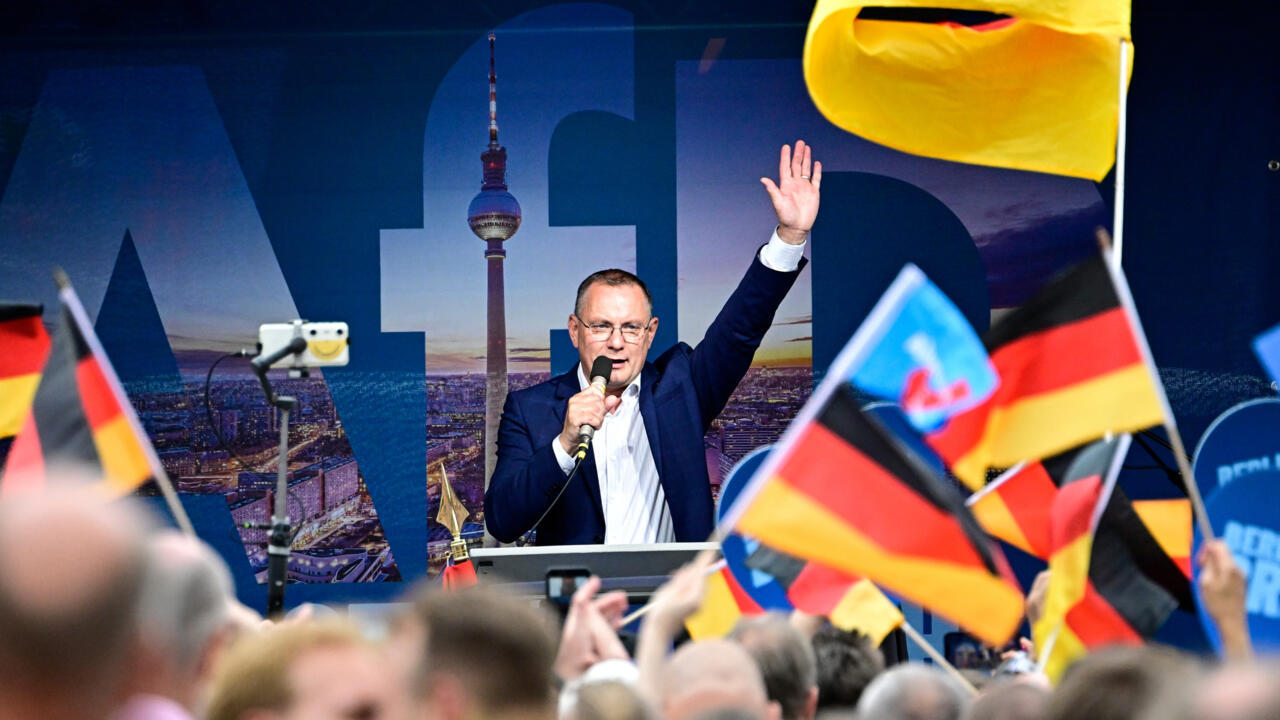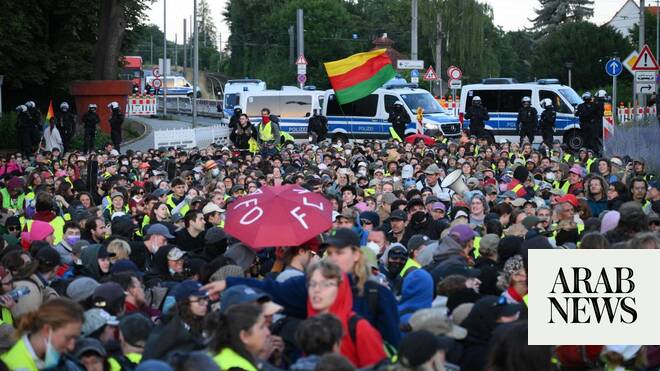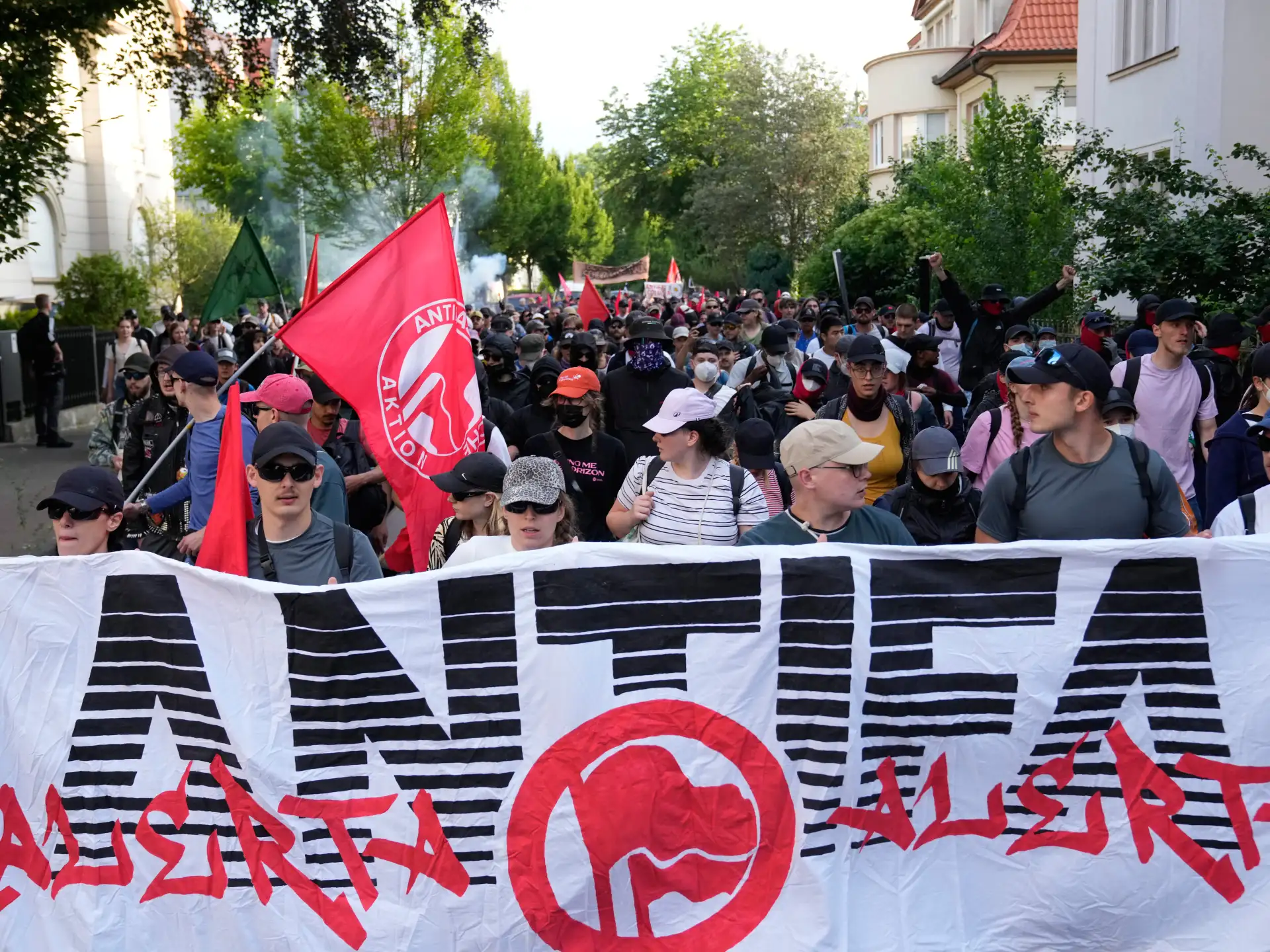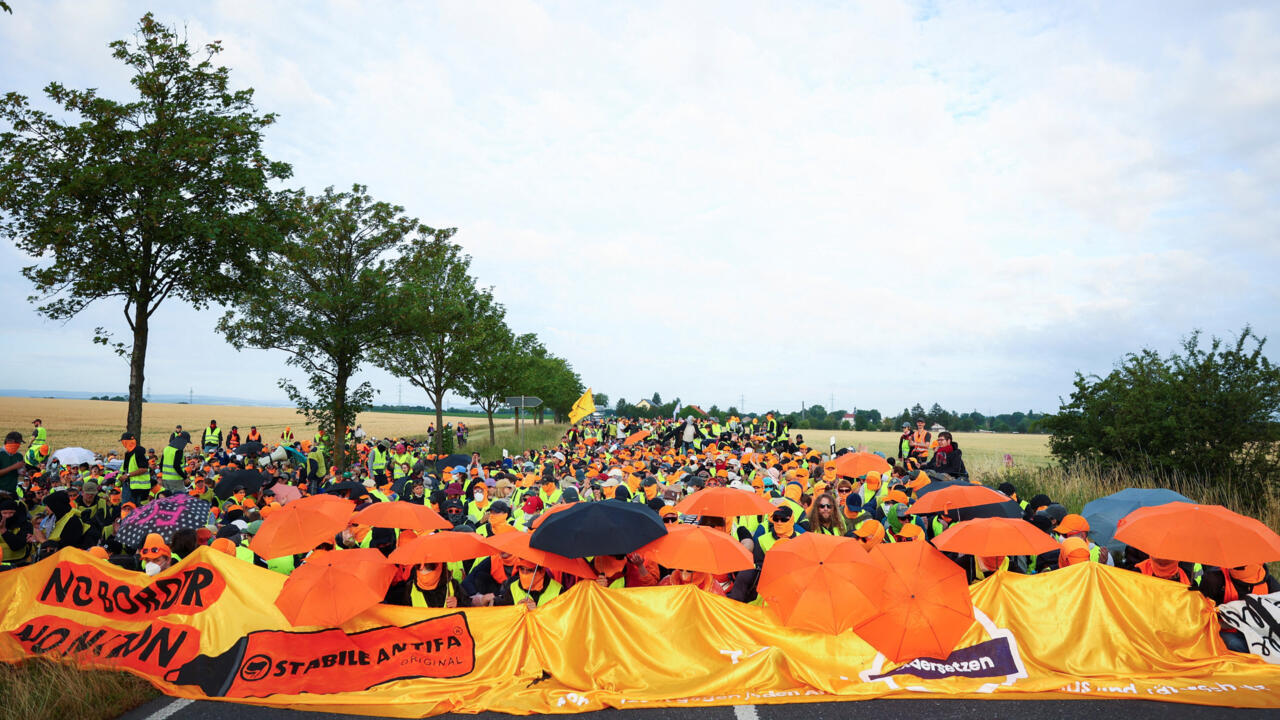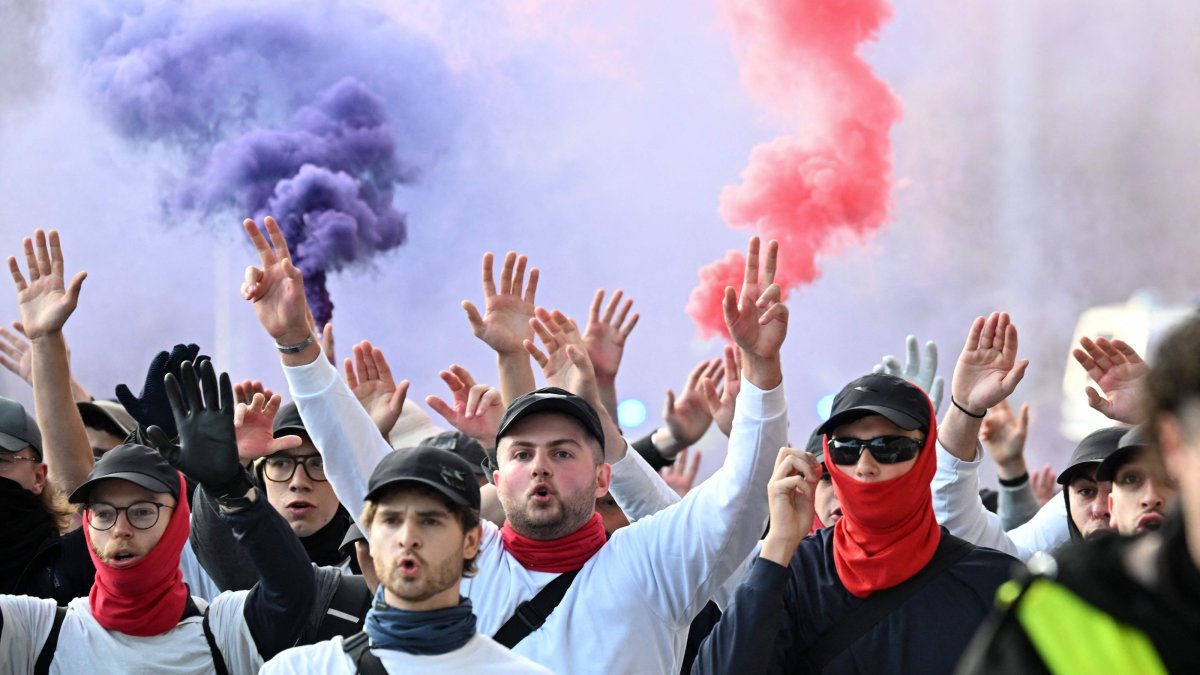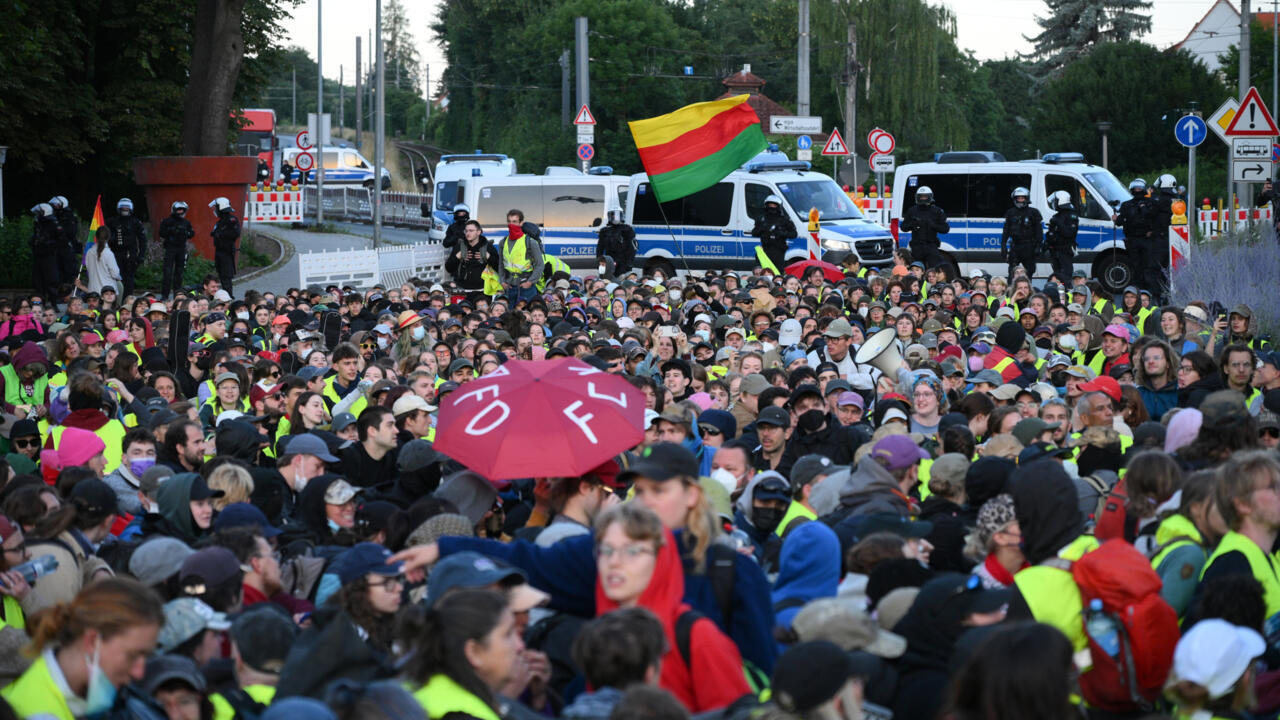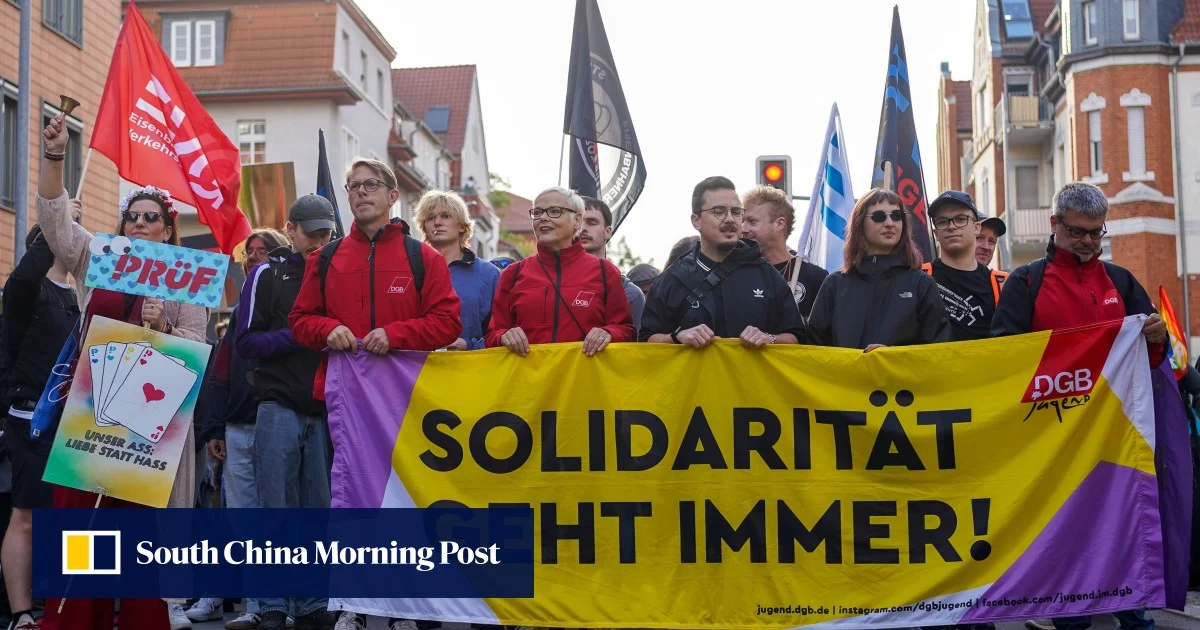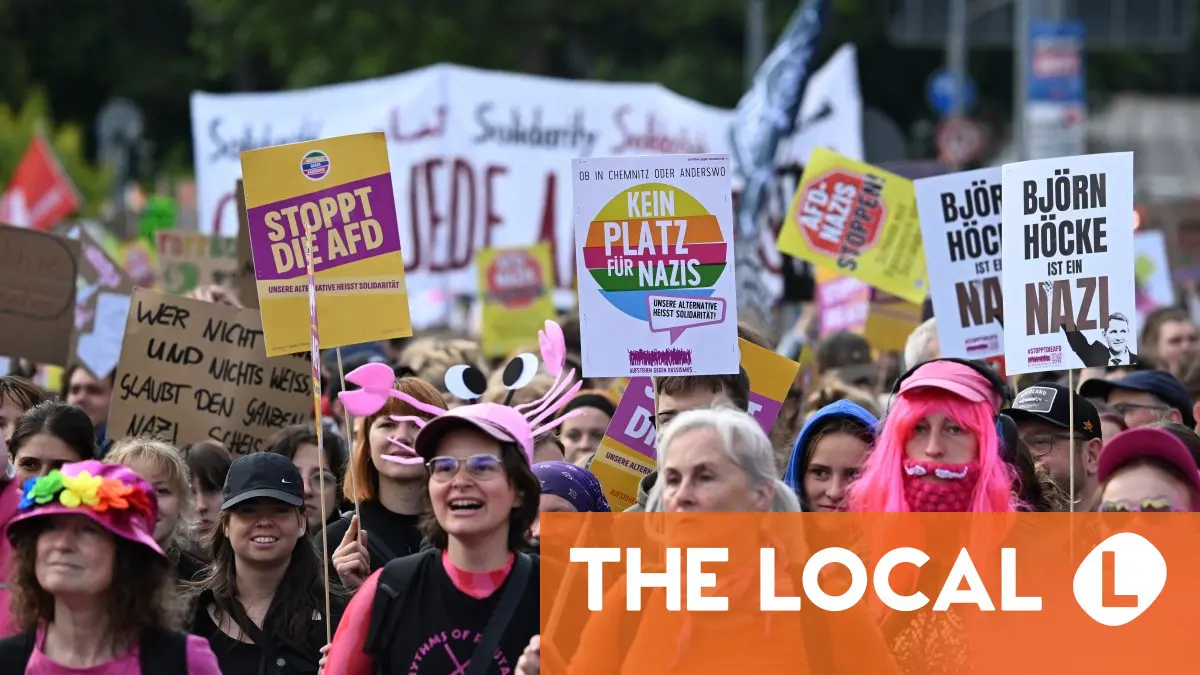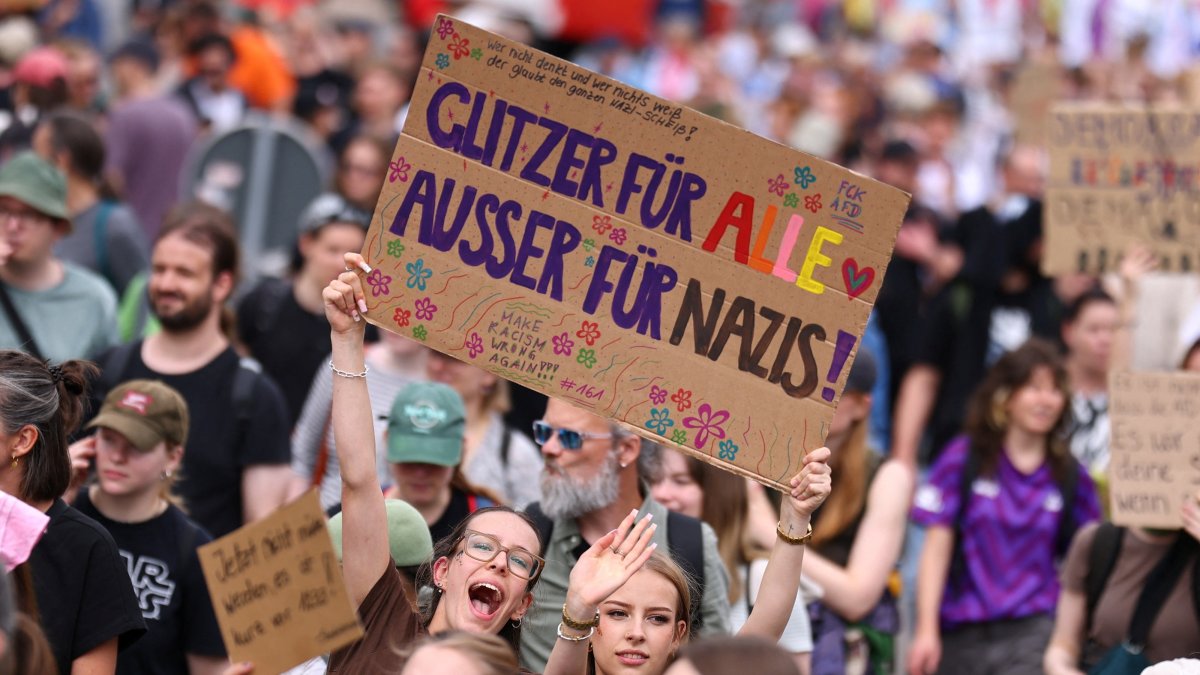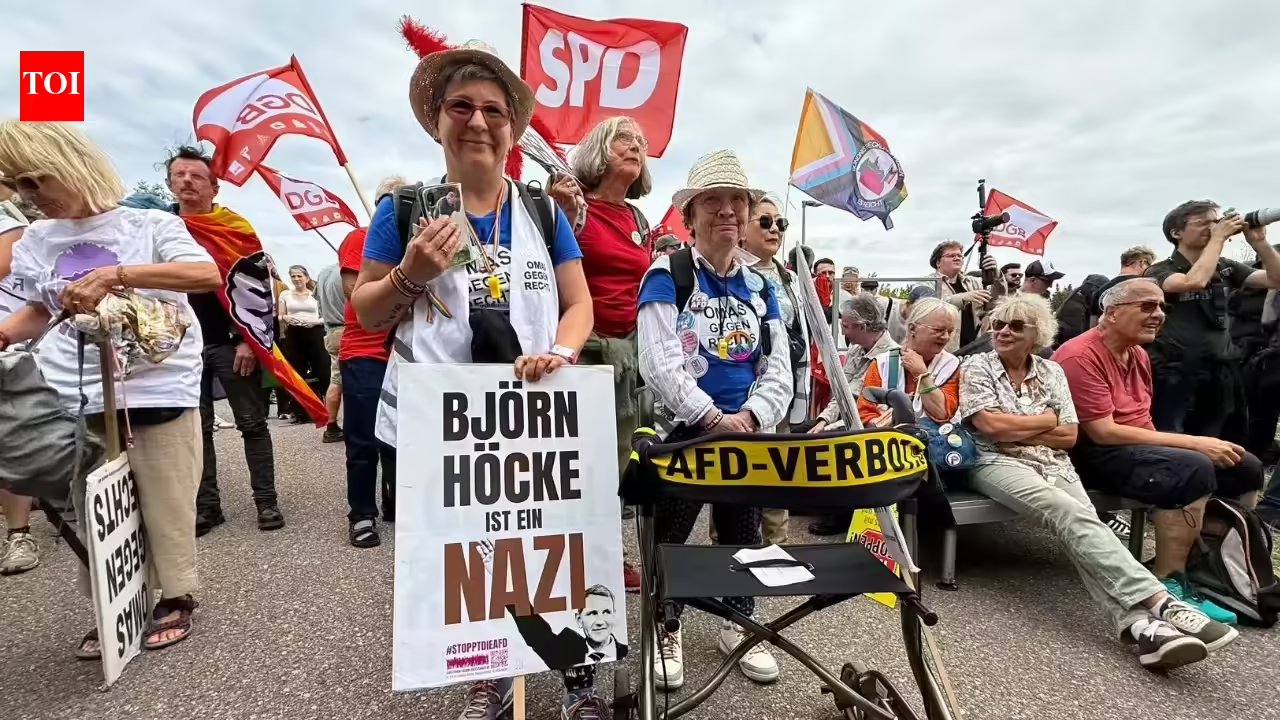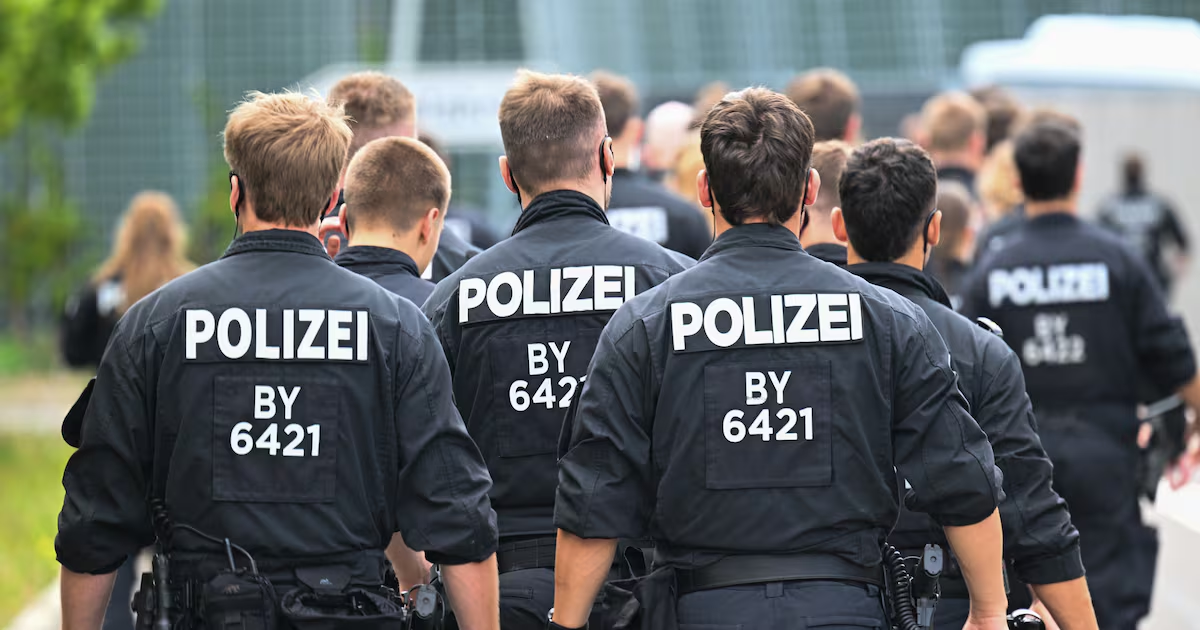
Locals in the eastern German city of Erfurt knew things were getting serious when their local Ikea announced it was closing this weekend.By keeping its shutters down, the Swedish homewares giant bowed to a greater force: the Alternative for Germany (AfD).Over 50,000 people are expected to protest – and possibly shut down – the AfD’s annual conference here, where delegates hope to celebrate their party’s latest surge in opinion-poll support to 27 per cent.That makes the AfD Germany’s most popular party, with a five-point lead on the ruling Christian Democratic Union (CDU) of chancellor Friedrich Merz.On Friday in Erfurt’s central Anger square, as a singer knocked out “A Change is Coming”, local small business owner Anke nodded along hopefully. “The established parties just milk us with taxes, rates, every kind of charge, and the AfD are the only ones pushing back against that,” she said. “Even if you don’t back the AfD, you can just sense the other parties are exhausted.”Around her, young left-wing campaigners in high-vis vests hope for change too, but not led by the AfD.“We’re getting a very mixed reaction, even outright insults, with people saying we are paid agents,” sighed Tobias, a 21-year-old engineering student. “AfD people here are often not extremists; they’re afraid for their existence and their children and are ready to ignore its more dangerous policies.”The AfD surge is particularly pronounced across eastern Germany: 40 per cent in Thuringia, of which Erfurt is the capital, and 41 per cent in the neighbouring state of Saxony-Anhalt, which chooses a new government in September.Its 18-point lead on the second-placed CDU means the AfD’s Ulrich Siegmund will be the shooting star of this weekend’s gathering.Ulrich Siegmund is the far-right AfD's top candidate for the regional elections in Saxony-Anhalt. Photograph: Tobias Schwarz/AFP/Getty Images With his buzz-cut and tailored blue suits, the telegenic 35-year-old is on course to be the AfD’s first-ever minister president, the first time the far-right has held office in Germany since 1945.On his way to Erfurt, Siegmund used a social media post to frame the expected mass protests as the real threat. “I only hope that the authorities intervene firmly against those who try to hinder democracy,” he said.For many in the AfD, founded as an anti-bailout protest party during the euro crisis, Erfurt is the party’s spiritual home. The local state party is one of Germany’s strongest, headed by the AfD’s most radical leader, Björn Höcke. A supporter wears a T-shirt with an image of the AFD's top candidate for the regional elections in Saxony-Anhalt, Ulrich Siegmund. Photograph: Jens Schluter/AFP/Getty Images In 2014, the last time the AfD held its conference here, delegates backed Höcke’s so-called “Erfurt Resolution” that triggered a pivot to its current far-right conservative identity. Growing tensions from the refugee crisis expedited that shift, in particular the 2015/2016 attacks by asylum seekers on women at the Cologne New Year’s Eve celebration and on a Berlin Christmas market. The party has radicalised still further in the intervening years, most recently backing various forms of so-called “remigration” policies: expulsions of criminal foreign nationals or even non-ethnic Germans with German citizenship.Throughout it all, as AfD leaders came and went in Berlin, Höcke has remained a constant, flirting with controversy with borrowed Nazi slogans and symbols.Many suspect it was his idea to hold the Erfurt gathering exactly a century after Germany’s National Socialist (Nazi) Party held its second party conference down the road in Weimar.That was the party’s first gathering after Hitler’s release from prison in Bavaria. German historian Prof Jens-Christian Wagner sees the date and location as a clear dog-whistle to extremist AfD supporters. Wagner, director of the Buchenwald concentration camp memorial located between Weimar and Erfurt, said: “With the best will in the world, I cannot believe that this is a coincidence.”Like many involved in German memory work, Wagner expects a tough crackdown on his historical institution – and him personally – if, in power, the AfD realise their historical revisionist policies. To get to power, though, AfD leaders have to crack the informal, metaphorical “firewall” that blocks political co-operation with them.AFD supporters of the far-right wave German flags, including one adorned with an iron cross, at a campaign rally ahead in Erfurt, Germany, in 2024. Photograph: Sean Gallup/Getty Images This week Matthias Döpfer, head of the influential Springer media group – owner of Bild, Politico and, since this week, London’s Daily Telegraph – denied strenuously a report that he lobbied chancellor Friedrich Merz to demolish the firewall.But, while some in the CDU are starting to shift restlessly, Merz insists this will not happen as long as he is party leader. “No one should underestimate just how firm my will is to prevent just that,” he said on Thursday.Across Erfurt city centre on Friday, police were stationed in large numbers, supported by officers from neighbouring federal states. They face a difficult balancing act this weekend to guarantee the assembly rights of both AfD delegates and their protesting opponents.On Erfurt’s Anger square, where the gospel singer is belting out Amy Winehouse’s Back to Black, campaigners fear Germany is sliding back to fascist brown. “The AfD have been very clever, portraying leftist protesters as the chaotic, dangerous mob,” said Andreas, a 23-year-old campaigner from Die Linke (The Left). “We know there will always be a few nutjobs in hoodies. But all the major groups this weekend have signed a commitment to peaceful protest. We can only hope that holds.”
German police brace for unrest as far-right AfD edges closer to power
Protests planned in Erfurt where delegates will celebrate party’s rise to become the country’s most popular political force
905 words~4 min read