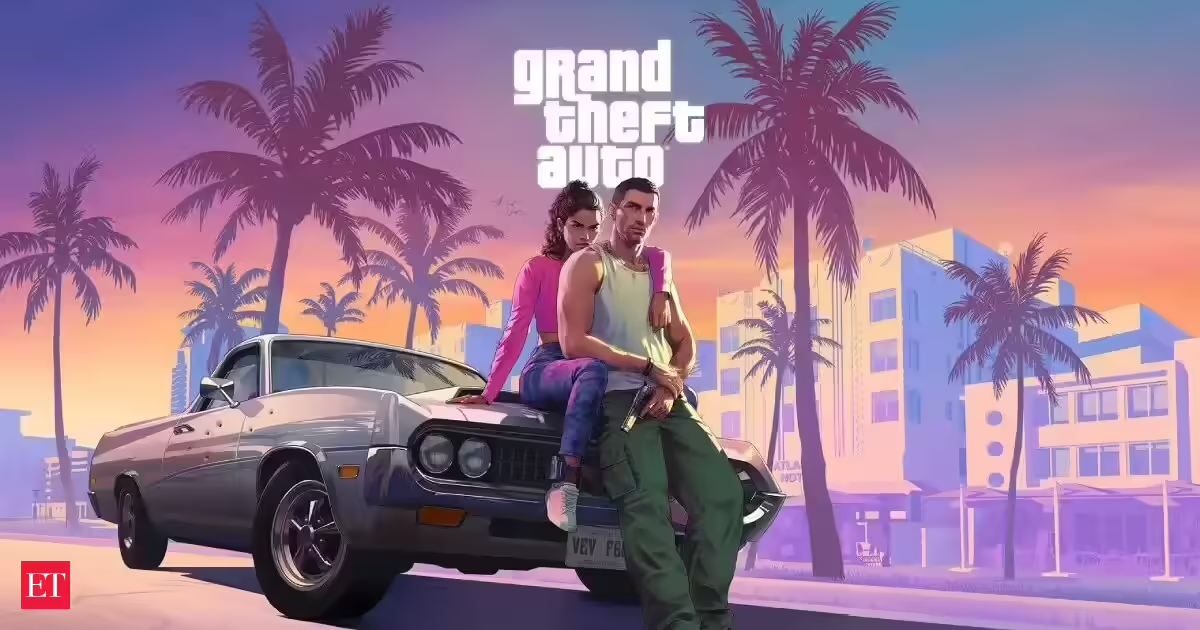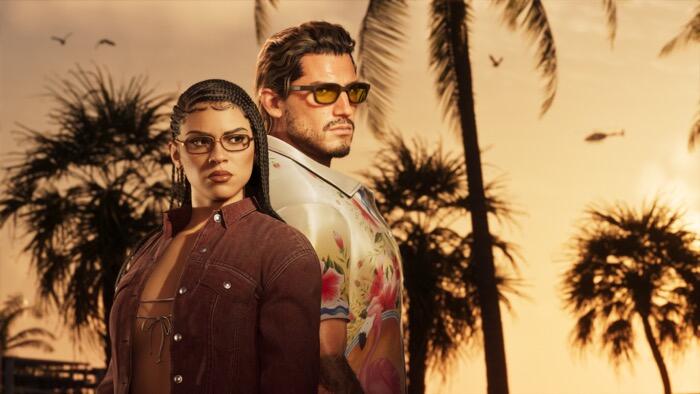
Gamers have been waiting more than a decade for the next installment of the wildly popular Grand Theft Auto video game series. And finally, just last week, pre-orders for Grand Theft Auto VI began. The game is slated to drop in November.One report suggests that Grand Theft Auto brought in $1 billion in pre-orders just one hour after launch.For more on this, “Marketplace Morning Report” host Kimberly Adams spoke with Dmitri Williams, professor at the University of Southern California's Annenberg School for Communication and Journalism. The following is an edited transcript of the conversation.Kimberly Adams: Can you help me better understand the scale of the hype around this game?Dmitri Williams: It is justified. It is probably going to be the most valuable media property in the history of mankind. So, I would say that is worth some hype. But this is a very, very large industry, which doesn't usually get the kind of attention it should — proportionally — given the amount of money it brings in.Adams: That's quite a claim. The biggest launch of all mankind. Say more.Williams: Well, there's a decent chance that this game is going to make billions of dollars. Its predecessor made a little under $1 billion in its first day, and it was the most successful media launch of all time. And this will probably be somewhere between two and four times that large, so you're talking about maybe $3 billion or more in its first year — most of that will be tilted in the first day or two. And there just isn't anything else like that. If you think about the biggest movies, the biggest books, the Super Bowl, FIFA — I mean, these are numbers with a lot of zeros, and it's something that is global and is not cheap, but is used by a whole lot of people.Adams: How do these numbers compare to, say, a big movie release, or, as you said, FIFA or the Super Bowl?Williams: Think about the sort of the bang for the buck here, compared to other media. This is going to be an $80 or $100 price tag, which is, sure, a whole lot more than a movie ticket or a new best-selling book. But a game like this could generate hundreds or even thousands of hours of entertainment consumption for each person who buys it. And when the inevitable multiplayer version comes out, it's more like buying a basketball — that you can play indefinitely — than a book that you read and probably never read again. And a lot of people are going to make the decision that that is a good use of their time and money compared to other media.And let's just put this in perspective, for sort of how large the video game industry is. Analysts vary a little bit, but the overall games industry is somewhere around $200 billion a year. Compare that to something better known, like say movies, and movies are around $30 billion to $35 billion a year. So gaming is at least six times as large as the motion picture box office. And the same for music, which is about the same size.And it's easy to discount this because games are just silly fun, right? It's dumb stuff, your kids are playing it in their basement, or whatever. So our sense of cultural importance and our awareness of games is pretty far from the reality, that certainly markets have priced in and have figured out, even if the culture hasn’t always.Adams: Grand Theft Auto VI has a slightly higher price tag than other similar big-budget studio releases. How are folks reacting to the price tag?Williams: There's a fair amount of breathlessness among analysts, but I don't think that the actual population is going to blink an eye. If you think about the sort of the dollar-per-hour of use, it's an extraordinary good deal. I mean, if these guys have spent probably a billion and a half dollars to make this game, that's going to be a lot of content, and it's going to be pretty good. Now, that doesn't mean that video games in general can be priced this way. This is an exceptional property with immense brand loyalty.Adams: Say more about this particular title and its role in society. I feel like I have heard about Grand Theft Auto for most of my life at this point.Williams: Well, it's been out for a really long time. I mean, this is the sixth iteration, but the spirit of the whole thing from the beginning has been purely transgressive. I mean, this is really an anti-hero kind of property, and so the same thing that maybe draws audiences to “Breaking Bad” or to “The Godfather” is this interesting quirk in Western society where we live within rules, but we also really enjoy breaking those rules. So perhaps it's not that surprising that audiences flock to it.Adams: You mentioned earlier that this could give people potentially endless entertainment for the cost of the game. But, as of now, there is no guarantee that they're actually going to get a physical disc to play the game. It's going to be potentially a code for a digital download. Can you talk about this shift to digital-only gaming and what it means for the industry and gamers?Williams: If you went back, say, 10 years or certainly 20 years, you had very few people who could download things in general. But now bandwidth is getting cheaper and cheaper. That's made for a pretty uneasy alliance between the developers and the brick-and-mortar retail stores that have been selling these games, who need a ‘thing’ to sell. And they had to employ those brick-and-mortar retailers, but now they don't. So, the leverage in those relationships and distribution has really shifted over time. The power now lies in the hands of the developers.There will still be demand for people who want a physical thing: collectors, people who want a statue or whatever. And they'll be able to go and get that. But there hasn't been a need for this for a while, and the markets are just pricing this in.Adams: For some folks — and I've heard this from critics — there is a need. I'm imagining the people who maybe can't afford to buy a game and would want to share it with friends and take it from one place to another. And there are critics that say this is a consumer rights issue. What do you think?Williams: I think that in our regulatory environment, consumer rights are wishful thinking. This is about power. Sorry to give you the cynical answer, but it's about the control over the space, and the control lies in the hands of developers. Why do companies do what they do? And the answer is almost always because they can. For their side, for defense, it's also an issue of preventing piracy. And, in fact, most of the video game industry works off of free-to-play, where there's never a physical thing, and you don't even have to pay anything up front. And this is really a response to games being easy to copy and trade around.
At last, Grand Theft Auto VI is available for pre-order
And one expert says it’s going to be the most valuable media property ever.
1,198 words~5 min read