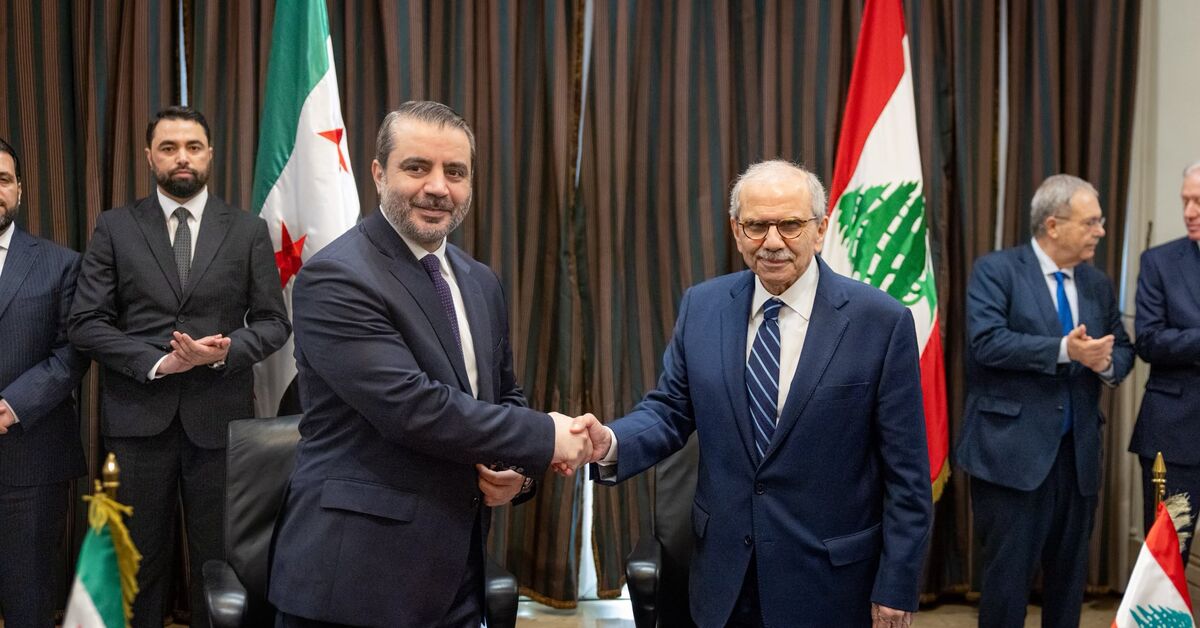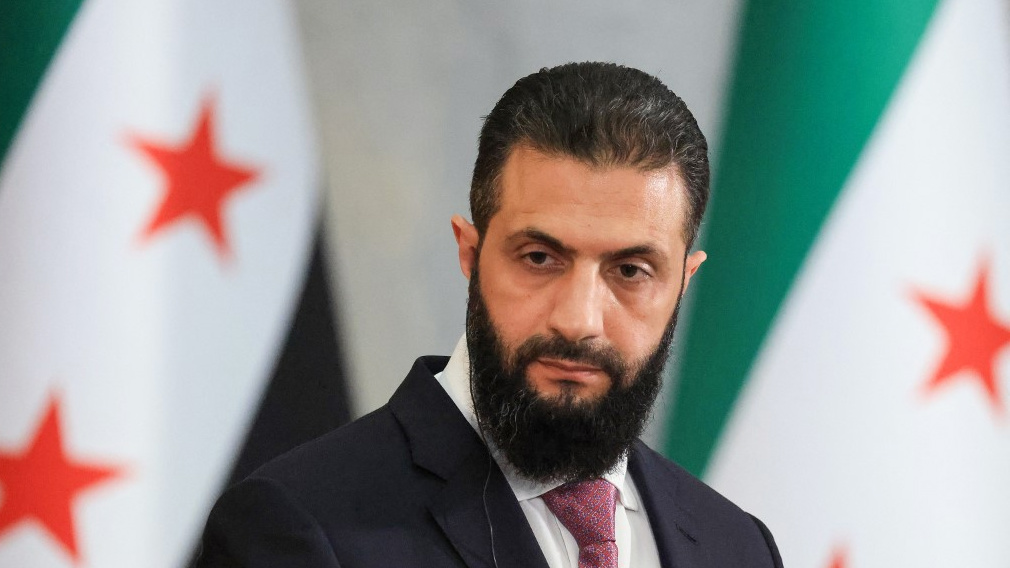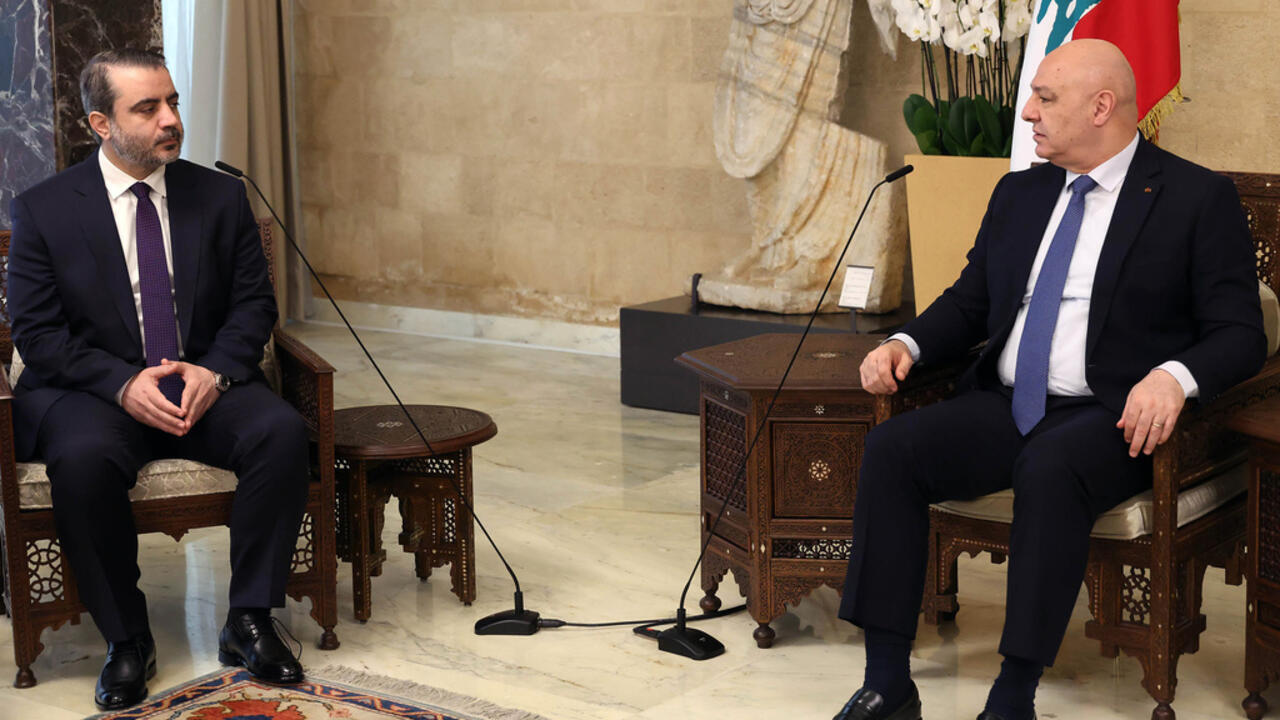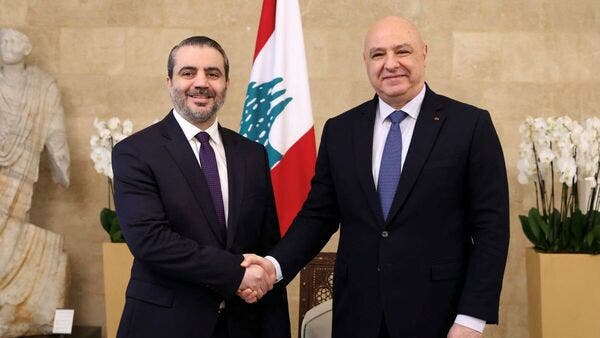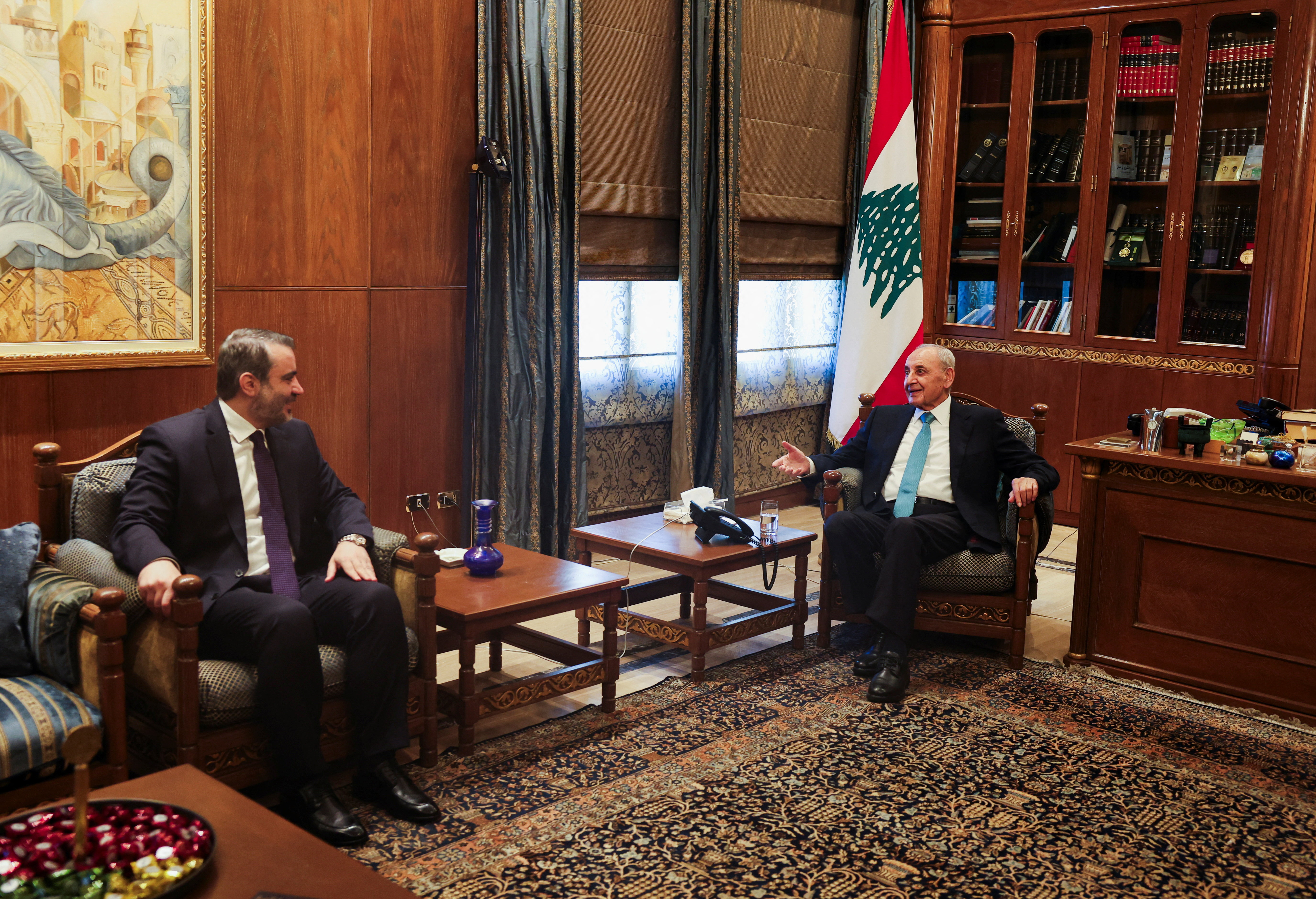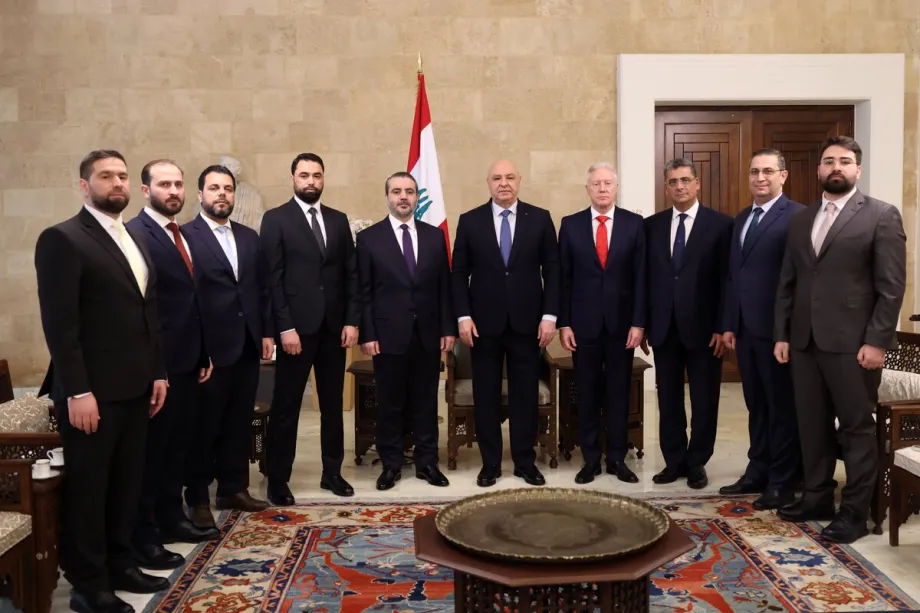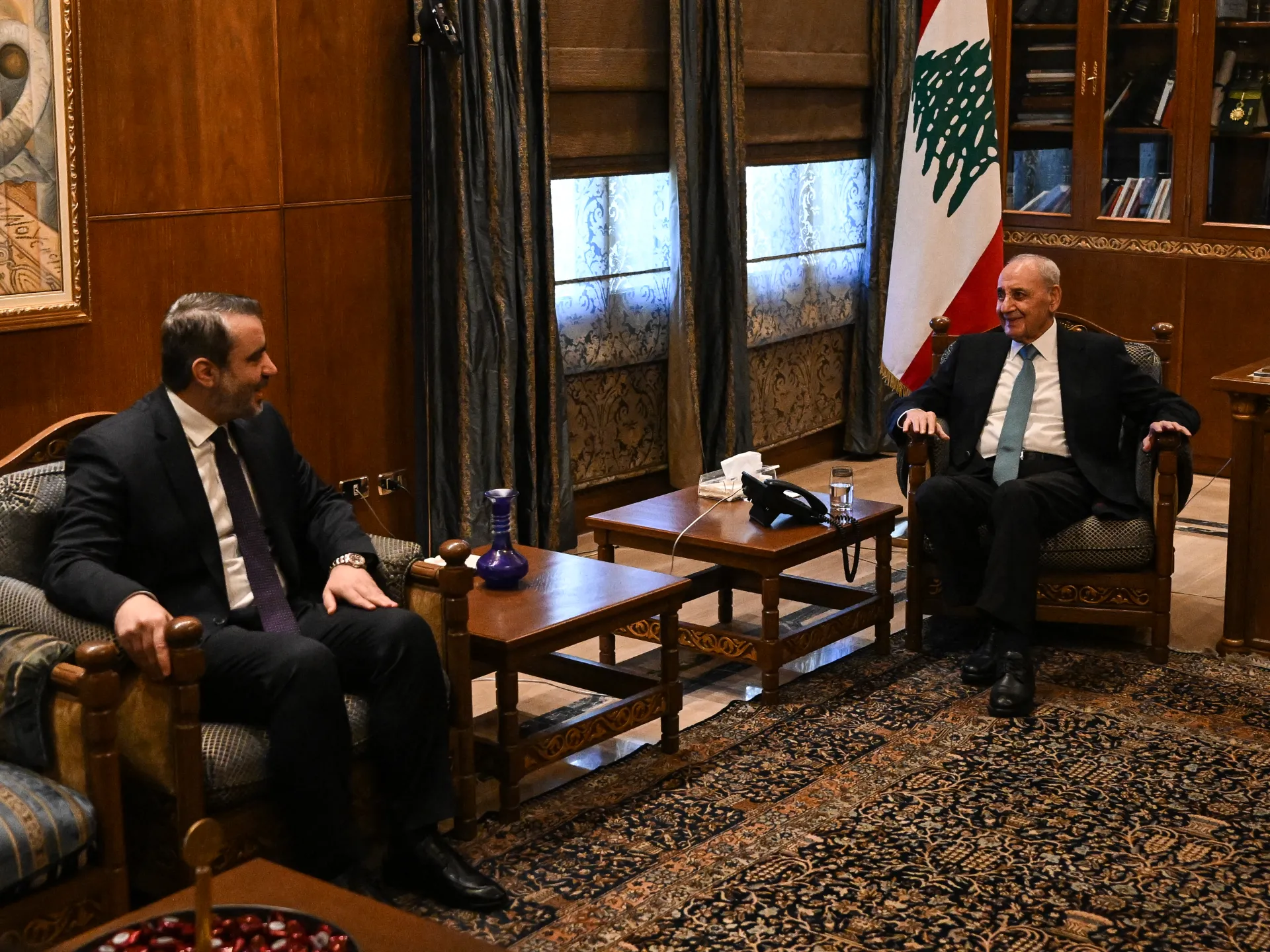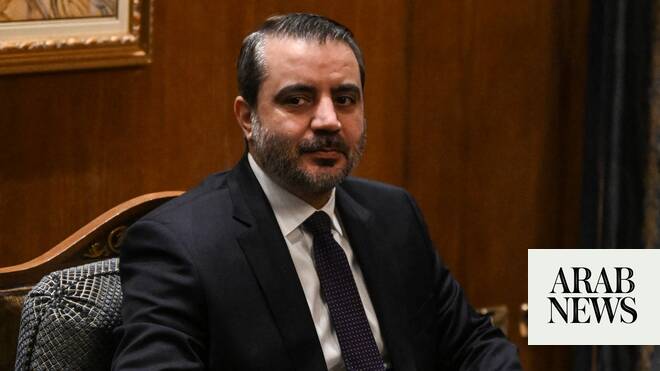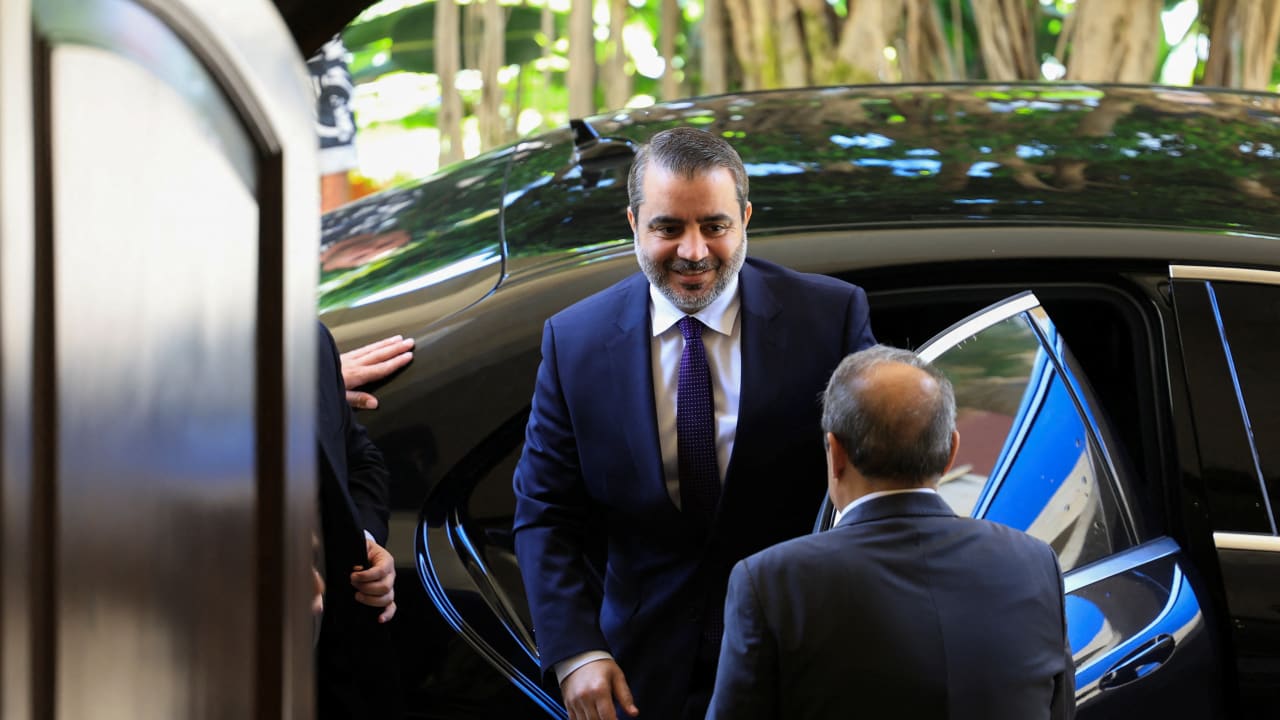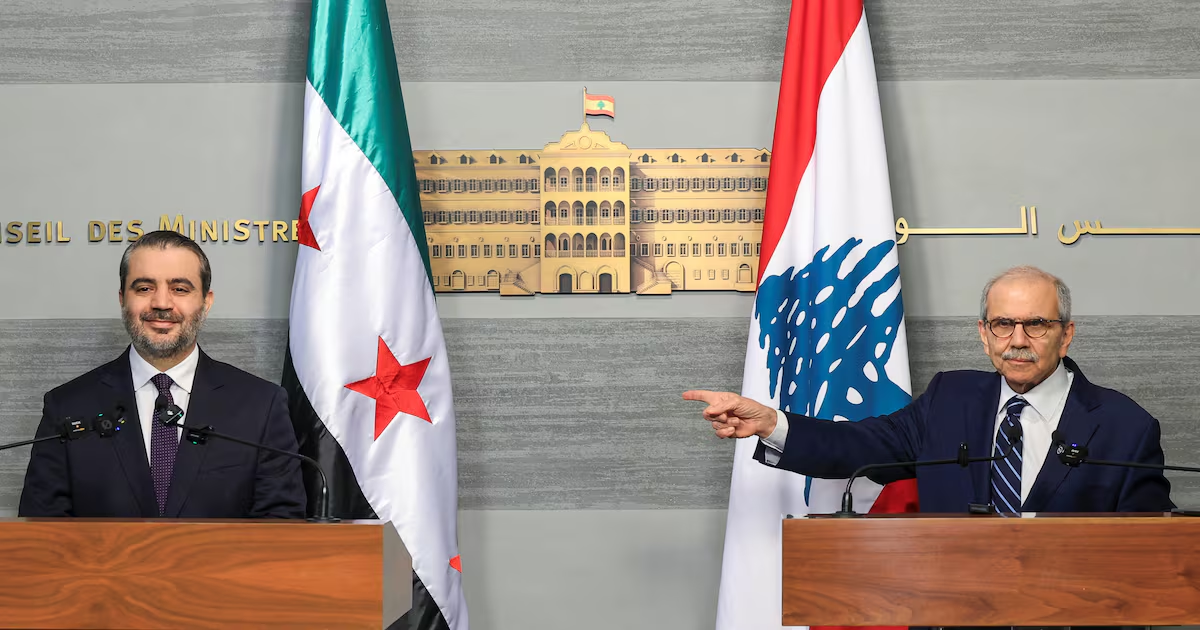
After almost every meeting with Syria's Foreign Minister Asaad Al Shibani in Beirut, Lebanese politicians repeated the same narrative: the neighbouring official pledged that Damascus was not seeking to regain sway over Lebanese politics.It was a remarkable statement that, according to political sources in the Lebanese capital, aims to quell concerns in Beirut of a possible return to Syrian influence over the country's ailing system.But it was also a window into Syria's balancing act, focused on pleasing the US by potentially helping the Lebanese state confront Iranian influence, all while making sure the newly established rule in Damascus doesn't fall into a bloody quagmire.“Publicly, Syrians want to say that they are seeking to break more ice with Lebanon and enhance ties. But they have also conveyed messages that they are willing to assist the Lebanese state in any way it sees fit,” a Lebanese political source told The National during Mr Al Shibani's visit on Thursday.“Syria is doing well, and wants Lebanon to do well too. There is much to do together, from border control to economic partnerships to even security, with remnants of the Assad regime hiding in Lebanon,” added the source.“But the US pressure to push Damascus back into some sort of role in Lebanon is real, and the Syrians seem to have understood that they have to find a way to make that happen without compromising the trajectory of the new rule in Damascus. The question is: what type of role can the Lebanese accept?”Last month, US President Donald Trump said Syria could help “take care” of Hezbollah, praising President Ahmad Al Shara's leadership while calling for more military action against the Iran-backed militant group amid Israel's deadly war on Lebanon.Play02:25Could Syria intervene in Lebanon against Hezbollah?Lebanon's strategic valueThe remarks fuelled concerns about a potential push for Syria to get involved in Lebanon militarily again, with a possible incursion from the east to fight Hezbollah. President Trump said he wanted a “better life” for Lebanon, adding that the US could assist in that effort or recommend Syria as a potential partner.The idea was first discussed last year, The National understands, and resurfaced after the start of the Iran war in February. In recent weeks, Mr Al Shara sought to calm fears, saying in an interview with a Lebanese journalist that Damascus wanted to address the issue of Hezbollah without pushing Lebanon into the kind of devastation Syria experienced during more than a decade of war.“Syria has so far avoided direct engagement in the regional war and refrained from opening a front against Hezbollah,” wrote Abu Dhabi's Emirates Policy Centre.“However, this path does not resolve the challenges that Syria may face after the war. If Tel Aviv succeeds in removing Hezbollah from southern Lebanon, it will likely press for heightened security measures in southern Syria. In turn, Hezbollah may pressure Damascus to reopen smuggling routes for arms, creating new strains on Syria's already fragile position.”Soldiers stand guard at a Syrian base in Lebanon in 2005. Getty imagesInfoThe US view of Syria's support for Lebanese politics isn't new. Since the 1975 to 1990 civil war, US administrations have seen Damascus as a power broker in Lebanese politics, given the small country's many problems, including its fragile economy and sectarianism.The latest push echoes previous analysis, mainly a declassified CIA document from 1984, which acknowledged that Syria “will remain the dominant foreign power in Lebanon” and that “the Syrians believe they have a long-term stake in Lebanon and are determined to remain intimately involved there regardless of the costs”.“Syria's involvement in the Lebanese civil war shaped the conflict's course and outcome, with Damascus eventually assuming the role of a kingmaker,” wrote the Arab Centre Washington recently. “Assad [...] recognised Lebanon's strategic value in helping Syria assert a leadership role in the Arab world when it managed Lebanon's affairs during the civil war. Indeed, maintaining influence in Lebanon became a matter of survival for the regime in Damascus”.Gesture of loyaltyAfter the civil war, Lebanon functioned in the shadow of a Syrian occupation until 2005, when its forces were forced to leave a year after the assassination of former Prime Minister Rafic Hariri, who had embarked on a mission to pull the country out of Syria's orbit.Despite that, Syria's allies in Lebanon, mainly Hezbollah, kept Damascus's influence afloat until the Assad regime dramatically fell in December 2024 after a swift offensive by rebels who had fought Hezbollah for years while Hezbollah supported the regime.Syria's Foreign Minister Asaad Al Shibani waves to crowds on arrival in the northern Lebanese city of Tripoli. AFPInfoSince then, the two neighbouring countries have been on different paths. While both are still struggling to recover, Syria appears to be edging towards renewed economic engagement, whereas Lebanon remains mired in a cycle of financial, political and security paralysis, and an expanding Israeli occupation in the south.Lebanon signed a framework for a future agreement with Israel last month, echoing a step taken by the Syrian authorities to negotiate an end to the Israeli occupation too. “Syria's interest lies in co-ordinating with Lebanon regarding that file, so that each side can have more cards on the table of negotiations with Israel,” said the political source.On Thursday evening, Mr Al Shibani visited Tripoli, the northern Lebanese city that became one of the strongest centres of support for the uprising against the former regime.“I want to thank the people of Tripoli for their warm welcome. This visit is a gesture of loyalty to them, as they stood by the Syrian revolution,” Mr Al Shibani said after being carried on the shoulders of supporters through the streets of the city, evoking images of Syrian officials who once received similar greetings in Lebanon during the Assad era.
To be continued: Will Syria play a kingmaker role in Lebanon again? | The National
While Damascus seeks to please the US by potentially helping Lebanon confront Iranian influence, its rulers also want to avoid falling into a bloody quagmire
951 words~4 min read