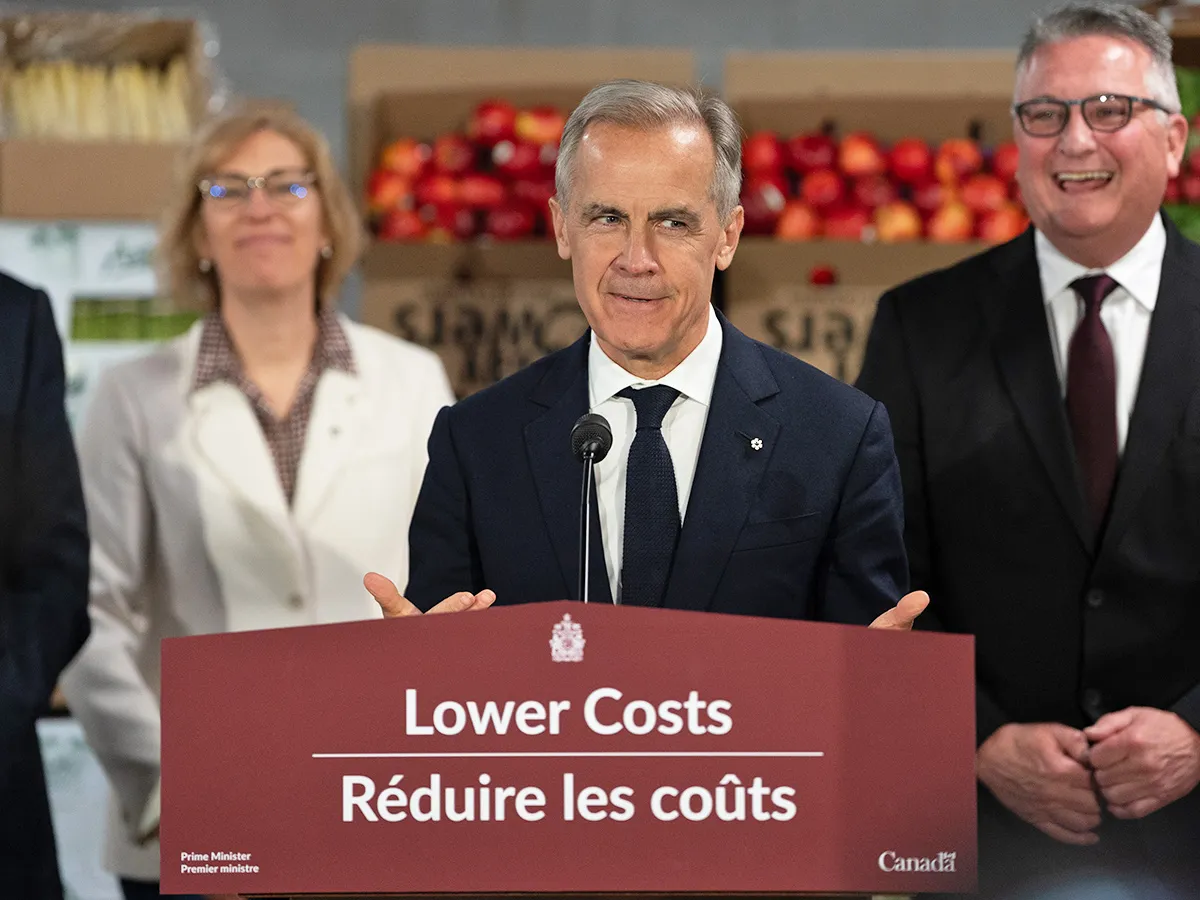
Skip to Content Subscribe Our Offers My Account Manage My Subscriptions FAQ Newsletters Canada Canadian True Crime Canadian Politics Health World Israel & Middle East Financial Post NP Comment Longreads Puzzmo Diversions Comics NP News Quiz New York Times Crossword Horoscopes Life Eating & Drinking Style Sponsored Play for Ontario Travel Travel Canada Travel USA Travel International Cruises Travel Essentials Culture Books Celebrity Movies Music Theatre Television Business Essentials Advice Lives Told Tails Told Shopping Buy Canadian Home Living Outdoor Living Kitchen & Dining Tech Style & Beauty Personal Care Entertainment & Hobbies Gift Guide Travel Guide Amazon Prime Day Deals Savings National Post Store More Sports Hockey Baseball Basketball Football Soccer Golf Tennis Driving Vehicle Research Reviews News Gear Guide Obituaries Place an Obituary Place an In Memoriam Classifieds Place an Ad Celebrations Working Business Ads Archives Healthing Epaper Manage Print Subscription Profile Settings My Subscriptions Saved Articles My Offers Newsletters Customer Service FAQ Newsletters Canada World Financial Post NP Comment Longreads Puzzmo Diversions Life Shopping Epaper Manage Print Subscription HomeNP CommentTristin Hopper: Carney is releasing tons of 'strategic plans,' with few resultsThe easy criticism is that the strategies all read like campaign platforms — filled with grand visions of the future, but often very short on specificsLast updated 35 minutes ago You can save this article by registering for free here. Or sign-in if you have an account.Prime Minister Mark Carney announces his government's Canadian food security program at the Ontario Food Terminal in Toronto on Thursday, June 11, 2026. Photo by Peter Power/Postmedia NewsIf there’s one aspect of federal governance in which Prime Minister Mark Carney has really excelled in these last few months, it’s in the publication of lengthy, high-production “strategies” liberally spiced with words such as “bold” and “ambitious.”Enjoy the latest local, national and international news.Exclusive articles by Conrad Black, Barbara Kay and others. Plus, special edition NP Platformed and First Reading newsletters and virtual events.Unlimited online access to National Post.National Post ePaper, an electronic replica of the print edition to view on any device, share and comment on.Daily puzzles including the New York Times Crossword.Support local journalism.Enjoy the latest local, national and international news.Exclusive articles by Conrad Black, Barbara Kay and others. Plus, special edition NP Platformed and First Reading newsletters and virtual events.Unlimited online access to National Post.National Post ePaper, an electronic replica of the print edition to view on any device, share and comment on.Daily puzzles including the New York Times Crossword.Support local journalism.Create an account or sign in to continue with your reading experience.Access articles from across Canada with one account.Share your thoughts and join the conversation in the comments.Enjoy additional articles per month.Get email updates from your favourite authors.Create an account or sign in to continue with your reading experience.Access articles from across Canada with one accountShare your thoughts and join the conversation in the commentsEnjoy additional articles per monthGet email updates from your favourite authorsSign In or Create an AccountorThe year 2026 has yielded no less than six such plans, on topics ranging from food security to nature.The easy criticism of the trend is that the strategies all read like campaign platforms. They’re filled with grand visions of the future, but are often very short on specifics.The counterpoint is that it can occasionally be valuable for a government to signal a “strategic vision.” The Canadian uranium mining sector, for instance, publicly said their job was made easier by the Carney government’s release of a Nuclear Energy Strategy.This newsletter from NP Comment tackles the topics you care about. (Subscriber-exclusive edition on Fridays)By signing up you consent to receive the above newsletter from Postmedia Network Inc.We encountered an issue signing you up. Please try againBelow, a quick guide to what is being produced in this new golden age of federal strategies.The Nuclear Energy StrategyThe government of then prime minister Justin Trudeau was known to occasionally issue statements or budget directives touting the Canadian nuclear sector. The 2024 federal budget, for instance, pledged to make Canada a “global nuclear leader” and support the development of “small, modular reactors.”For the most part, however, Canada’s well-developed nuclear competency was largely sidelined in favour of federal programs boosting solar, wind and other renewables.So the mere existence of a federal report raving about Canadian nuclear power plants and promising to make more of them was heartily welcomed by the atomic sector, as the Carney government generally holds the reins on whether these projects get approved.One section of the strategy pledged to “enable construction of up to ten new large-scale reactors within Canada.” Another to “double uranium exports from 2024 to 2035.”But as with virtually any document out of Ottawa these days, even the nuclear strategy had to include a few lines about reconciliation. Canada’s nuclear strategy must “increase meaningful Indigenous participation in nuclear projects, including equity partnerships and capacity-building.”The National Food Security StrategyThis strategy was released on June 11, just a week before Statistics Canada would confirm that Canadian groceries were rising in price faster than any other commodity.The 27-page strategy spends a lot of time simply restating the problem. Page three declares “Canada’s future food security will be based on our ability to build a system where food is more affordable.” Page five says that rising food prices are “making it harder for many Canadians and their families to access sufficient nutritious food at an affordable price.”As to how all of this might be remedied, the National Food Security Strategy has two recommendations: “More choice” and “more control.” “Greater choice and control will mean More Canada,” it concludes.In a theme running across many of these strategies, it contains no new government policy. Rather, it’s simply a laundry list of existing federal actions that may help deliver cheaper food, including this summer’s suspension of the Fuel Excise Tax.Canada’s Defence Industrial StrategyThis is easily the most serious of the various strategies. Released in February, it itemizes a goal (build out the Canadian military industry), lays out a budget for that goal ($180 billion by 2035), and even specifies who will be responsible for achieving that goal (a new body called the Defence Industrial Agency).What’s more, defence procurement is one area in which it’s actually quite useful for Ottawa to release something in writing declaring its plans for the future. As the report states, “one of the fundamental challenges facing Canadian industry has been the lack of clear and predictable demand signals and commitments from government.”The strategy is thus a “clear, long-term demand signal” assuring Canadian military contractors will no longer be as flaky on procurement.In a critique published in the Financial Post, retired naval officer Vice-Admiral Mark Norman mostly had praise for the plan, saying its main drawback was only that Canada may not have the 125,000 skilled workers necessary to deliver what was otherwise “the most ambitious industrial policy this country has produced in a generation.”The National Artificial Intelligence Strategy The subtitle of this report, released June 8, is “AI for all.” The gist is that Canada should have more AI in more places, and that such AI should be made nicer to alleviate fears about its adoption. The motto is “safe, reliable, and sovereign AI.”To this end, several sections are devoted towards how artificial intelligence will help Canada reach its various “equity” and reconciliation goals.The strategy promises to “ensure Indigenous peoples have agency in shaping AI development locally and internationally,” and warns of “the disproportionate exposure and impacts of AI harms to equity-seeking groups.”“Given our diverse and multicultural society, our approach to AI must acknowledge and support this rich diversity,” it reads.The artificial intelligence sector is currently dominated by major firms such as OpenAI and Anthropic. The National Artificial Intelligence Strategy dismisses these providers as “hegemons and hyperscalers,” and pledges to instead help subsidize the development of a Canadian AI sector that will be kind, equitable and respectful to “our customs, our history, and our heritage.”The Walrus magazine published an entire feature summing up all the AI experts who hated the strategy. Their basic critique being that it encourages universal adoption of a new technology on the promise that the federal government will ensure said technology works as intended. As one said, “right now, we are encouraging people to fly, adding harnesses later, and accepting that sometimes the flight just goes somewhere completely random.”A Force of Nature: Canada’s Strategy to Protect NatureThis strategy is particularly heavy on declarative statements such as “nature is part of our daily lives,” “nature is foundational to Canadian identity” and “nature underpins much of our economic prosperity.”In prior instances where the Liberal government made measurable promises on conservation, they quickly came to regret them. The best example being a 2019 promise to plant two billion trees by 2030. Ottawa managed just one tenth of that before the program was quickly scrapped in 2025.Canada’s Strategy to Protect Nature avoids this by committing the federal government only to three vague “pillars”: “Protecting nature in Canada,” “building Canada well,” and “valuing nature and mobilizing capital.”By adhering to all three pillars, Canada will “achieve results,” it reads.A National Strategy for an Electrified Canadian EconomyReleased in May, the main takeaway from the electricity strategy was that it marked an official break with the Liberal government’s prior strategy of relentlessly purging any and all fossil fuels from the electricity grid. The National Strategy for an Electrified Canadian Economy acknowledges that Canada will likely be making electricity out of natural gas for decades to come.Otherwise, the report reads like a wish list published by a think tank, rather than a position paper from a government with unprecedented powers to actually build out electrical infrastructure.The report says that, given current trends, Canada must deliver “twice as much power as it does today” by 2050. But as to how this will be done, there’s no new policy in the strategy.Anytime some specific government measure is cited, it’s something that Ottawa was doing anyway. One example: “The Government of Canada will … continue to prioritize projects of national interest that support electricity system growth.”In a conclusion, readers are told to register three takeaways from the National Strategy for an Electrified Canadian Economy: “It is time to act,” “it is time to think big” and “it is time to work together.” Join the Conversation This website uses cookies to personalize your content (including ads), and allows us to analyze our traffic. Read more about cookies here. By continuing to use our site, you agree to our Terms of Use and Privacy Policy.
Tristin Hopper: Carney is releasing tons of 'strategic plans,' with few results
The easy criticism is that they all read like campaign platforms, filled with grand visions of the future but often very short on specifics.
1,741 words~8 min read