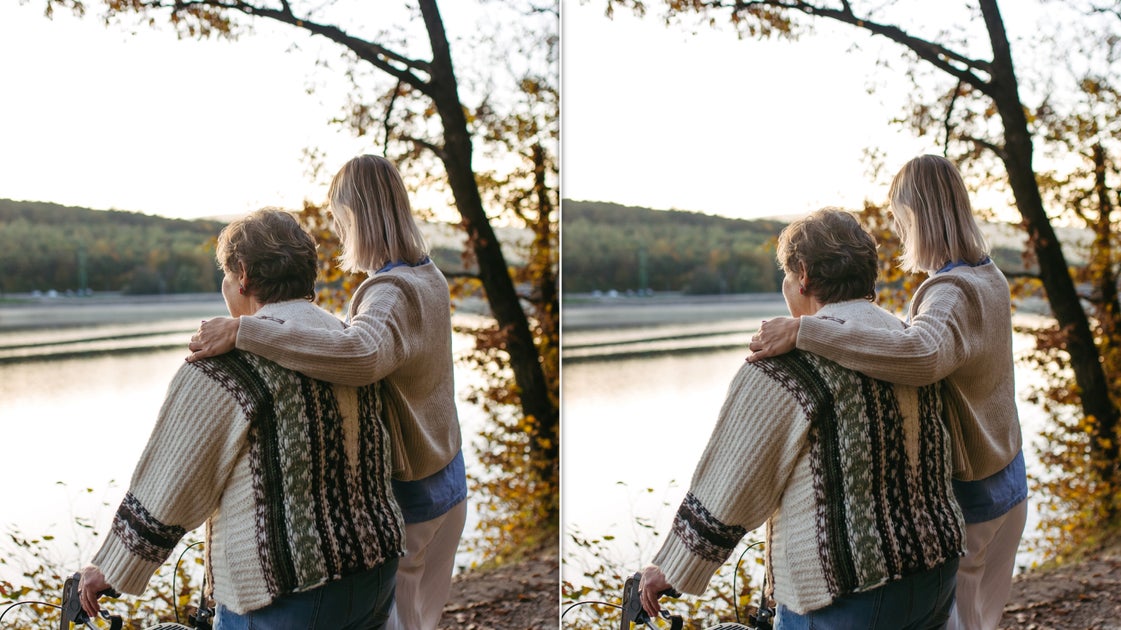
When we talk about dementia prevention and dementia risk, brain health is an obvious factor to consider. Challenging your brain with novel activities and reducing stress levels are examples of cognitively focused dementia tips whose importance can’t be overstated.That’s not all, though: Many types of health can play a role in your risk of dementia, believe it or not. For example, you might have read about the role that social health plays in warding off the disease. Physical health is a factor, too, when we look at dementia-preventing foods and the benefits of exercise in keeping the brain sharp.Yet another surprising piece of your health that very much matters — both as a preventive measure and after a diagnosis — is eye health. “The eye can provide a window to the health of the brain and other parts of the body,” said Dr. Benjamin Bert, a board-certified ophthalmologist at MemorialCare Orange Coast Medical Center in Fountain Valley, California.Ahead, doctors explain the link and how you can care for your eye and brain health simultaneously. How Eye Health and Dementia Risk Are RelatedEye health and dementia appear to be linked in both directions.“Vision loss and dementia are closely intertwined co-morbidities because patients with dementia can present with vision loss, and ... untreated vision impairment or eye diseases can worsen dementia,” said Dr. Andrew Lee, the chair of ophthalmology and professor of neuro-ophthalmology at Houston Methodist.He added that the Lancet Commission on dementia prevention listed untreated vision loss as a major modifiable risk factor for the disease, and that 1 in 5 dementia cases could be partially attributable or worsened by visual impairment. Researchers have looked at this link, too. For example, a recent Rutgers University study found that participants with cognitive impairment have more microvessel abnormalities in the eye. Recent research from Houston Methodist suggested the most critical early indicators of Alzheimer’s disease are hidden in the periphery of the eye, and that a protein that increases during the earliest stages of the disease shows up as stress in the peripheral retina.So, correcting visual deficits could help reduce risk. “Studies have not shown a direct correlation that poor vision leads to dementia, but it certainly increases the risk,” Bert said. “This is likely because correcting the underlying issue allows the person to continue to interact with the visual world around them — use the computer, the phone or other screens to continue to stimulate the brain.”“Studies have not shown a direct correlation that poor vision leads to dementia, but it certainly increases the risk.- Dr. Benjamin Bert, board-certified ophthalmologistLee said something similar: “Vision issues can deprive the brain’s visual pathways of necessary stimulation, which can cause them to be symptomatic and deteriorate faster from dementia.”He also commented on the unique biological connection between the eyes and brain. Eye tissue is the only part of the central nervous system that can be directly and noninvasively observed, he said, in that eye doctors can use the eye as a window to monitor neurological health.So, when you visit the eye doctor (and make sure you do that!), get an exam to assess your vision, contrast sensitivity and retinal blood vessels. This can actually provide insight into your dementia risk. The likelihood of experiencing dementia-related benefits from eye treatments is pretty significant, too. “For example, undergoing optimizing visual correction, including cataract surgery or age-related macular degeneration (AMD) treatment, has been found to reduce a patient’s risk of dementia by as much as 30%,” Lee said.Jelena Stanojkovic via Getty ImagesYour eye health can be linked to dementia risk, according to experts, and vice-versa.How To Protect Your Eye Health To Reduce Dementia RiskWhat else might be helpful at the eye doctor’s office? Several things, actually.“Corrections for the vision could be as simple as updating the patient’s corrective lenses or having surgery to correct underlying ocular issues affecting vision, like cataracts,” Bert said. “In addition, treating other underlying diseases, like glaucoma or macular degeneration, to maximize remaining vision can be beneficial.”Addressing eye issues ASAP — and routinely — is vital. According to Lee, subtle changes in visual sensitivity or damage to the blood vessels in the retina can appear “up to a decade before traditional dementia symptoms present themselves.”General eye health tips include not sleeping in contact lenses, not staring at screens for too long, getting regular eye exams, not ignoring vision changes, removing makeup at night, not staring at the sun, rinsing contact lenses in lens solution instead of tap water, and even not smoking.How To Take Care Of Your Eye Health After A Dementia DiagnosisEven if you or a loved one already has dementia, keeping eye health in tip-top shape is important. “If someone has already developed dementia, ensuring that they have the best vision can allow for them to be able to have the best visual sensory input to allow their brain to work as well as it can,” Bert said. “The added stress on the brain to try and use vision that is blurred overwhelms someone who has dementia and can further their visual impairments.”Lee agreed. “Untreated vision loss can amplify the confusion and spatial awareness issues associated with dementia,” he said. “Providing the right eyeglasses or surgery helps patients navigate their environment safely, reduce fall risk, maintain cognitive fitness and reduce the psychological burden of dual-sensory loss.”Additionally, it’s interesting and important to note that eye exams can track the progression of dementia. The particular “examination” we’re talking about, Bert said, is called ocular coherence tomography (OCT). It’s noninvasive, and eventually, it might enable a diagnosis of dementia earlier in the course of the disease.While addressing eye health is far from a cure for dementia, it can help patients function as well and as easily as possible, and assess how severe their case is. See what we mean?
The Surprising Dementia Risk Factor That Has Nothing To Do With Your Memory
Just one of many reasons why routine appointments for this body part are so important.
964 words~4 min read