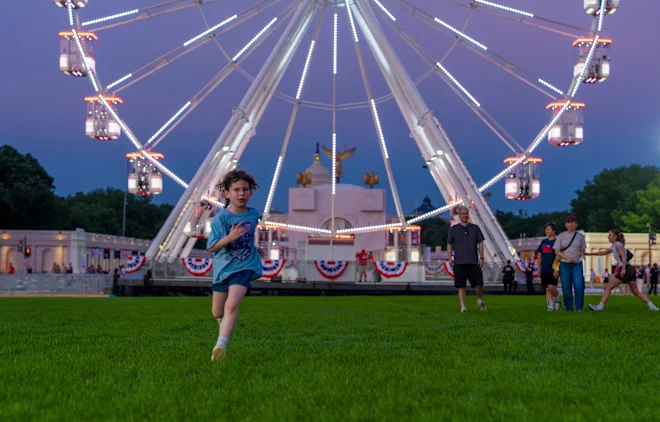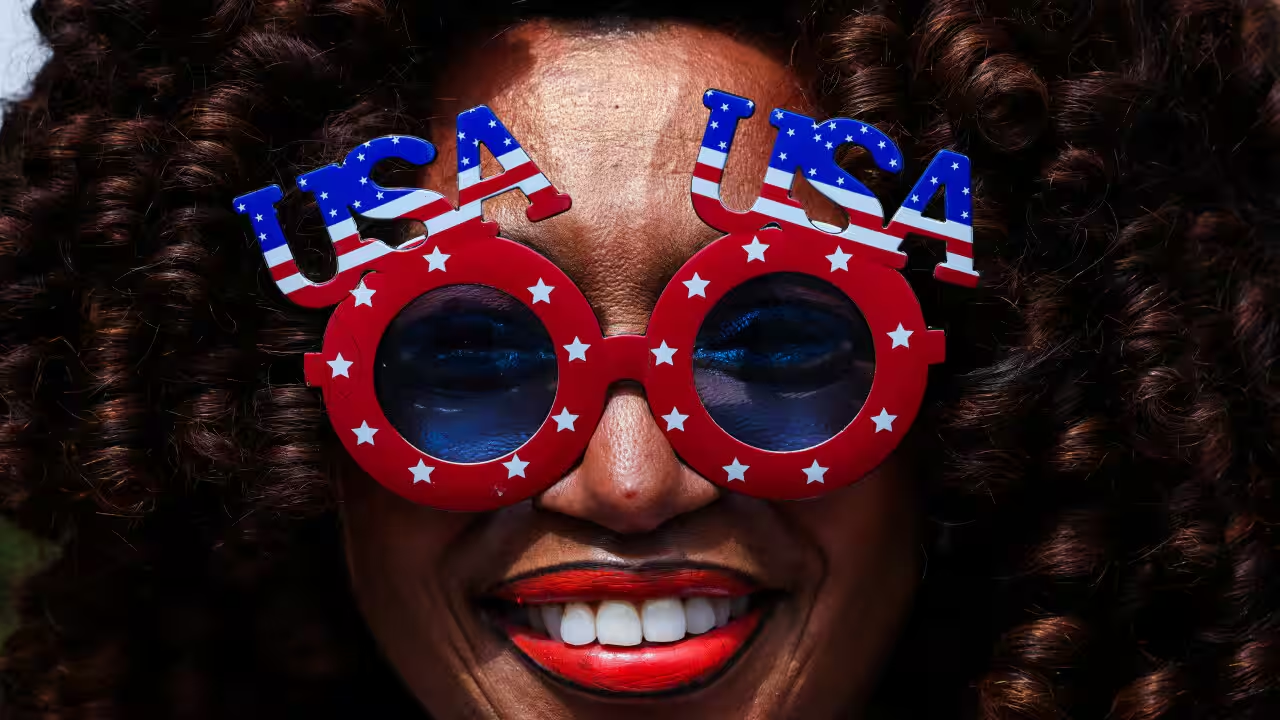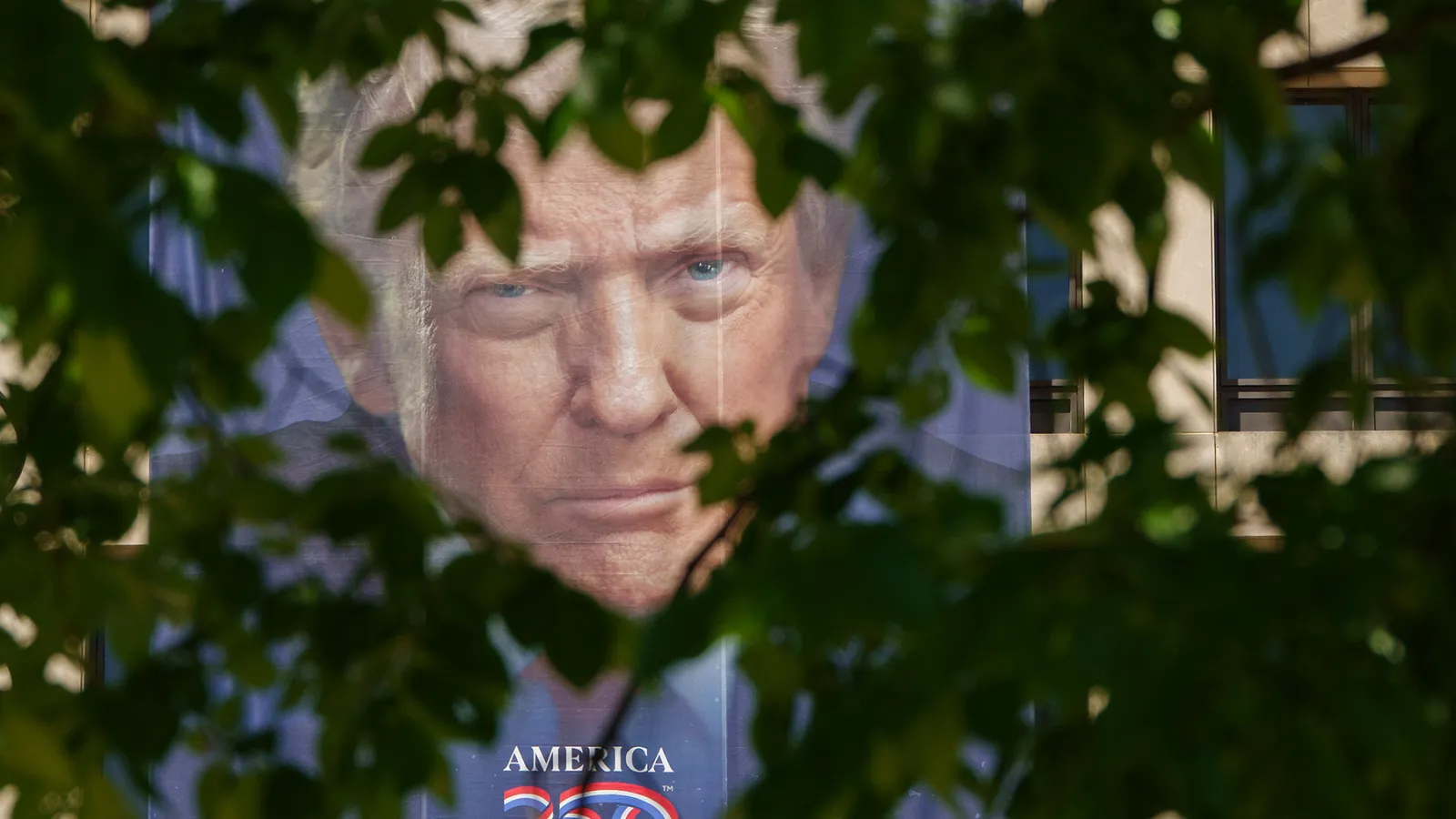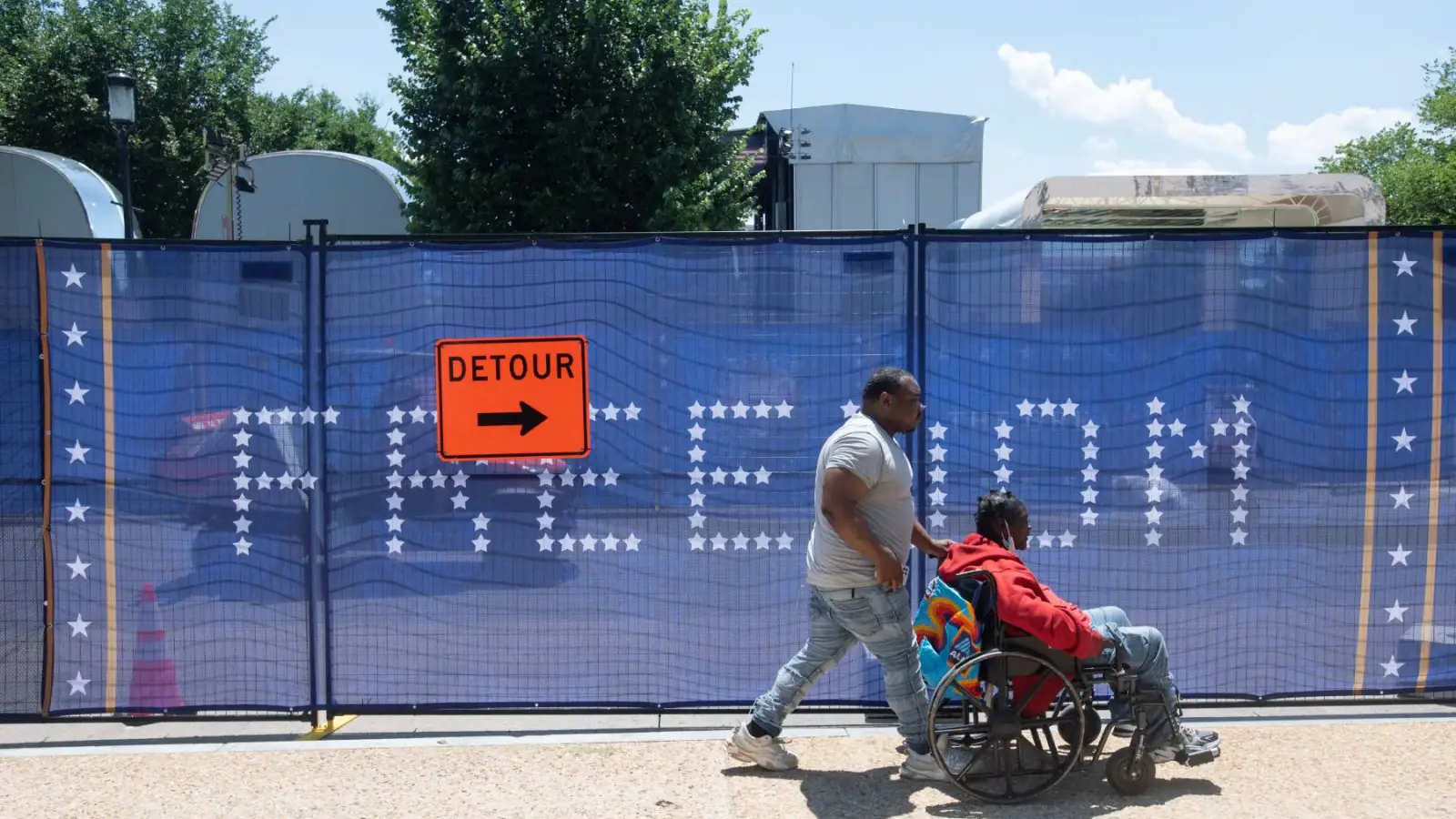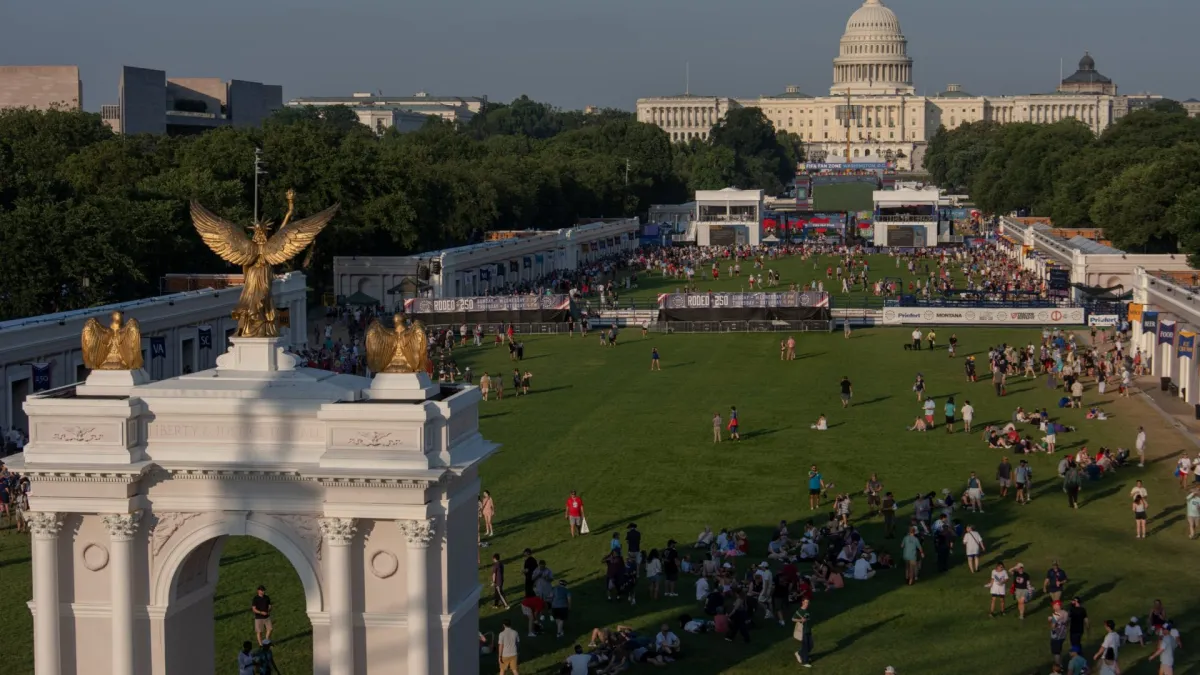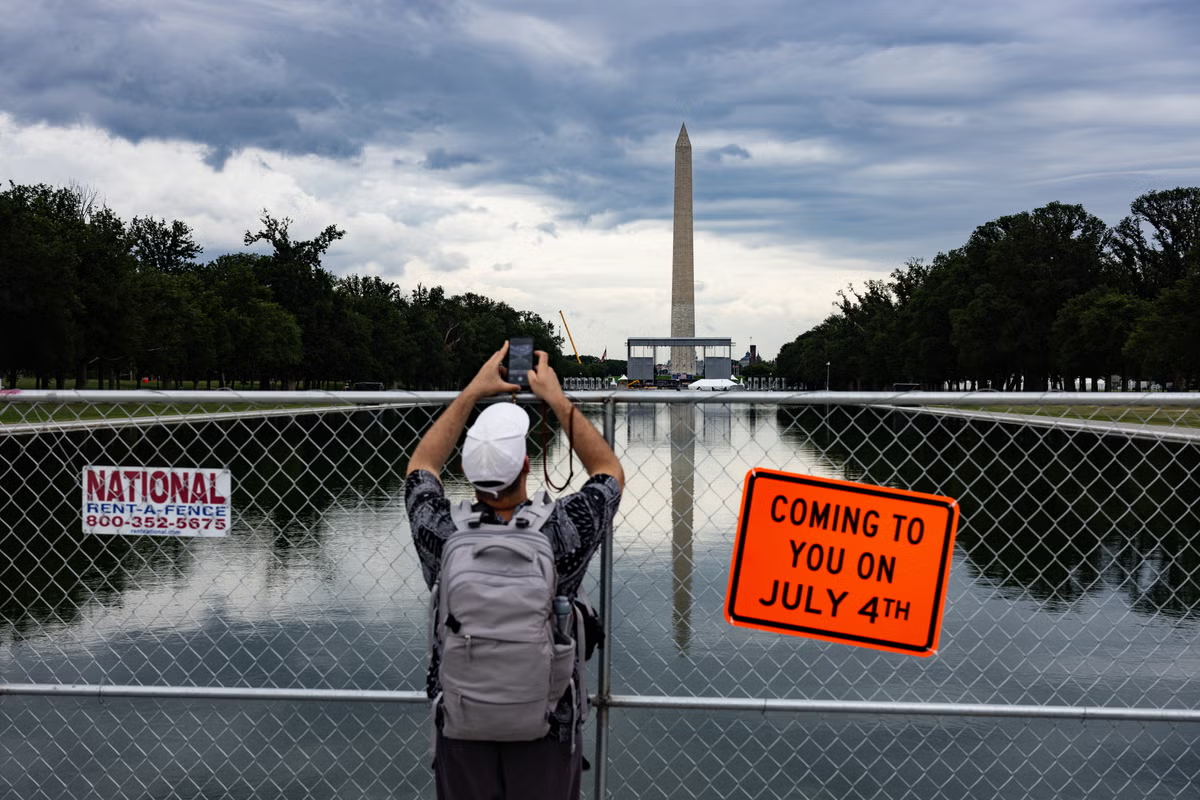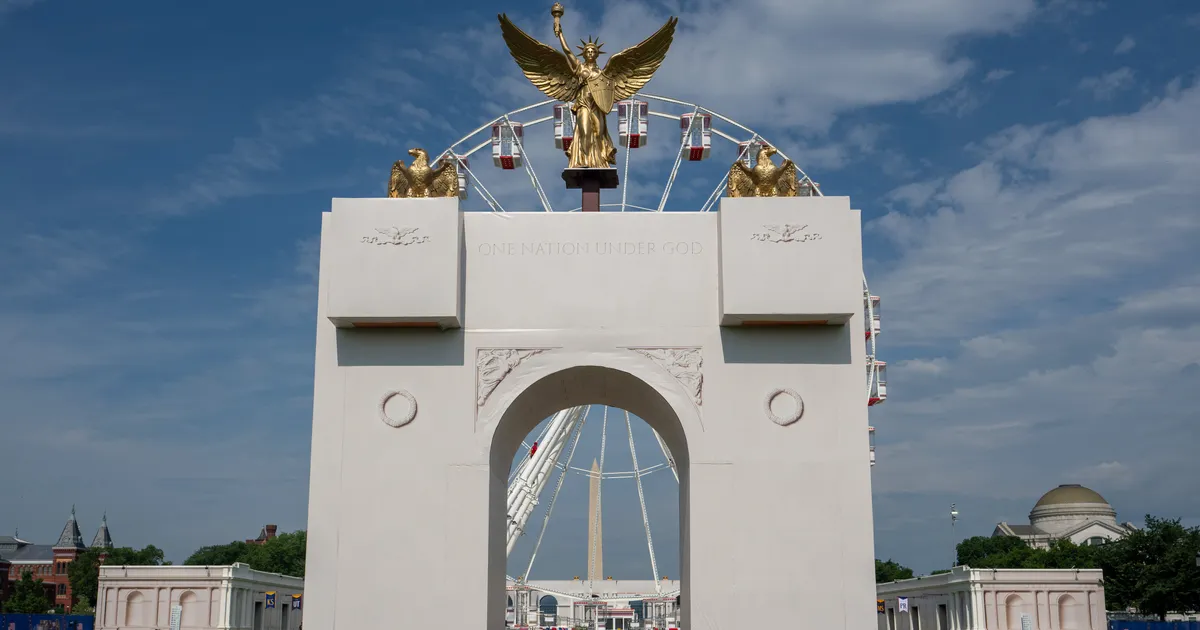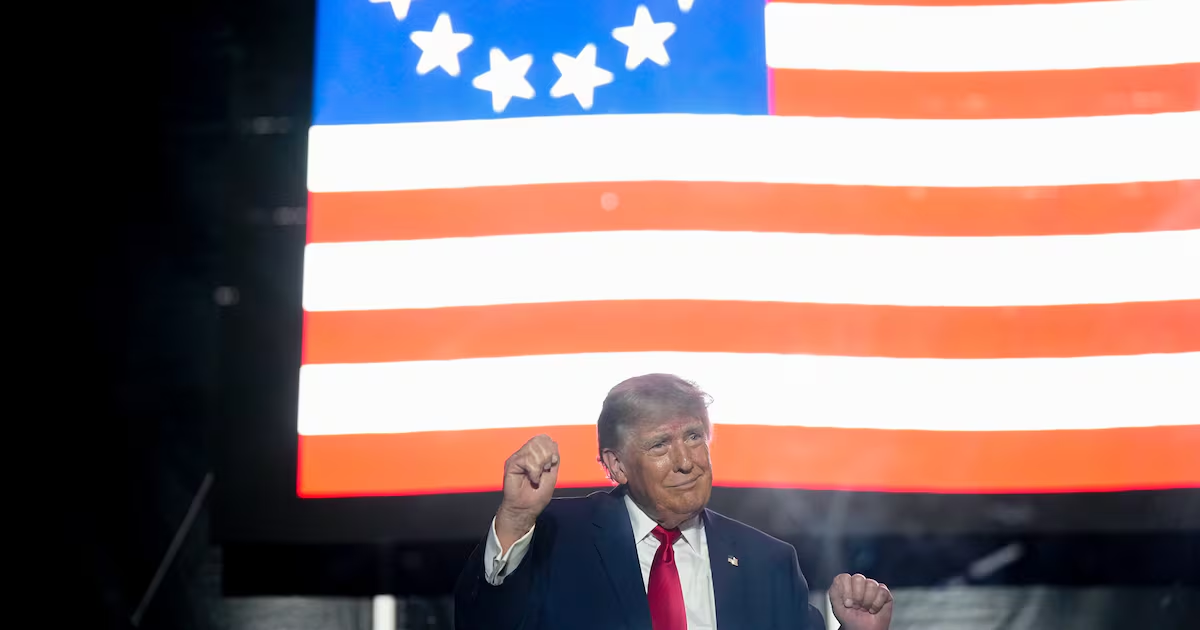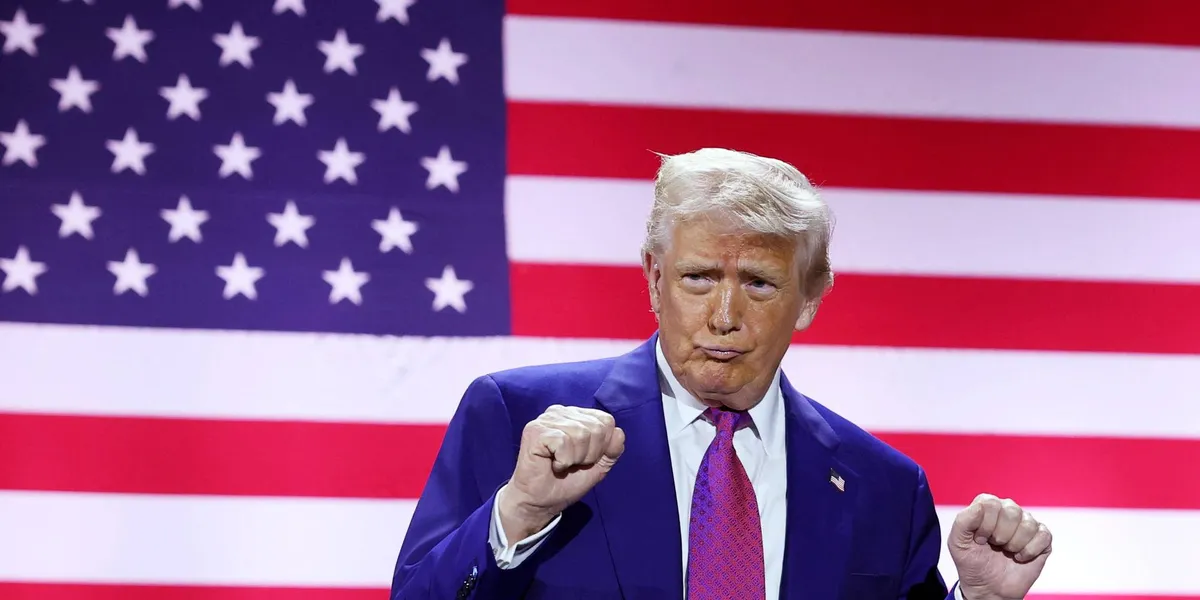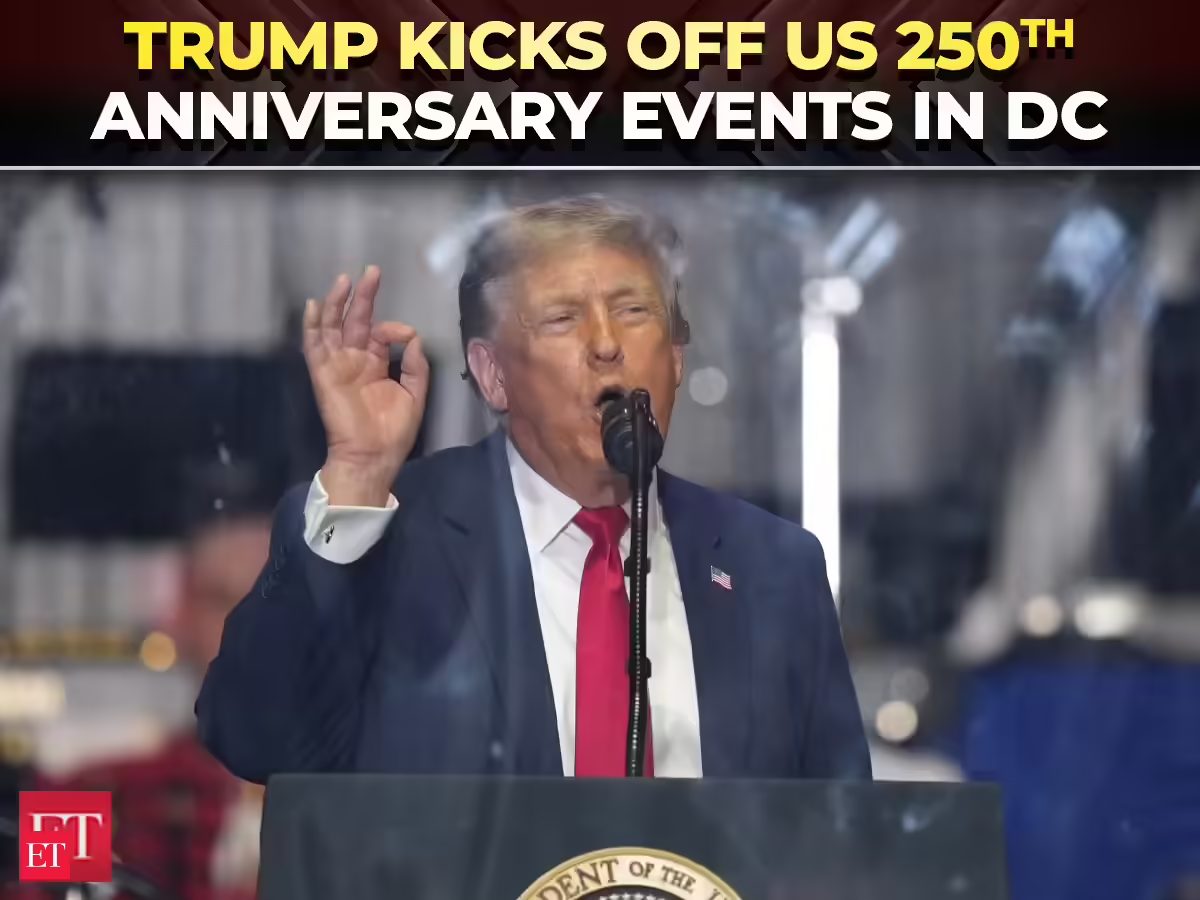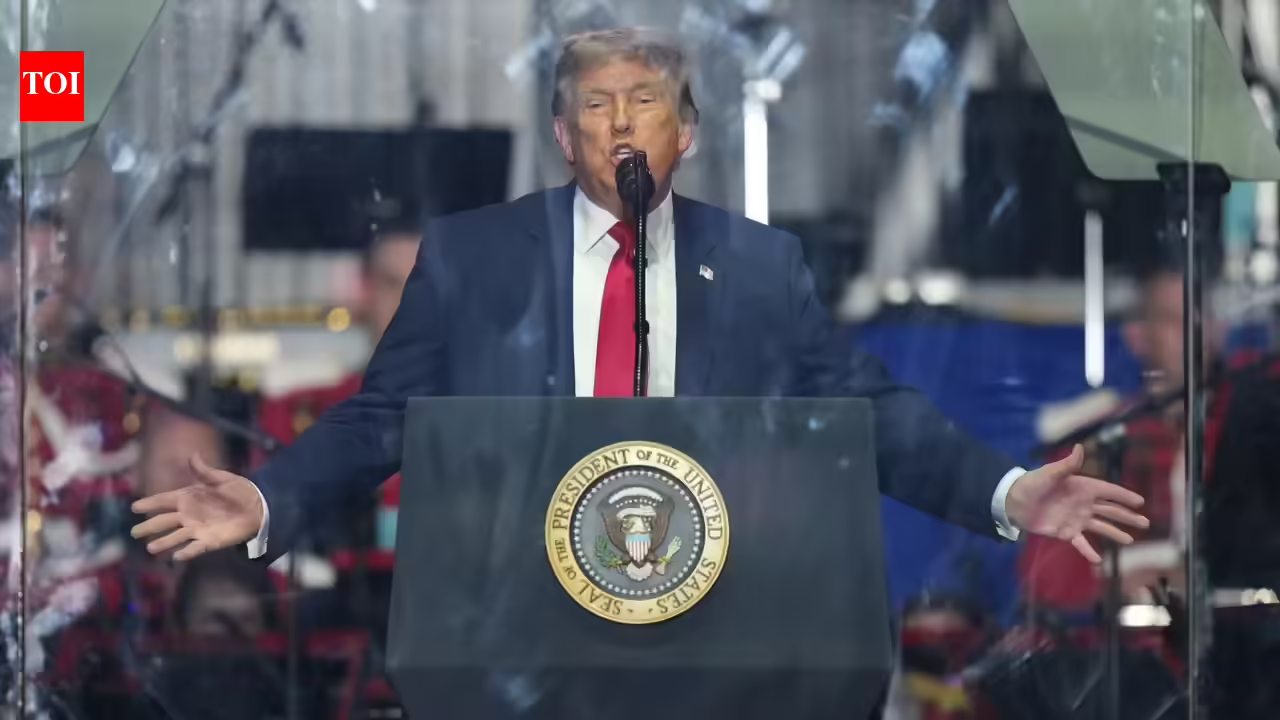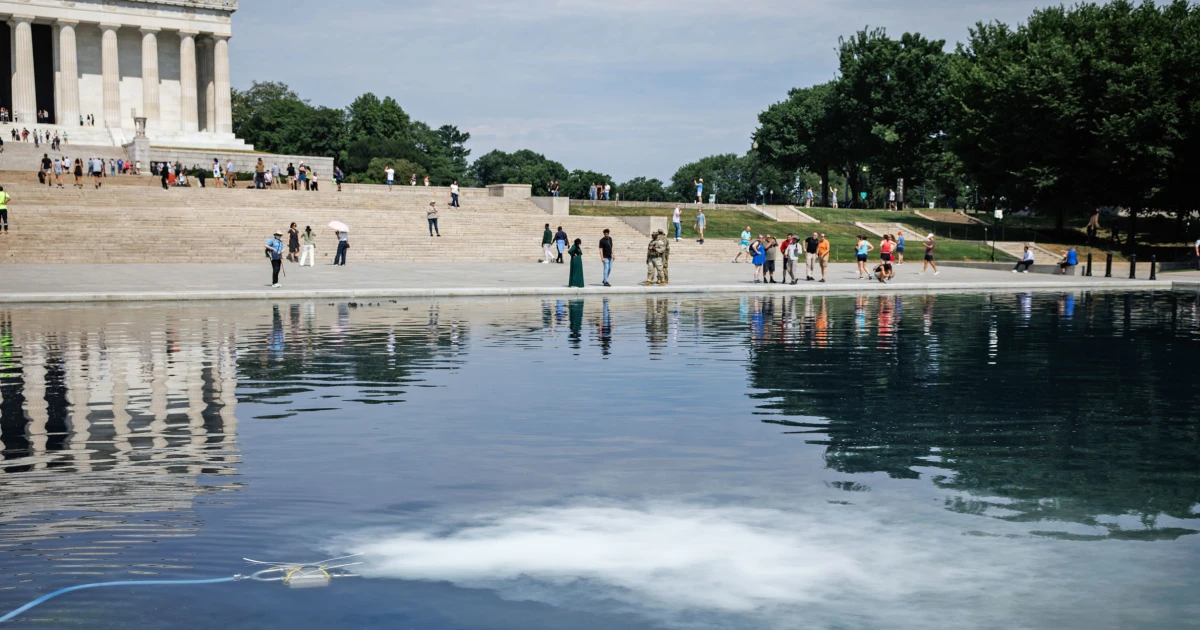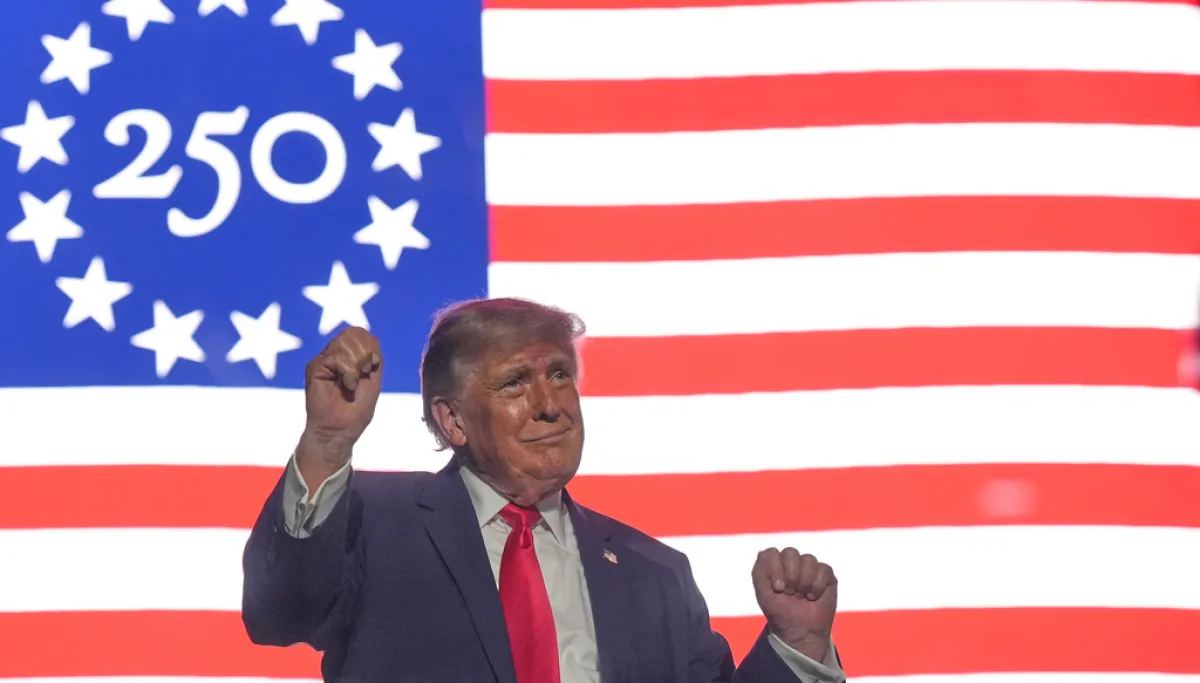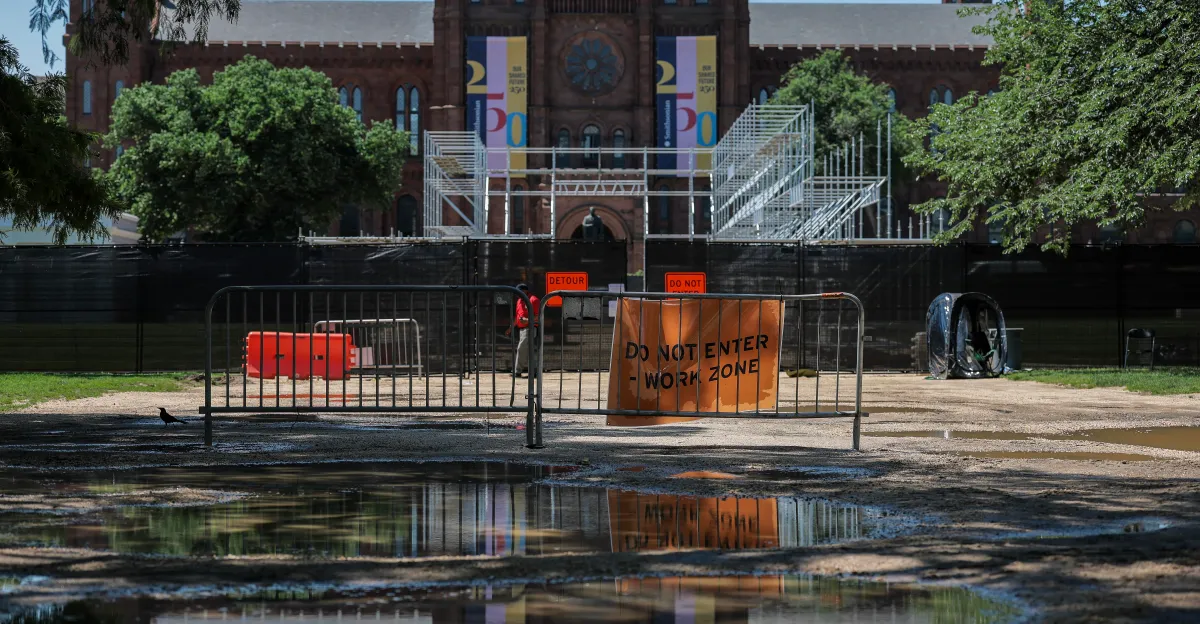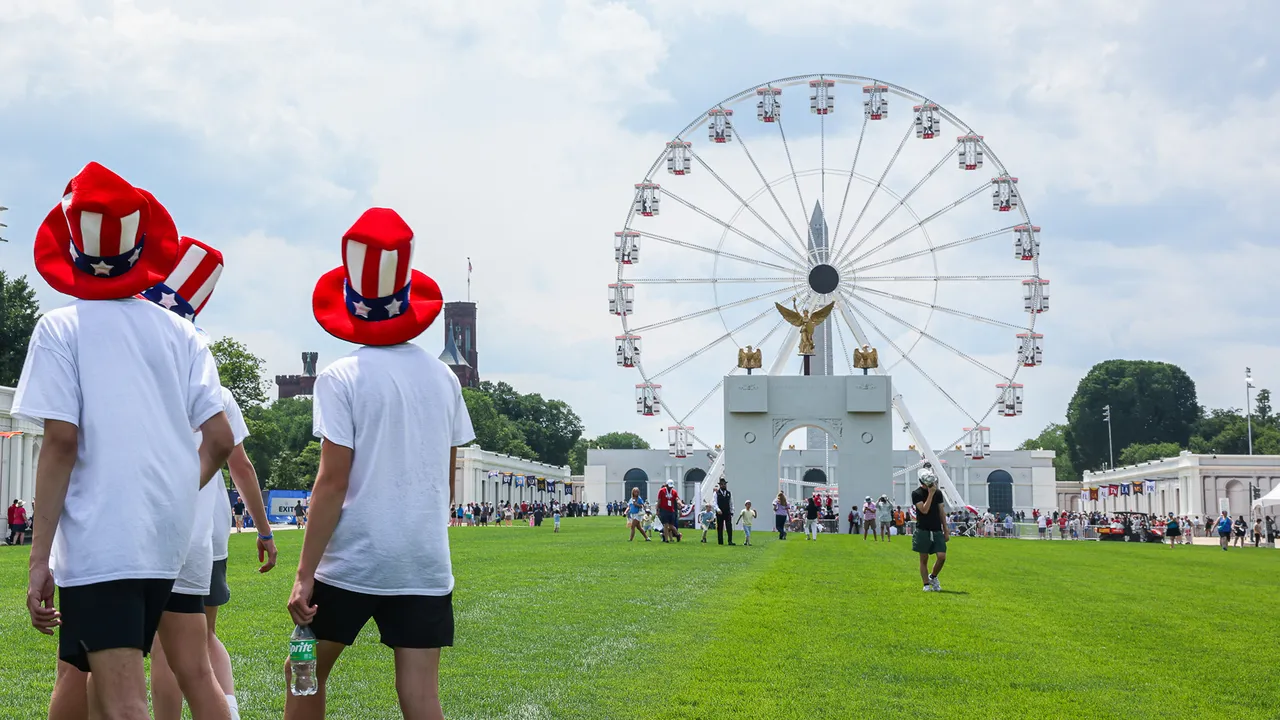
When George Washington signed legislation, in 1790, to create the District of Columbia, a federal capital along the Potomac, the place that we now call Washington was little more than a collection of forest and marshlands. It has been periodically renovated since then. “I can remember that when such Roman palaces as the Commerce Department were being built, we used to wonder, rather innocently, how these huge buildings could ever be filled up with people,” Gore Vidal wrote in 1982, lamenting the city’s transformation from a “pleasant Frenchified southern city” into an “imperial Roman” capital. “While the basilicas and porticoes were going up, one often had the sense that one was living not in a city that was being built but in a set of ruins.”Last week in Washington, to kick off the Great American State Fair, Trump told attendees on the National Mall that “the city named in honor of George Washington” had been “turned into a national disgrace.” He had returned to office with promises to “beautify” it; now, to mark the country’s two-hundred-and-fiftieth anniversary, he was conducting his own round of renovations. “The great civilizations of history did not wallow in aging ruins of the past,” Trump told the crowd. “They created new monuments.” Visitors arriving to celebrate the occasion have found a city full of cranes, scaffolding, and fencing. It’s not just the Lincoln Memorial Reflecting Pool, which has been painted, or the East Wing of the White House, which has been reduced to rubble to make room for a massive ballroom that Trump is building. On my way to the Great American State Fair, I walked past a poster detailing a “deep energy retrofit" of William Jefferson Clinton Federal Building. The sign bore the logo for “Freedom 250,” which, it announced, was “building for the people of the United States of America in honor of our 250th anniversary.”In the past year, marketing for Freedom 250, the group organizing events for the semiquincentennial, has covered the city, becoming nearly as ubiquitous as the ads for the defense-technology company Anduril. Recently, at a bus stop, I looked up and saw a Freedom 250 banner draped over the Victims of Communism Museum. A group called America250, a bipartisan, congressionally mandated nonprofit, was initially tasked with planning the anniversary in 2016, but, in 2025, Trump diverted funds from it to create Freedom 250, his reimagining of the commission. He signed an executive order a few days into his term ordering Freedom 250 to be the primary branding for America’s anniversary. This new iteration, characterized more by photos of Trump captioned with “America Is Back” than by actual American flags, would focus on things such as the U.F.C. fight at the White House in celebration of his eightieth birthday, a sculpture garden called the National Garden of American Heroes, featuring life-sized statues of Trump’s favorite historical figures, and an IndyCar race later this summer. (He had hoped to have the triumphal arch he aims to build—an arch for “me,” as he put it—ready in time for the anniversary.) In Washington, a Freedom 250 banner of George Washington (“America's First”) hangs next to a banner of Trump (“America First”). The Great American State Fair was the latest event to emerge from the struggle between the original group and Trump’s new directives. Instead of featuring gently patriotic nonpartisan content, the event was a pure reflection of Trump-branded America. (The First Amendment was displayed as part of a promotion for Truth Social, the President’s social network.) Some states chose not to send representatives; several of them cited disagreements with the partisan mission.When I visited the fair, on a hazy, drizzly Sunday morning, a few families in matching Smithsonian rain slickers passed through the security checkpoint ahead of me. “I have a Yeti bottle, and they won’t let me in,” one attendee said, deciding to skip it. A man came up to me and asked if I’d like to put on an American-flag sticker that said “product of the USA.” My first visit was to a large booth advertising Trump Accounts, tax-advantaged investment accounts for children seeded by the federal government. Power banks were available to borrow. “The power is in your hands: Trump Accounts are free, just like the charging stations below.” Above me, a light-up screen flashed with the event sponsors: Salesforce, Boeing, Lockheed Martin, U.F.C.Fake façades of old buildings had been put up to host exhibits from each state and federal department, but it was more like a job fair or a corporate expo—officers from the Secret Service handing out flyers about how to join, table after table of defense contractors and military recruiters. The line for the Department of War booth was the longest, so I went to check out what the Department of Justice had to offer. I was greeted by a color-coded map of the Federal Bureau of Prisons’ facility locations, propped up on a table alongside free chapsticks. I flipped through a binder, made by the National Recruitment Office, with information about amenities near various federal prisons, for those considering jobs in correctional facilities. “I’m a reservist, but prison is my full-time job,” a man overseeing the booth was telling visitors. Another guy complained about the merch: “You’d think the Department of Education would have a book bag.”At the State Department booth, I paused at an exhibit about the history of the U.S. passport, which culminated in a prototype for a limited edition featuring a large image of Trump’s likeness. In the Department of the Interior booth, a family asked me to take their photo as they posed in hard hats next to a Park Service officer. I took a brochure for the Bureau of Land Management’s Wild Horse and Burro Program, which urged people to adopt free-roaming horses that live on public lands—the descendants of animals brought over by Spanish explorers in the fifteen hundreds. “The BLM needs you to care for a living symbol of our American history,” the brochure read.In the tent between the departments’ and the states’ booths, a few people stood studying a CSPAN American-history time line, with a stand about Micron chips to one side and a John Deere model to the other. I watched a Marine play a game of trivia—what year was the Constitution signed?—administered by people who were promoting a free ten-day history course offered over text message: “Constitution 101: learn how the Constitution actually shapes the country you live in, just five minutes a day.” The Declaration of Independence was displayed as part of an interactive basketball exhibit (“take your shot!”), next to a booth advertising “express retail solutions.”A booth displaying the text of the First Amendment stood beside stands for SpaceX and Salesforce. At the TikTok booth, I was invited to take a selfie of the bottom half of my body—“looking good, America.” A friend texted me, “Much like the rest of the fair, it is a partiality and a distortion of the American dream.” I walked to the main stage, where, above recruiting stations for every branch of the military, a screen announced that the main event had been postponed, owing to bad weather.By the time I visited, there had been no shortage of cynical coverage. The Ferris wheel got stuck; the power went out; the fair was nearly empty. Trump had fumed online in response. “Do you think people appreciate what a fantastic job we did in building and operating the Great American State Fair at the National Mall, packed with happy people, and everybody loving it? Ask yourself this simple question, ‘DO YOU THINK THAT OBUMA OR SLEEPY JOE BIDEN COULD HAVE DONE IT?’ THE ANSWER IS NO!” When I left the fair, guards were telling visitors that their entrance—one of two—was closed because of some sort of technical issue; attendees gamely turned around and left. I walked north, past a homeless veteran camped under his umbrella; a few blocks further up, U.S. Park Police officers were handcuffing a man outside the Willard Hotel.A couple of days later, Trump flew to Medora, North Dakota, for a Freedom 250 event at the new Theodore Roosevelt Presidential Library. Since Trump decided to attend, the library opening had essentially turned into a campaign rally. People started lining up at dawn for shuttle buses up to the Burning Hills, in the Badlands. Some of those on board banged on the windows as they passed the “fake-news media”; there were chants of “Let’s go, Brandon.”The trip was Trump’s first flight on the plane donated by the government of Qatar, last year. “It’s the best plane ever built,” Trump said, of the new Air Force One. It had undergone months of modifications to make it secure for his use. “They made it appropriate for a President,” he said. “We’re very proud of it.” (The press section’s seats now have a massage function and a screen equipped with AppleTV set to Fox News.)After landing, Marine One flew Trump to a panoramic gorge in Theodore Roosevelt National Park, in the North Dakota badlands, touching down on the Painted Canyon overlook. From there, Trump took a custom Freedom 250 train to Medora, arriving to a cheering crowd. I watched as several dozen Rough Riders, men on horseback modelled after Roosevelt’s cavalry, escorted the motorcade up to the library. It will feature an exhibit that plays Trump’s voice reading Roosevelt’s “Citizen in a Republic” speech. His Administration relishes the comparison between Trump and Roosevelt—bully American optimism, building projects as American power. When Trump got off the Freedom Train, the press office captioned the photo of his arrival “The Man in the Arena.”I talked to a Theodore Roosevelt impersonator while we waited for the President to arrive. “When Roosevelt went to Wyoming for a Presidential visit in 1903, he gets off at Laramie and rides a horse sixty-two miles to Cheyenne—that’s how he chose to arrive in places,” he said. “You’ll probably see that Mr. Trump will arrive with a big line of flat vehicles—everyone will get this three-second glimpse of him.”All living Presidents had been invited to visit the library; several would visit later in the year, but Trump had decided to time his visit to correspond with the opening celebration, originally an America250 event. “I think his organization tends to kind of take over what happens,” the impersonator said. Nevertheless, he tried to stick to his duties, pointing out to me all the native grasses and plants from the region planted on top of the library roof. “It’s going to be able to filter rainwater, whenever we do get rain.” He paused to look at the people trailing in. “It’s the same segment that will always drive hours for any opportunity to be around Mr. Trump, I think. Just for a glimpse, just to be in the audience,” he said. “There’s the perception that this is just red-meat, Trump, MAGA country, but I think Westerners feel taken for granted all the time by Republicans. . . . They recognize it’s deeds, not words, that matter.”I listened to him talk to visitors, many of whom asked about the connection between Trump and Roosevelt. “I feel like I do that every day, honestly, educating people on Roosevelt who have misconceptions about Trump versus Roosevelt. And they want to see all these parallels between the two, and every day I educate people on the distinctions between the two and they are legion.” He was careful to maintain nonpartisan restraint. “That was very diplomatic for me,” he said.Hung Cao, the acting Secretary of the Navy, spoke before Trump. “I love Teddy Roosevelt. Who doesn’t? The commies don’t. . . . They just don’t make leaders like Teddy Roosevelt anymore. Or do they?” he asked suggestively. The crowd cheered. He compared Roosevelt’s great white fleet to Trump’s new fleet of “golden” ships; the principle of preparedness, he said, was the same, citing the Venezuela raid: “If you really piss us off, we’re going to fly into your country and snag you and your wife while you sleep in your beds.”As the Presidential seal was affixed to the lectern in anticipation of Trump’s arrival, the Rough Riders were led into formation and onto the risers. I stood with a mother and daughter, in red, white, and blue, who had come to the event to see Trump. “I bet we hear the word ‘bully’ about ten times from him,” the daughter told me. “That’s a word Teddy said all the time.” Trump took the stage in front of a mockup of an Old West Main Street. Snipers looked down from the mountaintops, where there was a sign for Medora, styled like the Hollywood sign.Trump said that his teleprompters weren’t working. “The one on my left is a waste of time. It’s a little like politics.” He told the crowd about his visit to the library—he’d had a conversation with an A.I. Roosevelt about “the fact that the Democrats gave the Panama Canal away.” While he riffed, the White House shared excerpts from his written speech over e-mail: Roosevelt “boldly fought for what he called a ‘New Nationalism’—putting the needs of the whole nation and all the people above partisanship, lobbyists, identity politics, and special interests. He knew that true patriotism demanded caring for the Worker, the Environment, and the Health, Culture, and Integrity of the nation itself.” Onstage, Trump complained about how often weather forecasts are wrong, even though meteorology is so expensive. He told attendees that he knew it would be very hot in Washington for the upcoming July 4th celebration, where the yearly fireworks show had been delayed till 11 P.M., because he planned to make remarks as part of a Freedom 250 event. “It’s going to be approximately a hundred and seven degrees out, and I’m going to go and make a really long speech, just to show that I can do anything,” he said. ♦
Donald Trump Celebrates America’s Two-Hundred-and-Fiftieth Birthday
At the Great American State Fair, in Washington, D.C., and at the opening of the Theodore Roosevelt Library, in North Dakota, the President casts himself as the rightful heir to American greatness.
2,310 words~11 min read