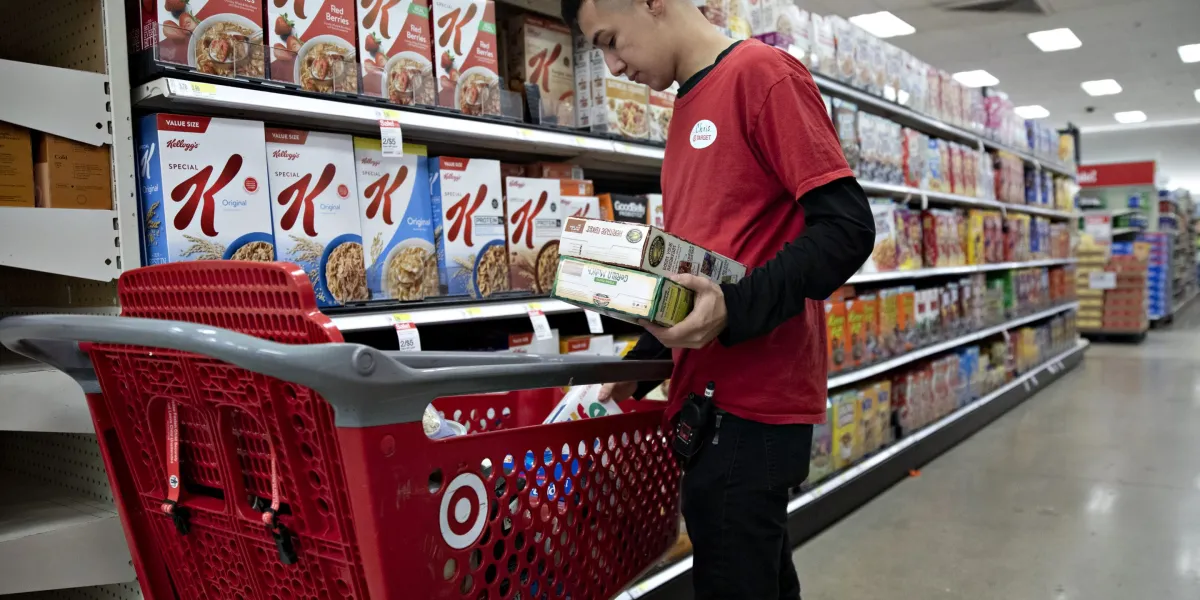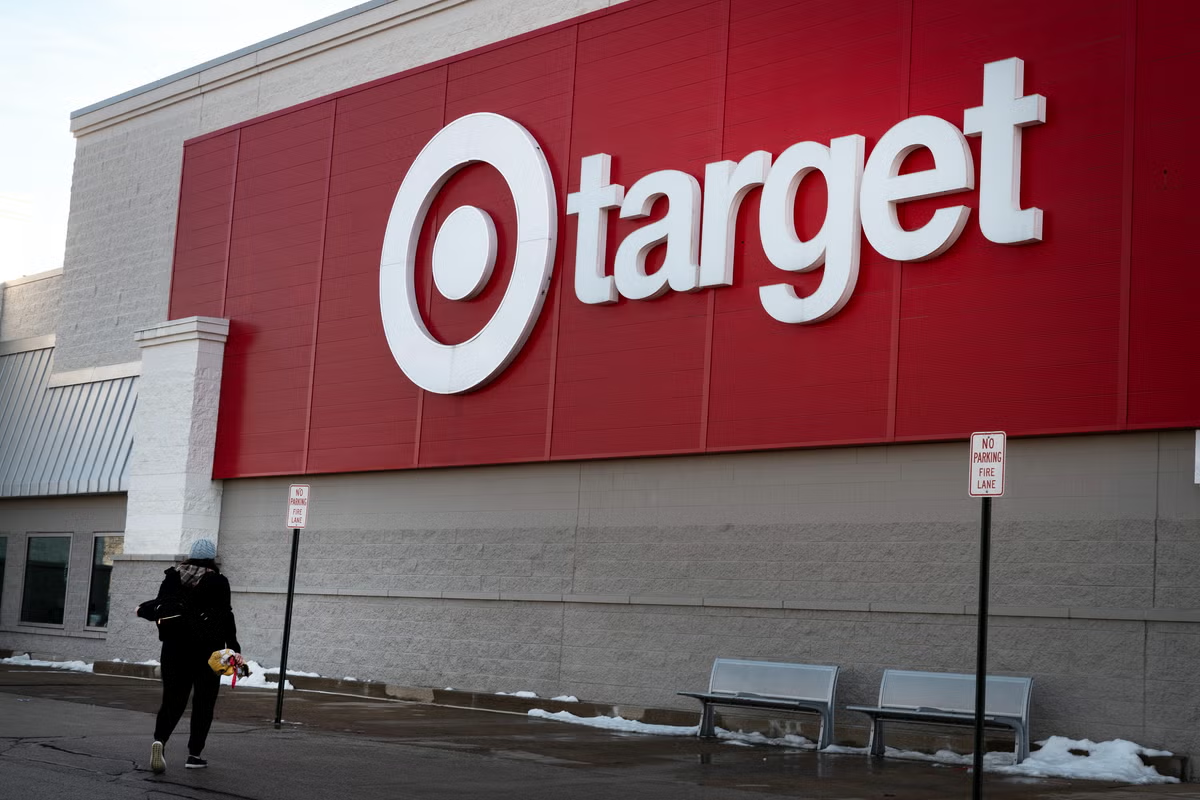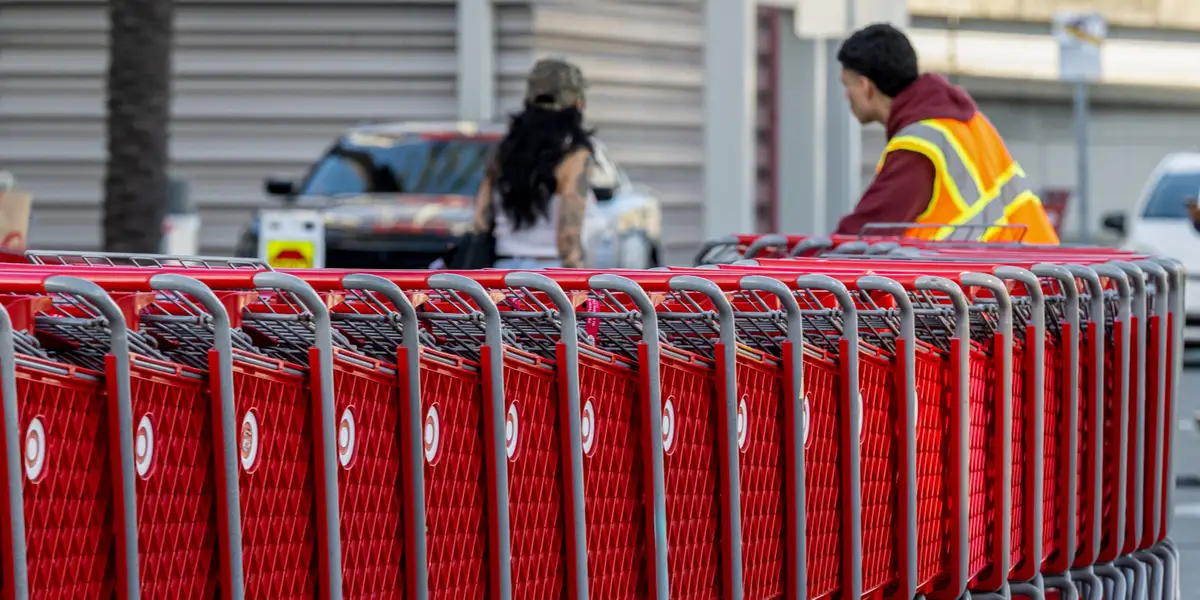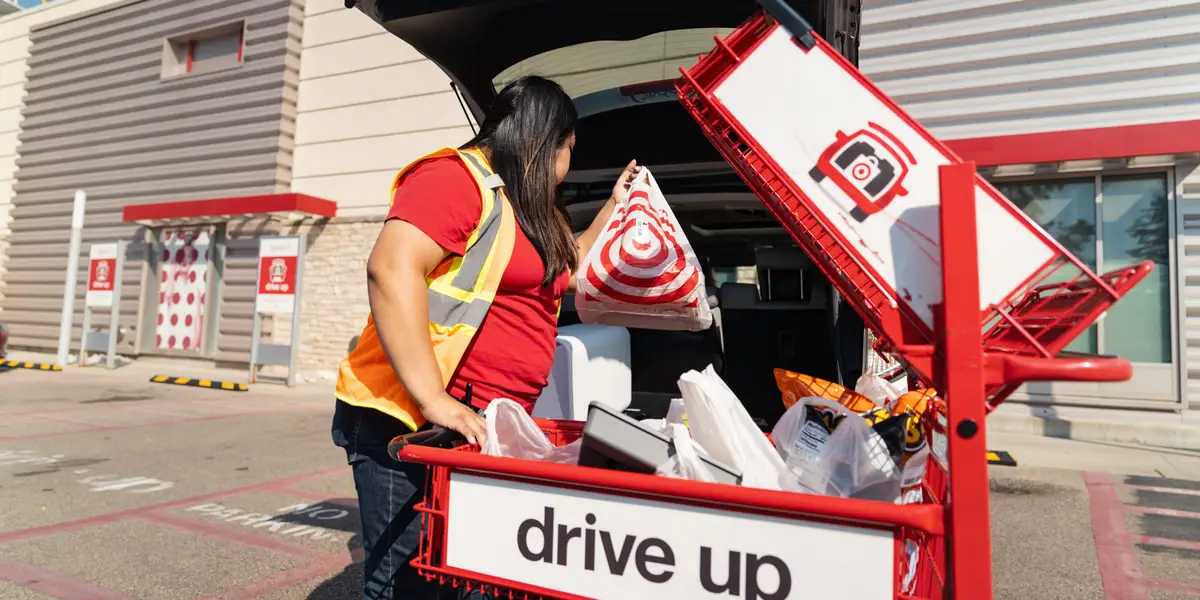
Some Target stores fulfill hundreds of drive-up orders per day, and small delays can add up fast.
Ben Brewer/Bloomberg via Getty Images
Target's drive-up operation is big, busy, and growing — and every second counts.Roughly 20% of the company's sales occur via its web or app, and a significant share of those digital orders are placed right into customers' cars waiting in the parking lot.The strategy is so important to Target that its recent (and future) store renovations devote more space to preparing online orders and often include newly installed drive-up doors for workers to use instead of the front entrance.Those doors are locked to prevent unauthorized access. To get back inside, drive-up workers would use a key, tap a fob, or call a coworker."We've all stood at home digging for our keys. Now imagine you know you've got a cart in front of you," said Ashley Daniels, who joined Target last year as head of product management for the chain's internal software. "We saw this was a frequent, very real pain point for our stores."Daniels told Business Insider that one of her first moves on the job was to send teams out to stores and distribution centers to get an on-the-ground perspective on how Target's tech tools fit into daily operations.A few seconds sounds small until you consider the bigger pictureHer team found drive-up workers were delayed by an average of 32 seconds each time they needed to get back into the store after completing an order. That might seem small, but multiplied throughout the day across 2,000 stores, the time adds up.