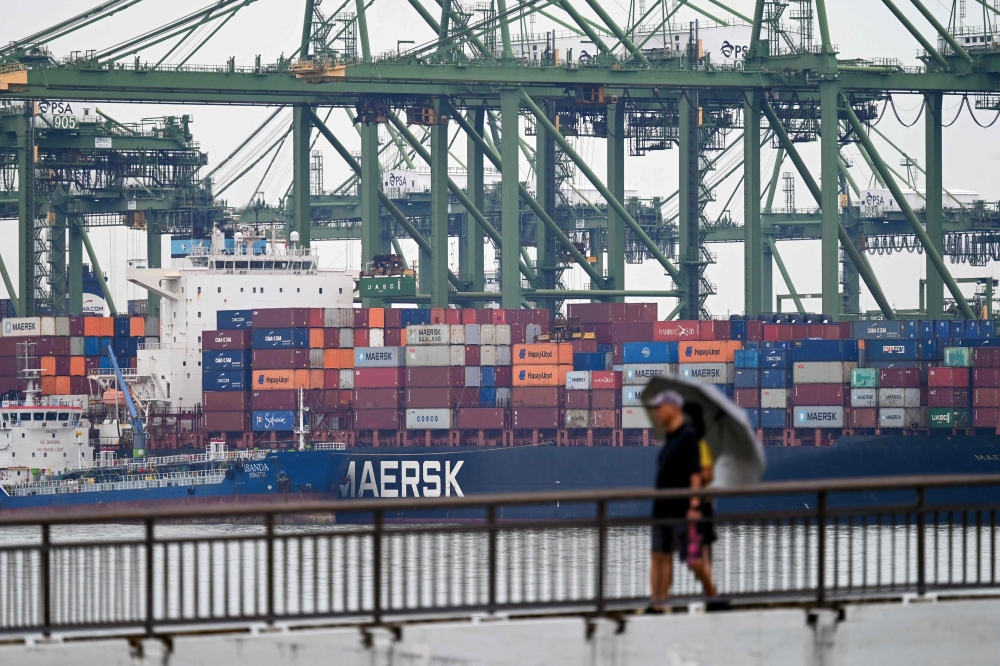
SINGAPORE: The Transport Government Parliamentary Committee (GPC) will table a motion on Tuesday (Jul 7) urging Singapore to strengthen its long-term transport strategy to stay globally competitive. It will be the first private member's motion tabled by a GPC since the 2025 General Election.Speaking to reporters ahead of the sitting, GPC chairperson Tin Pei Ling said the motion aims to position connectivity as a critical driver of Singapore's long-term economic competitiveness. The debate would focus on global connectivity rather than day-to-day public transport issues, she said, although the latter remains a GPC priority.
The issues being discussed "may not be politically sexy" but are important at the "national strategic level", Ms Tin said.She will lead the motion with deputy chairperson Mr Edward Chia. Months in the making, it is intended to set the agenda for transport discussions for the rest of the parliamentary term.The MPs also hope Singapore can use its Association of Southeast Asian Nations (ASEAN) chairmanship in 2027 to strengthen regional transport cooperation amid growing geopolitical uncertainty."As an open economy, as a small country, all the more so it is important for us to ensure that we have robust connectivity to the region and to the rest of the world," Ms Tin said.Work on the motion began before the recent conflict in the Middle East, though Ms Tin said the crisis reinforced its urgency. AI'S IMPACT ON TRANSPORTThe motion will span four areas meant to strengthen Singapore's resilience: international cooperation, frontier technologies, integrated physical and digital infrastructure, and creating good jobs for Singaporeans.On technology, Ms Tin said Singapore should focus less on competing in foundational artificial intelligence models and more on applying AI within transport.She and Mr Chia said AI could better integrate transport systems across land, sea and air, optimising flows and improving efficiency across platforms. The MPs also intend to call for greater investment in AI research and development, alongside infrastructure that better integrates physical and digital systems.The motion will also look at how Singapore can prepare workers for changes brought by AI and other emerging technologies in the transport sector, with the goal of anchoring higher-value jobs while helping workers build the skills needed for future roles, Ms Tin said.Mr Chia said discussions with the GPC's transport resource panel found that employers were more concerned about filling vacancies than job displacement, particularly in aviation maintenance, repair and overhaul, and in the maritime sector. This may stem from the challenging nature of the work or a lack of awareness of and interest in these careers, the MPs said."It's not about job losses, it's about how we can train, upskill Singaporeans, make greater awareness of the career opportunities in the transport sector," Mr Chia said.The MPs also plan to propose stronger partnerships between large companies, small- and medium-sized firms and startups to accelerate Singapore's transport strategy.