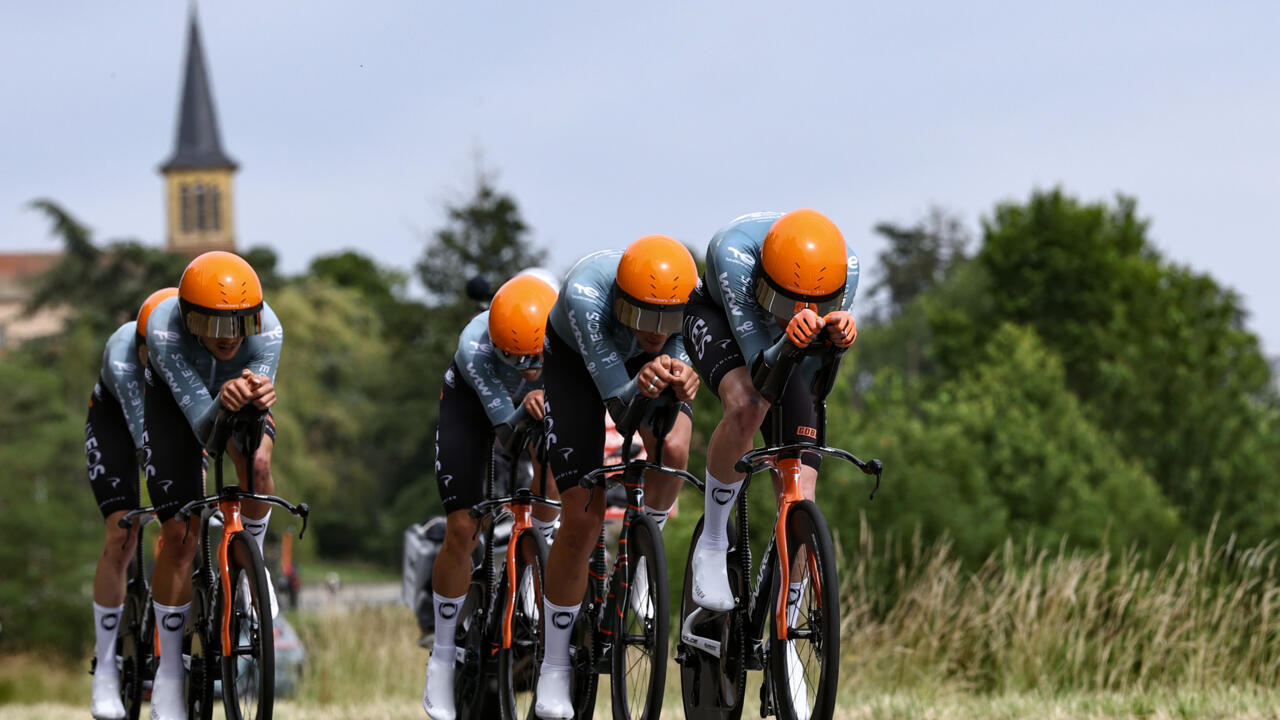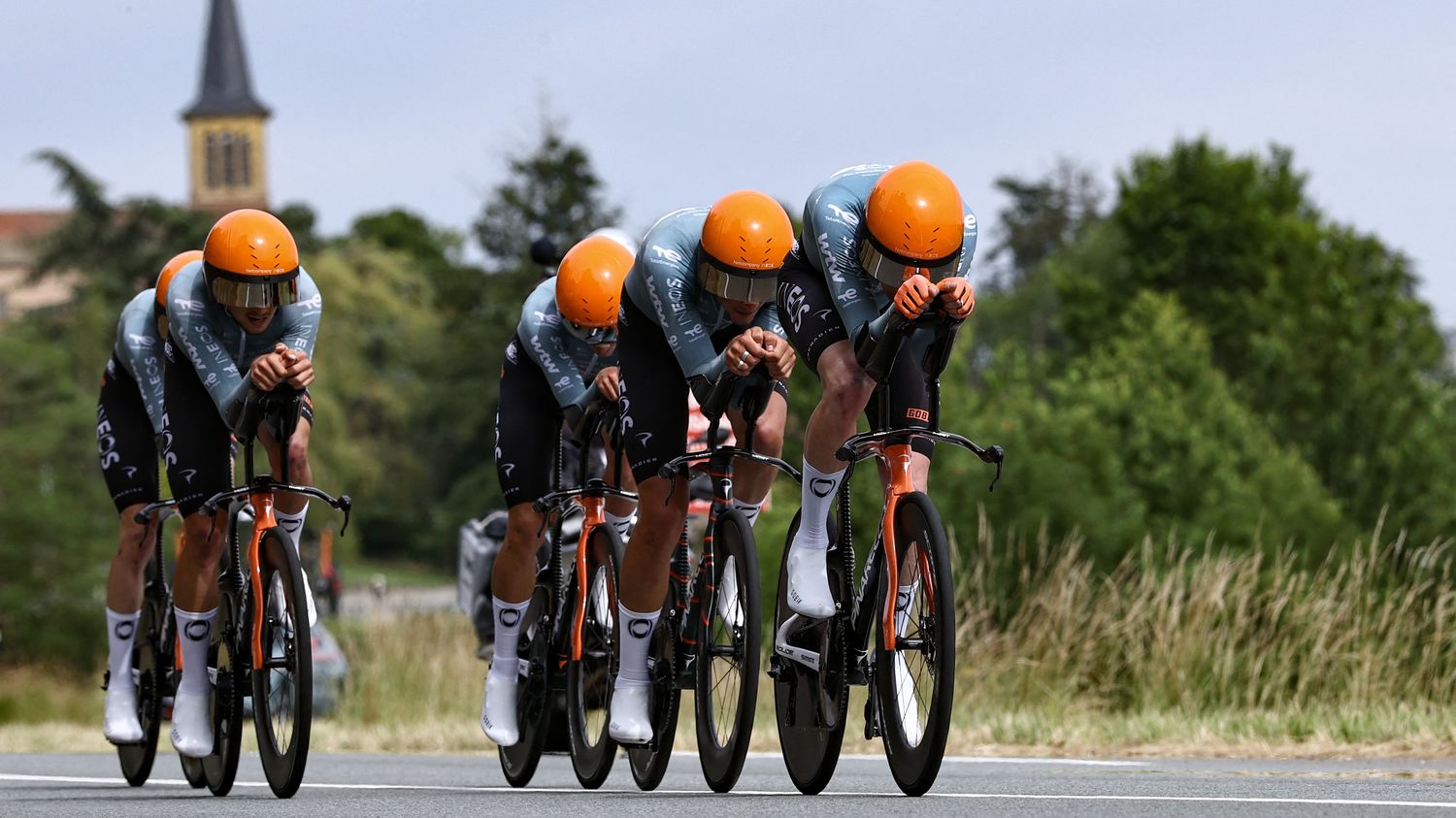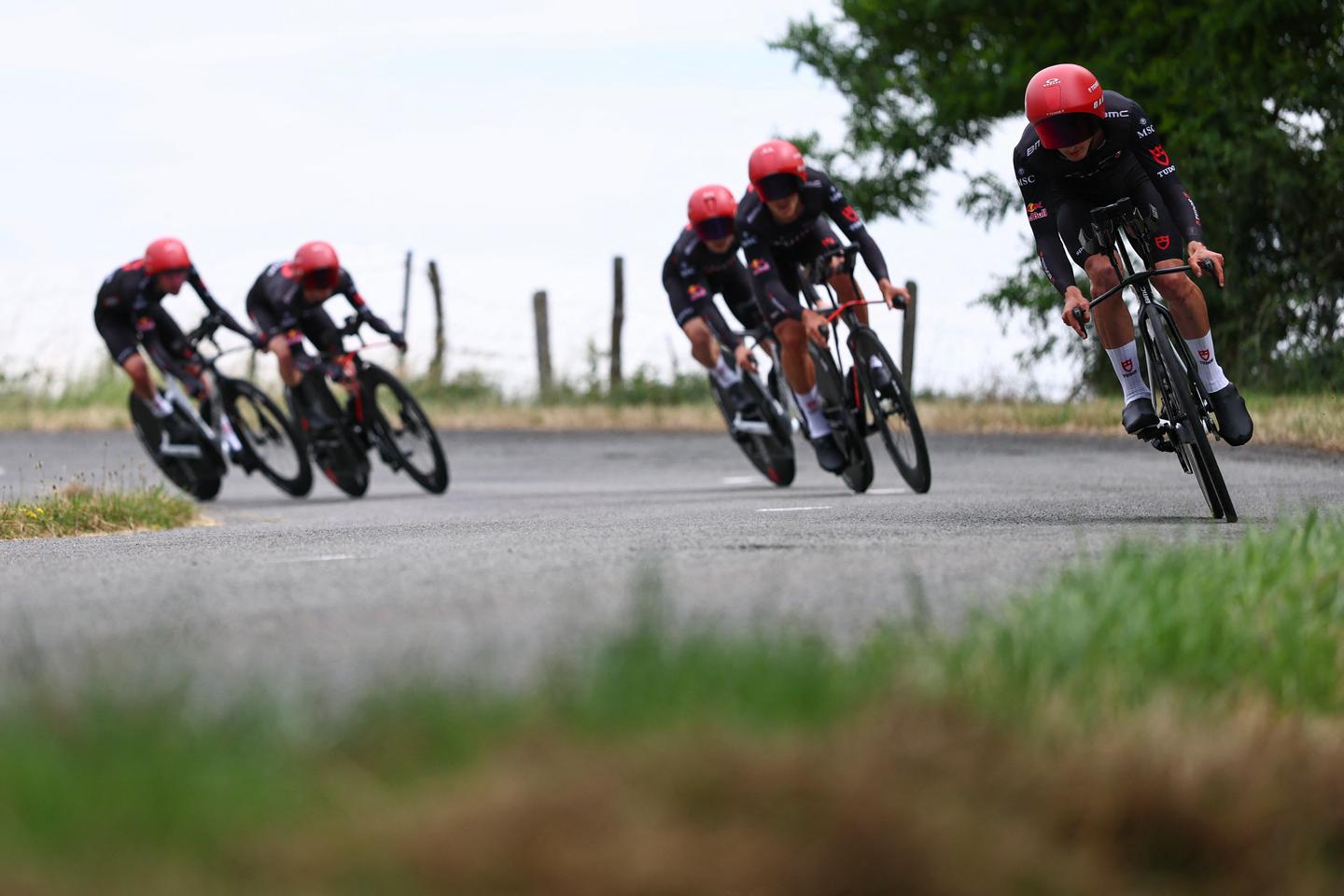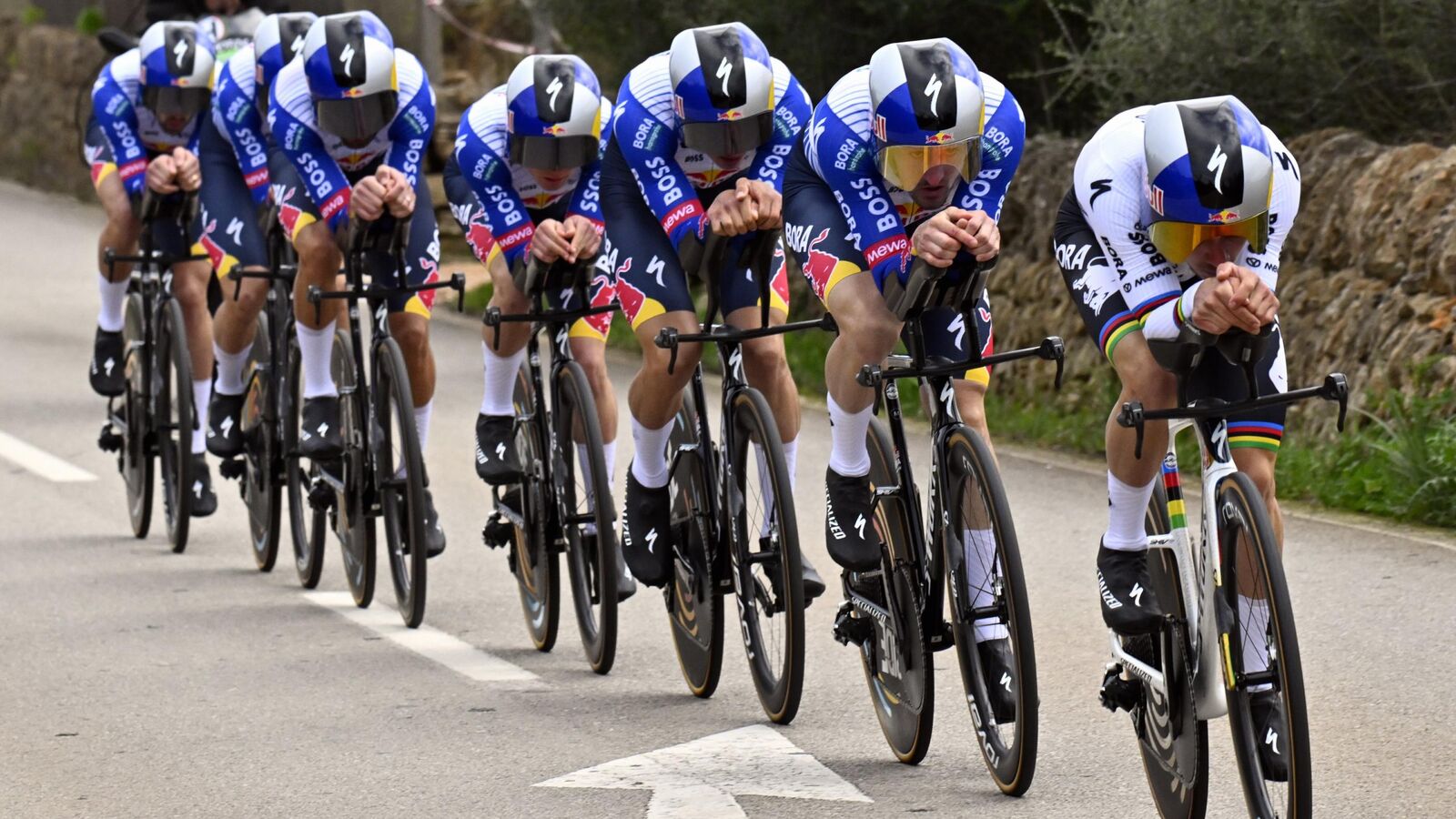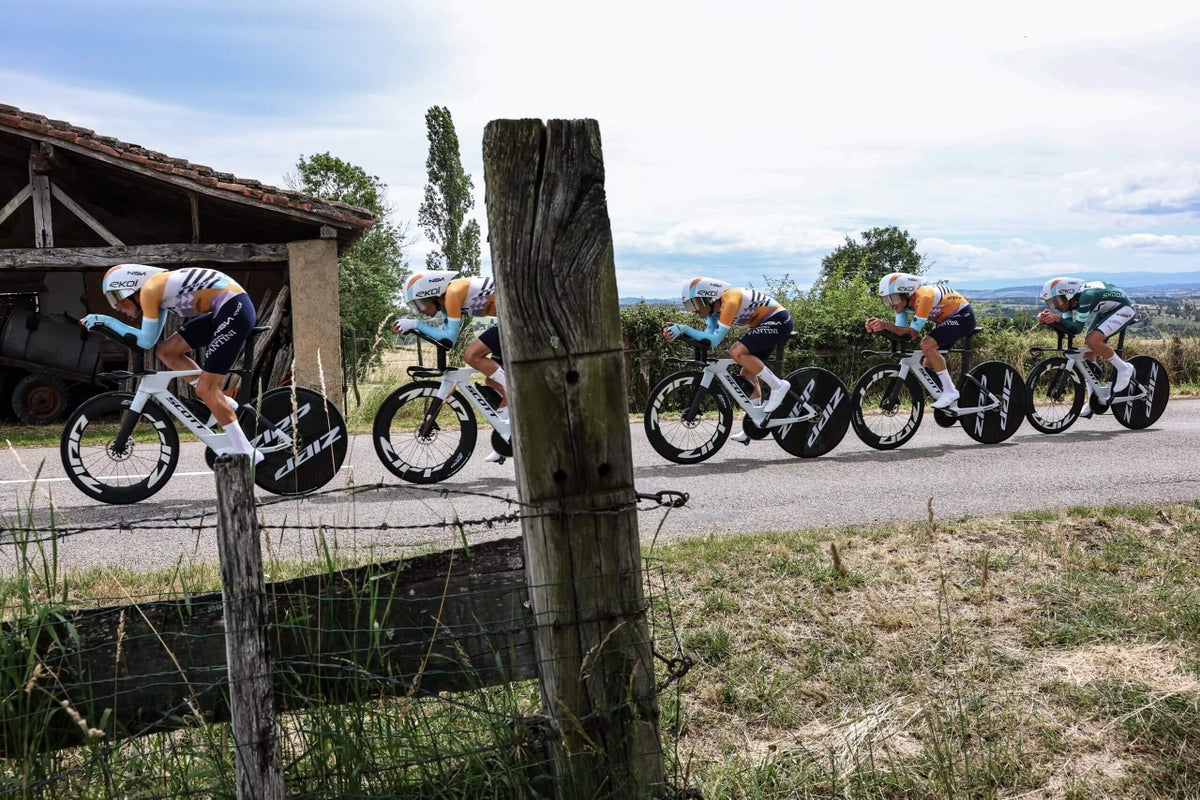
A team time trial in full motion is a glorious sight.The helicopter TV camera views of bobbing backs together with the close-up shots of riders in aerodynamic tucks and bulbous helmets, taking brief turns on the front to help the unit go as fast as possible.No wonder EF Pro Cycling performance coach and technical innovation strategist Jacob Tipper calls it “the truest team element you can get in this sport”.However, do not be fooled by appearances. There is so much unseen strain and suffering, together with unseen ways of losing valuable seconds here and there. The all-out effort brings to mind the cliché of the gliding swan: serene and regal on the water, paddling furiously beneath it.The Tour de France’s 19.6-kilometer first stage TTT around Barcelona tomorrow evening will be a meeting of physics and physiology. “There’s only so long a rider can take a turn for and so many turns they can take. They have to hope they can recover in the wheel,” Tipper says. “The definition of the TTT I’ve given before is if you’re fighting a bear: you don’t stop when you’re tired, you stop when the bear is tired.”“You have to just convince yourself that you’re going to be able to do this horrendous turn, suffer horrendously on the wheel, and do it all over again when you get back to the front.”Included in the Tour route after a seven-year absence, the TTT is back in focus. For the first time since 1971, when Molteni won and Eddy Merckx (who else?) subsequently wore the first yellow jersey, the race starts with the discipline — and a relatively-fresh tweak to the rules.The clock for each team will stop with the first rider over the line, rather than the fourth man to finish, putting an individual spin on the finale. Eight riders roll down the start ramp together but it is likely that only one or two team leaders will be together on the uphill finish at the Olympic Stadium. Each rider will get an individual time, but as with standard road stages, the role of the domestiques will be to facilitate the best time for their leader(s).Team time trials are one of the most intricate disciplines in road cycling (Anne-Christine POUJOULAT / AFP via Getty Images)There is an art to riding a successful TTT, underpinned by a structure of work almost as intricate — if not quite as time-consuming to put together — as the Sagrada Família, which is passed on the course.Management, performance coaches and aerodynamic specialists on top teams have been working on maximizing their gains since the route was announced last October. Tipper expects four or five squads to be “all in, thinking that this is their best chance to take the yellow jersey.”Winning comes down to not only having the most powerful riders, but also how they use that power, in tandem with cohesion and optimal aerodynamics. The TTT is also a sports science and tech battle, which lays bare the haves and have-nots of the WorldTour. Positioned in the financial mid-pack, EF Education-EasyPost cannot compete with the behemoths’ budgets.“We’ve not got the ability to do buckets worth of (wind tunnel) aero tests on every single rider,” Tipper says. “That didn’t necessarily make much of a difference in some of the TTTs (this year), but this has the potential to be magnified in this one.”EF Education-EasyPost cannot have certain riders focusing on the Tour’s opener for months on end, with camps dedicated to optimal performance in Barcelona. “I won’t name names, but I know some other teams have some of those sort of riders who have been able to have their eye on being an amazing TTT rider until this event,” Tipper adds.How to simulate the effort months ahead of time, considering no squad can rock up to downtown Barcelona and do on-course efforts in city traffic?Leading teams regularly rent motor racing circuits. The latest lightweight, wind-cheating tech can be tested — a TTT triumph is also manna from heaven for team partners and bike manufacturers — and traffic cones are sometimes used to simulate on-course corners in this more controlled environment.Netcompany INEOS did work at the Circuit de Barcelona-Catalunya before the 2023 Vuelta a España TTT and, according to French pro cyclist Bruno Armirail, were putting riders through their paces at a circuit in January near Valencia, a few months before winning the Paris-Nice test.Netcompany-INEOS will be one of the favorites to win the TTT in Barcelona on July 4 (Anne-Christine POUJOULAT / AFP via Getty Images)Groupama-FDJ trained at Linas-Montlhéry racing circuit before this year’s Paris-Nice. Ahead of winning the Tour de France’s most recent TTT in 2019, Jumbo-Visma even took the concept of military precision literally and fine-tuned their methods at a Dutch air force base.For the big day, everything will be strategized and carefully timetabled, from rider warm-ups and pre-cooling — pivotal in anticipated 85-degree weather — to each rider’s length of turn, position in the line and distribution of power.
How to win the 2026 Tour de France team time trial: The science behind cycling’s most complicated test
Celebrating the mechanical beauty of the TTT as the Tour prepares to begin with one for the first time since 1971
2,083 words~9 min read