Ashley Green-Thompson Ashley Green-Thompson
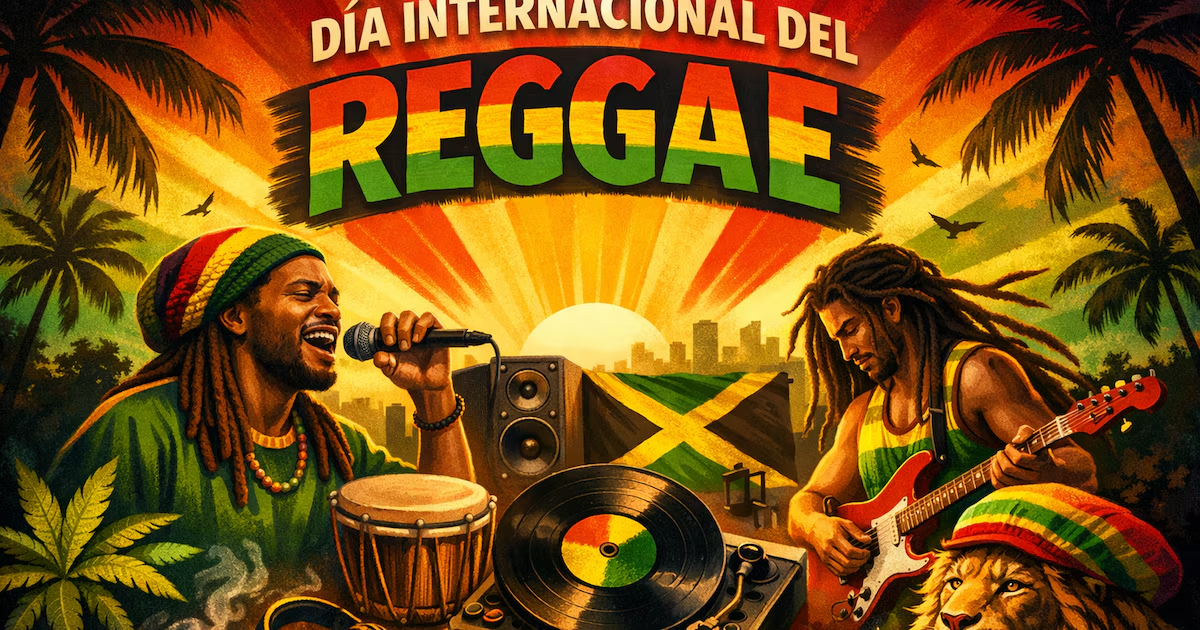
This week I learnt that the world celebrates International Reggae Day on July 1. This has been going on since 1994, and nobody told me until now. I feel hard done by - three decades of missing out.
International Reggae Day even has a website, and in bold green, yellow, and red proclaims this welcoming message to anybody wondering why it exists: “Reggae music has always been more than the pulsating riddim. It’s truth. It’s love. It’s the voice of the people. It's the sound track of resistance. The world needs that voice and message right now.”
For me, and maybe for many of those reaching adulthood in the seventies and eighties, discovering reggae was a game-changer. I was navigating the challenges of identity as a black kid in predominantly white Catholic schools in KZN, and I didn’t have the privilege today’s youth have of easy access to the writings of Steve Biko and others. Their books were banned then, so political awakening and conscientisation had to be found in conversations, and music. Reggae music – and the occasional R&B song with social commentary – provided the guidance I sought.
To be clear, Bob Marley has always been my main guy. I discovered him when I was thirteen, sadly only a couple of years before his untimely death aged thirty six. It was a battle for my allegiance between two of my older brothers, one extolling the velvety smoothness of Smokey Robinson, and the other the rhythmic trans-inducing Wailers. I was hooked by the ‘Rastaman Vibration’ album with its haunting ballads about the struggles of black people. It featured ‘War’, the lyrics of which represented Haile Selassie’s epic 1963 speech to the United Nations about human rights and world peace. ‘Johnny Was’ still causes me to pause a while to hold my emotions, and even though I never shared Bob’s love of the holy herb, I see his angst in facing police roadblocks in the song ‘Rebel Music’.