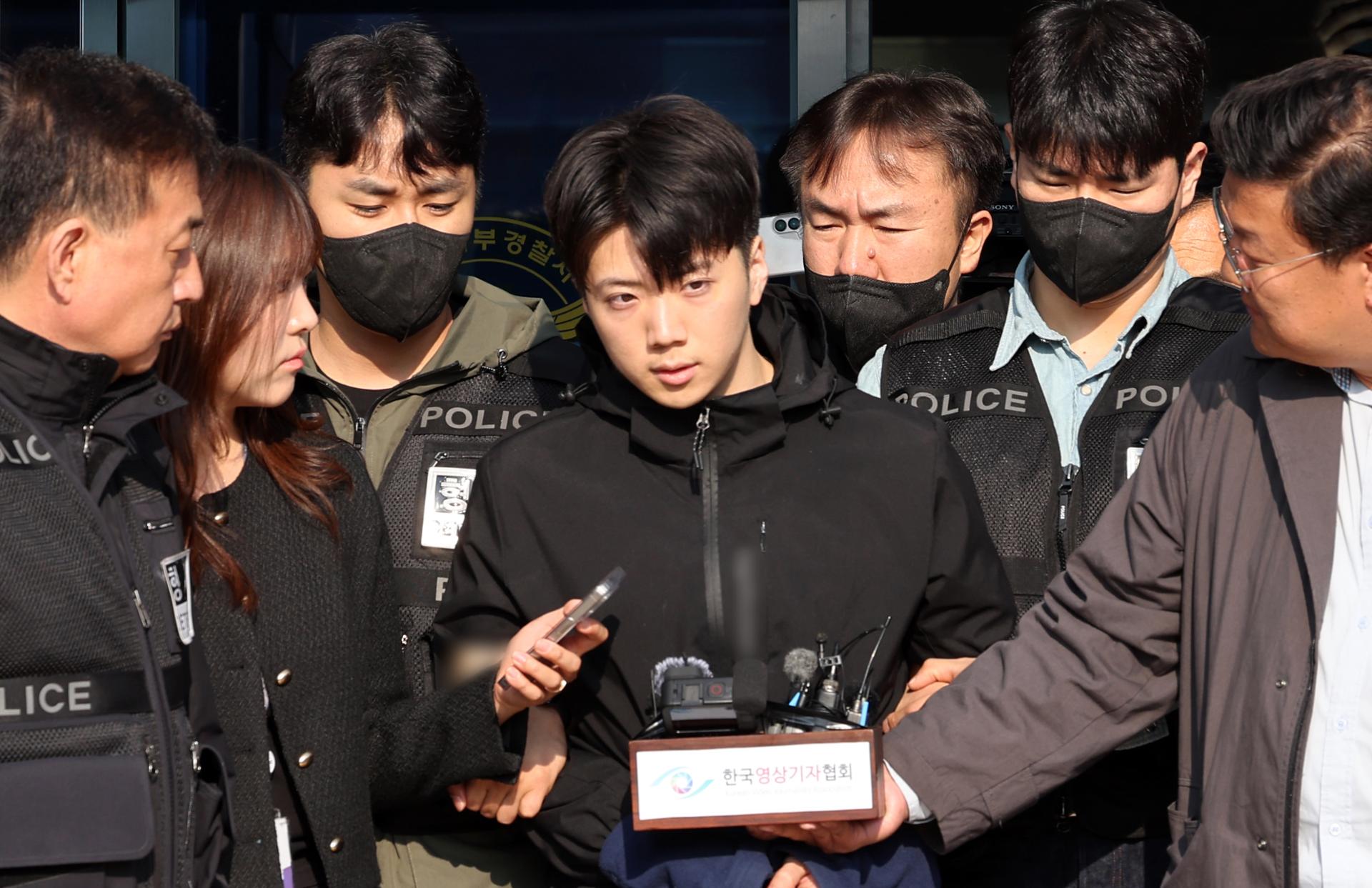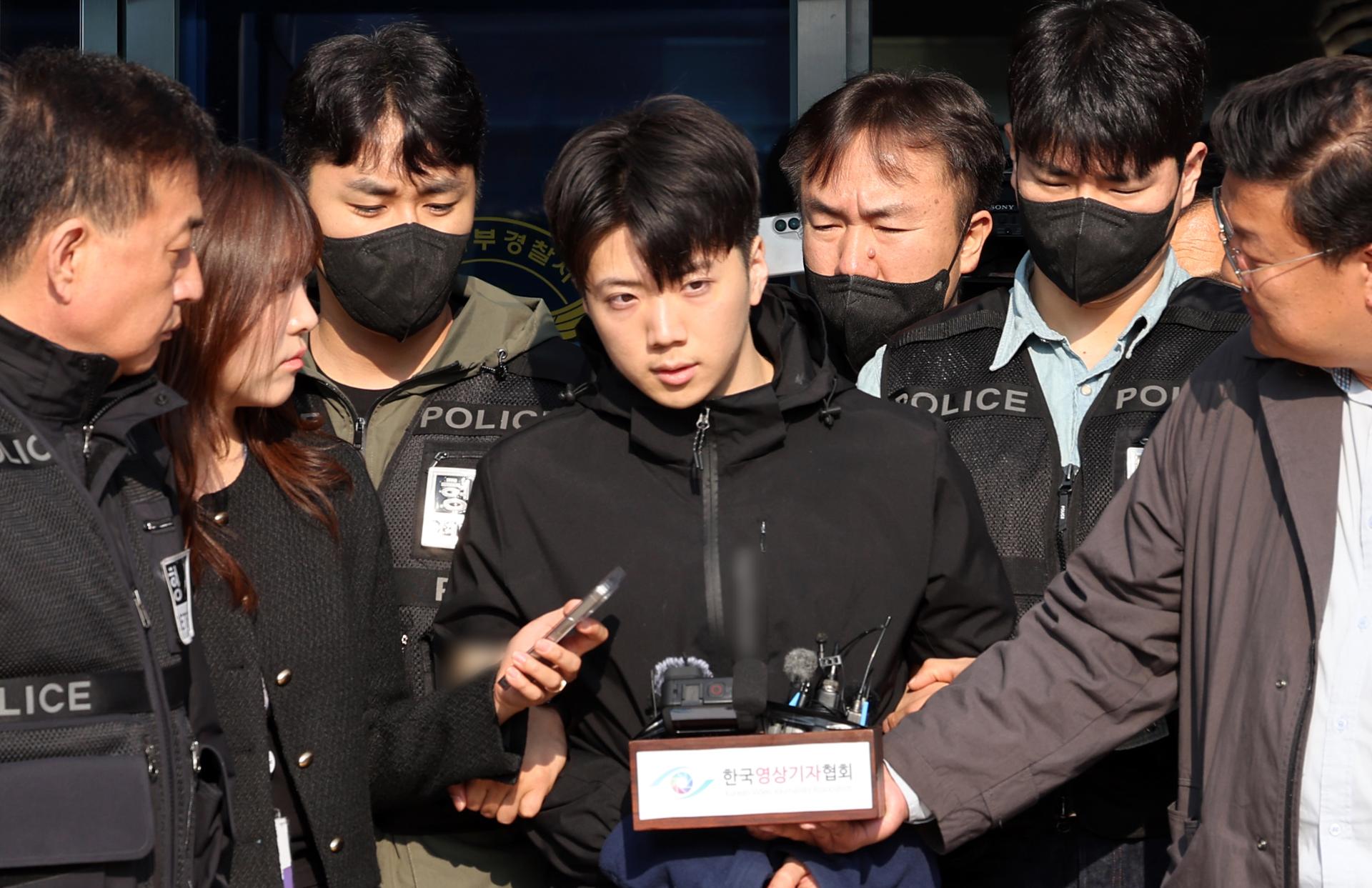
Jang Yoon-gi, center, a suspect in the murder of a high school student and an assault with a weapon on another student, stands in front of Gwangju Seobu Police Station, May 14. Yonhap
The father of Jang Yoon-gi, a suspect in the murder of a high school girl, allegedly destroyed evidence in the case, renewing debate over Korea's criminal code exemption shielding family members from evidence-tampering charges.
Last month, prosecutors indicted Jang, 23, on charges of stabbing and killing the girl in Gwangju in May after following her with intent to rape. He was also indicted on charges of attacking another student with a knife when they tried to intervene.
Investigators later found that Jang's father, an active-duty police officer, had disposed of items from his son's residence, including several mobile phones and a sex doll whose chest and neck areas showed concentrated damage. The father was not indicted, however.
Under current law, destroying evidence in another person's criminal case carries penalties of up to five years in prison or a fine of up to 7 million won ($4,530), but relatives or family members living with the offender are exempt.