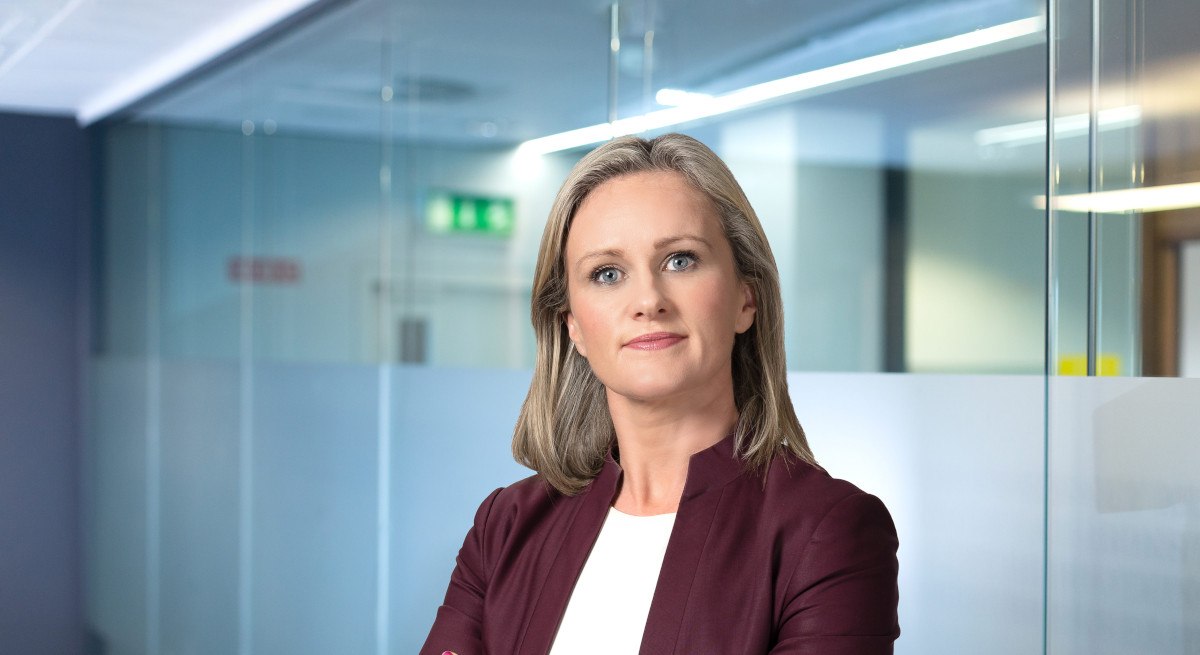
Across the world, jobs are being reshaped by automation and artificial intelligence (AI). Some will be lost, others transformed. At the same time, the World Economic Forum (WEF) says that 39 per cent of key skills required in the job market will change by 2030, with millions of new roles set to emerge alongside it.How well-placed is Ireland to respond, and how can people acquire the skills for jobs that may not even exist yet?“The Irish market has many of the right fundamentals in place,” says Lynn Guilbaud, partner in consulting and AI transformation lead at Deloitte. “We have seen strong growth in AI-related roles over the past two years, and the workforce performs well on digital literacy by European standards.”Ireland trains more science, technology, engineering and maths (Stem) graduates per capita than any other EU country, but that doesn’t necessarily mean that Irish organisations are ready for the scale of change ahead.“Data from our 2026 Deloitte Human Capital Trends report shows that only a small proportion of organisations are making meaningful progress on workforce adaptivity, and that is a critical gap,” Guilbaud says.Lynn Guilbaud, partner in consulting and AI transformation lead at Deloitte. The good news, however, is that there are a growing number of State and private schemes to help support workers in this transition.Early in 2026, Solas, the further education and training agency, launched a new suite of micro-qualifications designed in collaboration with industry partners including Microsoft Ireland and aimed at addressing some of these critical-skills gaps in areas such as machine learning basics, ethical AI, data analysis and practical use cases relevant to Irish businesses.‘As AI tools become easier to use, the bigger differentiators are human skills such as adaptability, resilience, critical thinking and decision-making’— Lynn Guilbaud, DeloitteThese courses are delivered locally by the network of 16 education and training boards (ETBs) across Ireland.Springboard+, another State initiative, provides more than 7,200 places across 244 courses delivered by 36 education providers nationwide, offering level six certifications right through to level nine postgraduate level, alongside a range of microcredentials which allow people to take their learning in smaller, more manageable chunks. Springboard+ courses are free for unemployed people or those returning to the workforce, with employed people typically paying just 10 per cent of the course fee. All Springboard+ micro-qualifications are subsidised by 50 per cent.And then there’s Technology Ireland ICT Skillnet, which partners with industry and academia to develop technology training for businesses and workers.But not all training has to be formal, with many workers needing little more than a YouTube tutorial to develop a specific skill they now need for their job, and affordable courses are available through organisations such as DigitalCharityLab or Udemy, as well as Irish company Alison.com, which offers more than 1,000 free courses across a wide range of subjects.Ultimately, however, it is those areas that cannot be replicated that will provide greater employment opportunities.“As AI tools become easier to use, the bigger differentiators are human skills such as adaptability, resilience, critical thinking and decision-making,” says Guilbaud.“But AI fluency cannot be built through one-off technical training programmes, the kind many of us have experienced over the course of our careers. To be effective, learning must be both persona- and function-specific, delivered through multiple formats such as classroom-based sessions, hackathons and virtual on-demand modules, and embedded into the flow of work over time.”Tania Kuklina, director of Workforce Intelligence & AI at KPMG Ireland Tania Kuklina, director of workforce intelligence and AI, KPMG Ireland, has a slightly different reading of the disruption caused by AI.“The WEF’s projection is striking, but it should be viewed in the context of a longer pattern of such forecasts, often underpinned by assumptions of linear or exponential AI progress and seamless adoption,” she says.‘In some areas, the talent pipeline is heavily influenced by market demand and supply dynamics – in some cases making it particularly challenging to build and sustain the right talent’— Tania Kuklina, KPMG“What we are observing across the market is that AI is primarily reshaping discrete tasks rather than whole roles, with most organisations still in the early stages of adoption.”While demand for AI and data skills is rising, leading to more formal training opportunities, Kuklina says that much of the learning is happening through practical application of AI into day-to-day tasks.“From a system-wide perspective, there is an opportunity to take a more co-ordinated, national approach to workforce planning,” Kuklina says.New initiatives such as the National Skills Observatory, which will be run by Solas and is planned to serve as a central data hub for skills intelligence, forecasting and labour market trends, could help.“This could play a key role in providing clearer visibility of emerging skills demand and evolving career pathways, supporting both individuals at the start of their careers and experienced professionals,” says Kuklina.At Deloitte, Guilbaud says that AI has taken away some of the repeatable tasks of junior roles, but it isn’t about replacing people.“In jobs where trust, judgment and defensible outputs really matter, human oversight is still critical,” she says.“At Deloitte, we’re applying the same principles we advise our clients on. We’re investing in continuous learning, rethinking how work gets done, and helping our people build the AI fluency and judgment they need to work confidently alongside these tools.”Kuklina suggests that organisations should take a long view.“In some areas, the talent pipeline is heavily influenced by market demand and supply dynamics – in some cases making it particularly challenging to build and sustain the right talent.“This challenge is often compounded by short-term planning cycles. Annual budgeting approaches can limit long-term investment in people and capability, restricting organisations’ ability to implement more sustainable, forward-looking talent and skills strategies.“We believe that strategic workforce planning is a critical discipline to enable a more holistic view of the workforce, assessing current skills and how they need to evolve in line with business priorities, market trends and, importantly, adoption of new technologies,” Kuklina says.
AI will reshape a third of job skills by 2030. Is Ireland ready?
Upskilling has become an imperative as Ireland’s workforce faces an uncertain future, writes Peter McGuire
985 words~4 min read