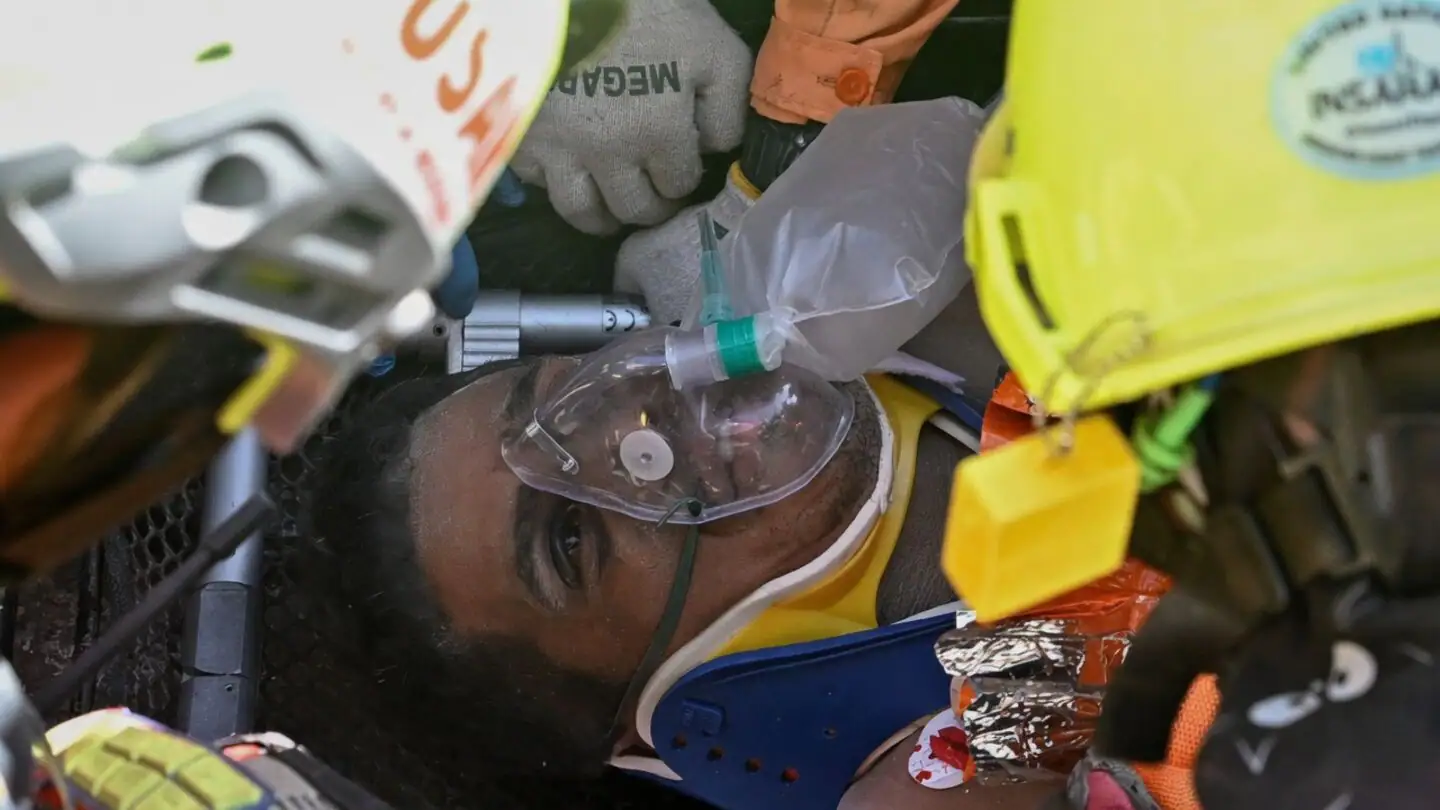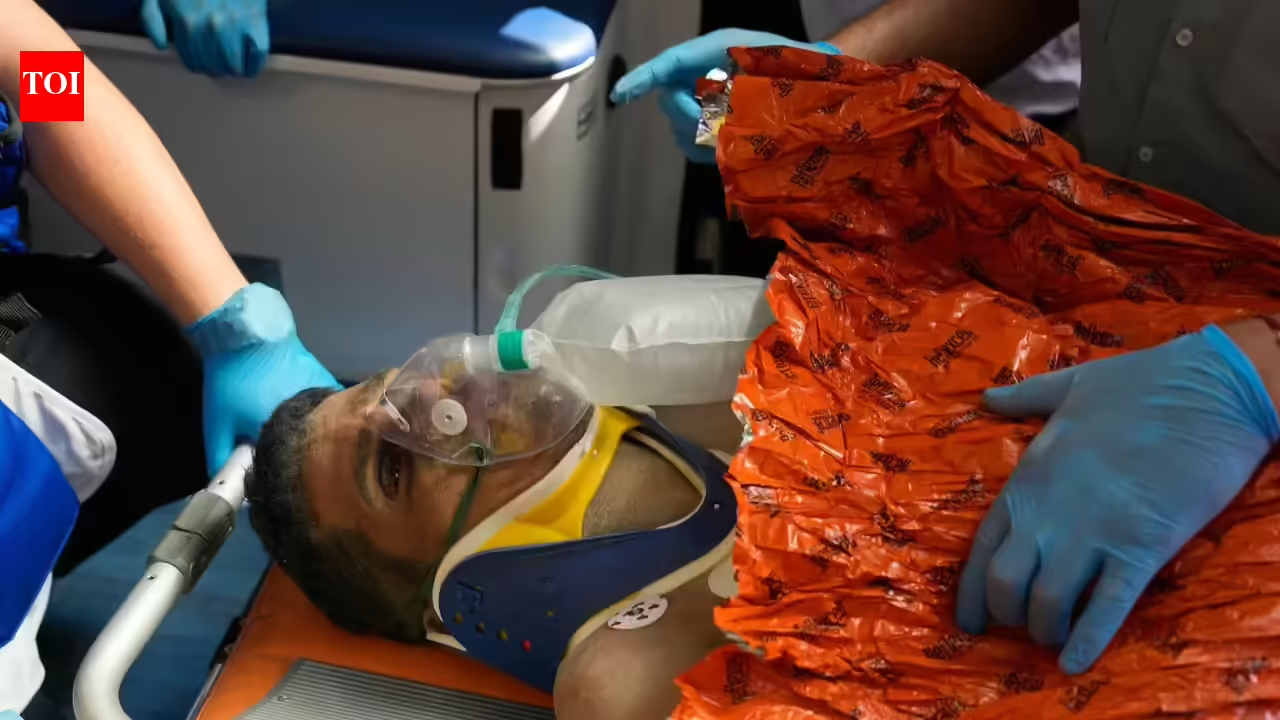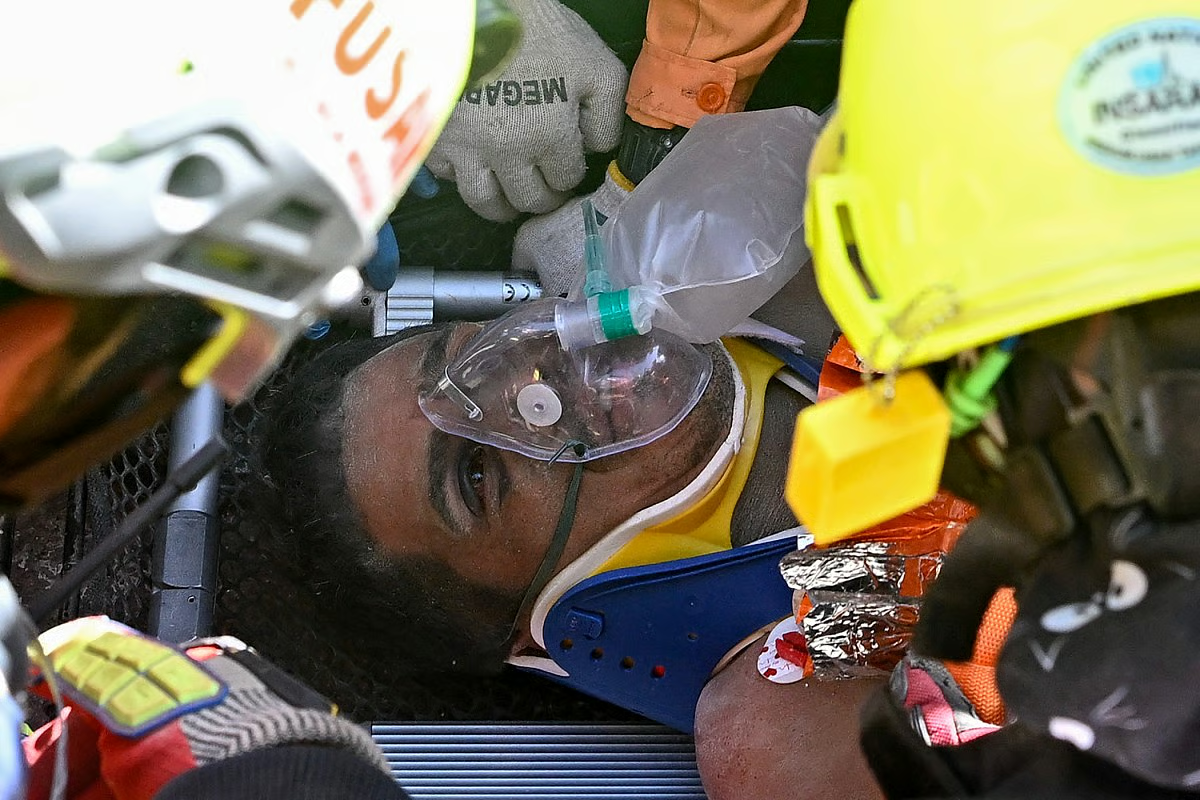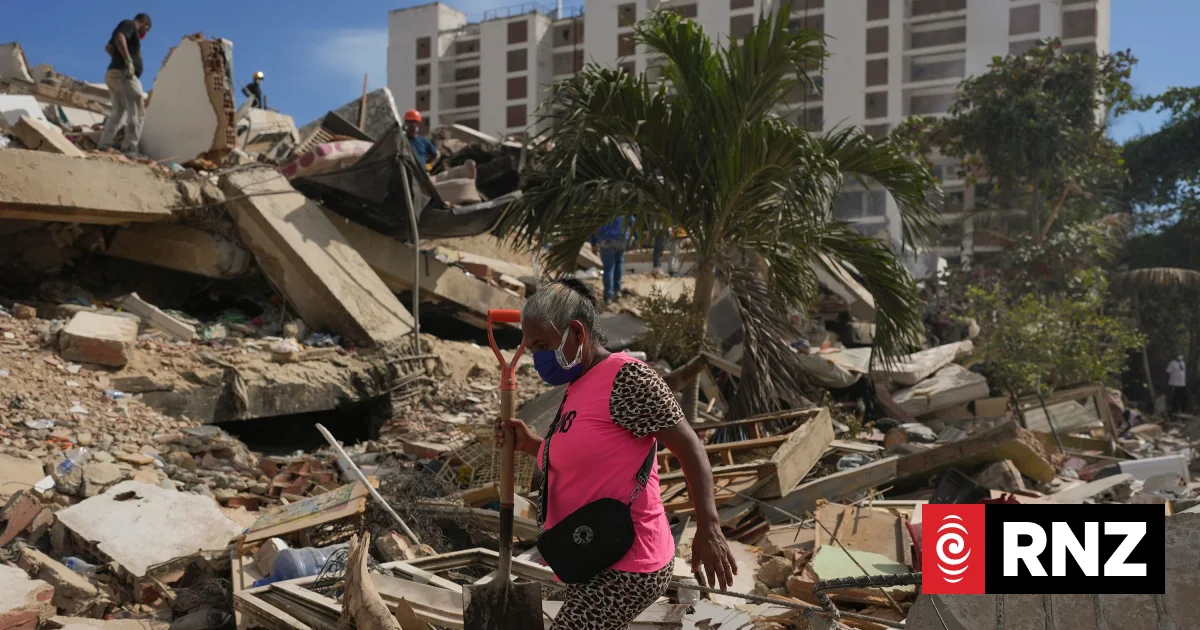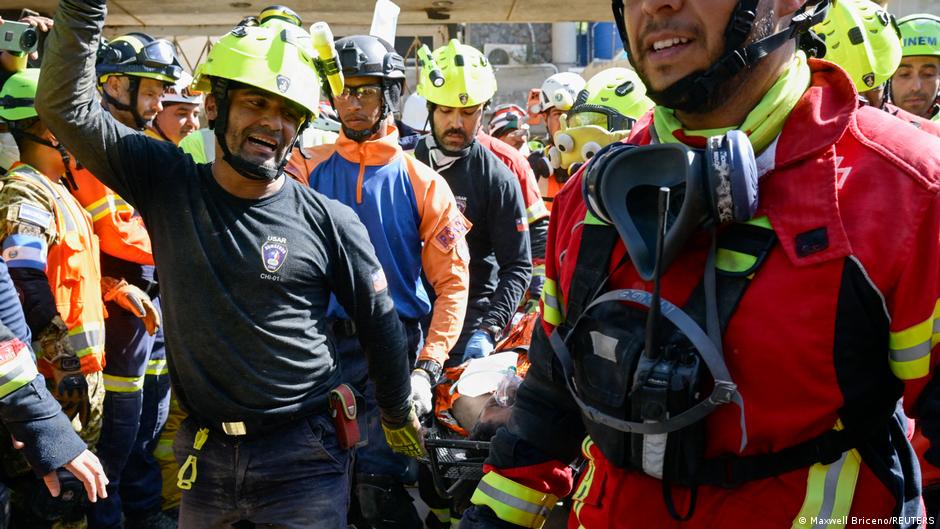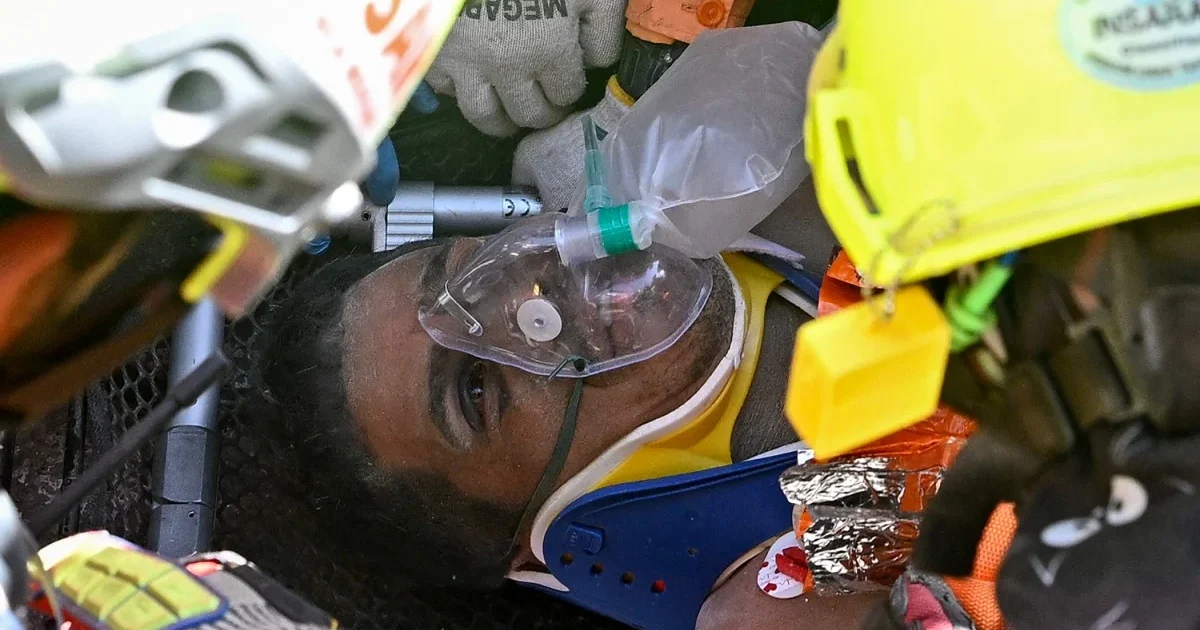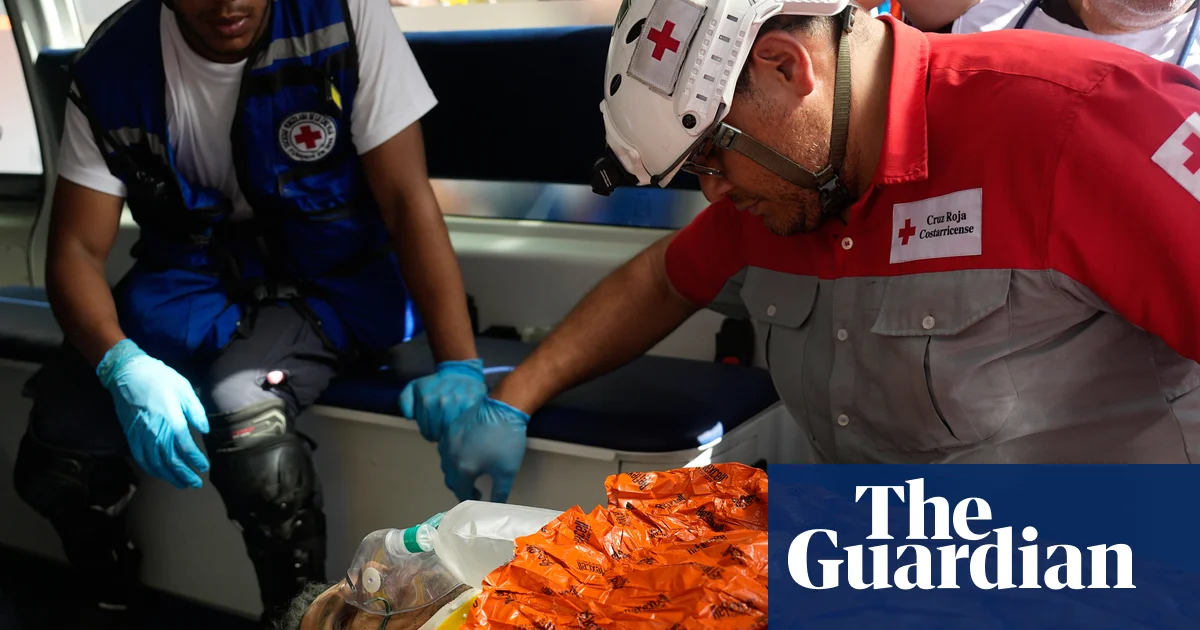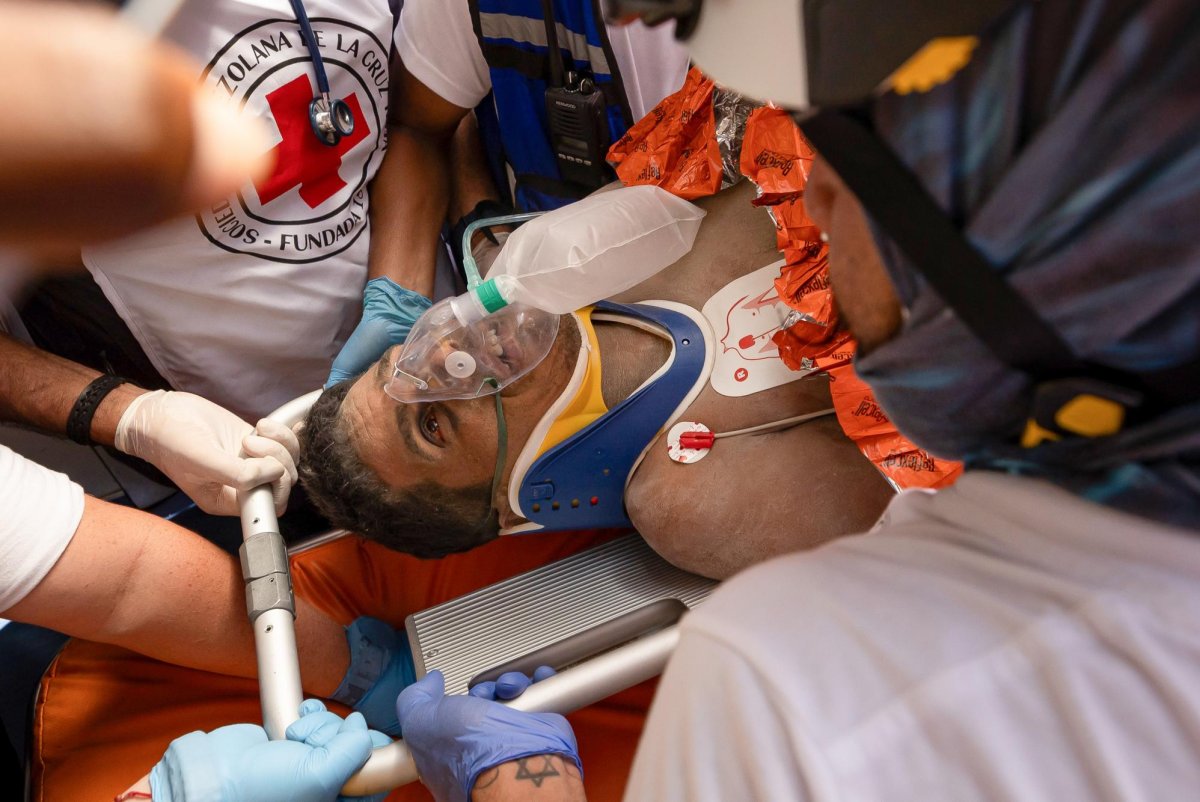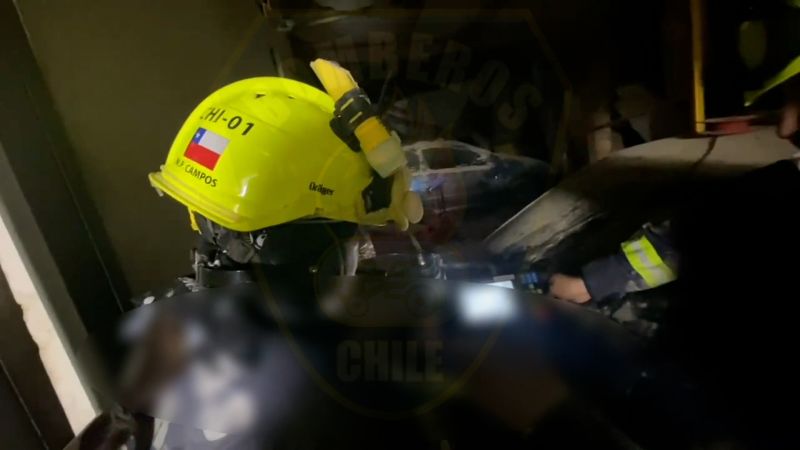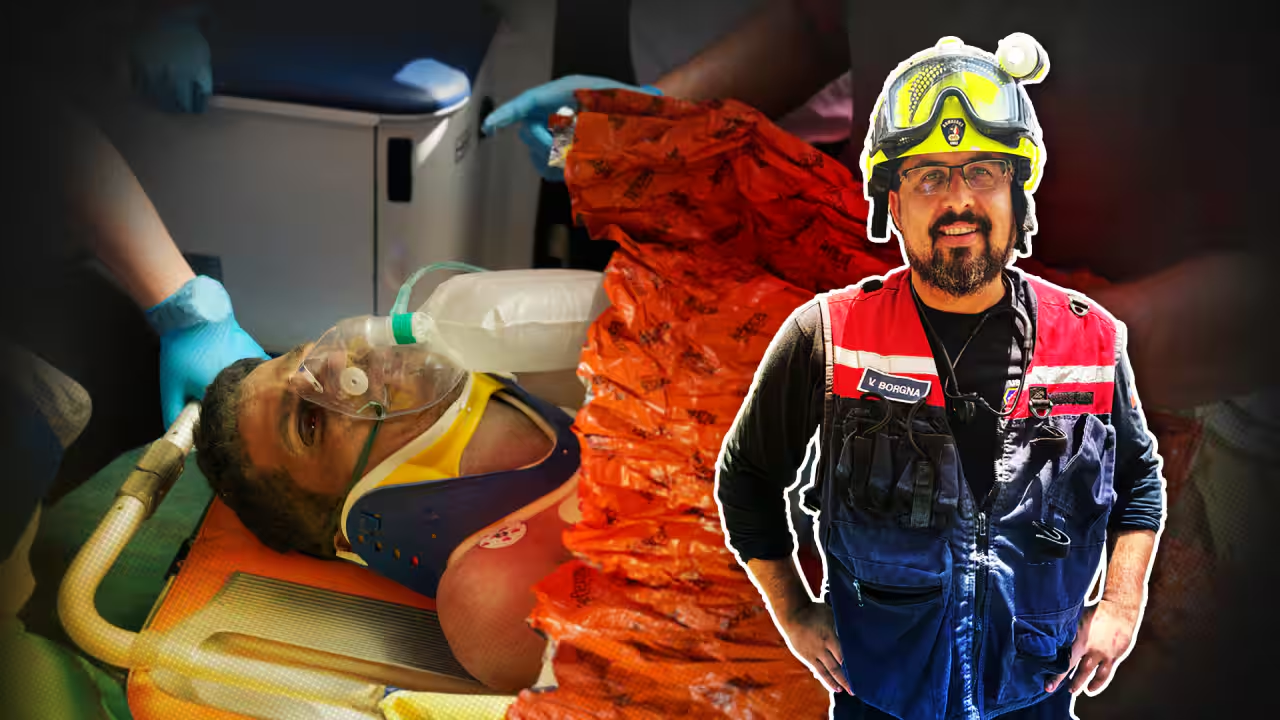
IN BRIEFA 43-year-old Venezuelan security guard has been rescued alive after spending eight days trapped beneath earthquake rubble. A Chilean rescuer told SBS News the three-day international operation to save him was complex and dangerous.It was a rescue lauded as a miracle.Eight days trapped beneath rubble — past the expected period of survival — security guard Hernán Alberto Gil Flores was pulled from the ruins of a collapsed shopping centre in a coastal Venezuelan town.The 43-year-old was working from a small cabin in the basement of Galerías Playa Grande when the 7.2 and 7.7 magnitude earthquakes hit Venezuela's north coast less than a minute apart on 24 June. As the building around Flores collapsed, his security cabin offered some protection and a small but vital pocket of air. But it wasn't until 29 June that workers from the Costa Rican Red Cross discovered Flores was still alive. The next day, formal rescue efforts started. It took more than 100 hours for rescuers to free Hernán Alberto Gil Flores from more than 140 tonnes of rubble in Venezuela. Source: AP / Fernando VergaraNews that makes senseYour trusted source for staying up-to-date with the world around you. Get free daily news updates and analysis, straight to your inbox.Vincenzo Borgna, the lead medic from a Chilean urban search and rescue team that coordinated Flores' rescue, described the operation as "extremely complex and dangerous". It was like "a sand castle with a building on top, and you take a rock away, and it'll fall", Borgna told SBS News in Venezuela.Inside the three-day rescueThe rescue operation brought together responders from around the world, including Chilean firefighters and specialist teams from the United States, Portugal, Mexico, Costa Rica, and El Salvador.Borgna says the operation was "so difficult that the technical and engineering teams from the US had dismissed it as too risky".Australia has pledged $2 million in humanitarian assistance to Venezuela as international rescue and recovery efforts continue. Credit: SBS NewsInitial strategies to save Flores had failed. SBS News understands that rescuers had even come within a 50cm vicinity of Flores before they had to re-evaluate their plans.Not only were rescuers forced to tunnel beneath debris, but they also navigated highly unstable structures, torrential rain and persistent aftershocks.Throughout the three-day mission, a telescopic camera was used to maintain ongoing contact with Flores. More than 10 litres of water and liquid nutrients were also transported via a hose through a narrow shaft of debris.Despite the circumstances, Borgna told SBS News that Flores was in remarkably high spirits."He wanted to come out walking, that's all I can tell you, he didn't want to come out on a stretcher."In a video published by Chilean firefighters in the hours before his rescue, Flores is reportedly shown drawing to pass the time.When he was finally extricated from the rubble, wearing protective goggles, Borgna recalled.He stood up in the tunnel, and he came on to our stretcher himself walking. He was in a very good mood.Minyar Collado from the Costa Rican Red Cross said when rescuers initially discovered Flores, "he asked us not to tell his wife that he was alive, just in case he wouldn't make it"."We were never going to leave him here," Collado said.'A ray of light in the darkness'Flores' wife, Gusbimar González, told local media that she was racked with despair during the initial days her husband was missing. The couple have two children, aged eight and 10."When I learned he was alive, I saw a ray of light in the darkness," she said.When Hernán Alberto Gil Flores Gil was pulled from the rubble, his rescue was met by a chorus of cheers from international volunteers. Source: AP / Fernando VergaraVenezuela's acting president, Delcy Rodríguez, also applauded the rescue on social media, saying: "We celebrate the greatness of humanity, when it is united for a single purpose: to save another. Thank you to our rescuers and to the support of the international rescuers."Her comments come as Venezuela's government faces mounting criticism regarding its response to the disaster.Other rescues — including a three-year-old boy who was found alive after being trapped beneath a collapsed building for six days — have also made headlines. However, experts believe the chance of finding quake survivors will become more unlikely as time passes.The first 24 hours after a disaster are usually when most rescues occur, with the crucial window around 72 hours. The chances of survival drop with each day if there's no access to water, among other factors. "From roughly the 25th hour to the 72nd hour, the rescues become more complex," Chilean rescuer Exequiel Gallardo told Reuters news agency."That's when international rescue teams like ours come in to assist, carrying out breaching operations and accessing victims who are not as easy to reach. "After the 72nd hour, the rescues become extremely difficult. After the fifth day, they are even referred to as 'miracle rescues.' It is very rare to find people alive after so many days, yet we are still here working to rescue this trapped person."According to the latest Venezuelan government figures, at least 2,295 people have died since the June earthquakes. Tens of thousands remain missing. As the death toll continues to mount, Venezuelan authorities are now confronting a new challenge — recovering, identifying and burying thousands of victims.That reality has overwhelmed Venezuela's forensic system, with temporary morgues established, including in the port city of La Guardia. For the latest from SBS News, download our app and subscribe to our newsletter.
Inside the 'extremely complex' operation to save a Venezuelan trapped for eight days
On the ground in Venezuela, rescuers describe to SBS News the harrowing effort to retrieve a man who, against all odds, remained alive eight days after twin earthquakes rocked Venezuela.
912 words~4 min read