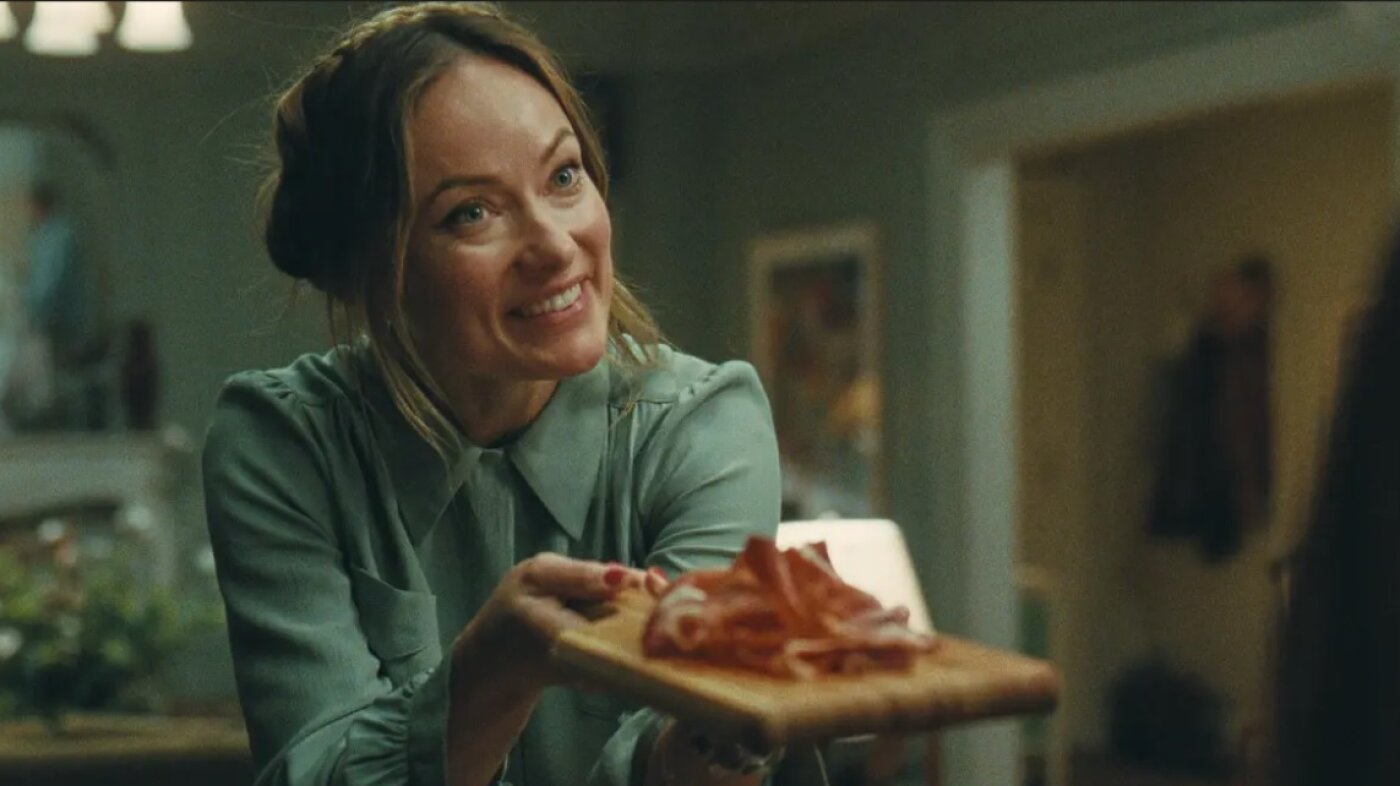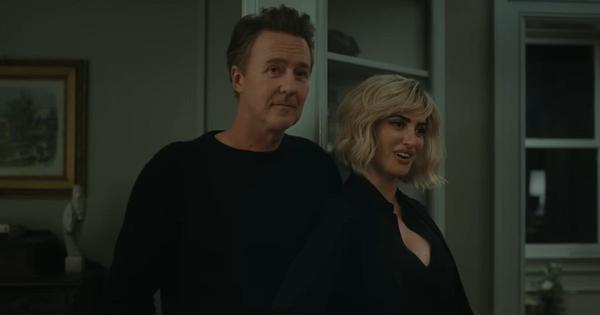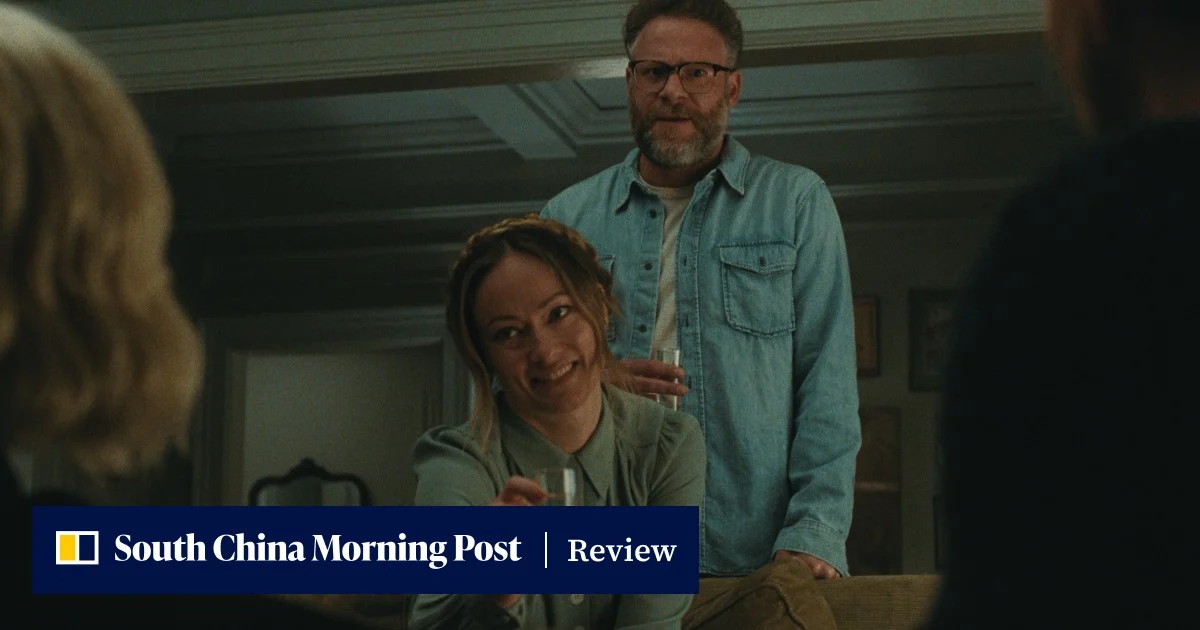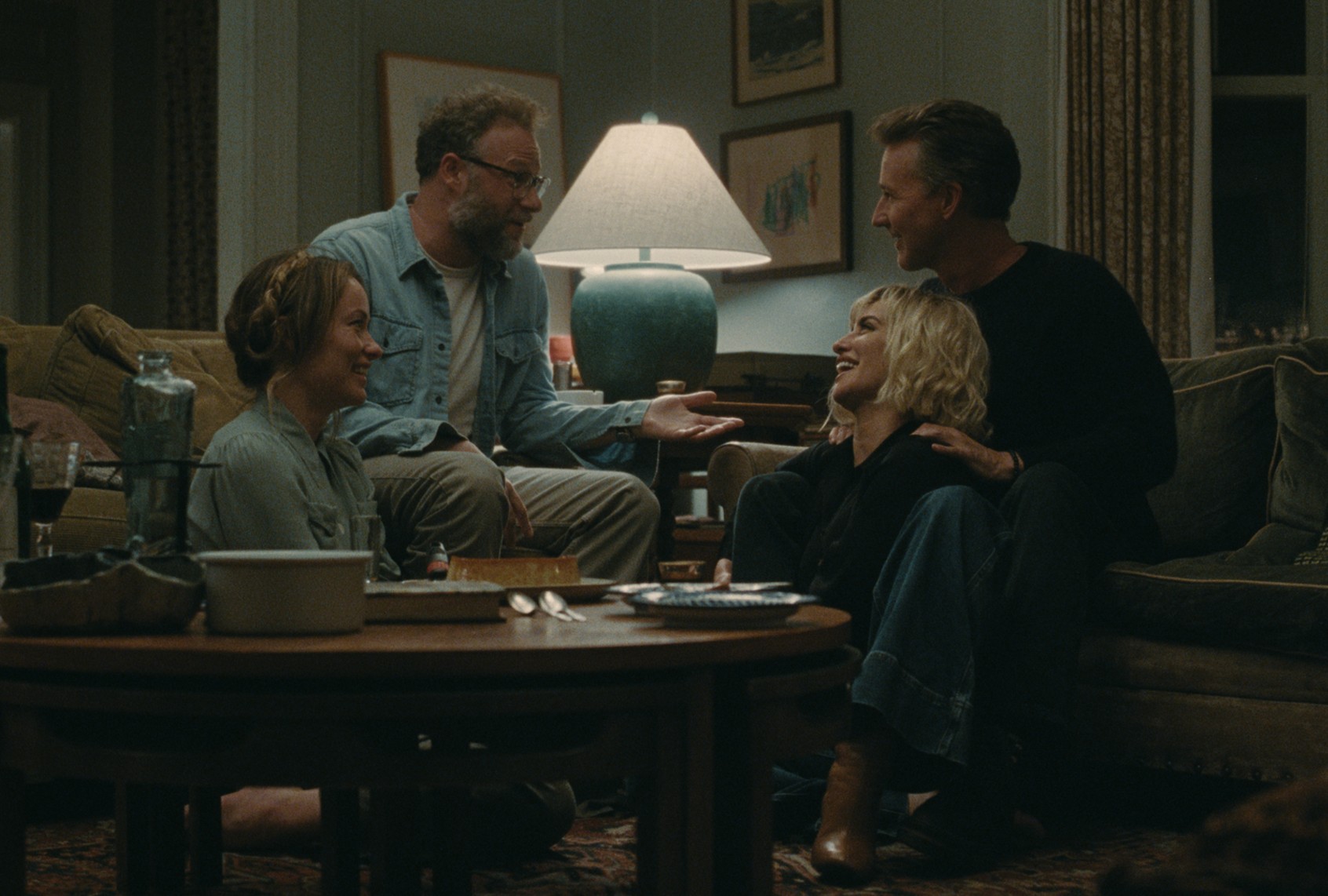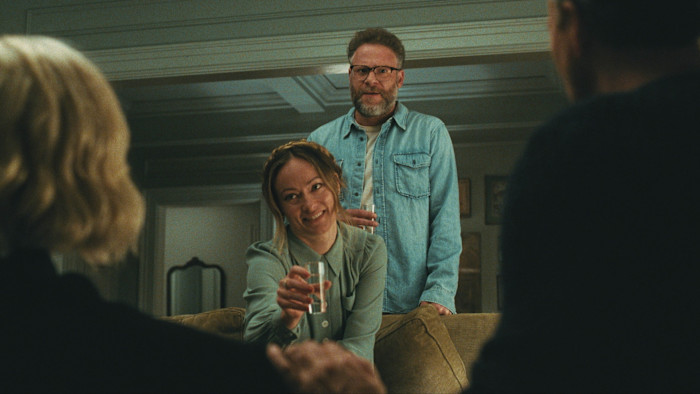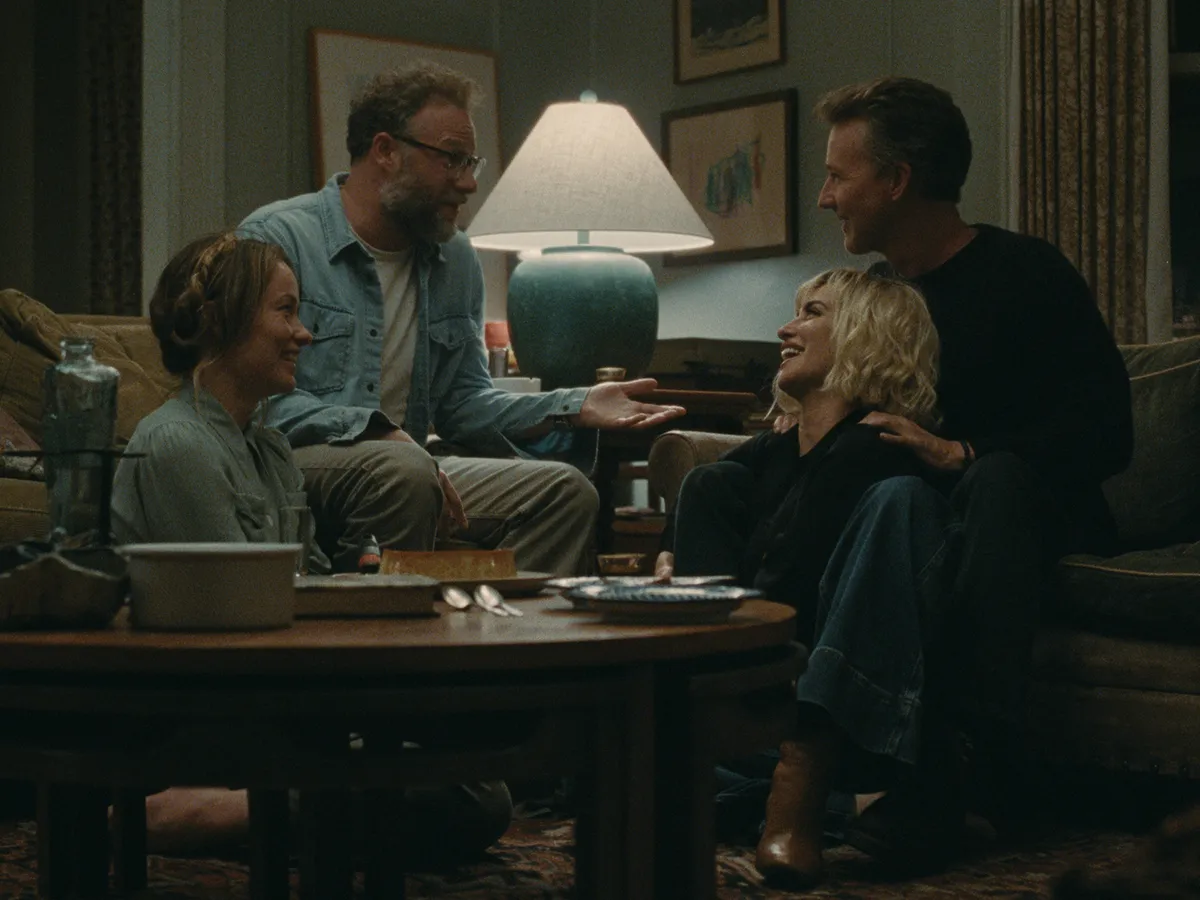
The Invite Director: Olivia WildeCert: 16Starring: Seth Rogen, Olivia Wilde, Penélope Cruz, Edward NortonRunning Time: 1 hr 47 minsAre drinks dos really so terrifying? Dramas such as Abigail’s Party, Who’s Afraid of Virginia Woolf? and this unsettling four-hander from Olivia Wilde suggest such events exist to open up the cracks in deceptively upright relationships. Stay in your couple bunker. Keep others out. That way miserable stability can be maintained.The zippy screenplay from Will McCormack and Rashida Jones (adapted from the Spanish movie The People Upstairs) brings us among two well-off San Francisco residents, Angela and Joe. Played with wired-up unease by the director and spluttering lack of co-operation by Seth Rogen, the couple seem to get by on recreational squabbling. “Did you forget the wine?” “You never told me we were having guests.” The sort of mid-level irritation that serves to distract from larger structural deficiencies.If we were in any doubt that a crash was coming, Devonté Hynes’ overly insistent score – later to calm down – would surely give the game away. The catalyst for destruction comes in the attractive form of the couple’s upstairs neighbours Piña (Penélope Cruz) and, ahem, Hawk (Edward Norton). These scenarios always have fun establishing hierarchies. In Who’s Afraid of Virginia Woolf? the younger guests were at a disadvantage to the older and madder hosts. Here the new arrivals, thanks to professional security and an unconventional personal harmony, have the social whip hand over those serving the crudites. Piña is a psychotherapist. Hawk used to be a firefighter. (He makes it clear we no longer say “fireman”.) Angela kowtows as Joe threatens to bring up their neighbours’ disturbingly cacophonous lovemaking. The noise alone keeps him awake, but more disturbing is the awareness that other people, very nearby, have a better sex life than he and his unhappy wife.Piña and Hawk are a recognisable type in drama (and in life): the progressives whose performative frankness, expressed as if they are unaware others might be capable of embarrassment, serves as a weapon to beat down social rivals. When they begin explaining precisely why there is so much noise, Angela makes a bad attempt at appearing relaxed whereas Joe, who at least recognises some sort of conflict is afoot, babbles like a kid who has stumbled upon his parents making out.All four actors master poisonous set pieces in the comedy of unease. One might (if picking nits) complain that the social dynamics don’t shift quite as much as they could. A few more unexpected alliances and secret betrayals might have upped the careering momentum. [ Himesh Patel on Enola Holmes 3: ‘The casting decisions were made to tell a very honest story about colonialism’Opens in new window ]What emerges is an apparent relic of the United States’ failure, in the early 1970s, to process the supposed sexual revolution. With their therapy-speak gobbledygook, the upstairs couple nicely capture the smugness of those who once took seriously the think pieces in Playboy magazine. The downstairs couple seem, on the surface, less happy, but neither – certainly not Joe – looks likely to buy the supposed, hip solutions. The canny script does not look to be taking Piña’s side either.Privilege is an unspoken presence here. Who would not trade these people’s problems for their own? Briefly a budding rock star, Joe now has to settle for the misery of living rent free in one of the US’s most desirable neighbourhoods. The rest are all struggling with similar symptoms of toxic luxury. Oh well. You could say the same of the characters in the novels of Marcel Proust or Henry James. Maybe freedom from financial pressure allows them, for our benefit, to struggle with universal questions of social alienation.Or maybe not. The Invite is, in truth, most memorable for its zippy invention in the field of creative cruelty. No sane person would enjoy being at such a party. Only an utter bore would pretend not to enjoy hearing about one.In cinemas from Friday, July 3rd
The Invite review: Problems of privilege play out in a canny comedy of toxic luxury and unease
This unsettling four-hander from Olivia Wilde shines light through the cracks in deceptively upright relationships
669 words~3 min read