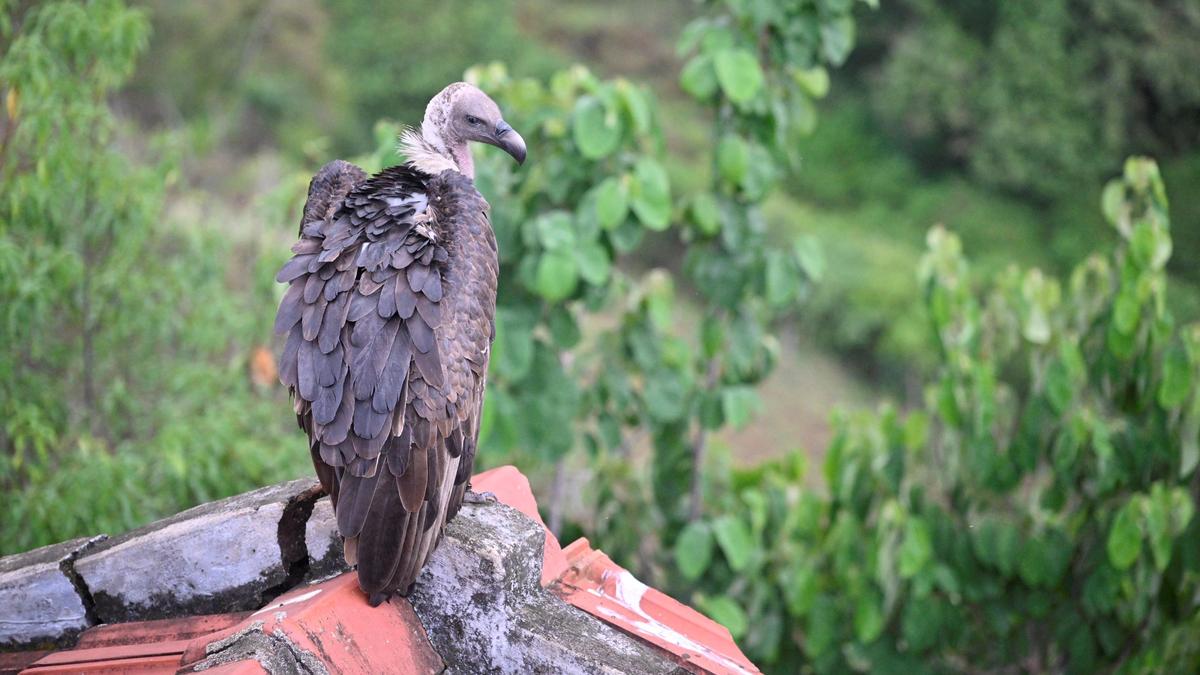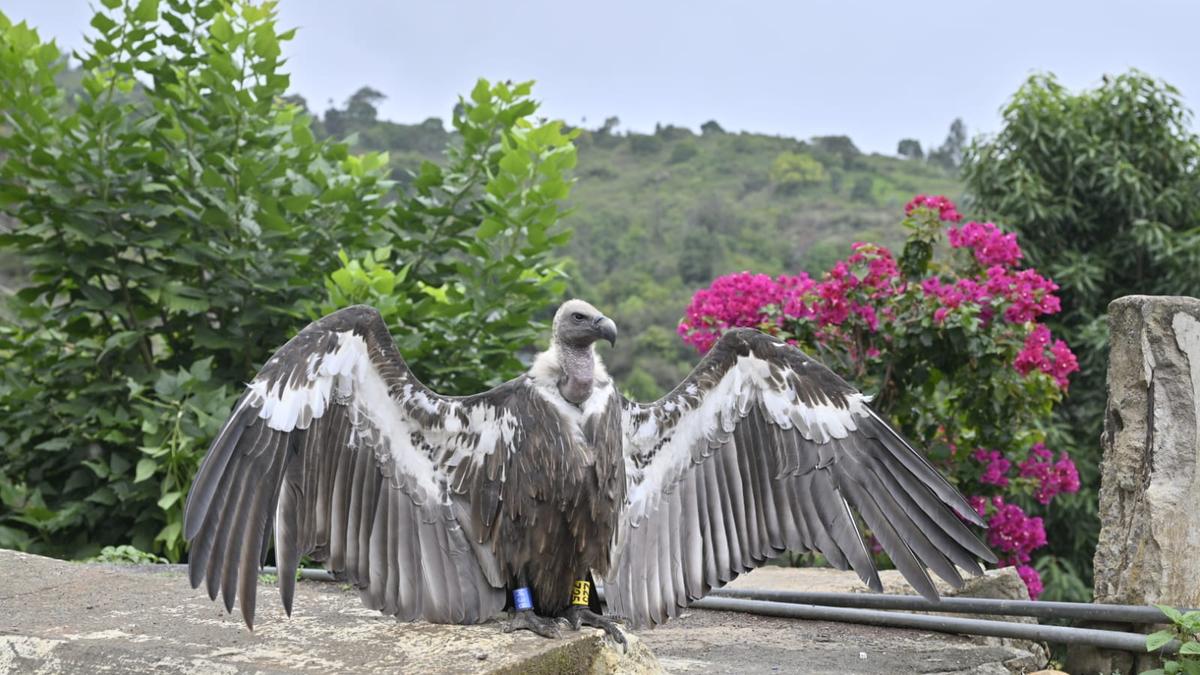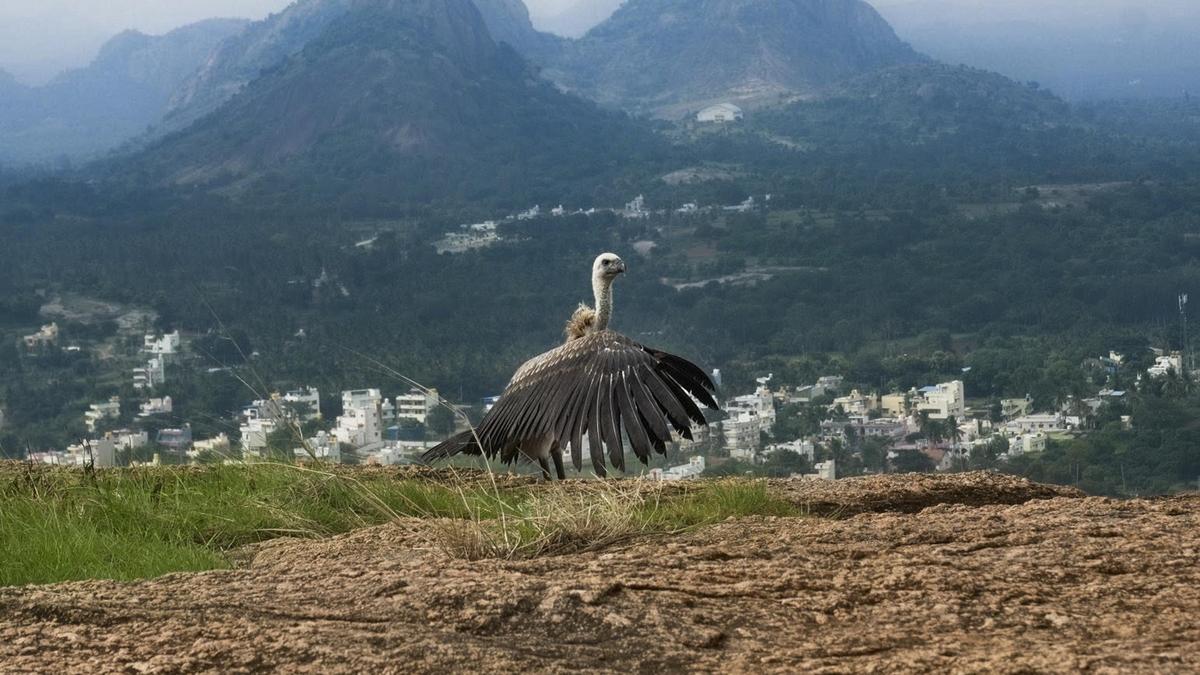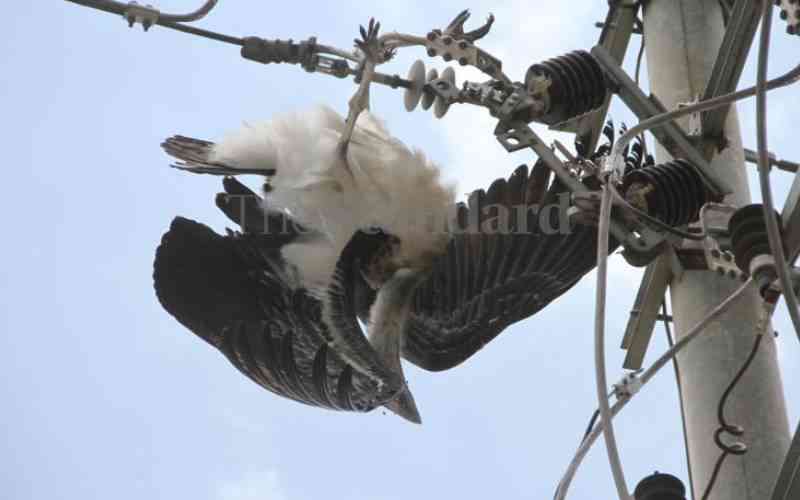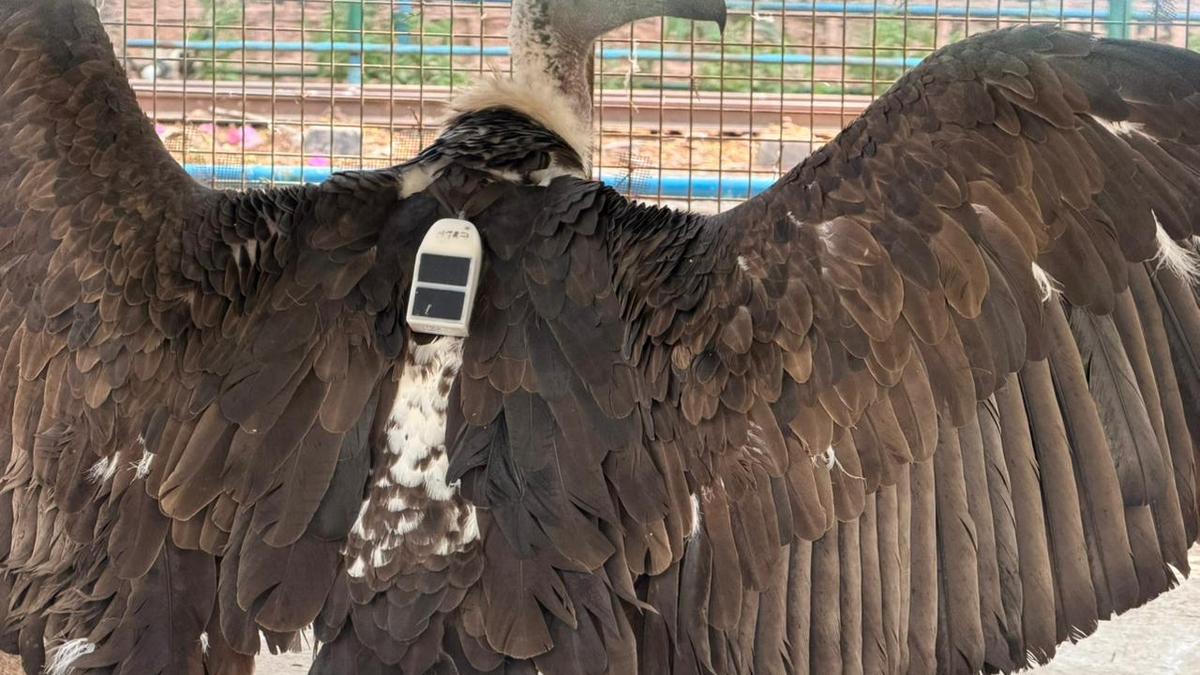
File image of ‘Z25’, a White-rumped vulture. Photo: Special Arrangement
Vultures are drawn to ‘the dead’. This one was drawn to the living. Captive-bred and released in the wild, this White rumped vulture consistently displayed a tendency to be within earshot of smartphone-carrying primates. It had taken into its bald head that humans are providers of food. The idea was likely seeded in there when the bird had a brief stay at Kalaburagi Zoological Park in Karnataka, and nurtured in the Mudumalai Tiger Reserve where it had the fortune, nay, misfortune of finding human feeders from time to time.This female vulture was being spied upon. Radio-tagged, the bird had its movements tracked in real time. Records of its peregrinations at the Mudumalai Tiger Reserve were showing up on screens at the Bombay Natural History Society’s (BNHS) establishment at Tadoba-Andhari in Maharashtra. From radio telemetry data gathered by BNHS, it was evident the vulture was not fit for the wild, and the BNHS team was considering relocating the bird to a breeding centre where it could be used for breeding. Before the conservationists could act on that decision, the vulture met with a tragic end, being electrocuted at a power transmission line in the Nilgiris in Mudumali. If that plan had fructified, the bird would have come full circle, as it had been captive-bred at Jatayu Conservation Breeding Centre in Pinjore Haryana, run by the Haryana Forest Department along with Bombay Naturalist History Society (BNHS). Radio telemetry almost saved the bird.