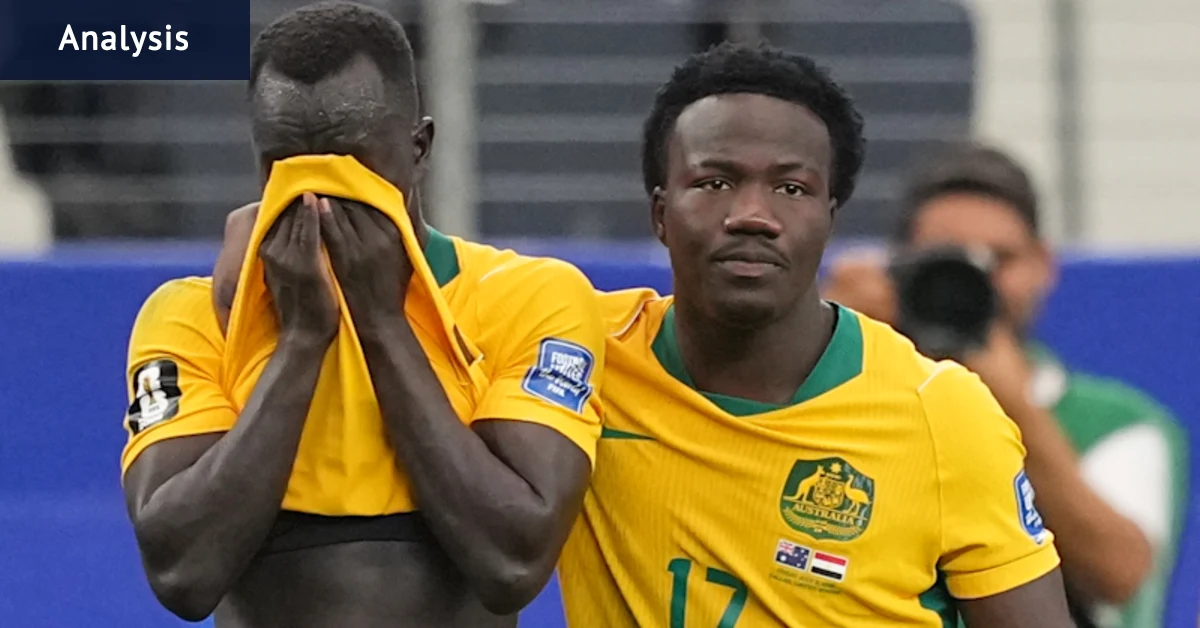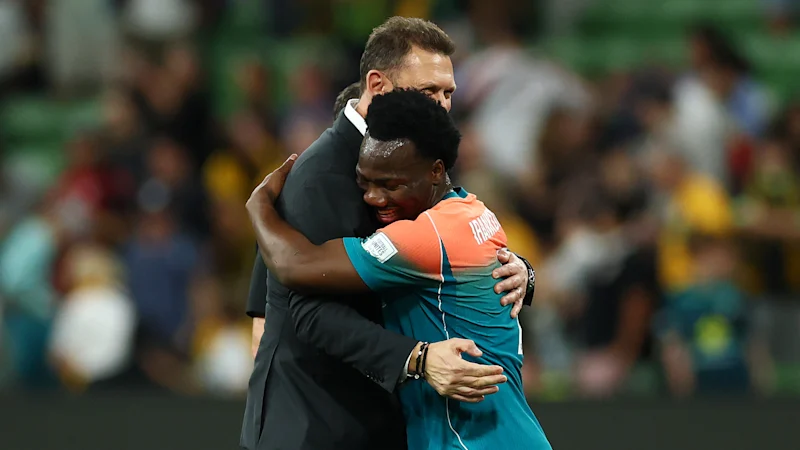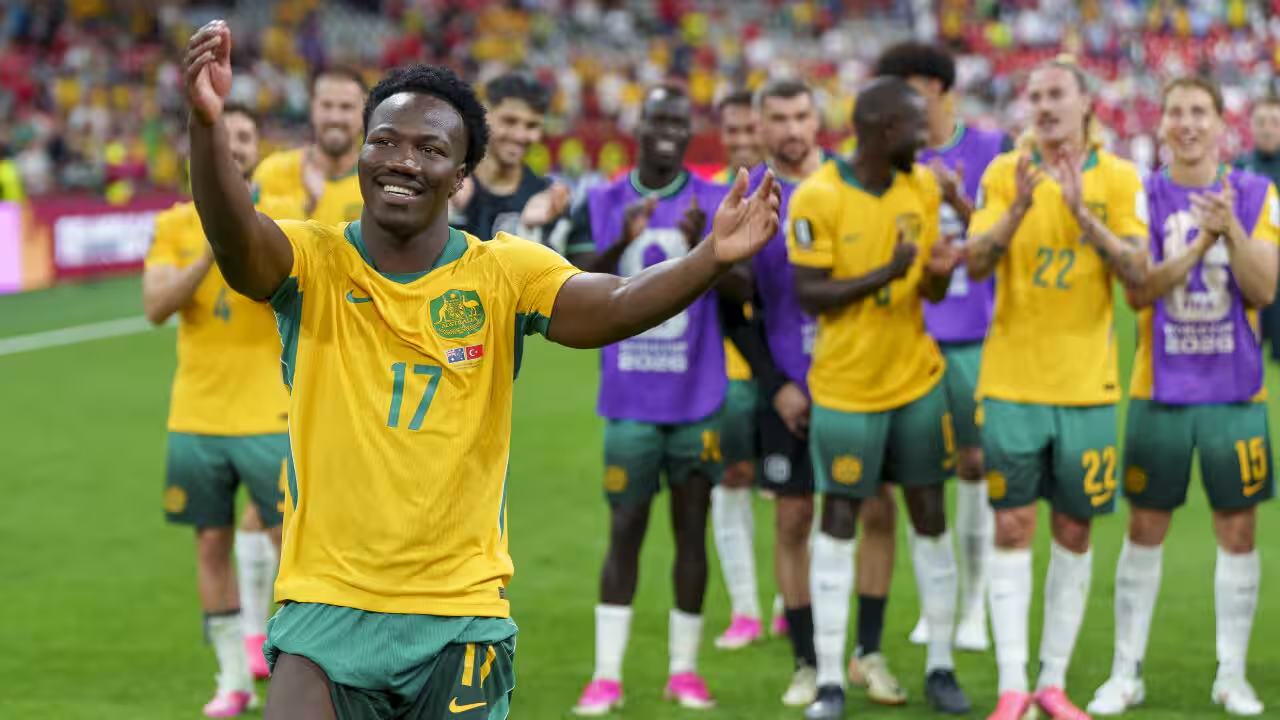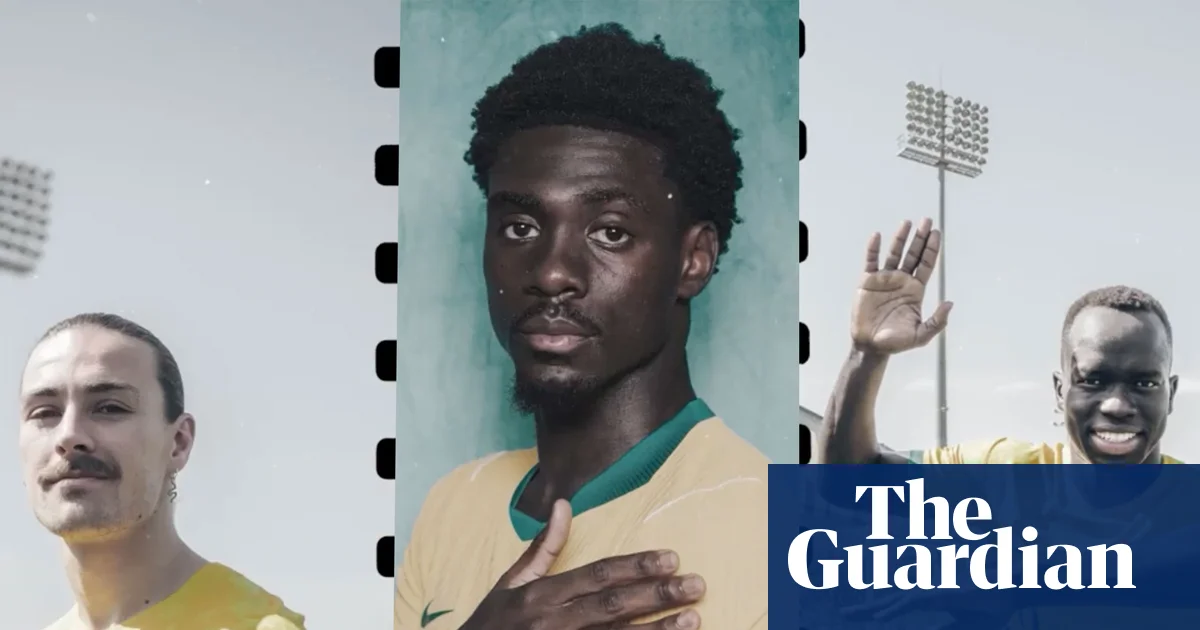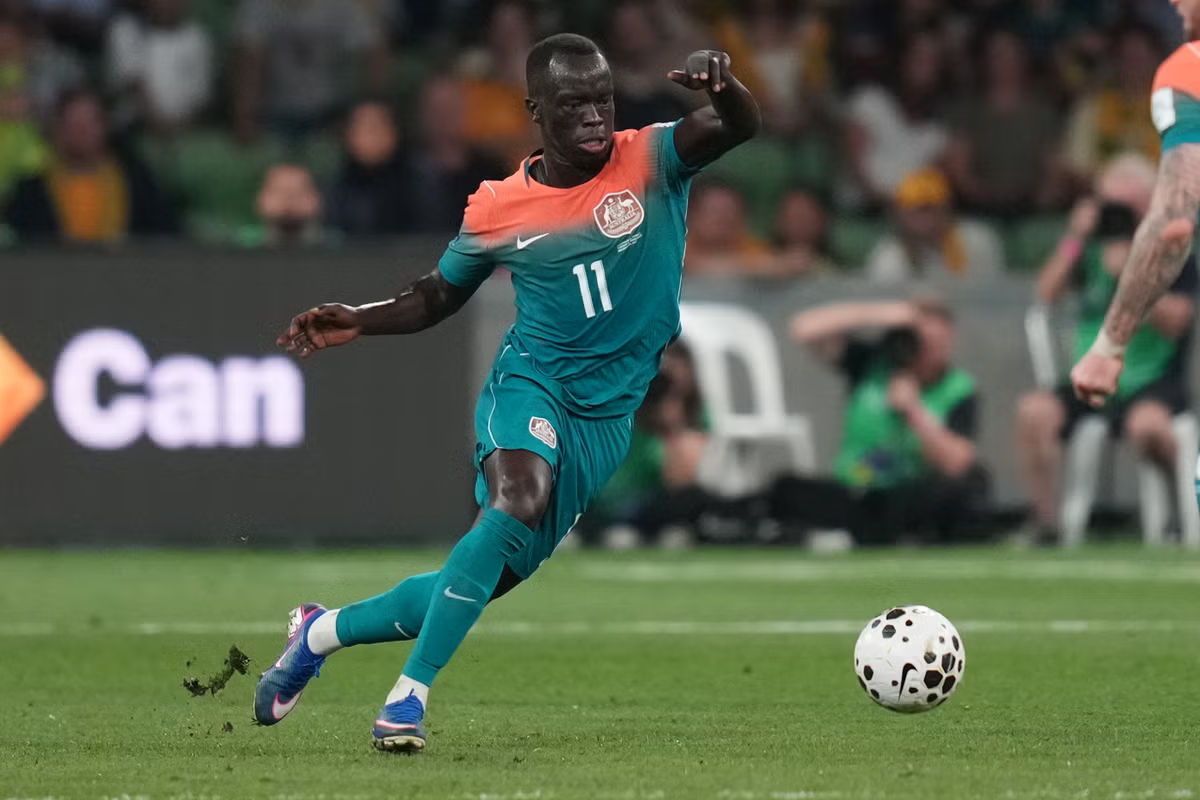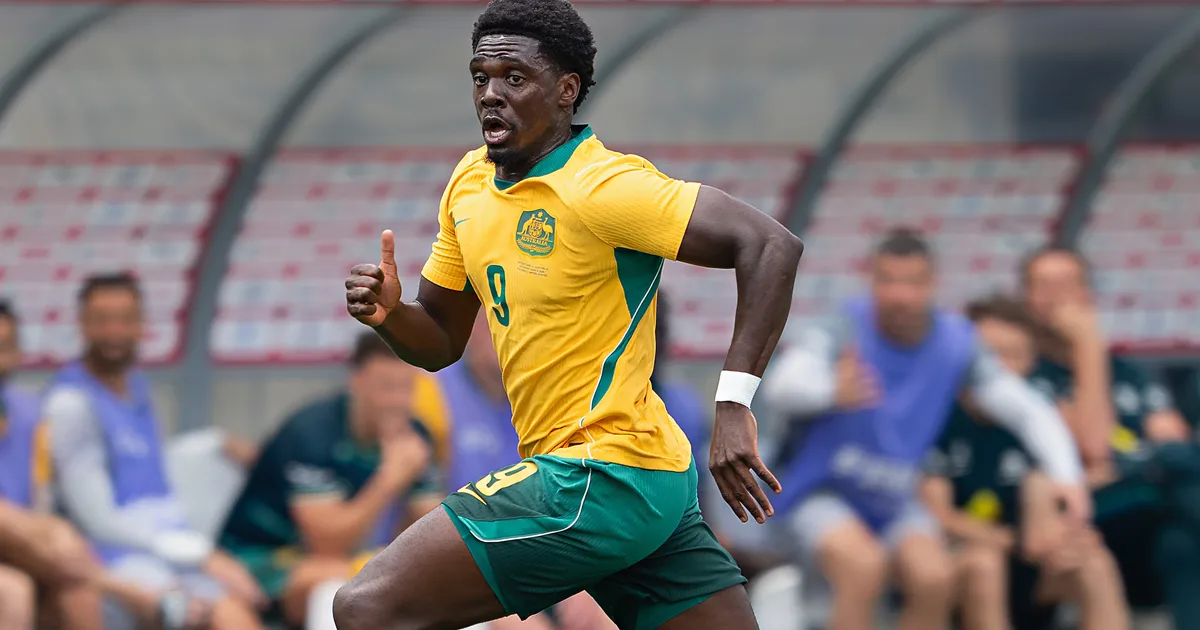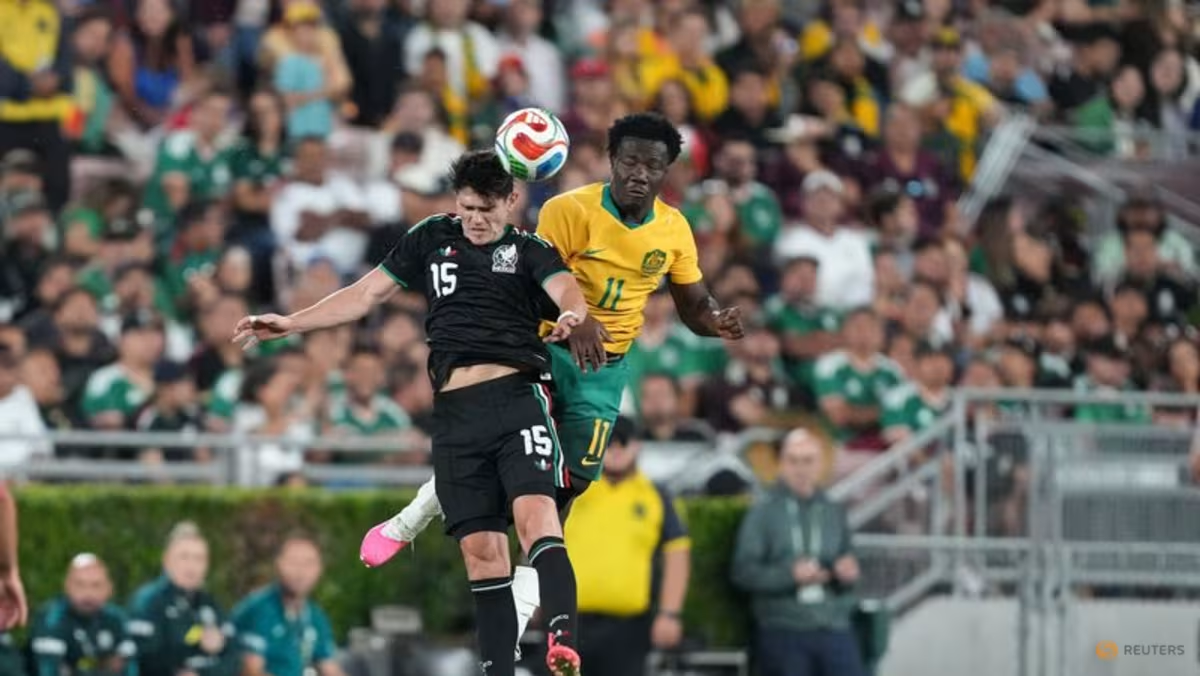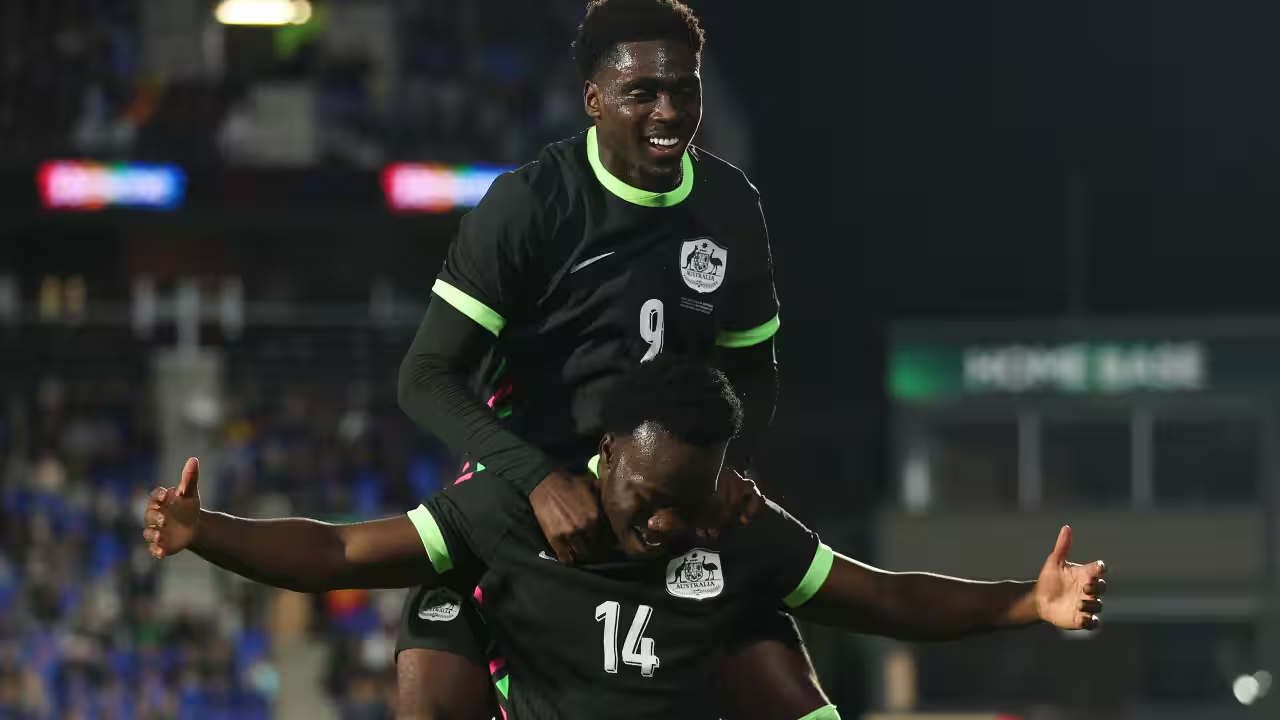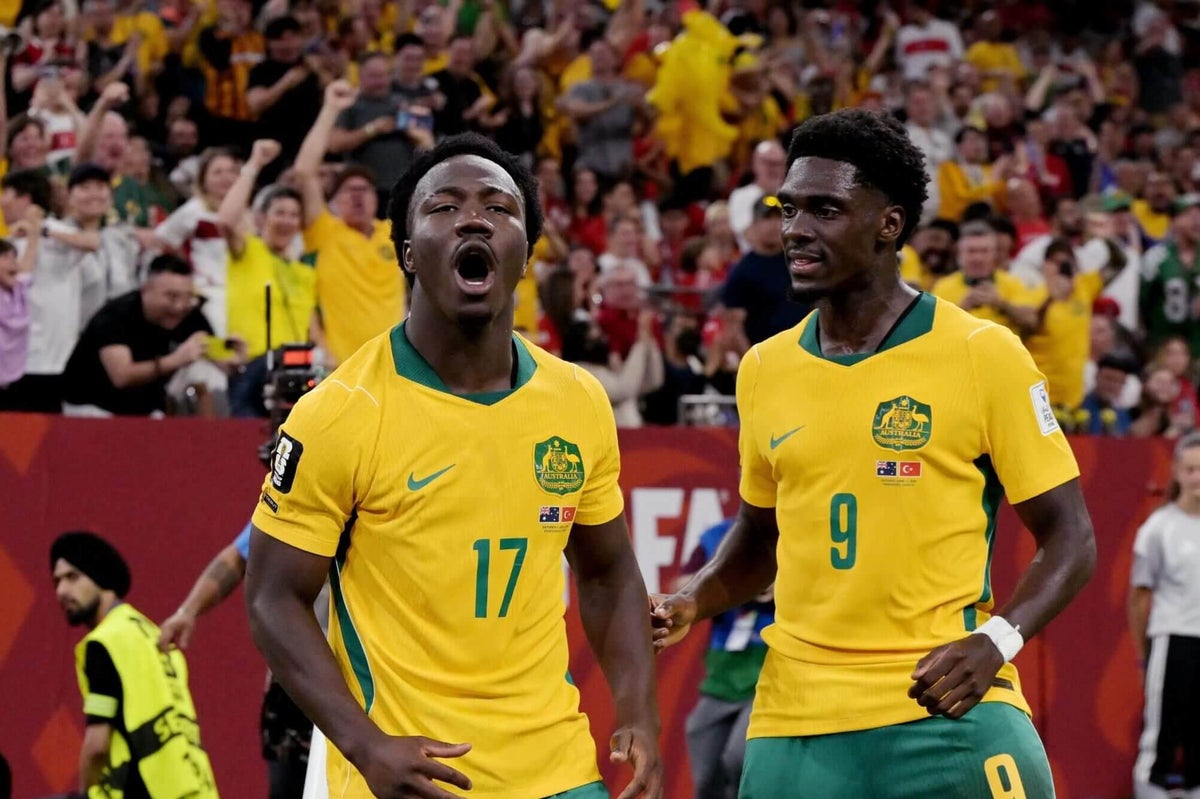
“The Socceroos aren’t just a team. We are a reflection of modern Australia.”Those were the words of Australia midfielder Jackson Irvine in a video, released by Professional Footballers Australia, on the eve of this World Cup.“It was a moment to describe what Australia is, and Australia is a very multicultural country, and that’s what makes it the best country in the world, in my opinion,” winger Awer Mabil told reporters when asked about it at a later press conference, in quotes reported by The Guardian. “The Socceroos now is a representation of that. You have many different backgrounds representing one jersey.”Australia’s opening group-stage match against Turkey was a clear illustration of that.They won 2-0, with Nestory Irankunda scoring the first goal.After putting the ball in the net, Irankunda recreated his hero, and 108-time Australia international, Tim Cahill’s iconic corner-flag-punching celebration. He was joined by fellow striker Mohamed Toure, the pair revelling in a joyous moment they had dreamt about for years.Get free access to the most comprehensive World Cup coverage in The Athletic appThe close friends’ journeys to the 2026 World Cup are remarkable tales.Irankunda was born in a refugee camp in Tanzania, East Africa, in 2006 after his Burundian parents fled civil war in that neighbouring nation, and the family moved to Australia when he was three months old; Toure came into the world in the same circumstances in Guinea, West Africa, following his parents escaping civil war across the border in Liberia as children in 1990. They came to Australia in 2004, also when their son was still a baby.“It was hard for my family,” Toure told The Athletic in an interview earlier this year. “They wanted to get out of danger so bad, but they didn’t know what they were coming to. It was a tough journey, of course, to settle into a country, to get comfortable.”Football’s growth in Australia over recent decades owes a huge amount to its immigrant communities, as detailed in this article for The Athletic’s Language of Soccer series. But there have been huge challenges along the way. Speaking in that same article, supporter Michelle Morris told The Athletic: “Football was embedded in racism when it first came to this country. People didn’t want a bar of it.”Describing his upbringing in Adelaide, Toure added: “I don’t want to use the word ‘rough’, because I grew up in such a lovely country, but I was a little bit less privileged than some of my team-mates and classmates. I feel like that built the motivation inside of me to work even harder.”There are two other refugees in Australia’s World Cup squad.Mabil was born in Kenya to South Sudanese parents, who again had fled civil war, before relocating to Adelaide when he was 10 years old, while centre-back Milos Degenek started life in Croatia, then moved with his family to Serbia as an 18-month-old to also escape conflict, before emigrating to Australia at age six.Elsewhere in the squad, the diversity of modern Australia is also clear to see.Full-back Aziz Behich was born in Melbourne after his Turkish-Cypriot parents fled unrest in Cyprus, while winger Nishan Velupillay, also born in Melbourne, is the son of a Malaysian father with Sri Lankan Tamil heritage and an Anglo-Indian mother.Striker Tete Yengi was born in Adelaide but spent part of his childhood in South Sudan, where his father, Ben — who was awarded the Medal of the Order of Australia (OAM) for his work supporting refugees — grew up. Yengi’s elder brother Kusini, and fellow striker, has also played for the Socceroos but missed out on this tournament through injury.Defender Jason Geria was born in capital city Canberra to Ugandan parents.“You are proof of what is possible — for first-generation kids in the African-Australian community, for every young person from Canberra who has watched you and dared to dream bigger,” his older sister, Suzie, wrote on Instagram. “You are making history, and we are so proud of you.”Irankunda made history in that match with Turkey when he became Australia’s youngest ever goalscorer at a World Cup.The now 20-year-old’s family initially settled in Perth, before relocating to Adelaide when he was seven.Toure told the Sydney Morning Herald how he first came across Irankunda when they played each other in a school tournament in that city — and they struck up a friendship afterwards. “You know when you have one of those teams that has that one player who does everything? He was that one player,” Toure said. “I was just like, ‘Who is this guy?’”Both came through the youth system at Adelaide United — making their first-team debuts aged 15 — before their impressive performances earned them moves to European clubs.Irankunda joined Bayern Munich of Germany in July 2024 but switched to Watford in England’s second-tier Championship last year in search of regular first-team football, while Toure has made an excellent start to life at Norwich City, also in that division, following spells at French sides Reims and Paris FC and Randers in Denmark.Toure has an older brother, Al-Hassan, who has also represented Australia, while his younger brother, Musa, has played for them at under-20s level.In that previous interview with The Athletic, the 22-year-old spoke about wanting to make people — especially his family — proud and to inspire the next generation.His parents, Mawa and Amara, fled Liberia’s civil war when they were children. Mohamed and Al-Hassan were both born in the refugee camp in Conakry, Guinea, before the family moved to Australia when Mohamed was seven months old.“I saw my parents struggle a lot,” he said in that previous interview. “So it’s always been a thing for me, whatever I do in life, to make sure I do it and help my parents. If I’m tired, I just think about the struggles I saw my mum and dad have to go through. That’s the motivation for me.”In a separate interview with Australia’s SBS News, Toure said: “Wearing the Socceroos jersey represents freedom. It was the land that gave us opportunity, that lent us a helping hand.”Secrets of World Cup stadium playlistsMabil, appearing at his second World Cup, told ESPN how he saw his role as playing “big brother” to Irankunda and Toure.Now 30, he moved to Australia when he was 10, having spent his early years in a Kenyan refugee camp.Mabil also started his football career at Adelaide United, before playing for a series of clubs across Europe. He is currently with Castellon in Spain’s second division.Awer Mabil, No 11, and his Australia team-mates celebrate qualifying for the World Cup’s round of 32 (Elysia Su/ISI Photos/ISI Photos via Getty Images)To help Australia book their spot at the previous World Cup in 2022, he netted what proved the decisive penalty in a shootout win in their final qualifier, an inter-continental play-off against Peru. “I knew I was going to score. It was the only way to say thank you to Australia on behalf of my family,” he told reporters after the match.Along with his brother, Mabil has also set up a charity called Barefoot To Boots that aims to help those currently in refugee camps by delivering football boots and kit as well as educational and healthcare support.In January 2019, shortly after breaking into the national team, Mabil had to deal with the death of his sister, Bor, in a car crash. At the time, he was on duty with Australia at the Asian Cup. “I’m unbreakable, because I’ve been broken and I pulled myself together,” he told Football Australia after the tragedy.Degenek’s story is also one of hardship.He was born in Knin, Croatia, in April 1994, but just 18 months later, his family left for Belgrade during the Croatian War of Independence. He remained there until he was six, when they relocated to Sydney.“You flee one country and lose everything you ever had,” he told Football Australia in a previous interview. “I was 18 months old when we fled to Serbia. I was on a tractor with my mum, my brother and family, and ended up living in a home with 22 other people.“Then, in 1999, you have another war, where we were getting bombed. But as a six-year-old, I’m thinking, ‘This is normal’.”Degenek, who now plays for APOEL in Cyprus, also told Football Australia how that tough childhood led to him regularly being ill and needing frequent hospital visits.After taking four points from their three group games — that 2-0 win against Turkey, a defeat to co-hosts the United States by the same score and a goalless draw with Paraguay — Australia finished as runners-up in Group D.Attention now turns to their round of 32 match against Egypt in Arlington, Texas, on Friday and the chance to win a World Cup knockout match for the first time in Socceroos history.Whatever the outcome, though, Australia’s squad — filled with players who have inspirational stories — will have made a lasting impact during these weeks in North America.
Refugees are playing a key role for the Socceroos, a team who are a ‘reflection of modern Australia’
The squad is packed with inspirational stories of players who have overcome hardship and are now making their nation proud
1,487 words~7 min read