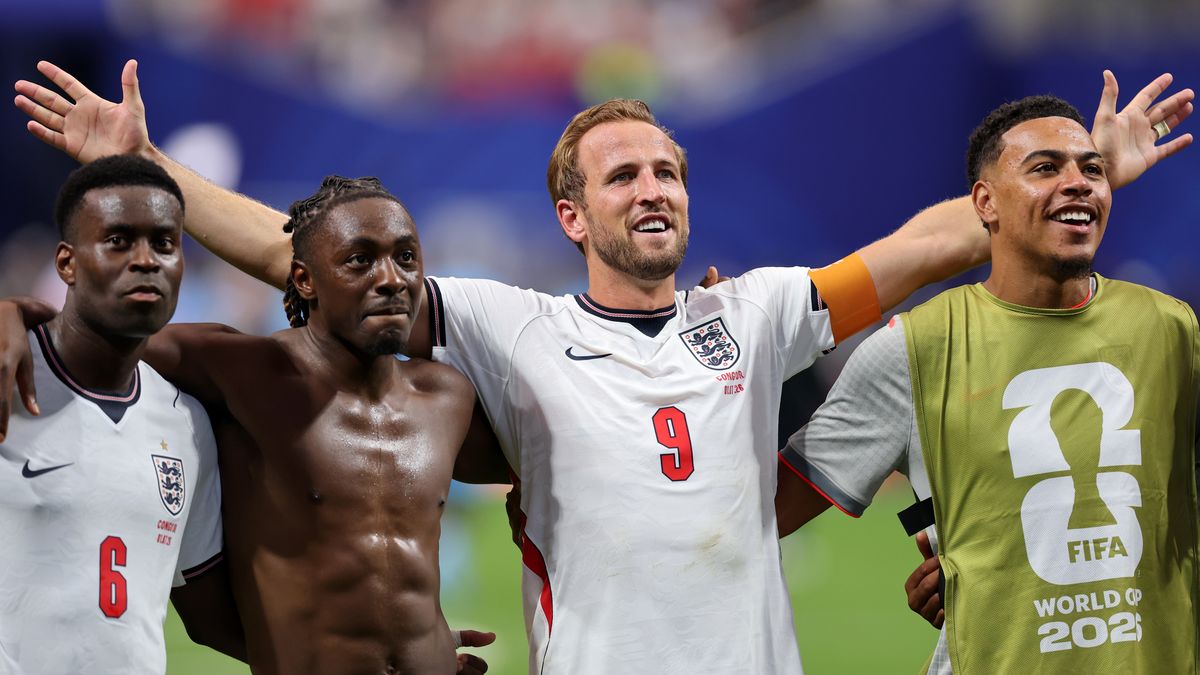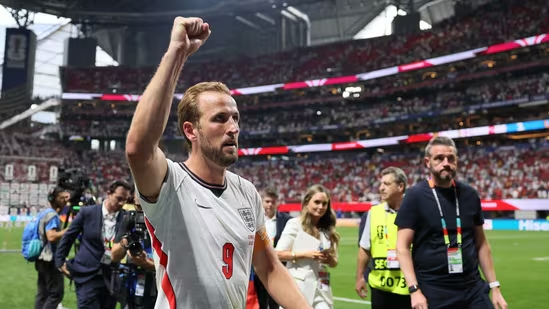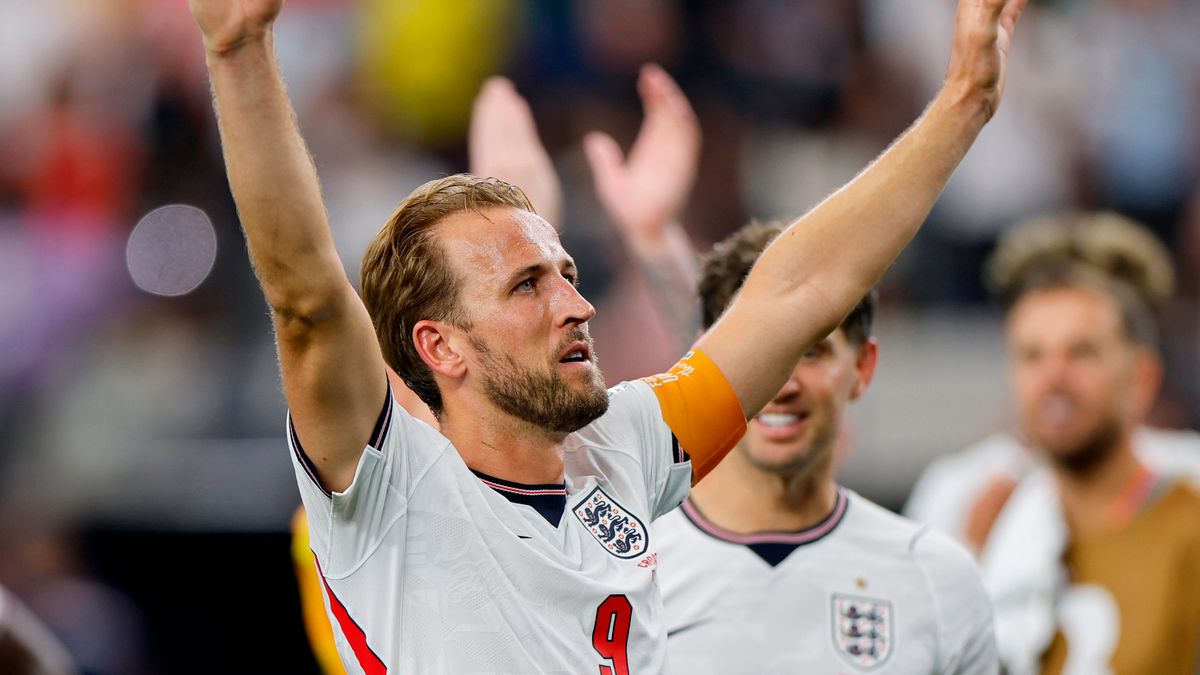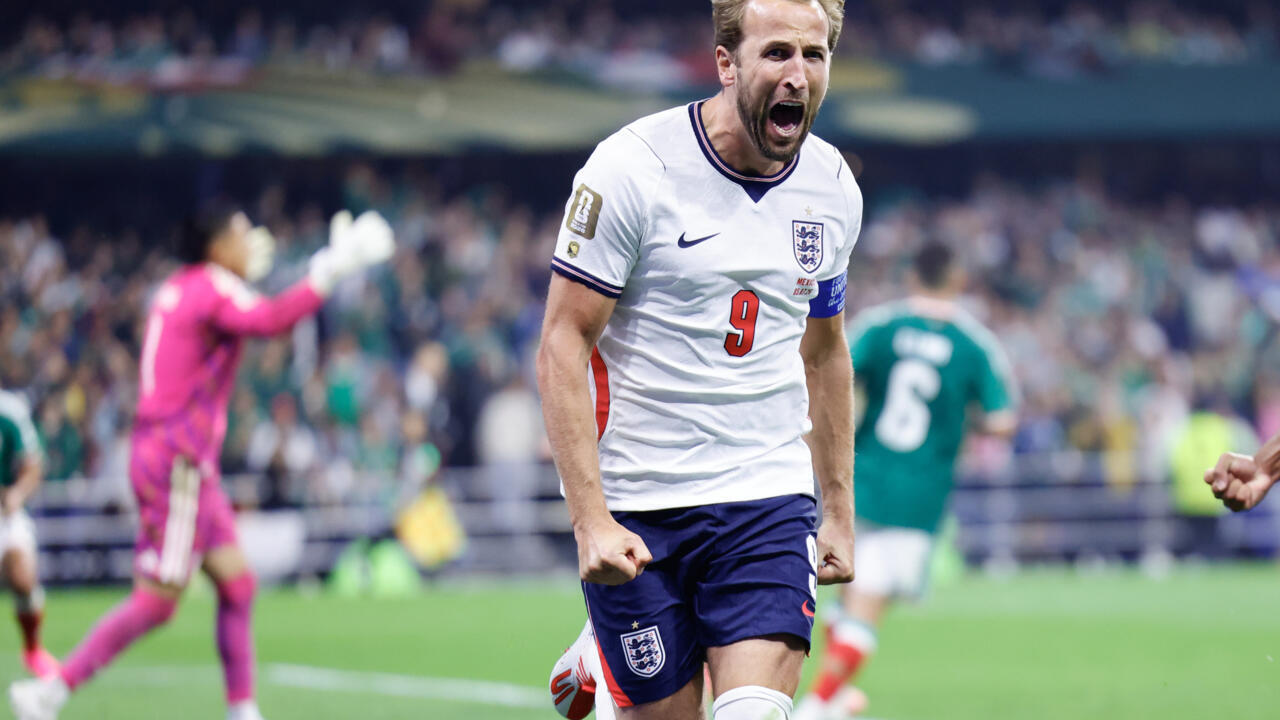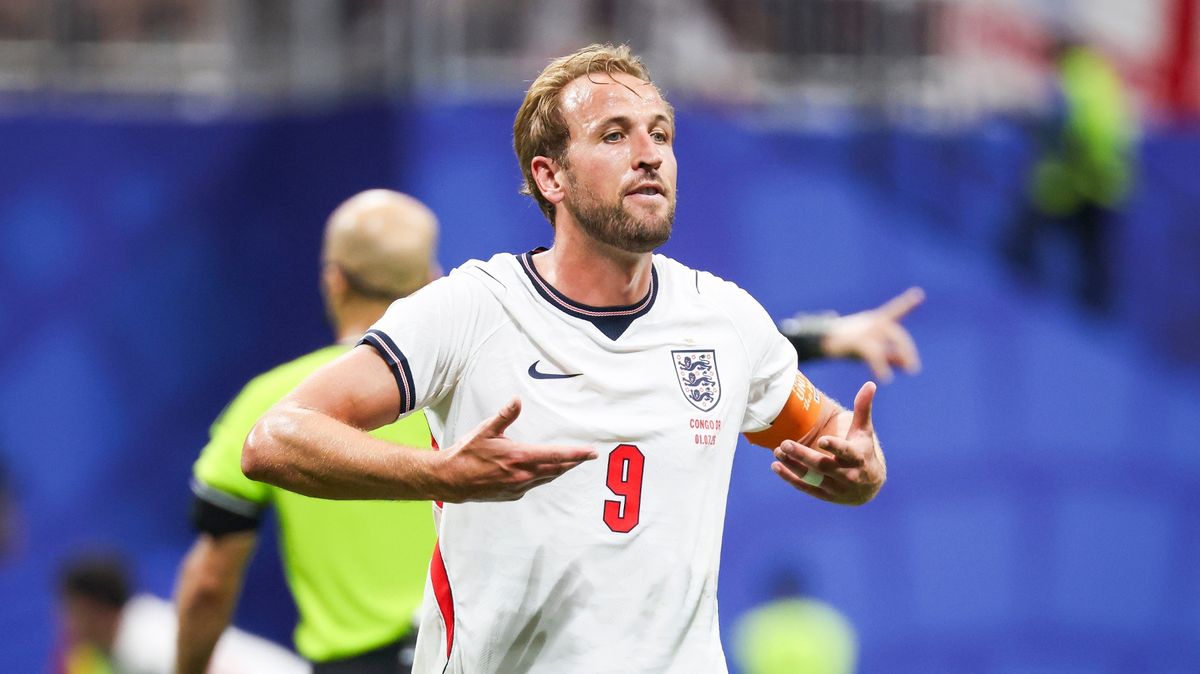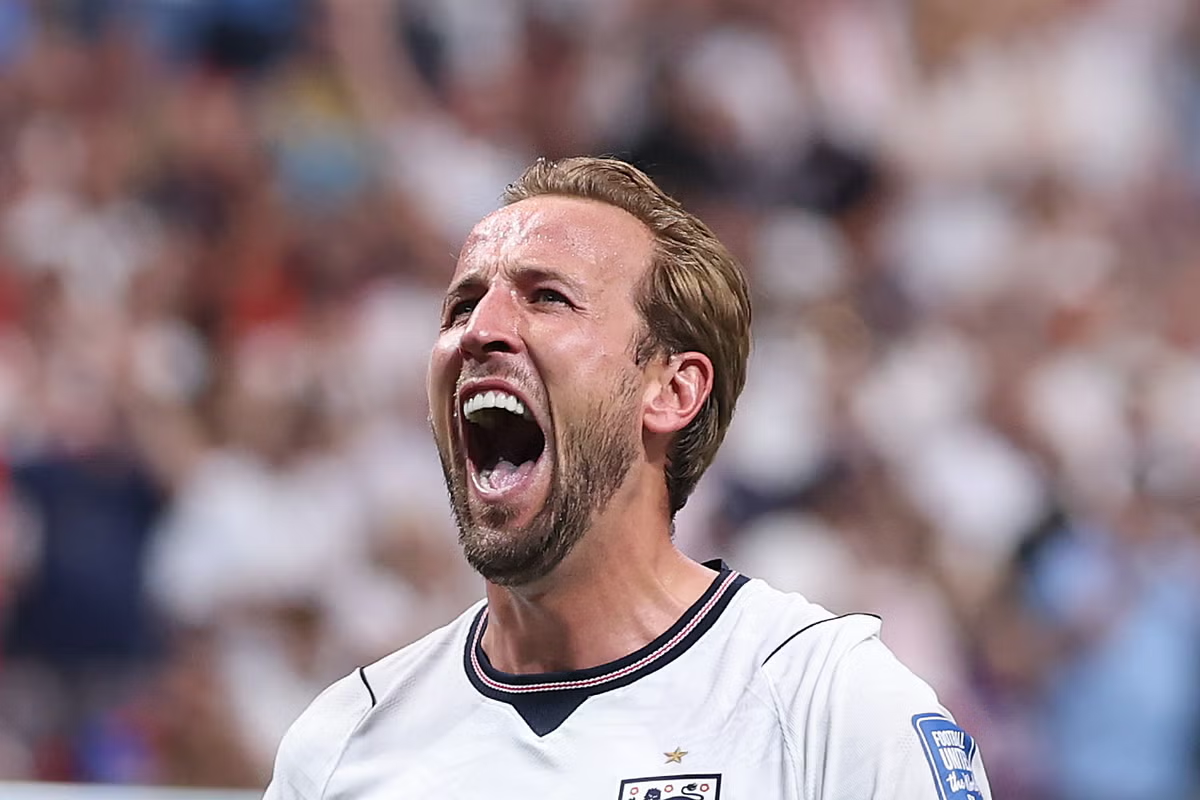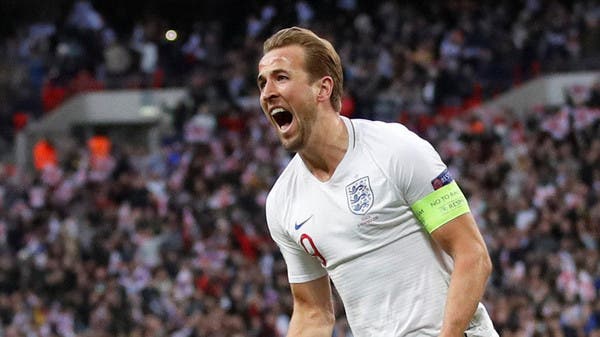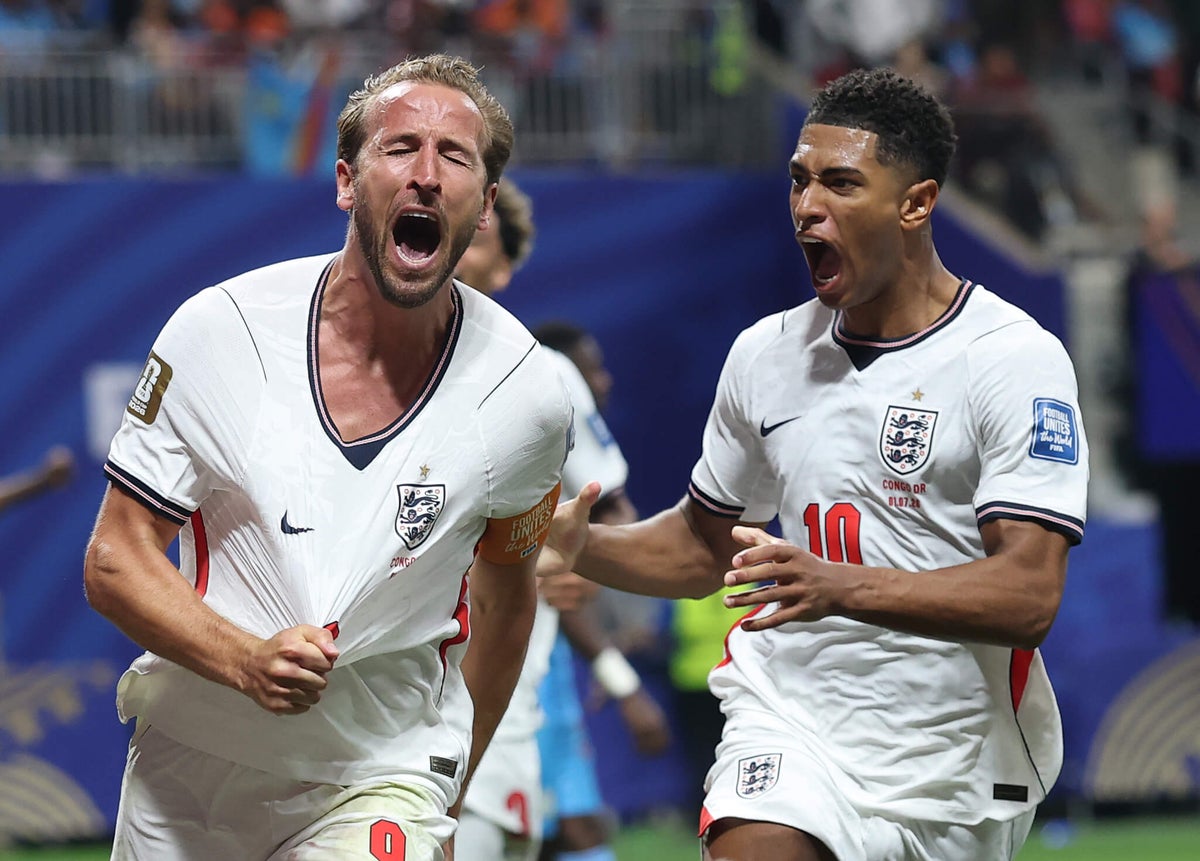
Eyes closed. Veins bulging. Mouth wide open to release an almighty roar: this was England captain Harry Kane in the moments after he scored the equalising goal against DR Congo — the goal that brought his side back from the brink of what would have been a disappointingly early World Cup exit and damaging defeat.It’s a striking image of a player who is not necessarily known for wearing his emotions quite so outwardly as some. And of a goalscorer who has hit the back of the net 72 times for club and country this season (including his brace against DR Congo).But clearly, this one hit differently.With England 15 minutes away from failing to make it beyond the round of 32, having fallen behind to a goal from Brian Cipenga in the seventh minute and DRC’s goalkeeper Lionel Mpasi in inspired form, the outlook was bleak.On the touchline, England head coach Thomas Tuchel looked like a man who knew his job was hanging by a thread. In the stands at the Atlanta Stadium, fans with the flag of St George painted across their faces — fans who had seen the ending to this story far too many times before — were losing hope with every passing second.Until that moment in the 75th minute, when Kane’s head met with Anthony Gordon’s lofted cross, directed the ball beyond Mpasi’s outstretched hand and sent the 32-year-old running wildly towards the corner flag, his face etched with…well, what, exactly?Relief, initially, says Jeremy Snape, former England cricketer turned performance psychologist. “Elite performers are trained to dial down focus on the external crowd and dial up their focus on executing their skills,” he tells The Athletic.“This moment shows Kane emerging from the quiet, methodical ‘zone’ and realising the deafening enormity of what he just did. Winning is the result of huge suffering and sacrifice, even suppressing the emotions and noise takes energy. It’s at these moments of release that you realise the sacrifice was worth it.“I think it starts as huge relief for him and the team and then grows outwards as he sees the effervescent celebrations of the fans.”It’s an expression that might seem somewhat alien on the face of Kane, but it’s one we’ve seen elsewhere many times before.Rafael Nadal won 22 grand slam titles and greeted almost every major victory with an emotional release to rival Kane’s in Atlanta.Nadal after winning the 2022 Australian Open (Martin KEEP / AFP via Getty Images)When Rory McIlroy finally completed his career grand slam on an extraordinary final day at Augusta in 2025, he fell to his knees, closed his eyes tight and released a roar into the sky.“A roar that could only mean one thing,” we reported: “Sweet, sweet relief.”McIlroy after winning the Masters in 2025 (Richard Heathcote/Getty Images)Scoring goals and winning trophies is supposed to be joyous, but Kane’s face (and the faces of those above) showed no signs of delight in any traditional sense. That usually comes later though, says Snape, host of Inside the Mind of Champions podcast.“Joy often comes from seeing the reaction of others and realising the enormity of the result,” he explains. He recalls once speaking to former England goalkeeper Gordon Banks, who started every game of the 1966 World Cup victory, and asking him: ‘What was the first emotion you felt when the whistle was blown in 1966?’“His response was simple but surprising,” says Snape: “Relief. Sports stars desperately want to win but equally, they don’t want to fail and let people down. That burden of expectation can be seen in these moments of release and relief before they take in the wider adulation and hysteria.”Getty Images photographer Richard “Dickie” Pelham, who took the image of Kane’s moment of release, felt the pressure too.Working at his ninth World Cup, he was tasked with covering both halves of the England attack in their game against DRC. In the second half, he positioned himself in the far corner, from where he watched as Gordon’s ball flew towards the edge of the box.“I’m just waiting then, for the ball to come across,” he says over the phone the following day. “I see Kane rise and then just press the button. And then if Kane runs to me, that’s even better because that’s what you want: the big celebration picture.“I was looking through the camera and then looking at Harry’s face, screaming. I could see the emotion in his eyes. You know then that you’ve got something special coming your way.”The presence of Jude Bellingham alongside Kane reminded Pelham of the moments following Michael Owen’s glorious goal against Argentina at the 1998 World Cup, when the 18-year-old striker wheeled away to celebrate and was joined by David Beckham.Pelham, who is part of a Getty team of 115 photographers, editors and operations staff who will shoot and edit more than 2.6million images and deliver them in real time throughout the competition, estimates he took around 50 images of Kane’s celebration (“It could have been 150 if I’d had the camera on super high speed.”) Each one gets sent immediately via a cable in his camera to Getty’s New York office to be edited and sent around the world.“That puts even more pressure on you,” he says. “I used to work in another way which was tag and send. You’d look at your pictures slowly and decide which ones to send. But now they are seeing every image that comes out the back of my camera, which is quite daunting. But with deadlines for a major agency like Getty (the authorised photographic agency of FIFA), that’s what has to be done.”He recalls the likes of former England players Paul Gascoigne (“remember the dentist’s chair at Wembley in ’96? That was amazing”), David Beckham and Ian Wright as the kind of players he knew would usually give him a good celebration picture. Wright would even make a beeline for him on purpose.Gascoigne’s famous celebration after scoring against Scotland at Euro ’96 (Richard Sellers/Sportsphoto/Allstar via Getty Images)“Wrighty would say to me, ‘Dicky where are you sitting?’ When I’d tell him, he’d say ‘Expect a visit, I’m coming over’. But to get a big celebration like that from Harry Kane was just something else, wasn’t it?”The photographer is no stranger to seeing Kane celebrate a goal but says the release that followed his first goal against DRC was “100 per cent” the most emotional he’s ever seen the England striker.“You usually get that little jump in the air and that little fist pump. So for Kane to do that was incredible. There was nothing like that in the Germany Euros,” he says, referring to the 2024 tournament when England reached the final where they lost to Spain.He echoes Snape’s view that the basis for those emotions was likely relief, based on an intense desire to win the World Cup: “You can see it. He wants to win the World Cup, and he’s got all those players behind him, you could see it.“To be losing 1-0 at half-time; that must have been some serious pressure. So it was like releasing a pressure valve. Imagine (if England had lost), that would have been bigger than Iceland,” he says, referring to the 2-1 defeat that knocked them out of the 2016 Euros in the last 16 and sparked a major inquest into where it all went so wrong.Kane’s emotions were mirrored by England fans inside the stadium; broadcast pictures in the UK showing some shedding tears of relief after his header drew them level. Snape says it’s understandable, given they wait years for success and invest time, money and hope into their team winning.“One moment of genius on the pitch can give 80,000 dejected, deflated people a surge of uncontrollable elation,” he explains. “One minute they are planning their trip home, the next they are planning an extended party. The emotional contagion between the players and fans works both ways — that’s the addictive joy of sport.”It’s also why Pelham continues to do what he does, after more than 30 years in the job.“I’m over the moon that I got the gold picture and I got the gold cele,” he says. What made it even more special was the fact that it came in the same city – Atlanta – where Pelham took what he says is one of his greatest images, of U.S. sprinter Michael Johnson smashing the 200m world record during the 1996 Olympic Games.“Being back in Atlanta after all these years, and getting an image like that — it’s incredible. And that’s why I still want to do this job, to take images like that.”
The Harry Kane image that perfectly depicts the emotion of sport: ‘It was like releasing a pressure valve’
We speak to the photographer who took the image and a performance psychologist to give their views on the emotion in Kane's face.
1,436 words~7 min read