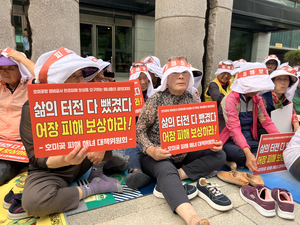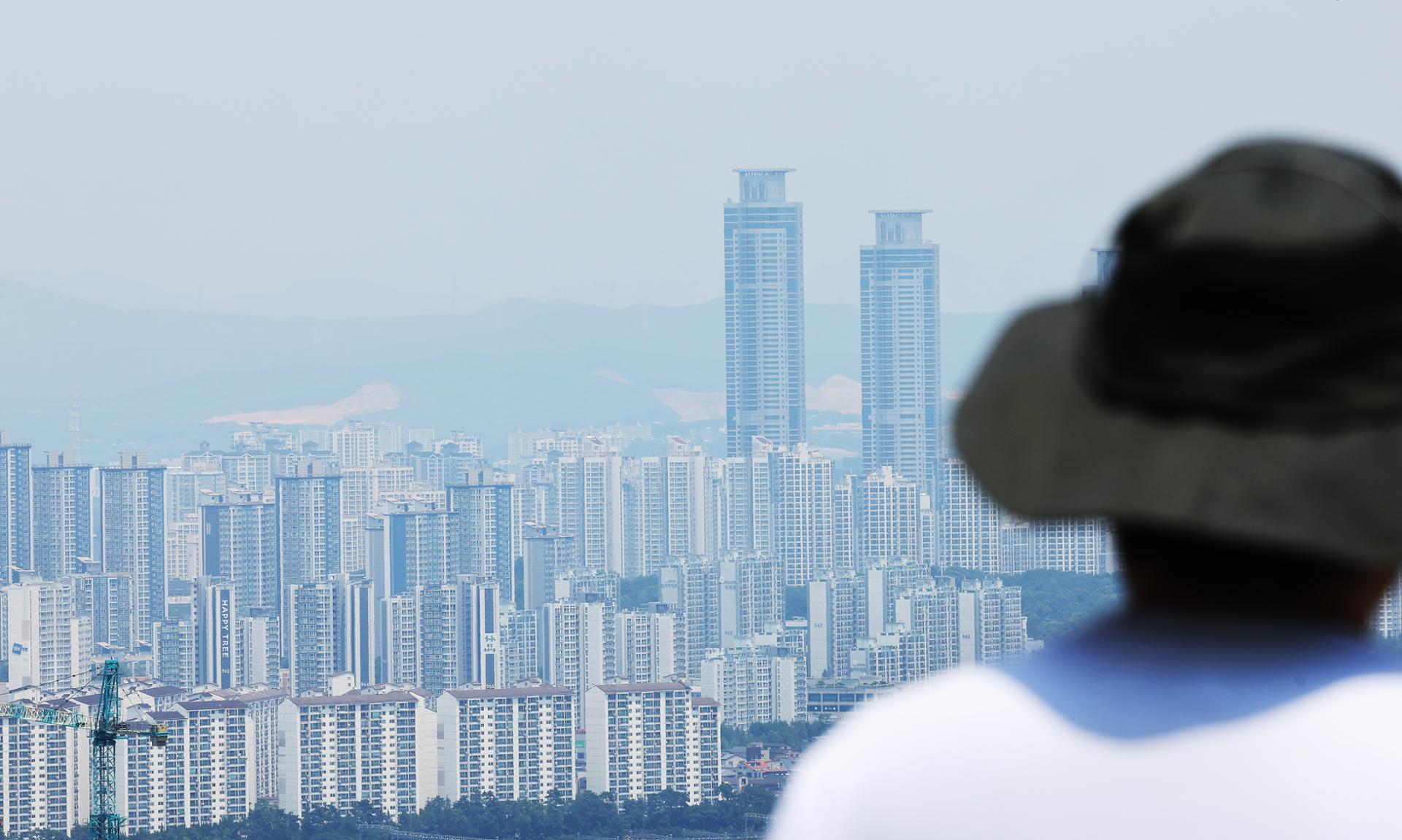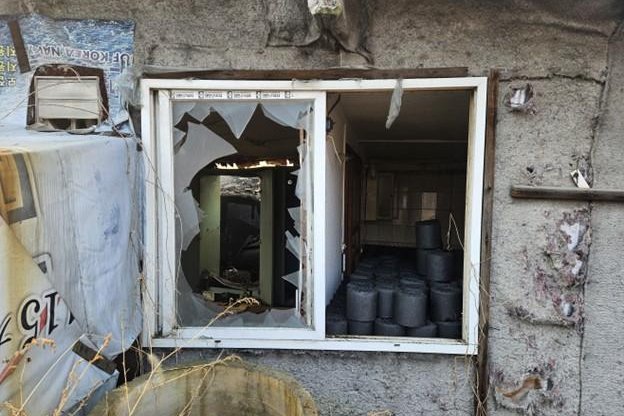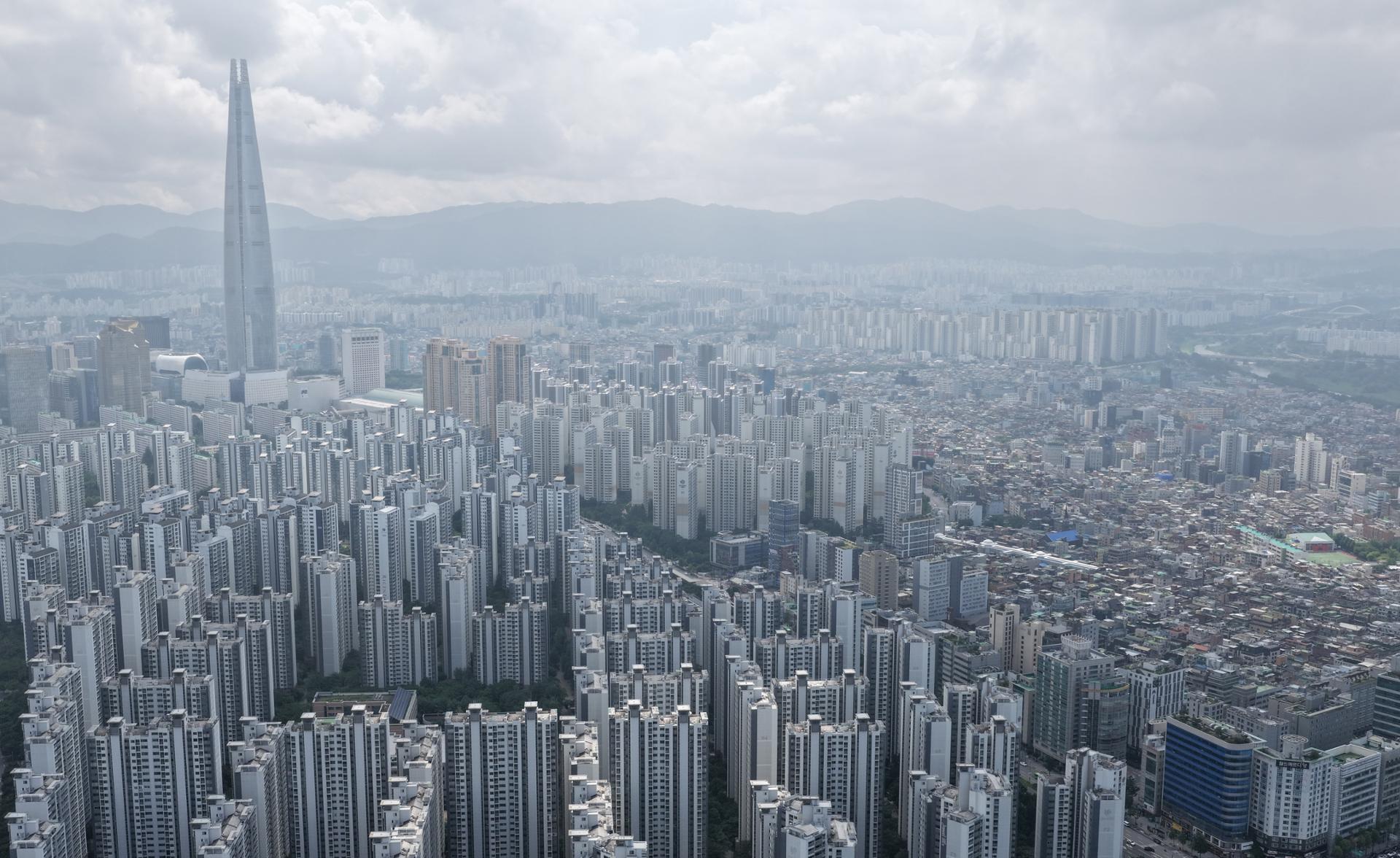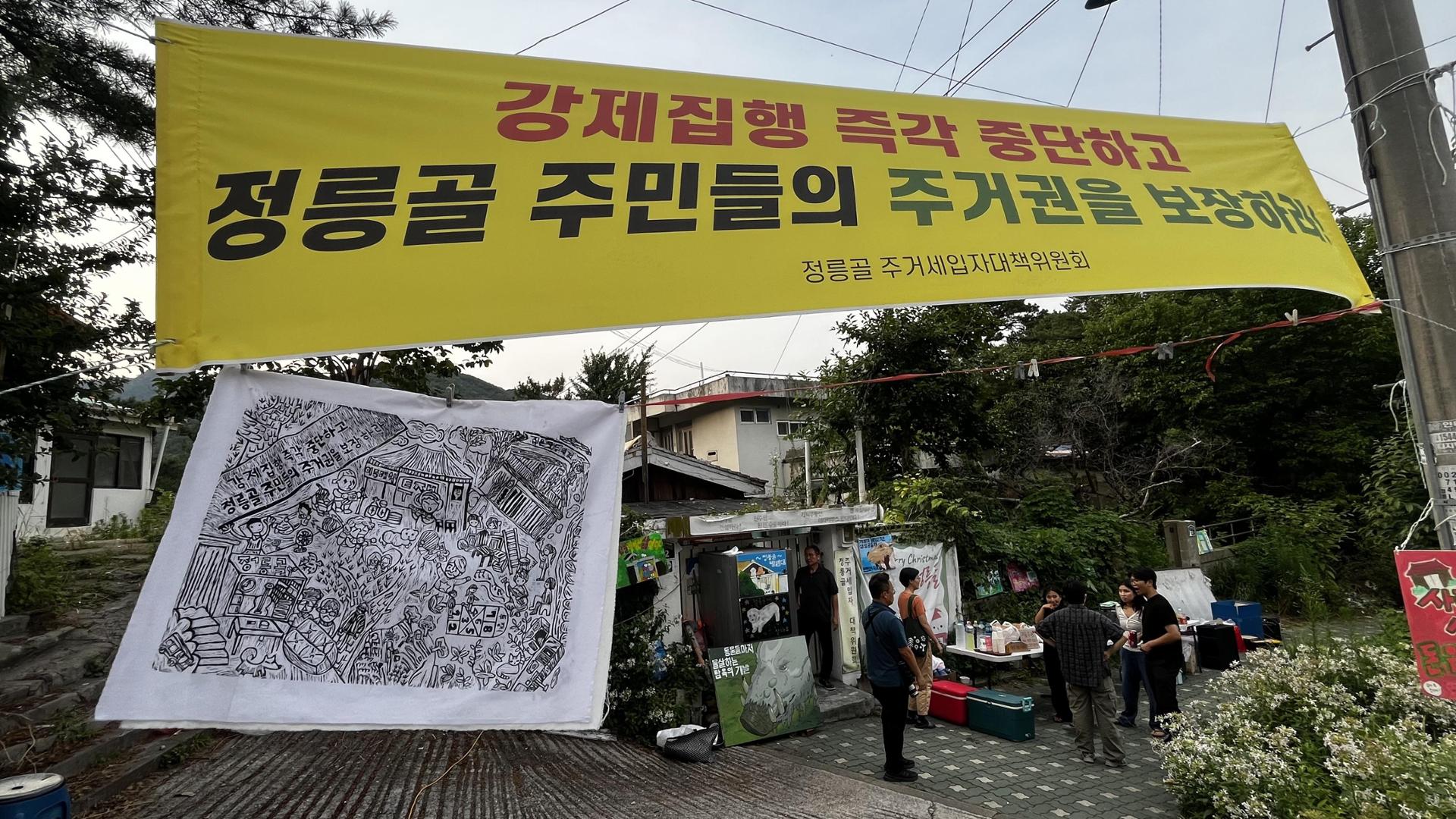
People gather in front of a house in northeastern Seoul's Jeongneunggol, June 30. The banner reads “Stop Forced Eviction Immediately and Secure Jeongneunggol People’s Housing Rights!” Courtesy of Anastasia TrayninThere are over 500 houses in Jeongneunggol, a mountainous village in northeastern Seoul, but most of them lie vacant. The area's redevelopment plans are moving forward. On June 30, four remaining tenant households were granted rental housing and relocation support within Seongbuk District. As the affected tenants were previously ineligible for support, the agreement is considered a step toward resolving a longstanding conflict over Jeongneunggol's urban renewal.During rapid urbanization in the 1960s and 1970s, displaced residents of former shanty towns along Cheonggye Stream and Ahyeon-dong relocated to the hills above Jeongneung Stream, near the entrance of Bukhansan National Park. It became one of many so-called "moon villages" and a haven for the urban poor and working class.More than half a century later, the quiet village is on the verge of disappearing into history. After designating the area for redevelopment in 2012, the Jeongneunggol District Housing Redevelopment and Maintenance Project Association has gradually moved forward with plans to build a multistory complex of 1,400 townhouses on 203,965 square meters of land, which will bring in more affluent homeowners.Kim Woo-kwon has lived here in a tiny house with his wife Kim Tae-yeong and their dog Bom for 10 years. Their home now doubles as the tenant task force office for coordinating anti-eviction activities. The area has faced several forced eviction attempts by private security forces known as "yongyeok," often referred to as "gangsters" by the evictees and their supporters. Jeongneunggol Tenant Task Force Leader Kim Woo-kwon addresses a crowd of supporters during a solidarity concert in northeastern Seoul's Jeongneunggol, June 30. Courtesy of Anastasia Traynin"We haven't had much of an appetite these days," said Kim Tae-yeong, describing the tense atmosphere.When the Kims first moved to the village in 2007, there were already a number of vacant and abandoned houses. By January 2024, over 90 percent of residents left Jeongneunggol. The Kims are now one of an estimated 21 tenant households among the 88 remaining.The hillside neighborhood lacks basic utilities, such as a connection to city gas, leaving the village dependent on charcoal briquettes or propane. Rather than improving the living conditions for the existing residents, redevelopment has focused on wholesale removal of all the buildings, uprooting residents and breaking apart their community. Some residents were unaware of specific redevelopment plans until it was too late to receive housing support.Until 2003, Jeongneunggol was a protected area with restrictions on development. Following suspension of these restrictions, a notice of redevelopment and public inspection went into effect on Sept. 30, 2009. Until the decision on June 30 to extend help to the last few residents, only tenants residing continuously in the village from before fall 2009 were eligible for subsidized housing assistance and relocation support. Those who did not meet the criteria could only receive relocation compensation at the March 2024 rate of 840,000 to 2.6 million won per household. Even for tenants residing in the village since well before 2009, factors such as improper housing registration have prevented some from qualifying for full assistance. “With the coming redevelopment, we will all have to leave,” Kim Woo-kwon said. “But some of us can’t leave freely because there is no affordable housing being built for us. With current deposit and rental rates, there is no way we can afford to live anywhere else but here. There must be a housing policy for the remaining residents. Housing is a human right. ”The Kims and other remaining residents who refused to leave before receiving what they considered fair housing support were served with an official eviction order in August 2024. Beginning in May, private security firms have been legally allowed to enter and execute forced evictions on remaining houses “without prior notice.” Hand-painted signs are displayed in front of a home in northeastern Seoul's Jeongneunggol, June 30. Courtesy of Anastasia TrayninThe first forced eviction took place on June 10. Residents condemned the eviction attempts at a community press conference in front of Seongbuk District Office on June 12, calling the tactics used a violation of their human rights.Civic groups within the existing anti-eviction social movement in Seoul have been working with the Jeongneungol Tenant Task Force since late 2024. They formed a joint committee led by Okbaraji Missionary Center, which holds prayer vigils and provides legal and logistical support for people facing eviction.“None of us know how things will end up anyway, but we are holding onto hope and continuing the fight,” said Roh Ye-ju, a member of Okbaraji and visual artist who organizes drawing and painting events. “We’re working with the task force every day to decide how to find a solution with the association.”Hand-painted protest signs are displayed in front of a house in northeastern Seoul's Jeongneunggol, June 30. Courtesy of Anastasia TrayninIn the early morning hours of June 15, around 50 activists and citizen supporters gathered outside of the Kim family home to block a second forced eviction attempt. The participants played resistance music and shared food and drinks. Okbaraji Missionary Center Secretary General Lee Eun-hae stressed on that day that those gathered should not give in to helplessness.“The forced eviction might not come today and we might lose some energy by the end, but we won’t give up. We’ll gather again tomorrow to defend this space and find a solution,” Lee said.Okbaraji Missionary Center Secretary General Lee Eun-hae gives a closing speech during a solidarity concert in northeastern Seoul's Jeongneunggol, June 30. Courtesy of Anastasia TrayninPrior to the opening of a conflict resolution committee at Seongbuk District Office, the tenant task force and citizen supporters blocked another forced eviction attempt on June 17.The joint committee expanded open community events in Jeongneunggol at the end of May, scheduling a range of activities including monthly prayer vigils, film screenings, lectures, art workshops and concerts.An image on white cloth depicts a protest gathering in northeastern Seoul's Jeongneunggol, June 30. Courtesy of Anastasia TrayninKim Woo-kwon has seen the fight to defend Jeungneunggol expand into a larger movement.“We began this struggle in 2024 with one-person protests at the district office and people started coming out in support," he said. "Looking at it now, I feel that we’ve gone beyond the tenant issue to include diverse marginalized communities that have been left behind by society.”To continue the momentum, groups have organized ongoing Tuesday evening prayer vigils, Friday open community events and 24-hour on-site monitoring. A solidarity concert in northeastern Seoul's Jeongneunggol, June 30. Courtesy of Anastasia TrayninAt a concert in support of the remaining Jeongneunggol residents on June 30, Lee gave a tearful closing speech, in which she lamented the past three weeks of daily gathering as “the last that we will spend here in Jeongneunggol.”Kim Woo-kwon addressed the crowd, saying, “When we leave here at the end of July, this village will disappear. There will be no more villages in Seoul. But the traces of what we have created here in solidarity will stay with me.”After the June 30 agreement, events at Jeongneungol have been temporarily suspended. For regular updates, follow @jeongnunggol on Instagram. Anastasia Traynin is a writer, editor, translator and teacher based in Seoul.
Jeongneunggol's last residents forge solidarity in eviction struggle - The Korea Times
There are over 500 houses in Jeongneunggol, a mountainous village in northeastern Seoul, but most of them lie vacant. The area's redevelopment plan...
1,206 words~5 min read