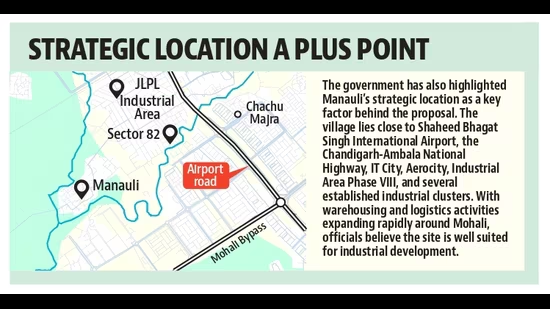
Punjab government has initiated the process to change the land use of nearly 54 acres of Manauli village – Sector 83 in the Mohali Master Plan – from the institutional category to industrial, paving way for the development of light engineering industries, allied commercial activities, warehouses, logistics parks and packaging facilities in the area.The proposal further states that the land earmarked for institutional use has remained largely underutilised over the years, whereas the demand for industrial and logistics infrastructure has grown considerably. (HT Photo)Noting that the development could generate both direct and indirect employment opportunities for local youth while encouraging private investment in the region, a draft proposal has been placed in public domain, inviting objections and suggestions from stakeholders within 30 days. After the said period, the government will take a final decision.‘Long-pending demand’According to the proposal, the move follows sustained demands from residents and local representatives, who argued that the existing institutional land-use designation had limited the village’s development potential. They pointed out that while surrounding areas have witnessed rapid industrialisation and commercial expansion, Manauli has not been able to benefit because large parcels of land remain reserved for institutional purposes.The proposal further states that the land earmarked for institutional use has remained largely underutilised over the years, whereas the demand for industrial and logistics infrastructure has grown considerably. It also points out that sufficient land for educational institutions, healthcare facilities and other public amenities is already available in nearby sectors and adjoining areas. Converting the land to industrial use, the government says, would ensure its optimum utilisation while supporting Mohali’s expanding industrial ecosystem and strengthening the region’s economic growth.
Mohali: Punjab plans conversion of 54-acre Manauli land into industrial zone
The move follows sustained demands from residents and local representatives, who argued that the existing institutional land-use designation had limited the village’s development potential
272 words~1 min read