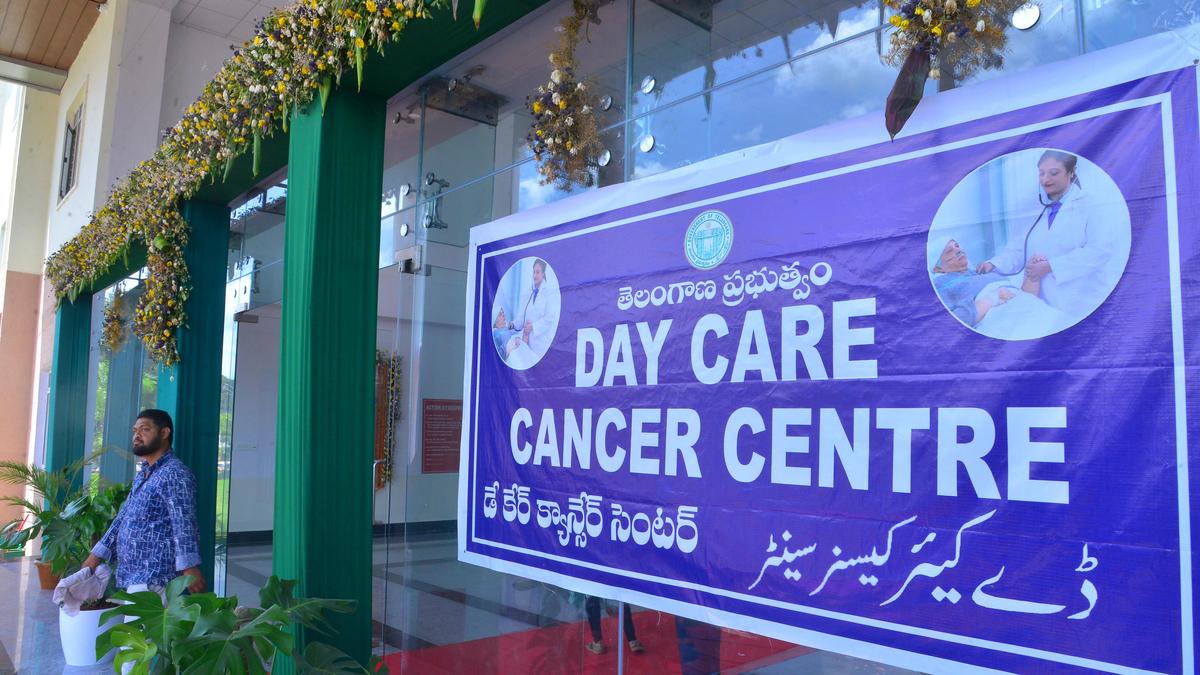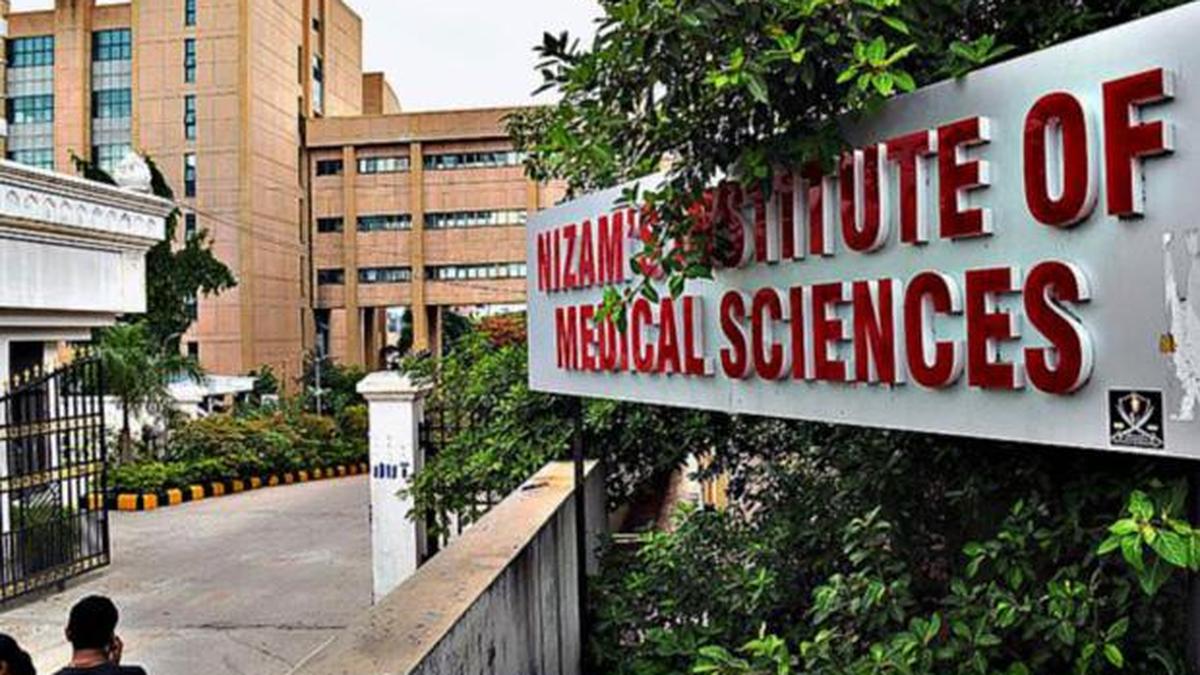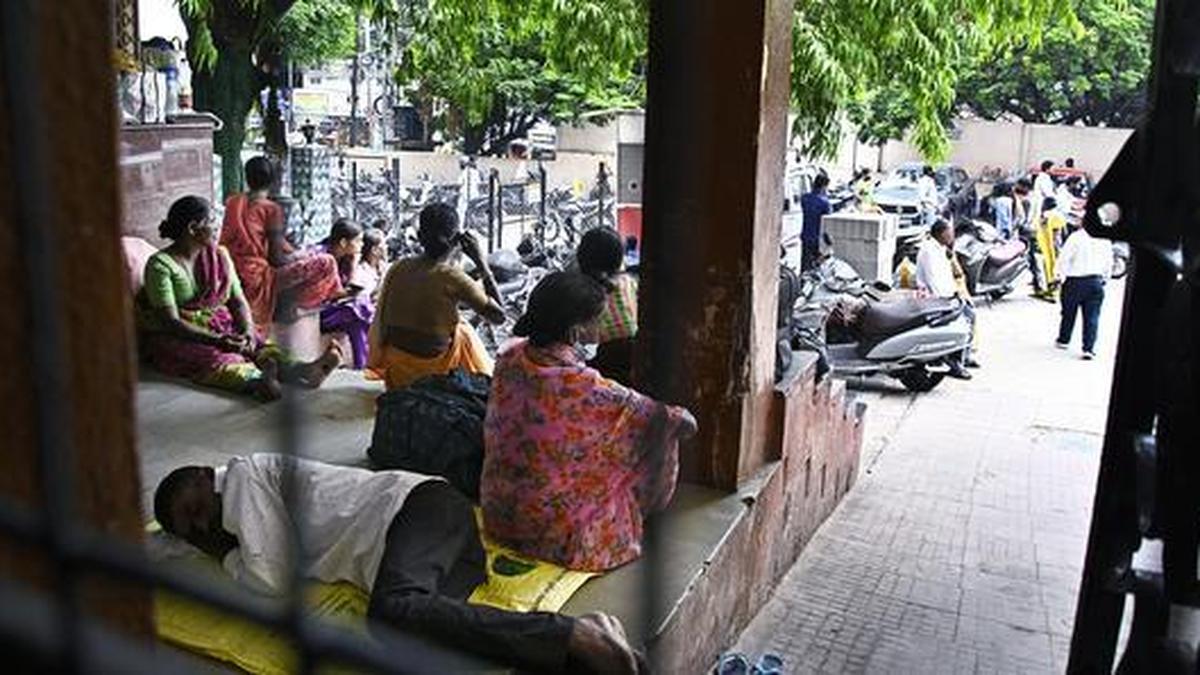
The waiting begins long before the outpatient department at Hyderabad’s Mehdi Nawaz Jung Institute of Oncology and Regional Cancer Centre — commonly known as MNJ Cancer Hospital — opens its doors.By mid-morning, the hospital is already teeming with patients. Cars, two-wheelers and ambulances jostle for every available parking space as people, many accompanied by anxious family members, make their way towards the outpatient block carrying thick bundles of medical records, scan reports and medicine packets. Some have travelled overnight from districts hundreds of kilometres away, while others have been referred from government hospitals that lack specialised oncology services.Every seat inside the outpatient block is occupied. Those who arrive late settle on the steps outside, inching forward as the queues move. Across from the entrance, the public toilets emit an unpleasant odour, adding to the discomfort of patients already bracing themselves for a long day.The crowds grow denser with each step inside. Long queues snake towards the registration counters while an even larger gathering waits outside the radiation oncology section. Despite the congestion, there is little impatience. For many, this is not their first visit.“My mother was diagnosed with brain tumour about two years ago. We first went to Osmania General Hospital, Hyderabad, but she was referred here. Since then, we have been coming regularly. The doctors are good and we get medicines from the hospital pharmacy,” says 26-year-old Mohammed Usman, a resident of Moula Ali in the city.Among those waiting is 44-year-old Shekhar from Adilabad, watching as his son checks on the schedule for his next radiotherapy session. “I was diagnosed with mouth cancer last year, possibly due to chewing gutka. We went to a government hospital in our district, but they said such cases are treated only in Hyderabad. It is crowded here, but treatment that would cost lakhs at a private hospital is available free here,” he says.For thousands, MNJ is far more than Telangana’s largest government cancer hospital. It is the last stop in a referral chain stretching across the State and into neighbouring Andhra Pradesh. The crowds that fill its corridors each day speak not only of the growing burden of cancer but also of a healthcare system still centred around a handful of specialised facilities in Hyderabad, a reality the government now hopes to better understand through its first comprehensive cancer registry.According to the Telangana Cancer Atlas, prepared using data from the Rajiv Aarogyasri Health Care Trust between April 2020 and September 2025, more than 1,00,294 unique cancer patients received treatment under the State’s flagship health insurance scheme over the five-and-a-half-year period, averaging about 18,235 patients annually. Cancer emerged as the second most treated condition under Aarogyasri after kidney ailments, accounting for nearly 4,96,552 treatment episodes.A rising burdenMNJ itself treated 34,256 patients during the study period, making it the single largest cancer treatment facility in Telangana. It was followed by the Basavatarakam Indo American Cancer Hospital and Research Institute with 21,508 patients and Nizam’s Institute of Medical Sciences (NIMS) with 8,641.The findings suggest that despite government institutions accounting for the largest individual cancer centres, private hospitals collectively treat a slightly larger share of patients under the Aarogyasri scheme. Of the 1,00,294 patients analysed, 53,523 (53.4%) received treatment in private hospitals, compared with 43,480 (43.4%) in government hospitals, while 3,291 (3.3%) underwent treatment in both sectors.The cancer burden is spread across all 33 districts of Telangana, although not evenly. Hyderabad accounted for the highest number of patients treated under Aarogyasri (12,517), followed by Rangareddy (6,372) and Medchal (5,483).Adjusted for population, however, Hanumakonda reported the highest annual incidence at 79 cases per one lakh population, ahead of Hyderabad (72) and Karimnagar (65). Overall, 25 districts recorded incidence rates above 45 per one lakh population, underscoring that cancer is no longer confined to the State’s largest urban centres.The disease was also found to be affecting people in their most productive years. Patient numbers rise sharply after the age of 33, with the highest number of cases recorded in the 39-48 age group, followed by those aged above 62 years. Women accounted for nearly 60% of all patients treated under Aarogyasri, with breast and cervical cancers majorly contributing to the overall burden.Health Department estimates suggest Telangana now records 55,000 to 60,000 new cancer cases annually, a figure expected to rise in coming years. Yet, even these numbers tell only a part of the story. The Cancer Atlas is limited to Aarogyasri beneficiaries, leaving out thousands of patients who seek treatment outside the scheme or in healthcare facilities not linked to it.For years, that has left policymakers trying to plan cancer services without knowing the true scale or geographical spread of the disease. It is a gap the government is now attempting to close.The count beginsOn April 6 this year, Telangana declared cancer a notifiable disease, making it one of the few States in the country to mandate reporting of every diagnosed case. Until now, cancer data was largely confined to institutional registries maintained by MNJ and NIMS, offering only a fragmented picture of the disease burden.Under the new policy, every diagnosed case, whether identified at a government or private hospital, pathology laboratory or diagnostic centre, must be reported through an online portal within a month of diagnosis. The registry will capture data on cancer incidence, prevalence, mortality, treatment patterns and geographical distribution, with MNJ designated as the State’s Centre of Excellence to validate the information before forwarding it to the National Cancer Registry Programme under the Indian Council of Medical Research.“We have started collecting this year’s data and hospitals have already begun entering cases every day. However, this is a completely new system and healthcare workers across districts require training. The data also has to be filtered carefully to eliminate duplicate entries because the same patient may visit multiple hospitals. It will take at least six months before we begin seeing meaningful trends and about a year before we get a clearer picture of the cancer burden across Telangana,” says MNJ director Sadashivudu Gundeti.Once district-wise patterns emerge, the data can help the government identify high-burden areas, strengthen screening and awareness programmes, improve palliative care and plan new cancer facilities where they are needed most. Regular review meetings are already being held with District Medical and Health Officers to improve reporting, Dr. Gundeti says.The pressure is evident at MNJ itself, which registers around 500 new outpatients every day, besides thousands of follow-up visits every month.The government has also begun decentralising cancer care. In September last year, it inaugurated Day Care Cancer Centres in 34 Government General Hospitals across Telangana, offering screening, diagnosis, chemotherapy and palliative care, allowing many patients to receive follow-up chemotherapy closer to home instead of travelling repeatedly to Hyderabad. Regional Cancer Centres are also planned across the State by 2030.But many oncologists believe better data alone will not ease the burden on hospitals like MNJ.A senior oncologist, requesting anonymity, says identifying more patients will inevitably place greater pressure on a healthcare system that is already stretched. While the State has expanded bed strength at MNJ over the years, the doctor argues that increasing capacity within a single hospital cannot substitute for developing comprehensive oncology services across the districts.The Telangana Cancer Atlas appears to reinforce those concerns. Although government hospitals constitute nearly two-thirds of the 81 hospitals empanelled under Aarogyasri for cancer care, private hospitals treated a slightly larger share of patients, accounting for 53.4% of all cases under the scheme compared with 43.4% in government institutions. Doctors say this reflects not only patient preference but also disparities in infrastructure and the availability of advanced treatment options.“Patients from Adilabad and several other districts travel hundreds of kilometres to Hyderabad because treatment simply isn’t available closer to home. Increasing beds alone at MNJ will not solve the problem. Similar infrastructure, specialists and treatment facilities have to be developed in peripheral districts so that patients can receive care nearer their homes,” the doctor says.A stretched systemThe gaps extend beyond accessibility. While Aarogyasri has substantially reduced out-of-pocket expenditure for patients receiving treatment in government hospitals, advanced therapies such as immunotherapy and targeted therapy remain largely unavailable in the public sector, forcing many patients to turn to private hospitals despite higher costs.Infrastructure constraints are perhaps most visible in radiation oncology. According to another doctor, MNJ has four radiotherapy machines, but only one remains fully operational. Despite this, the institute continues to manage 400 to 500 patients requiring radiation therapy every day using the single functioning machine.“Radiotherapy equipment requires a substantial capital investment. Each machine costs around ₹30 crore. Replacing ageing machines and expanding radiotherapy capacity should be among the State’s priorities if it wants to improve cancer care,” the doctor says.The challenge extends beyond equipment. A comprehensive cancer care system also requires trained oncologists, oncology nurses, pathology services, chemotherapy units, operation theatres and palliative care facilities, particularly outside Hyderabad.
Mapping cancer, testing capacity
Telangana's cancer registry aims to reveal disease burden, but treatment access remains critical as demand outpaces current healthcare capacity.
1,589 words~7 min read