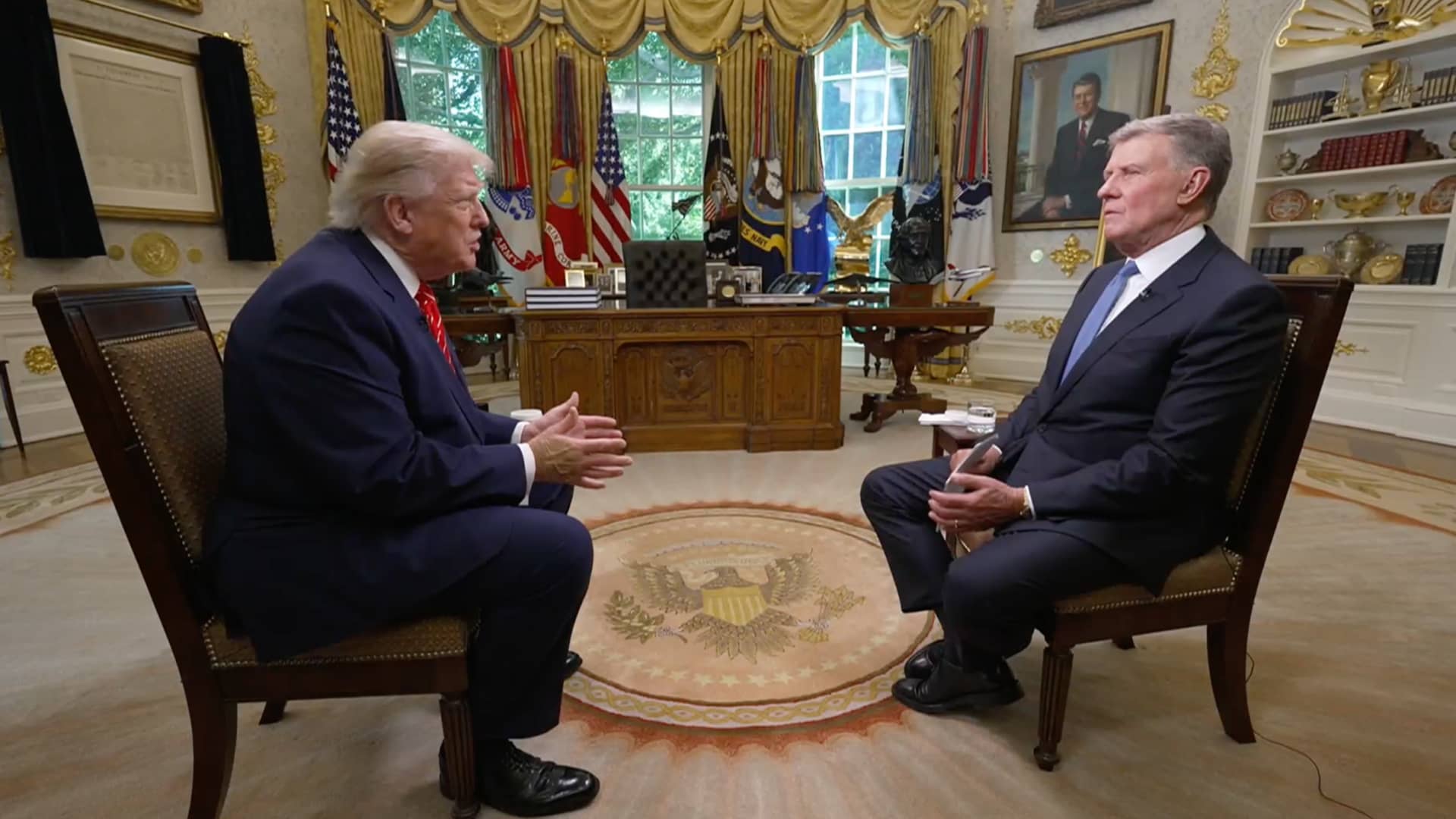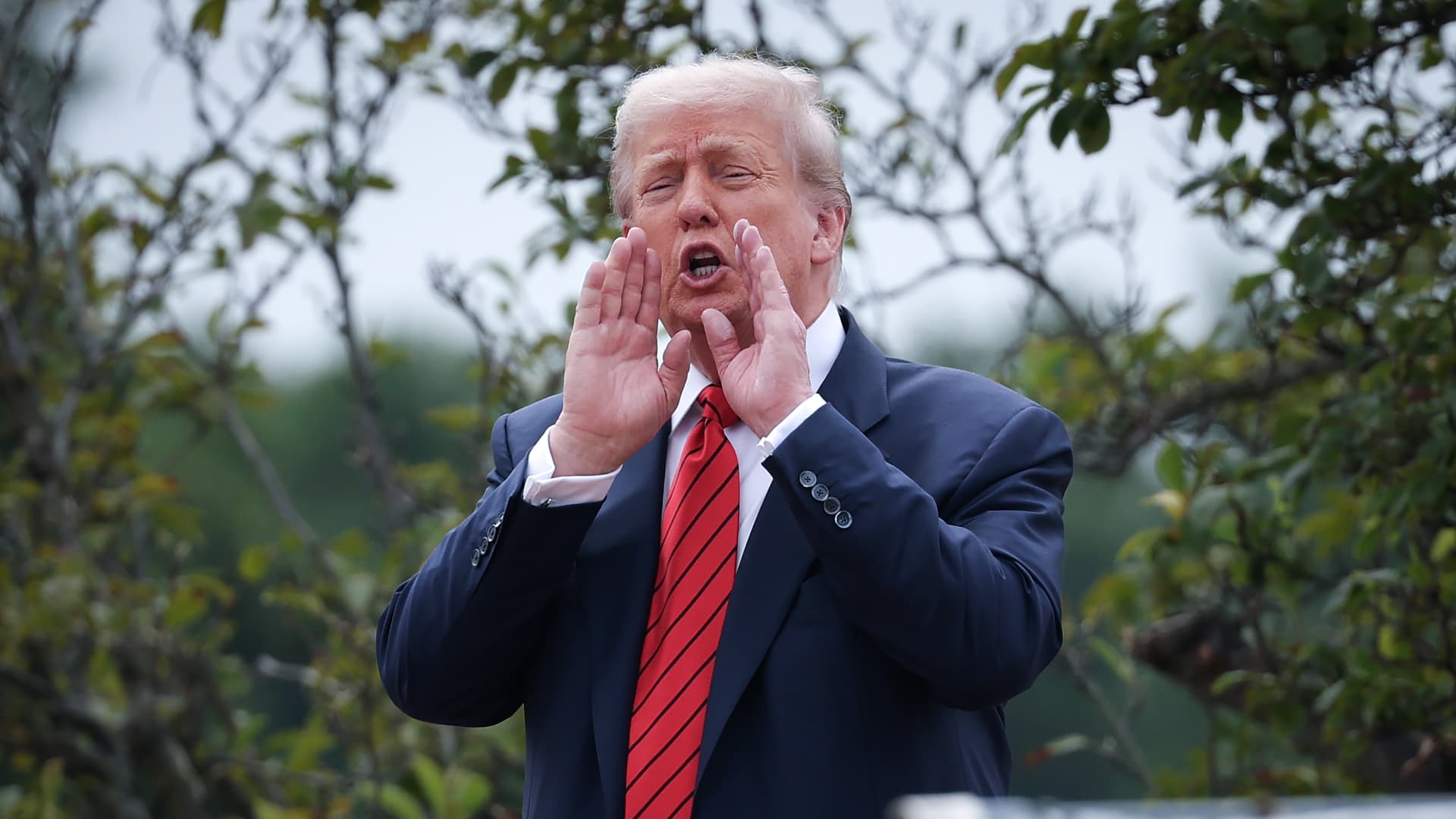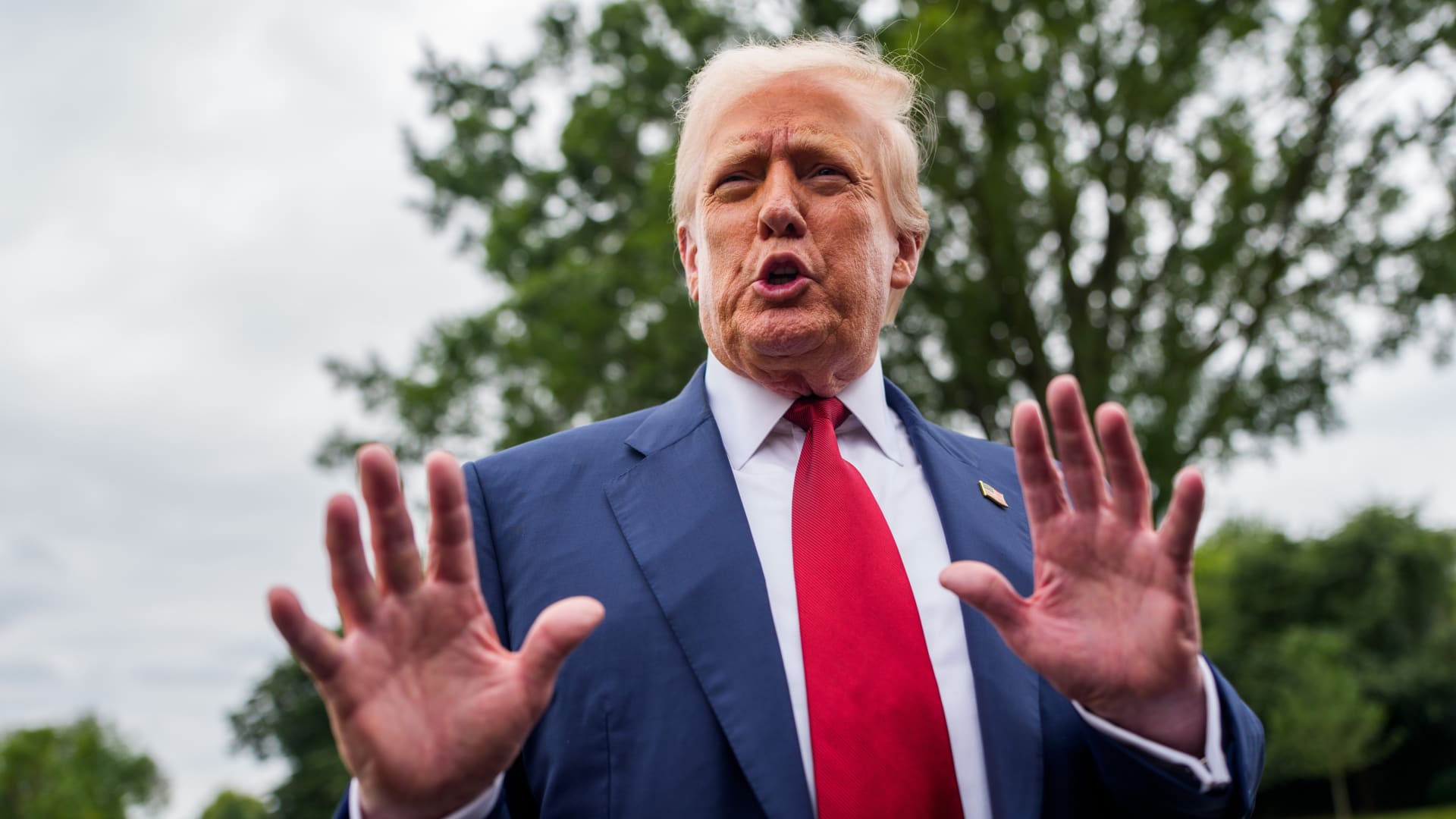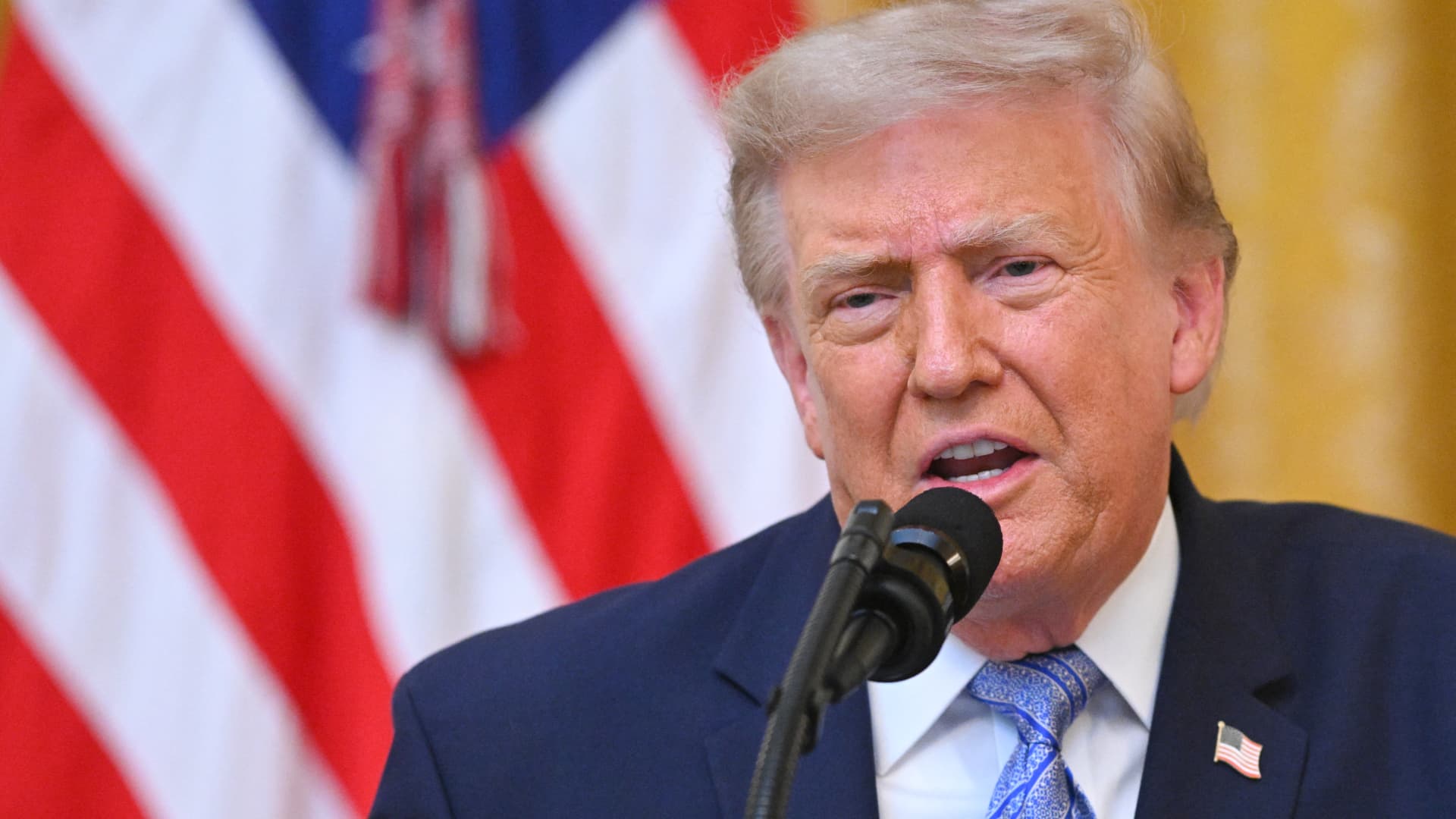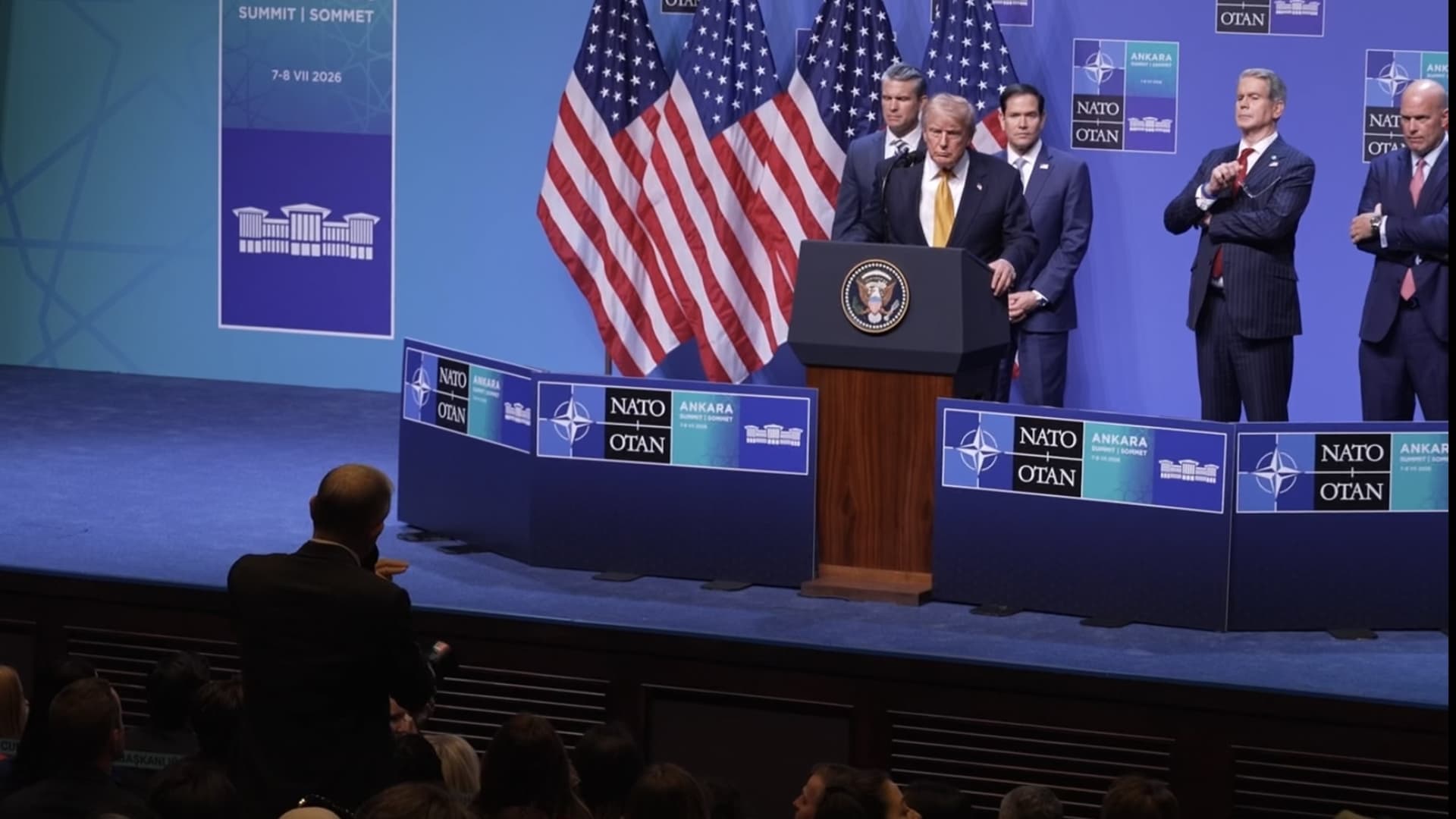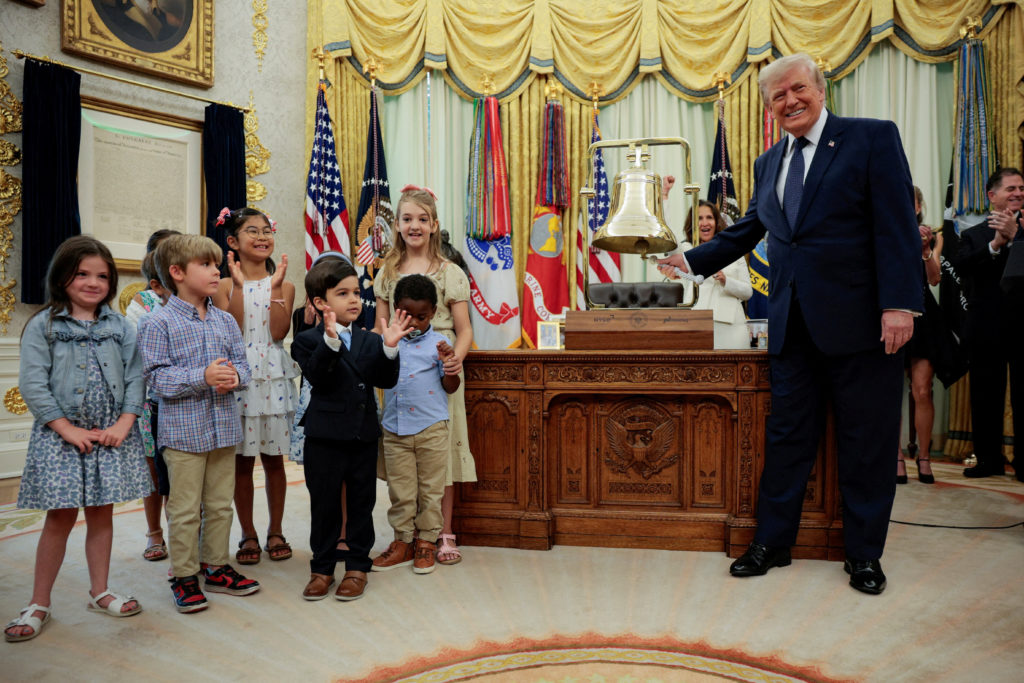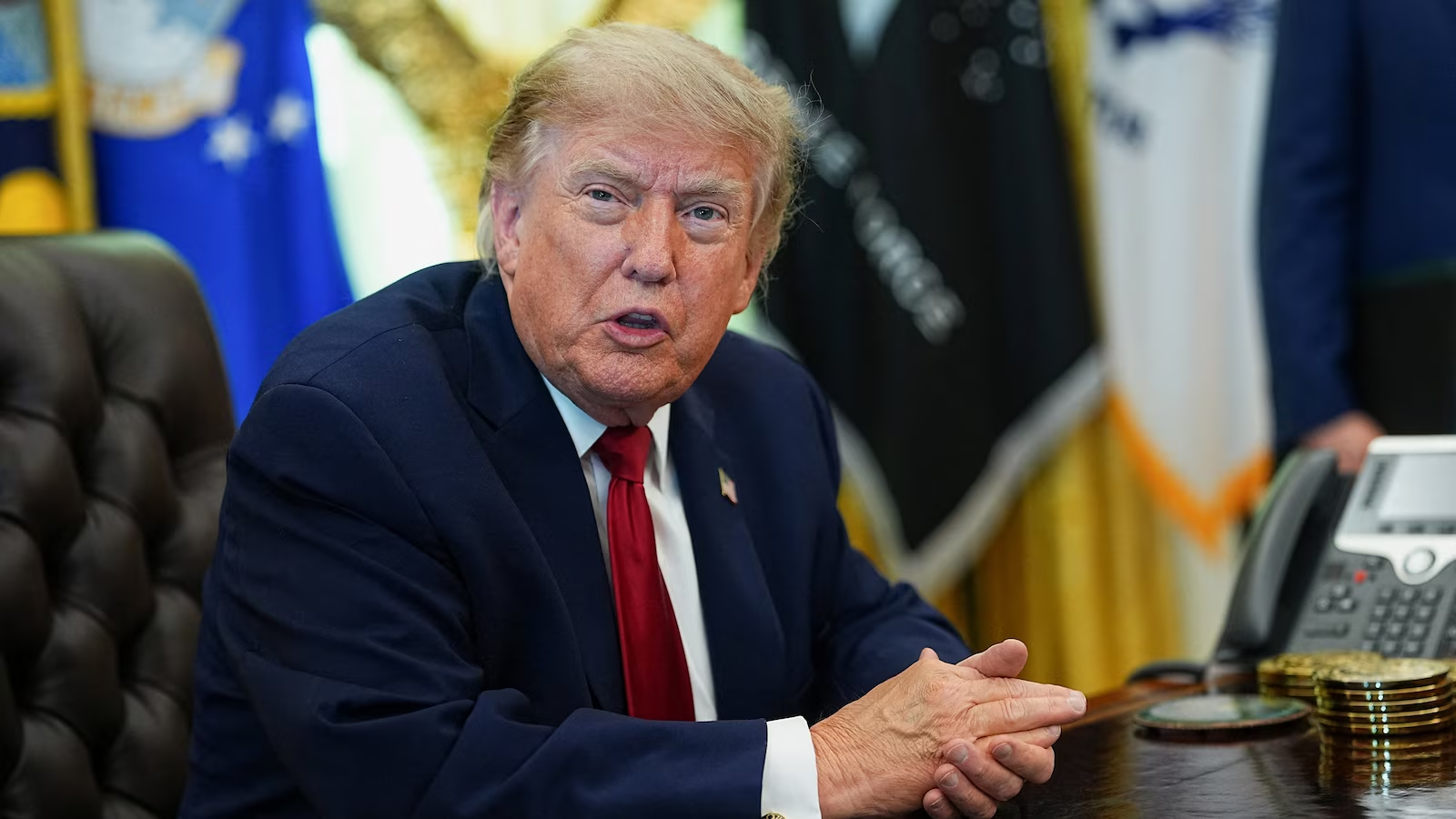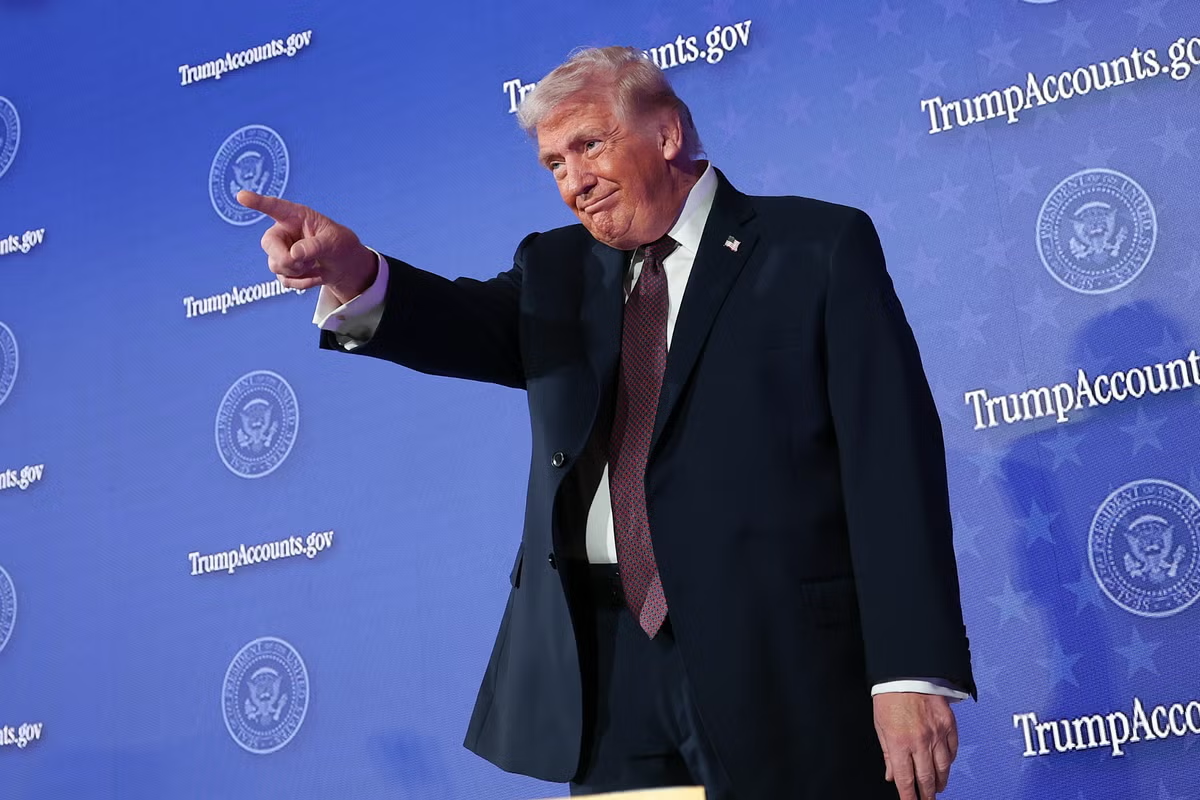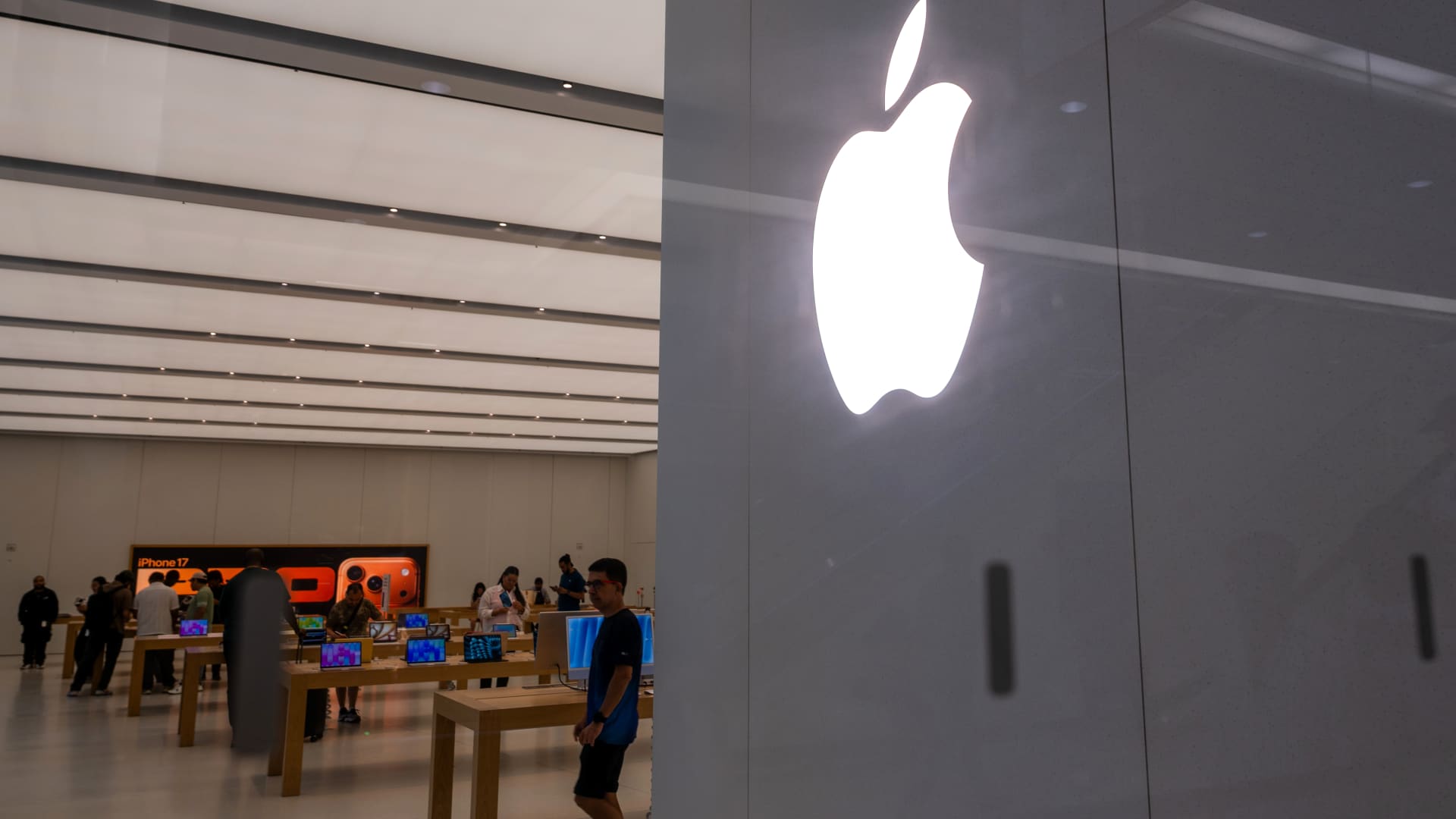
US President Donald Trump points at the crowd after speaking at the Faith & Freedom Coalition's 2026 Policy Conference at the Washington Hilton in Washington, DC, on June 26, 2026. Kent Nishimura | AFP | Getty ImagesHello, this is Justina Lee writing to you from Singapore. Welcome to another edition of CNBC's Daily Open.Trump gave CNBC an exclusive interview and defended business dealings of his children which were heavily assessed by critics, while CNBC reporters took a closer look at his stock market buying spree last year. Growing pressure on major U.S. AI firms from Trump's administration's increasingly wary outlook of cybersecurity vulnerabilities, is prompting OpenAI to propose handing to the U.S. government a 5% stake in the company, according to a report. Tensions between Russia and Ukraine are now back in the spotlight, after Russia launched a massive missile and drone attack on Ukraine. Meanwhile, oil continues to flow smoothly in the Middle East, with the Saudis shipping 34 million barrels through the Strait of Hormuz since the day U.S. and Iran signed an agreement to end the war. What you need to know todayPresident Donald Trump sat down with CNBC's Joe Kernen for an exclusive interview defending his family's business dealings. He said that almost anything his children do could be considered a conflict, and that they face unusually broad scrutiny because of presidential policy that touches nearly every part of the economy."I tell my kids, 'stay away,'" Trump said. "But they also have a life. You know, they were doing business long before I ever thought of … running for president."Trump said there was "nothing illegal" or "wrong" with his crypto venture, after his 2025 financial disclosure report showed more than $580 million in crypto-related income, including about $515 million from Trump-linked World Liberty Financial token sales and $65 million from sales of equity in WLF's holding company.He pointed to federal conflict-of-interest laws, saying the president and vice president are not required to recuse themselves from decisions that could affect their financial interests.While Trump faces political stress, OpenAI is boosting efforts to defuse pressure from Washington by reportedly proposing to hand the U.S. government a 5% stake in the company.Major U.S. AI firms are facing growing pressure as Washington becomes increasingly cautious of cybersecurity vulnerabilities associated with their models amid intensifying competition from Chinese open-source models that are significantly cheaper. Over in the geopolitical front, fresh escalating tensions draw concern as Russia launched a massive missile and drone attack on Ukraine, prompting Poland to scramble jets while Finland restricted airspace. The latest attack by Russia comes as Kyiv has stepped up long-range drone strikes in Russia. "As envisaged by the Defense Strategy of Ukraine, we are depriving the enemy of resources for waging war," the ministry said on Telegram on July 1, adding that the effort is intended to pressure Russia to end the war, now in its fourth year.The escalating tensions between Russia and Ukraine are in sharp contrast to developments in the Middle East following the Iran-U.S interim peace deal. According to data from the trade intel firm Kpler, the Saudis have shipped 34 million barrels through the Strait of Hormuz since the day both countries signed an agreement to end the war. —Justina LeeAnd finally...People shop in an Apple store in lower Manhattan on June 25, 2026 in New York City. Spencer Platt | Getty ImagesApple plans to launch at least five new iPhone models between the second half of this year and the first half of 2027, while increasing production plans for foldable devices, as it looks to vie for a greater slice of the market amid an industrywide component supply shortage, Nikkei Asia reported Thursday.The U.S. tech giant has instructed suppliers to prepare to produce about 10 million foldable iPhones this year, up from an earlier forecast of 7 million to 8 million units, the report said, citing people familiar with the matter.Ahead of launching its first-ever foldable device, Apple has already secured components for about 80 million smartphones spread across new models for the second half of 2026, according to Nikkei Asia.—Jenny Lee
CNBC Daily Open: Trump's children, stock buying spree in the spotlight
Trump gave CNBC an exclusive interview in which he defended the business dealings of his children. And we took a look at his stock market trades last year.
682 words~3 min read