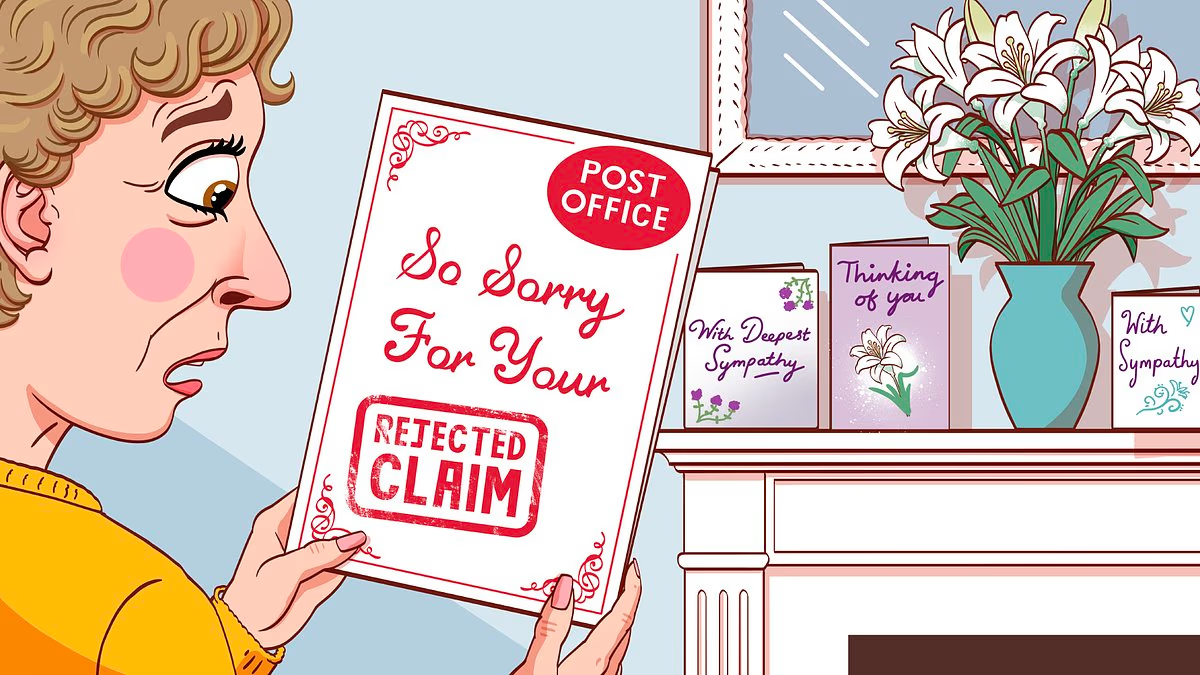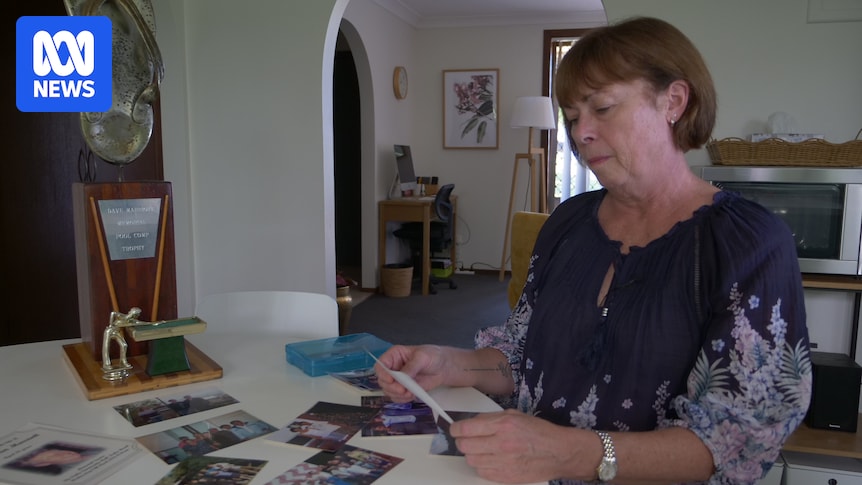
It has been a decade since Lynn Conder lost her husband Dave unexpectedly.She was overseas visiting her brother when her husband stopped answering her calls home.A neighbour went to investigate and found the macadamia farmer had died in his sleep from a suspected heart attack after a night out for his birthday."He's one of the most beautiful people I've ever met in my whole life, I can honestly say," she said.As Ms Conder dealt with the complexities of her husband's funeral and estate, among the paperwork was a $600 bill for the ambulance that took his body to hospital for a post-mortem.When she tried to claim it on the couple's private health insurance, she learned from the ambulance service her claim was initially rejected.As a long-time customer, she was angry."It was just a real shock. I had the ambulance administrators calling me too because they were wanting their money," she said."The whole thing was horrific. I couldn't sleep, I couldn't eat properly and there was just no compassion or assistance."Advocates say it is an example of the complexities of ambulance coverage nationally.A corpse is not a patientThe brutal reality was that it was perfectly legal for the insurer to reject the claim.Medico-legal expert Margaret Faux said it was because under health law a corpse was not considered a patient, and therefore no longer covered by their health insurance. Margaret Faux says case law from 1989 found a corpse was not a patient.(ABC News: John Gunn)"So this is a really sad situation, but private health insurers have absolutely no legal obligation whatsoever to cover the cost," Dr Faux said.It dates back to a 1989 court decision that ruled a GP could not claim death certificates on Medicare because a doctor could not treat a dead body."What it means is when you die, your private health insurance dies with you," Dr Faux said."It's a real gap and we really need to do better to help patients understand what it is they're buying when they buy health insurance."Consumers Health Forum of Australia chief executive Elizabeth Deveny said Ms Conder's experience was not unusual."We have occasionally heard similar stories where somebody has died and then a bill arrives," she said.Generally, when a patient is expected to die at home, their body is collected by a funeral home.In the case of unexpected deaths, police often call coroner's court contractors.But in regional and remote Australia, like the NSW mid-north coast where Ms Conder lived, often it falls to ambulance services if the deceased person needs to go to hospital for post-mortem. It often falls to ambulances in regional areas to help transport deceased patients.(Supplied: Queensland Ambulance Service)Ambulance services told the ABC the bill was often paid for out of a deceased person's estate.Dr Faux said the problem was indicative of "deep structural flaws" in private health and Medicare laws that she felt needed a major overhaul."State variations don't help, it just amplifies confusion," she said.Health Minister Mark Butler's office declined to comment on the laws.Ambulance cover varies between states and systemsUnexpected costs when someone dies are among the pitfalls in ambulance charging in Australia.The way public ambulance costs are treated varies widely between the states, with flow-on effects for both public patients and those with private health insurance.In some states, ambulances are covered by state governments, while others have multiple carve-outs including free ambulance services for groups ranging from pensioners to victims of violent crime. Ambulance bills and fee exemptions can vary widely between the states.(ABC News: Andrew Chounding)The ACT even offers free ambulance rides to Good Samaritans injured in an emergency.Some states also run their own roadside assistance-style membership schemes and only some have reciprocal arrangements if a resident needs an ambulance while visiting another state.Consequently, many people also have ambulance cover on their health insurance policy to cover potential costs.Dr Faux warned that sometimes people lived in a state where ambulances were free, but later forgot to add it to their private health cover if they moved interstate.She added that even within ambulance cover there was variability between private health insurers."Some private health insurers will cover you to take you to a hospital. Others will not cover you if an ambulance is called out to see you, say, at your home, but they don't then transport you to hospital."Ms Conder said she and her husband had ambulance transport on their policy and it should have been covered."This business of having to pick through fine print to look for something that you don't even know what you're looking for is ridiculous," she said."That's why you take out insurance, hoping that if something terrible happens there'll be a process."Ambulance cover by the statesNSW Ambulance bills and fee exemptions can vary widely between the states.(ABC News: Timothy Ailwood)Residents get a 49 per cent discount but visitors pay full price. Free for concession and veteran Gold and White card holders, along with those in state care or a victim of some types of assault.Victoria An ambulance arrives at a call-out in Melbourne's CBD.(ABC News: Margaret Burin )Free for some concession card holders, those in state care and certain asylum seekers. Ambulance Victoria runs its own voluntary insurance membership scheme.Queensland Beaudesert Hospital in Queensland.(ABC News: Emma Pollard)No cost for residents even if they call an ambulance interstate, but visitors to the state may be charged.South Australia The side of an SA ambulance.(ABC News: Gary Rivett)Residents are charged. Some discounts for concession card holders. They also run a membership-style system.Tasmania An Ambulance Tasmania vehicle in front of the emergency department at Royal Hobart Hospital.(ABC News: Janek Frankowski)Free for residents but some upfront cash might be required for reimbursement through motor vehicle and workplace injury insurance schemes. It has reciprocal agreements with five states and territories, but not necessarily for aeromedical.Western Australia Western Australian ambulance.(Supplied: St John Ambulance)Charges apply. Free for pensioners and discounts for over 65s and other concession card holders.Australian Capital Territory Ambulance fees can vary between the states and territories.(ABC News: Matt Roberts)Free for people in car accidents, kids at school, mental health patients, Good Samaritans, people treated on site, victims of family violence or sexual assault, people in state care, victims of violent crime, palliative care patients, deceased persons and concession card holders.Northern Territory St John Ambulance runs Northern Territory ambulance services.(ABC)Residents are charged. Holders of an NT Centrelink Pensioner Concession Card or Health Care Card may have emergency ambulance cover as part of their entitlements. They also run a subscription scheme.These rules apply when transport is medically necessary and not patient transport.'Unnecessarily complex': advocatesThis variability has prompted a call from the Consumers Health Forum of Australia for National Cabinet to harmonise ambulance billing nationally. Elizabeth Deveny says ambulance billing should be harmonised to avoid bill shock.(ABC News: Richard Sydenham)"It's unnecessarily complex," chief executive Elizabeth Deveny said."There's bill shock. So people call an ambulance because they're injured and then discover later on there's a very big bill."And we also have people who don't call an ambulance because they're worried about the cost."She said unexpected ambulance bills could run into the thousands."Everyone wants to know if they ring [Triple Zero], they'll be able to get an ambulance and the cost won't be a big surprise," she said.Health Minister Mark Butler's office declined to comment, saying ambulance billing was a matter for the states. Ambulance bills and fee exemptions can vary widely between the states.(ABC News: Keana Naughton)Ms Conder was determined not to pay, and after six months her insurer Bupa paid the bill."There was really no acknowledgement of anything from Bupa. They certainly didn't give me any assistance," she said.Bupa said it was only required to pay such a claim when ambulance services deemed a call out an emergency, unless patients had specific cover for non-emergency transport. A spokesperson said they recognised getting such a bill could be upsetting and they paid it out of goodwill."It's important to remember that ambulance providers decide whether an ambulance trip is classed as an 'emergency' or 'non-emergency', not the health insurer," they said.It has been a decade since Ms Conder lost her husband, but she said she was still traumatised."I will never not feel angry about how I was treated," she said.Posted Fri 3 Jul 2026 at 9:48amFri 3 Jul 2026 at 9:48am, updated Fri 3 Jul 2026 at 10:38amFri 3 Jul 2026 at 10:38am
Widow warns of shock ambulance bill after husband's unexpected death
Private health insurers can legally avoid ambulance bills because corpses are not considered patients, a loophole that left a grieving widow shocked.
1,384 words~6 min read