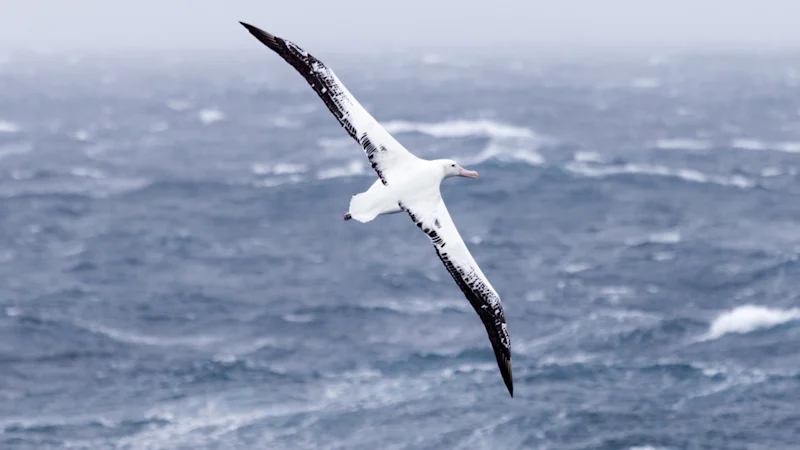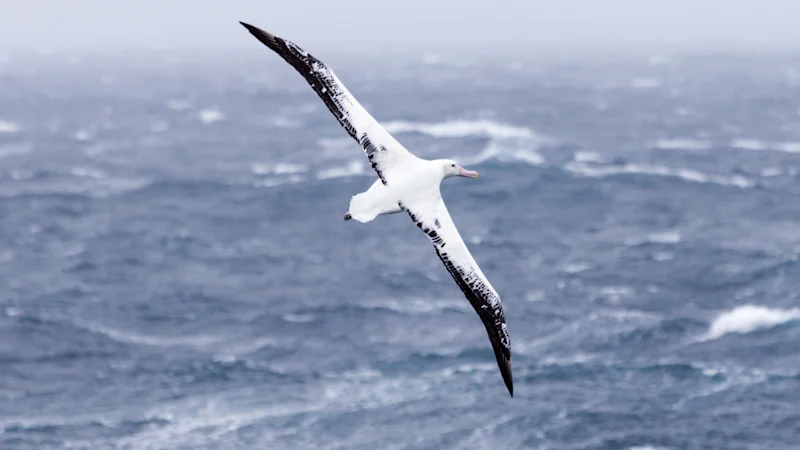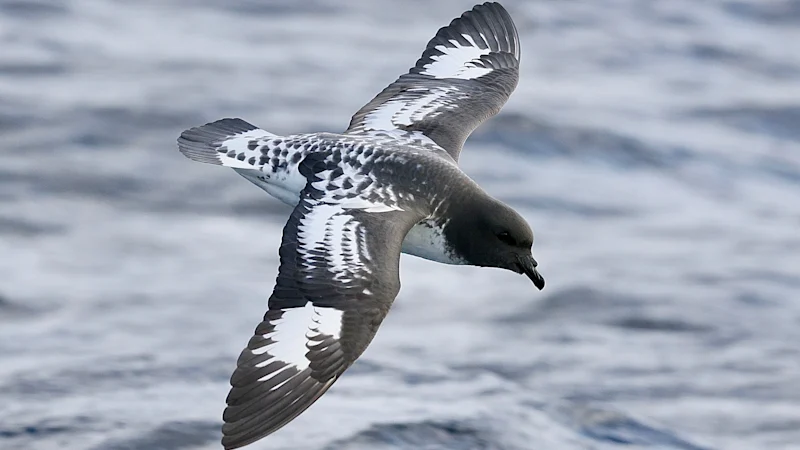
July 3, 2026 — 11:02amAn unprecedented phenomenon is unfolding off the eastern seaboard as vast flocks of sub-Antarctic seabirds, including some never seen in these waters, converge just over the horizon from our major cities after journeying thousands of kilometres from their Southern Ocean home.They are currently circling the skies in the Tasman Sea, having ridden the storms of the unseasonably warm Southern Ocean near places like Macquarie Island, and many species are so rare that even the most seasoned seabird watchers have declared this a once-in-a-lifetime event.Light-mantled Albatross, which has a two metre wingspan, with a blue petrel in the background.Andrew Robinson, Central Coast Pelagics.The cause of this curiosity remains a mystery for now, but experts think a marine heatwave in the Southern Ocean may be a factor, as the birds’ typical feeding patterns are disrupted by a shift in their food sources.Most of these birds, including an array of albatross and petrel species, are concentrated on the continental shelf around 30 kilometres offshore.However, some are venturing close to shore if they are hungry, tired or blown in by storms and may be spotted from headlands and beaches.“There is a huge, unprecedented influx of Southern Ocean seabirds to the eastern seaboard. They have pushed into the Tasman Sea and the south-western Coral Sea off south-east Queensland,” said University of NSW ecologist Simon Gorta.“It is possible that a widespread heatwave across the southern Tasman Sea and Southern Ocean south of New Zealand has displaced these seabirds from this region if it has depleted available food for them, but it is difficult to speculate at this stage.”The deadly H5N1 bird flu virus has been brought to Western and South Australia by Southern Ocean Seabirds. But those birds came from Heard and McDonald islands, and it is thought unlikely that the influx to the east coast is coming from an infection zone.The virus is spreading east from South America to sub-Antarctic Islands, but has not yet reached Macquarie Island.Bird enthusiasts are particularly excited by the first-ever documented visit to NSW waters of the Kerguelen Petrel, a relatively small seabird around 33 centimetres in length, with a wingspan of around 80 centimetres.Other small to medium-sized seabirds that are rarely sighted so far north include the blue petrel, southern fulmar, and the Antarctic prion.Large seabirds, with wingspans of 2 metres or more, include the light-mantled albatross, northern giant petrel, southern giant petrel and antipodean albatross.James Bennet, a musician by trade, runs Port Macquarie Pelagic seabird charters, a reference to pelagic birds that spend most of their lives on the high seas and typically only return to land to breed.“I guess you’d call it an obsession, more than a hobby of mine,” Bennet said.His charters are normally monthly, but he has organised several trips in a few days to take advantage of the seabird bonanza.A pintado petrel, a sub-Antarctic seabird rarely spotted so far north. It is known as a “professional” ship follower.Andrew Robinson, Central Coast Pelagics.“These birds are mega rarities off the East Coast,” he said. “You can only dream of seeing birds like this, so we’ll take it while we can get it.”Andrew Robinson also organises seabird boat trips and runs the Central Coast Pelagics Facebook page.“I’ve been a pelagic birder for the best part of 15 years now and, in that time, we certainly haven’t seen anything like this before. Some mates that have been seabirding longer than me are suggesting that it’s a once-in-a-lifetime event.“We did a trip out of Terrigal last week and it’s been talked about as perhaps the best NSW pelagic trip ever undertaken. It was the best hour-and-a-half of birding I’ve ever had in my life.”A westland petrel, which is not a subantarctic seabird. They breed on the west coast of the south island of New Zealand and are very rare in NSW but have been seen in high numbers in recent days.Andrew Robinson, Central Coast Pelagics.Robinson said he loves the excitement and intrigue of the seabirds and their travels, which in the case of albatross can see them rack up to 10 million kilometres of flight in their life.“With land birding, you can have a reasonable idea where a bird is found. You seek out the right habitat, and you can usually find out where birds have been seen in the past, and generally go and see that bird. Seabirding is a totally different scenario.“There’s so many unknowns when it comes to seabirds in terms of their ecology and their distribution and their movements around the ocean.”Just as mysteriously as they appeared, there are signs the seabirds are dispersing from the east coast. But with yet more Southern Ocean storms on the way, their unpredictable lives may take yet another unexpected turn.Cut through the noise of federal politics with news, views and expert analysis. Subscribers can sign up to our weekly Inside Politics newsletter.Mike Foley is the climate and energy correspondent for The Age and The Sydney Morning Herald.Connect via email.From our partners
A ‘once-in-a-lifetime’ mystery is unfolding over the east coast
A vast array of ocean wanderers have been brought to Australia’s doorstep. And we don’t know why.
827 words~4 min read