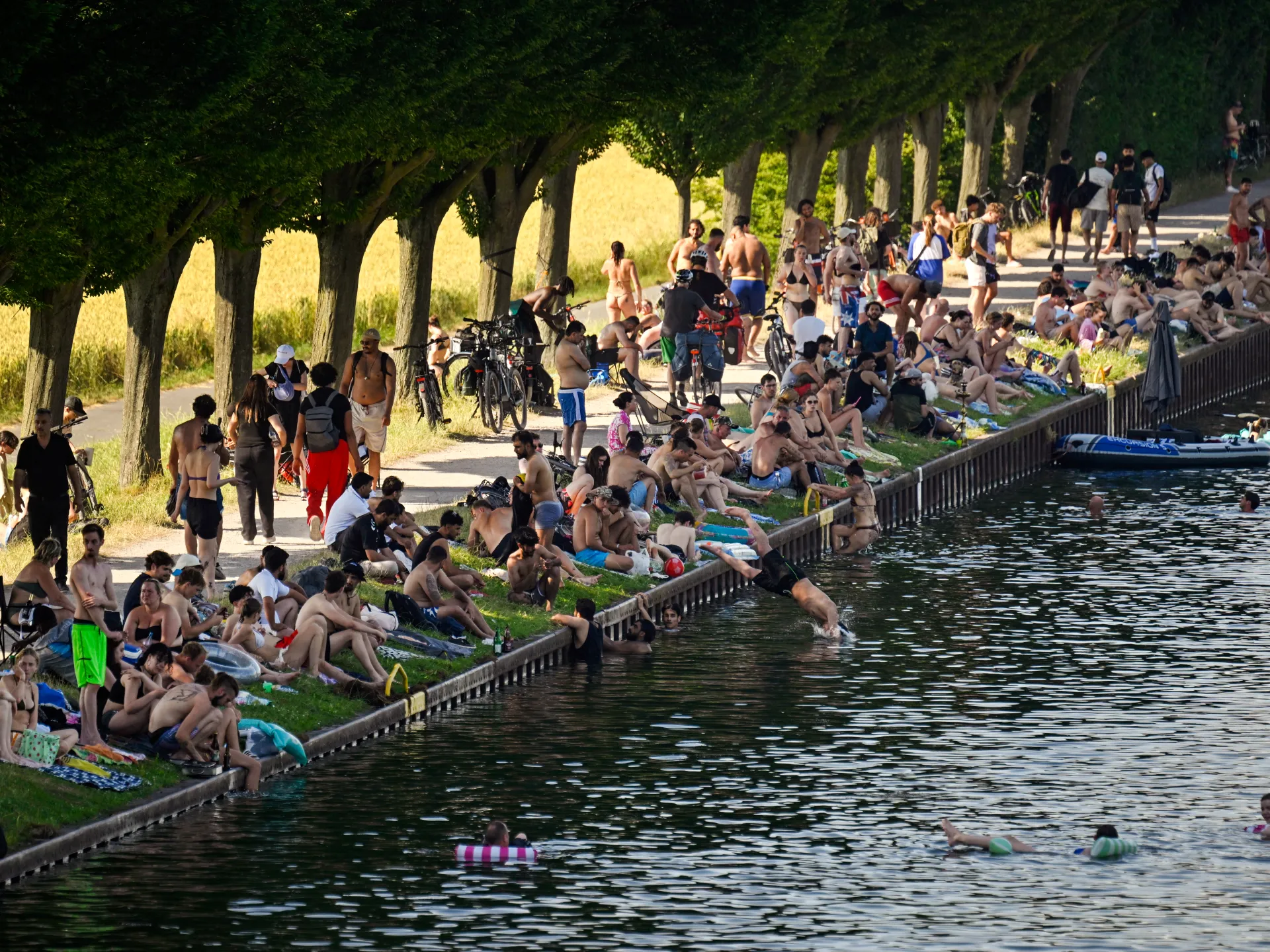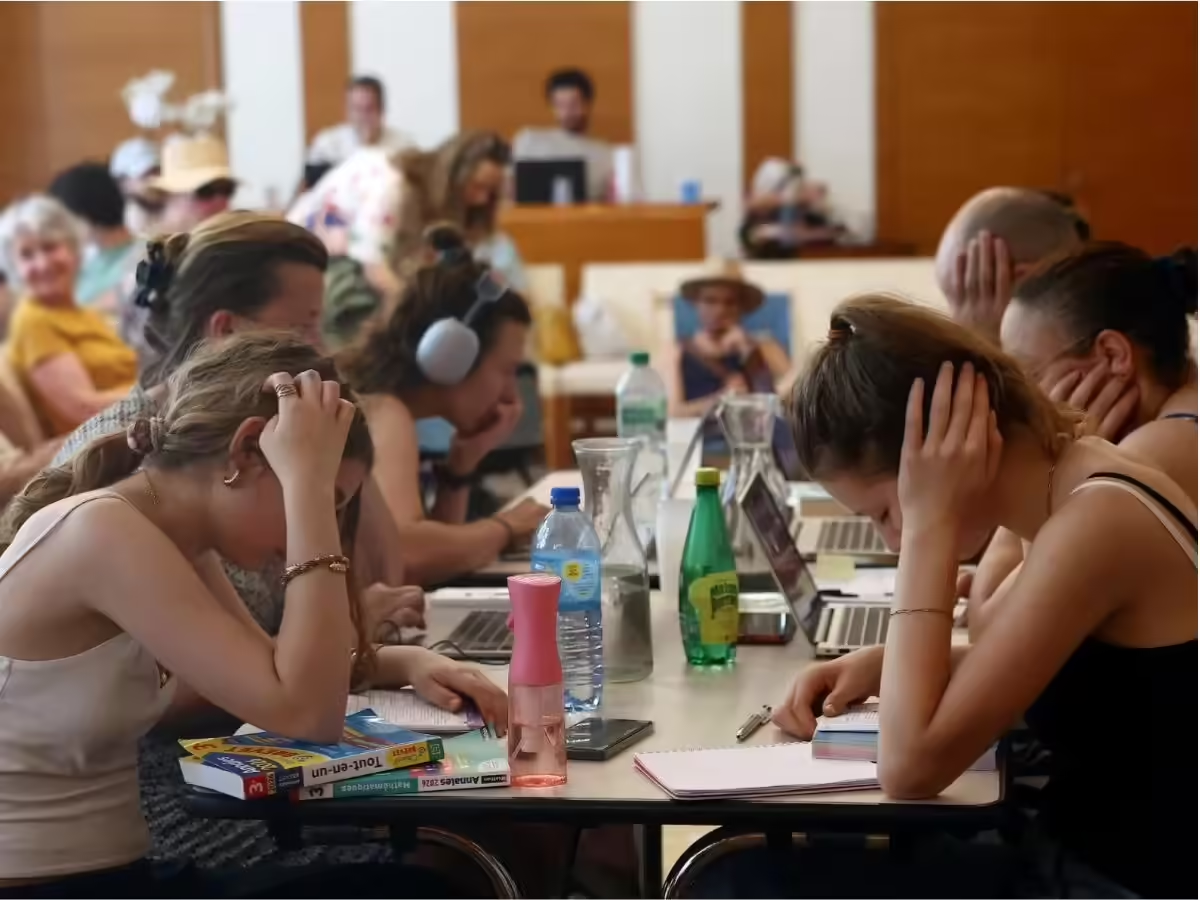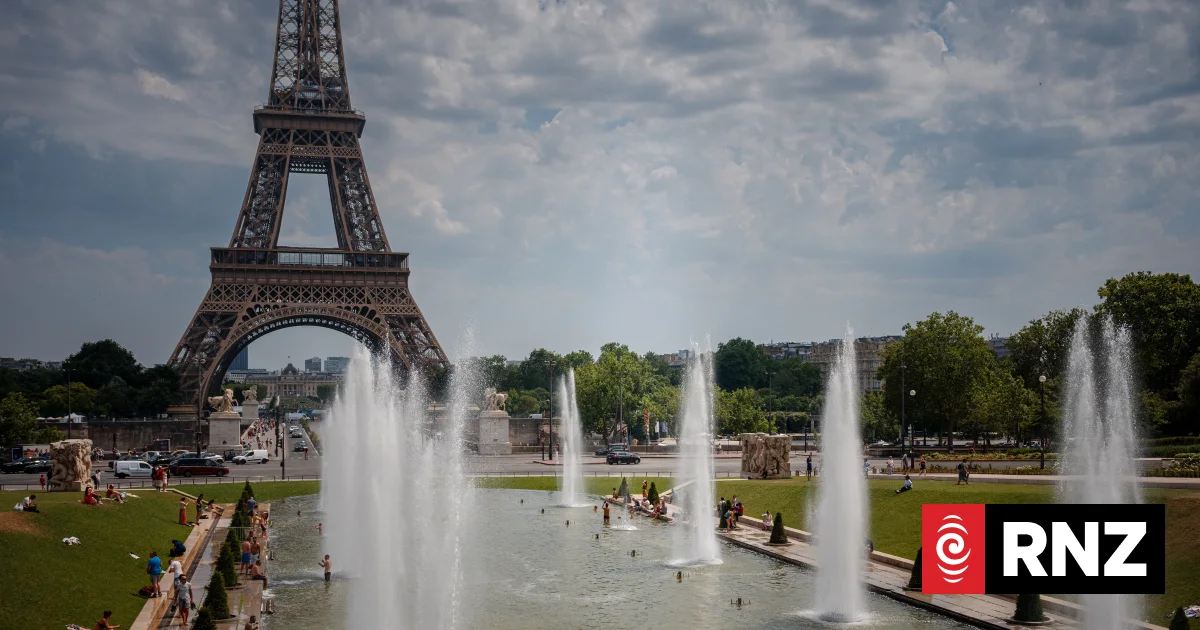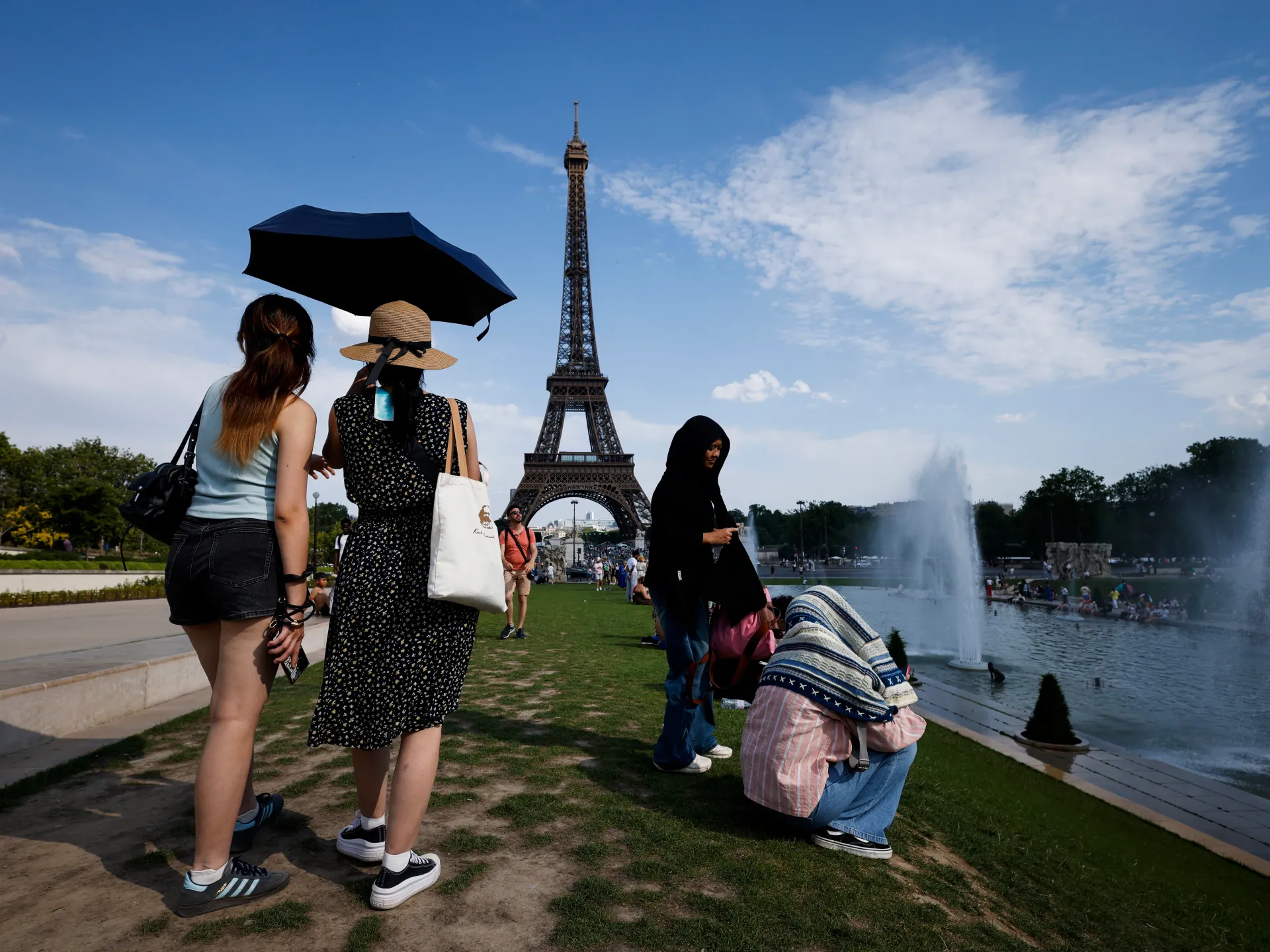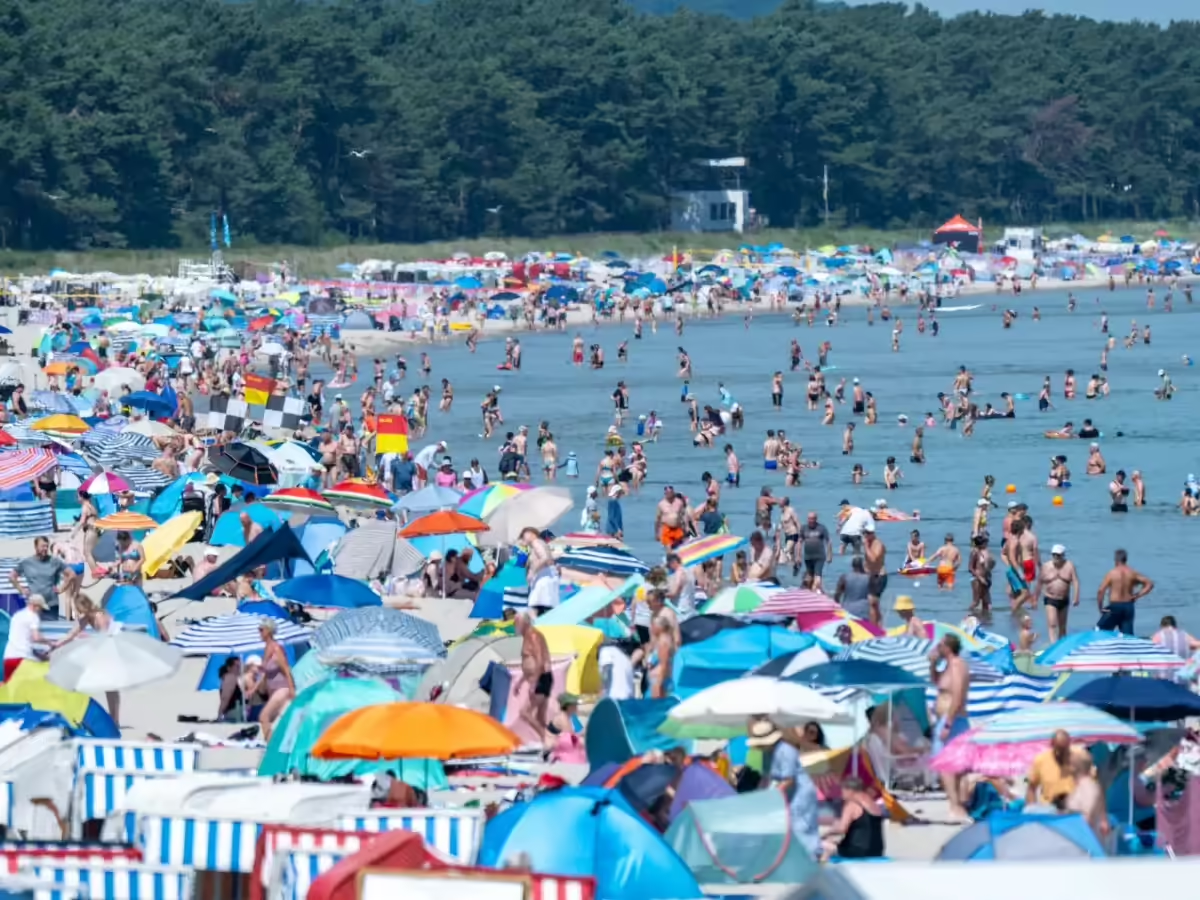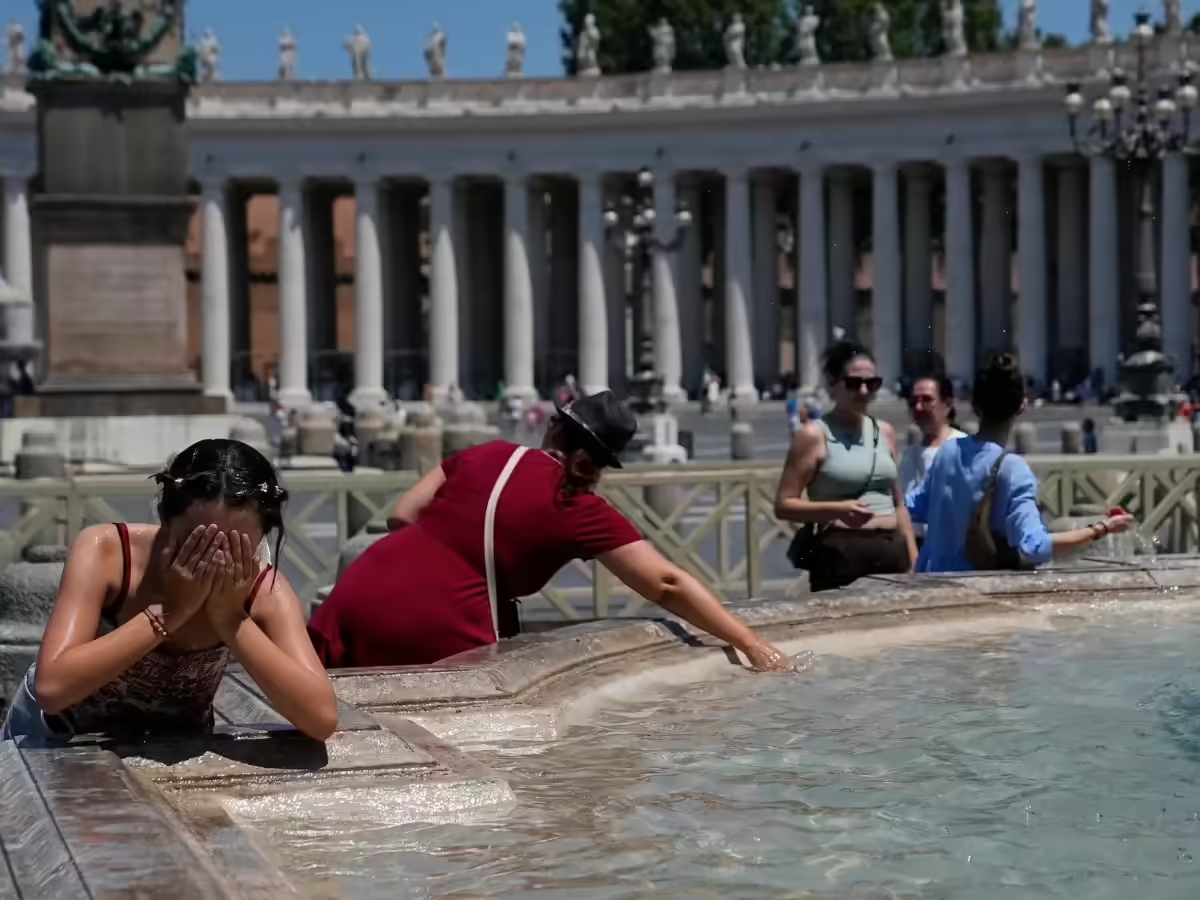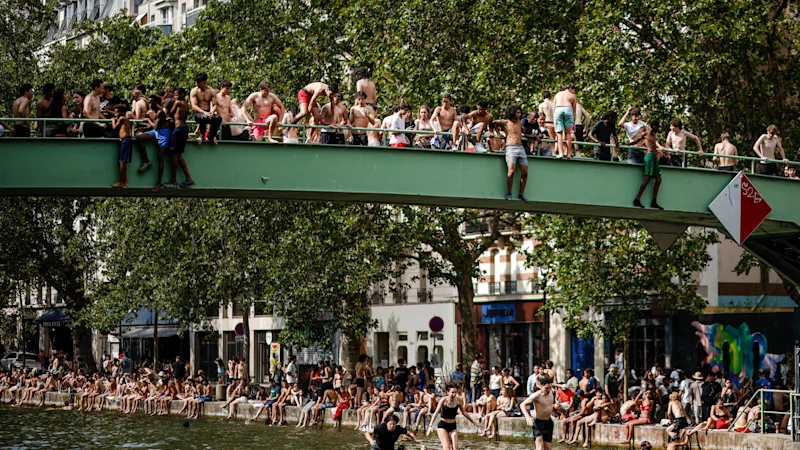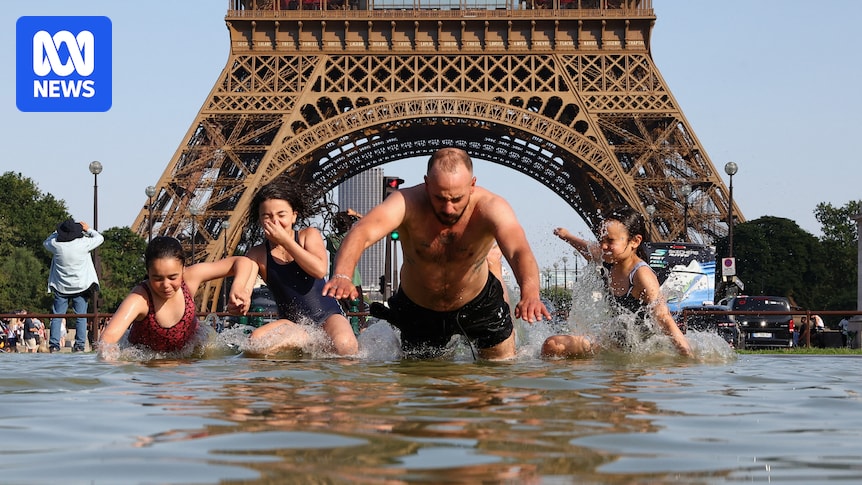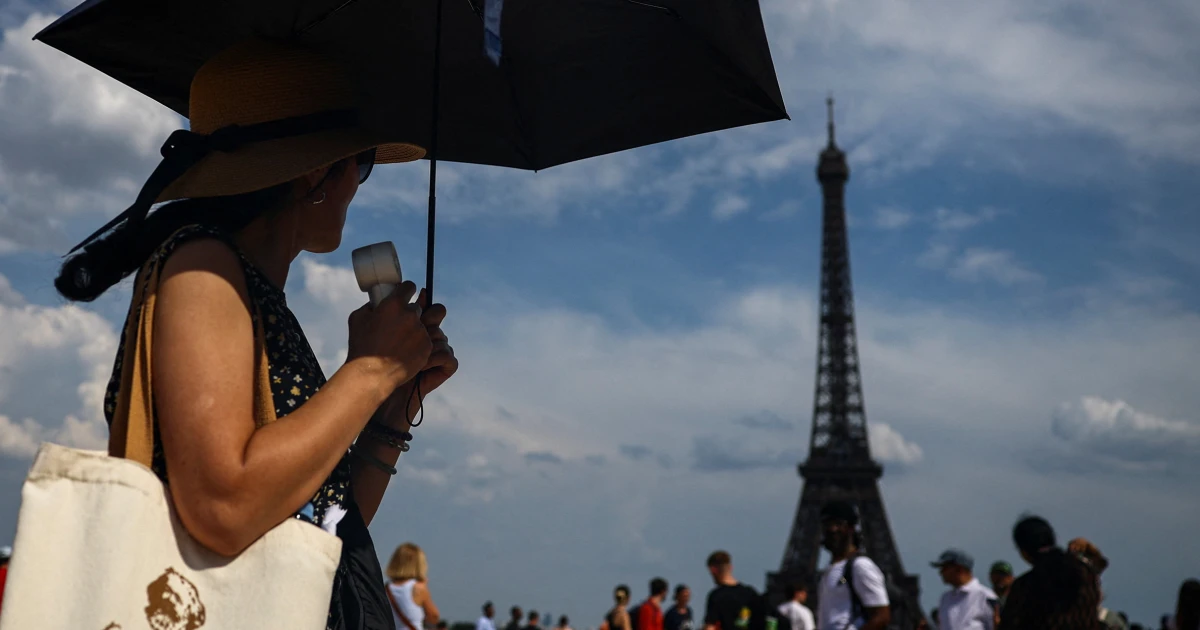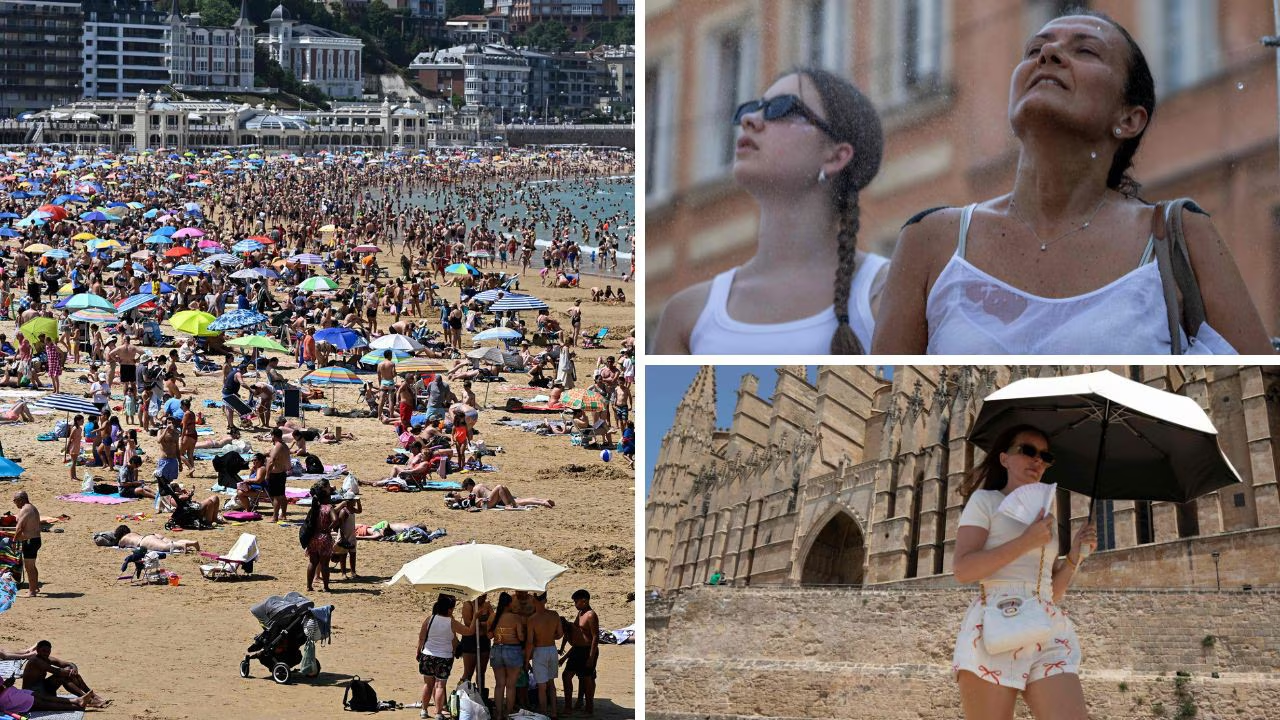
Europe has been sweltering through a brutal early summer heatwave and it could put an emerging Aussie travel trend into overdrive. France had its hottest day ever countrywide on June 23, with over 1000 additional deaths during days of extreme temperatures. Czech Republic and Poland both recorded their highest temperatures on June 28, with the latter breaking the previous record held for 105 years. Hungary hit a new temperature record on June 29, and Germany broke records for three consecutive days.In the last week and a half of the month, Spain, Austria, Switzerland and the Netherlands all recorded new June temperature records. The UK also saw a new June record, just weeks after a new May record was set.The extreme heat has caused chaos for rail networks and videos have appeared across social media of locals and expats getting creative to keep cool without airconditioning, such as covering windows with aluminium foil.World Health Organisation director-general Tedros Adhanom Ghebreyesus called out Europe as “the fastest-warming continent on Earth”.“Driven by climate change and global warming, the phenomenon of the ‘once-in-a-generation’ heatwave is now occurring nearly annual,” he said, adding that “European homes, workplaces and schools were not built for these temperatures”.Australian travellers who love a European summer are paying attention.Melbourne-born global company Intrepid Travel revealed last year that for the first time more customers were travelling to Europe in the shoulder season (April, May, September) than those travelling in the traditional peak summer season (June, July, August).“I thought we had five to ten years before this trend hit the mainstream, but climate change has accelerated everything,” Intrepid Travel’s Australian and New Zealand managing director Brett Mitchell had told news.com.au at the time.It wasn’t a one-off. The trend has continued for 2026 and 2027 bookings.And, there’s been another interesting development.While the Middle East conflict was a factor impacting travel timings to Europe this year, the small group tour operator’s booking data shows that next year, May will be the most popular month for Aussies travelling to Europe for the first time. It comes after September was the favourite for the previous three years.Mr Mitchell said this was proof of the continued demand for shoulder season travel, and he believes the early heatwaves this year would “absolutely” influence how people choose to travel next year and into the future.“I think that’s what’s building the momentum and the trend,” he told news.com.au.“People are not just seeing it on the news or reading about it, but they’re actually speaking to their friends who’ve just got back from travel and they’re hearing it first hand a lot of the time. So it’s absolutely influencing the forward booking patterns of what we’re seeing.”Aussies rethink the typical Euro summerMr Mitchell, who is also an Australian Travel Industry Association board member, said the “severe, frequent, unpredictable” climate was changing everything.“We probably think it’s going to just continue to get worse in that sense,” he said.While southern Europe is gaining momentum in the shoulder season, northern Europe has become more popular in typically the hottest summer months – July and August.“You can see how customers are actually travelling around north and south of Europe depending on the weather,” Mr Mitchell explained.Aussie travellers are also trying to escape overcrowding at hotspots during peak season.In the years to come, he expects March and April and even October to grow notably in popularity for southern Europe in particular.What Intrepid Travel is doing as a company now to adjust to the extreme heat is focusing on education, and changing itineraries to see landmarks earlier or later in the day to skip the hottest times.“Places like the UK and parts of Europe, the infrastructure’s not designed to handle the heat. And so you have to take that into account. Try and educate our customers a lot about hydration,” he said.“Even coming from Australia, we noticed a lot of our Aussies think that we can handle the heat and we’ll be okay, but you know, not quite the case when you when you’re walking a fair bit in 30-40C heat over there.”To cater for the trend and shift in demand, Intrepid Travel is running more departures in the April, May and September.And Mr Mitchell notes there’s actually a “silver lining” to climate change’s impact on travel.“It spreads out tourism and spreading out tourism is good for the traveller, but it’s actually good for the communities as well to have a bit more of a spread instead of mass tourism over one or two months only. It’s quite a healthier, I think more sustainable model,” he said.This year, the Middle East conflict has also influenced Australians’ travel behaviour.About 50 per cent of Intrepid Travel customers typically fly through The Gulf states, so the conflict and Australia’s level four ‘do not travel’ warning had quite an impact.However, demand has since surged. With people delaying Europe trips this year, Intrepid Travel expects 2027 to be a “bumper year”.Intrepid Travel recorded its biggest month ever in June for Aussies booking both domestic and international trips for future dates.In mid-June, the United States and Iran signed a memorandum of understanding to end the war. Subsequent negotiations between the two countries are ongoing.The Australian Department of Foreign Affairs and Trade (DFAT) changed its Middle East travel advisories on June 17, downgrading major aviation hubs in Qatar and the United Arab Emirates from the highest level 4 “do not travel” to level 3 “reconsider your need to travel”. The change means travellers may be eligible again to purchase travel insurance if transiting through these countries, but they are warned to check policies carefully.El Nino changes travel behaviour at homeIt’s not just the heat in Europe affecting Aussies’ travel patterns. The weather changes behaviour in our own backyard too.The Bureau of Meteorology officially declared an El Nino on June 16, associated with hot and dry weather.Big Red Group president and chief growth officer John Boris said the company, which includes tourism experience booking sites RedBalloon, Adrenaline and Experience Oz, is anticipating a surge in outdoor activity bookings.When the last El Nino event was in effect in spring and summer 2023, outdoor experience bookings grew by almost 30 per cent between October and December on the previous year.“Heat is less of a prevention for outdoor activities. It’s more of an accelerant,” Mr Boris told news.com.au.“Rain is where it gets a little bit tricky, right? Rain is where it starts to impact hot air ballooning, it starts to impact driving, some of the other outdoor activities. But heat, Australians are resilient.”As expected during hot weather, Mr Boris said water activities will get a nice boost. In the first four months of the year, reef and island cruises and scenic cruises were already up 19 per cent year-on-year. Jet boating also had an uptick. The chief growth officer said this increased interest would only rise further in the latter half of the year.Meanwhile, Aussies who don’t like being outside when it’s too hot will turn to indoor activities – meaning indoor and outdoor tour operators are likely to both benefit.“I talk a lot with operators and some are struggling, some are still feeling the impact of the macroeconomic environment and that’s global issues as well as CPI,” Mr Boris said.“But for the most part there’s a sense of positivity and a positive outlook, and warm dry weather is welcomed in this sector.”What’s also welcomed by the Australian tourism industry, is Aussies choosing to travel more domestically.“We’re definitely seeing due to the higher cost of international travel more Australians looking in their backyard and that’s a combination of everything from staycations and what we’re calling ‘metromorphosis’ – it’s a travel term that we’ve coined,” he said, referring to an increase in city-based tourism from those who don’t want to miss out but want to stay close to home.“But just across Australia, we are seeing more and more domestic travel which is great, because this country has such amazing experiences and things to see. It’s lovely to see that flourish in a time where international travel is troubled.”Mr Boris said Big Red Group had also seen a “huge spike” in international tourists booking experiences in Australia, up 60 per cent year-on-year in the last 12 months. Most of the business’ inbound traffic is from Asia.Australia is also now Australian Intrepid Travel customers’ favourite country to travel.“That’s changed significantly over the past three years,” Mr Mitchell said.“We’re seeing our customers have one of those big overseas trips once a year, but then they’re also choosing to go domestically a couple of times a year as well.”As for an El Nino year, Mr Mitchell said they were “bracing for it”.“A lot of the way we plan our stays, where we stay, the accommodation we stay in, all of that gets adjusted based on the temperatures and how hot it can get,” he explained.Flooding and bushfire are major considerations too, but Mr Mitchell said having local leaders for their small group tours gives the business more confidence.“A good example is the Kimberly, which floods quite often and you’re not sure when the season will start, so you make sure you’re educating your customers so that they understand some of the risks around weather,” he said.“Then there’s certain things in an itinerary that you might have planned, walking in particular, that you just have to adjust when some of these big high pressure systems come in and it gets up to 40C pretty quickly.“You sort of rotate the different activities throughout the multi-day tour. And that’s pretty important. It’s actually become the norm now in Australia more than ever.”Intrepid Travel have seen an increase in Australians booking closer to the departure date and Mr Mitchell believes weather is a major factor.“We think customers will hold off booking too far in advance because they are just wanting to make sure,” he said.“They’re happy to pay a bit more by booking a bit later. But they do want to make sure that they’re not going to be adversely impacted by some of these major weather events.”
‘Not built for this’: Aussies rethink Euro trips
Europe has been sweltering through a brutal early summer heatwave and it could put an emerging Aussie travel trend into overdrive.
1,670 words~8 min read