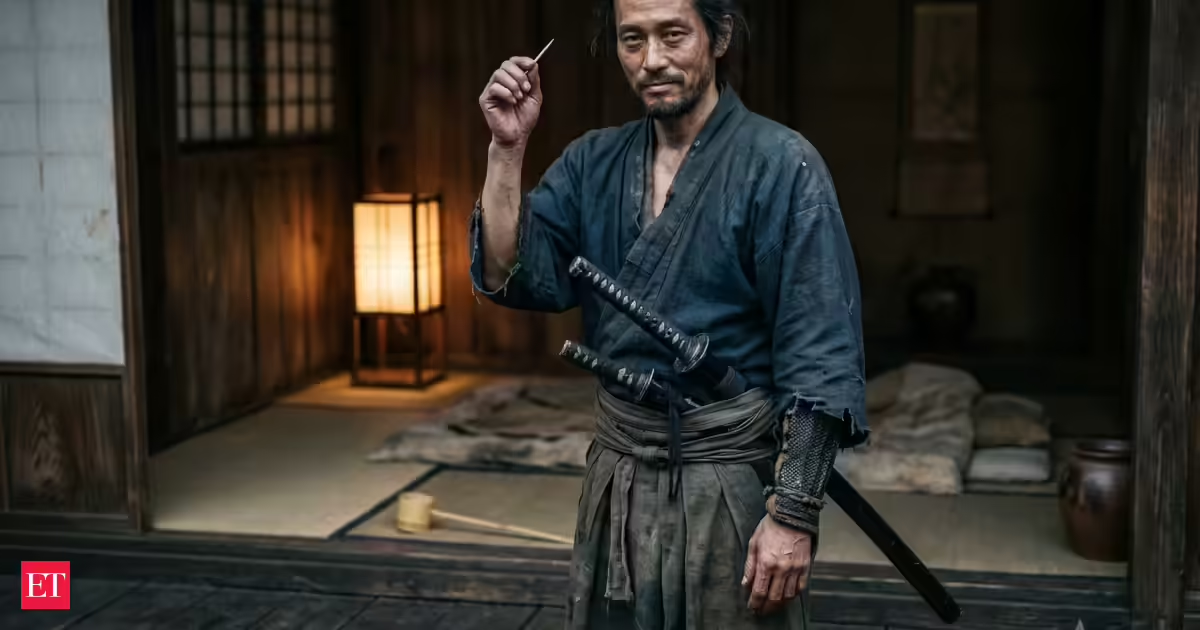
Japanese proverb of the day highlights a traditional saying that reflects patterns of human experience, discipline, and the way personal character shapes behavior in everyday life within Japan. The proverb “Those who are strong with the blade are good at courtesy” offers insight into how true strength is not only measured through skill or power, but also through restraint, humility, and respectful conduct toward others. It suggests that mastery and discipline naturally extend beyond action and into one’s manners and way of life. Many people turn to such proverbs to better understand human behavior in simple, relatable terms. These sayings are often rooted in cultural observation, historical tradition, and lived experience, passed down through generations as moral reflections rather than literal instructions. Over time, they have become part of everyday thinking, shaping how people interpret strength, skill, and character.Japanese Proverb of the Day — Why strong minds stay humble“Those who are strong with the blade are good at courtesy”Japanese proverb of the day highlights a timeless idea about human perception, self-awareness, discipline, and the influence of social expectations on personal identity within Japan.The first part of the proverb suggests that true strength is not defined only by skill or power, but by the way a person controls and expresses that strength. It challenges the assumption that external ability alone determines character, instead shifting attention toward inner discipline, restraint, and mindset.The second part emphasizes how behavior and attitude are shaped not just by capability, but also by values such as respect, humility, and awareness of others. It suggests that those who are truly strong or skilled naturally reflect balance in their actions and interactions.Together, the proverb teaches that perception and character are formed through both ability and conduct. People do not simply express strength through action, but through the way they carry themselves, combining skill with courtesy and control.Life lessons from the proverb The Japanese proverb carries practical lessons about discipline, self-control, and how true strength is reflected in everyday behavior within Japan.Strength is shown through restraint True ability is not only about power or skill, but about how calmly and responsibly a person uses it in real situations.Character matters as much as capability What defines a person is not just what they can do, but how they behave while doing it, especially under pressure.Respect enhances strength Courtesy and respect are not separate from strength—they are part of what makes it meaningful and socially valuable.Discipline shapes behavior Self-control and inner discipline guide actions, ensuring that strength is expressed in a balanced and thoughtful way.Why this proverb is still relevant today The Japanese proverb remains highly relevant in modern life as it goes beyond traditional ideas of physical strength, reflecting timeless lessons about character, discipline, and social behavior within Japan. In today’s world, “strength with the blade” can be understood as skill, talent, influence, or authority in any field. Whether in professional environments, leadership roles, or digital spaces, people are judged not only by what they are capable of achieving, but also by how they conduct themselves while doing so. This makes courtesy and restraint essential qualities in maintaining respect and trust.The proverb also connects strongly to modern social expectations, where behavior is constantly visible and evaluated. In such an environment, emotional control, humility, and respectful communication become even more important. Strength without consideration for others can easily lose its value, while strength expressed with courtesy becomes more sustainable and respected. Ultimately, the proverb reminds us that true relevance of strength lies in balance. It teaches that capability must be matched with character, and that how we treat others is just as important as what we are able to do.English equivalent and related expressions Other English expressions that reflect similar thinking about strength, character, and respectful behavior include:“True strength is shown through restraint.” “Power without control is dangerous.” “Respect is earned through actions, not force.” “Calm strength is the strongest strength.”Each of these highlights the idea that real capability is not just about skill or power, but about how it is expressed through discipline, humility, and consideration for others.
Japanese Proverb of the Day: “Those who are strong with the blade are good at… — Life lessons on strength, discipline, character, self-control and why mastery means control
Japanese proverb of the day highlights the meaning of “Those who are strong with the blade are good at courtesy.” This saying reflects the traditional idea that true strength is not defined only by physical skill or power, but also by discipline, humility, and respectful behavior toward others. It suggests that a person who has mastered the ability to wield force—symbolized by the blade—also understands the importance of restraint and proper conduct in daily life. Rather than encouraging aggression, the proverb emphasizes that genuine mastery naturally comes with self-control and politeness.
677 words~3 min read