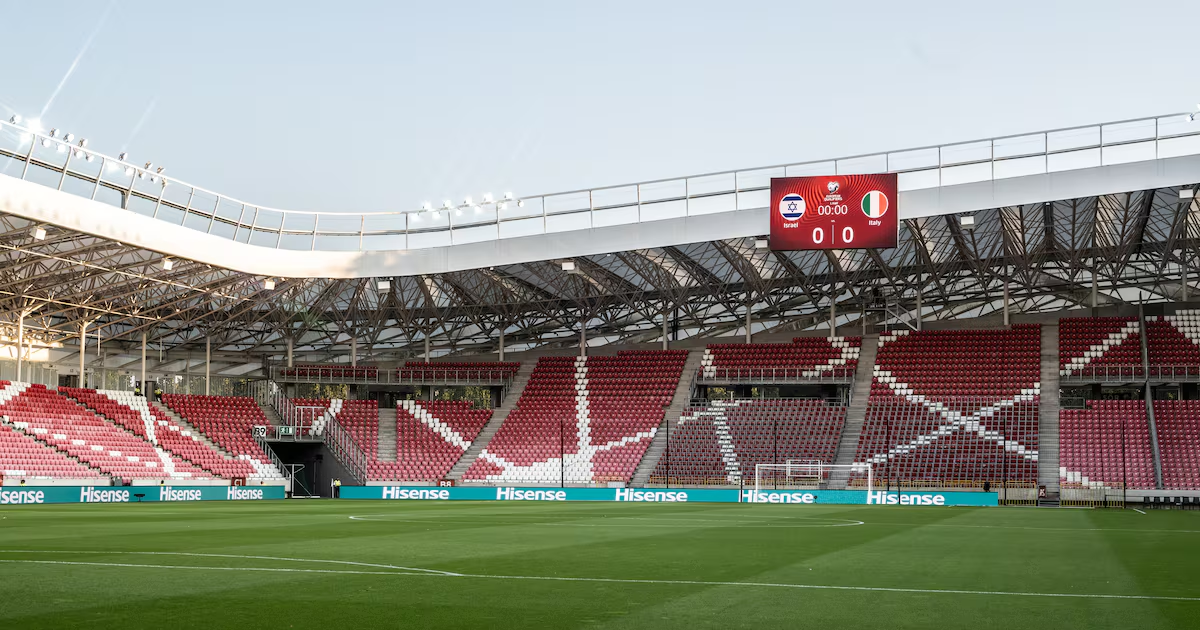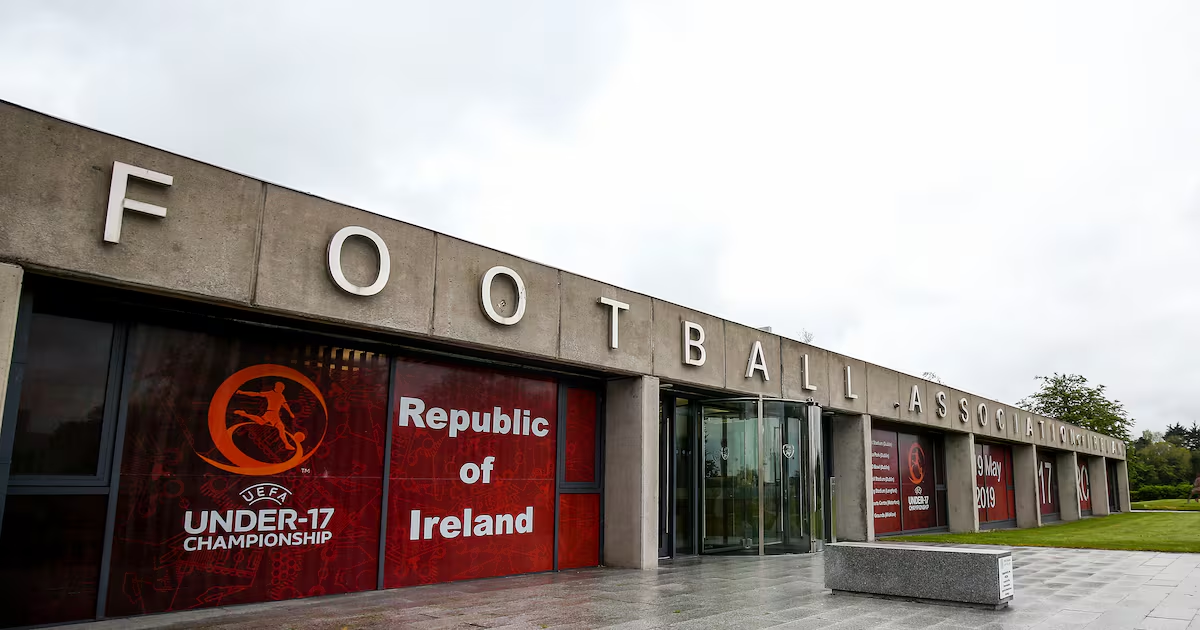
Members of the Football Association of Ireland will vote at an extraordinary general meeting next Wednesday to endorse the board’s decision to fulfil the upcoming Uefa Nations League fixtures against Israel. The games will be staged at neutral venues, with the FAI moving Ireland’s ‘home fixture’ on October 4th to Serbia, where it will be played behind closed doors. The meeting will be hybrid, with members attending either online or in-person at the Aviva Stadium. The vote is likely to be held via secret ballot. The motion has been put forward to members by the FAI themselves, and is not a vote on whether to boycott the fixtures. The motion instead calls for members to endorse the fulfilling of the fixtures, and makes no explicit mention of Israel.It reads as follows: “While acknowledging the strength of feeling regarding support for Palestine and the upcoming Uefa Men’s Nations League fixtures, that the members recognise the profound impact that any non-fulfilment of UEFA fixtures would have on Irish football as a whole and on its future development, and accordingly endorses the Association fulfilling its obligations in respect of those fixtures.”Members of the FAI general assembly had previously submitted a motion for a boycott of the Israel fixtures, but the FAI ruled this inadmissible under the Association’s rules as it was not supported by the mandated 10 per cent of the Association’s membership.The FAI board have explained their reasoning for fulfilling the fixtures in a seven-page letter to members calling for support of the motion, which has been seen by The Irish Times. FAI president Paul Cooke and chairman Tony Keohane write that the board concluded that boycotting the fixtures would “cause significant and lasting harm to Irish football”.A view of tennis balls thrown on the pitch in protest by fans during the friendly international against Qatar at the Aviva Stadium in May. Photograph: Laszlo Geczo/Inpho The letter lists some of the potential sanctions with which the FAI would be hit were they to boycott the games. They repeat some of the known potential consequences, including the forfeiting of games and potential relegation to League C of the Nations League and the consequent loss of Fifa ranking points. To this they have added the potential exclusion from the next edition of the Nations League for reasons of “competitive integrity”, and the potential exclusion from future Uefa and Fifa competitions at senior and underage level.In this letter, the FAI enumerate for the first time the potential cost of a boycott, estimating it at a minimum of €5.5 million. They say this is the direct potential impact, consisting of the loss of Uefa participation income, ticketing, revenue, and compensation. The FAI say the likely costs could climb to €10.3 million when the impact relegation would have on ticketing and sponsorship is priced in, and say there could be further, significant impact due to the “possible removal from Uefa competitions”.The FAI say that a boycott would set a precedent whereby all Irish international teams and League of Ireland clubs would be forced to confront “difficult decisions with financial and sporting impacts”. They also point to their co-hosting of Euro 2028, saying that “maintaining a positive and constructive relationship with Uefa is essential” for the delivery of the tournament, infrastructure and development funding, future hosting opportunities, and Ireland’s standing within European football. The FAI state that they would have no authority to exclude Israel from playing Euro 2028 games in Dublin should they qualify, which, in the FAI’s words, “makes a boycott in the short-term both inconsistent and ineffective”. The FAI’s letter argues that a boycott would not punish Israel, but punish Irish football, and say they will continue to engage with Uefa regarding Israel’s participation and explore appropriate support for civilians affected by the humanitarian crisis in Gaza.
FAI members to vote next week to endorse decision to fulfil Israel fixtures
In a letter to members, FAI say a boycott would cost Irish football at least €5.5m and could climb to €10.3m
632 words~3 min read