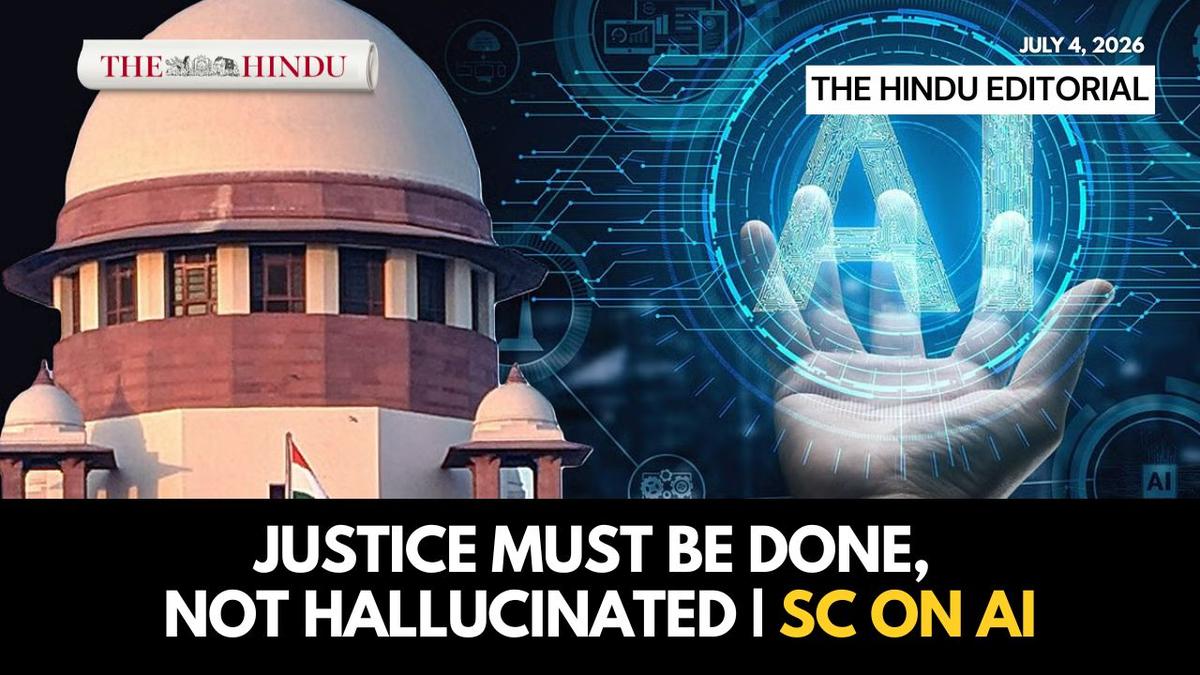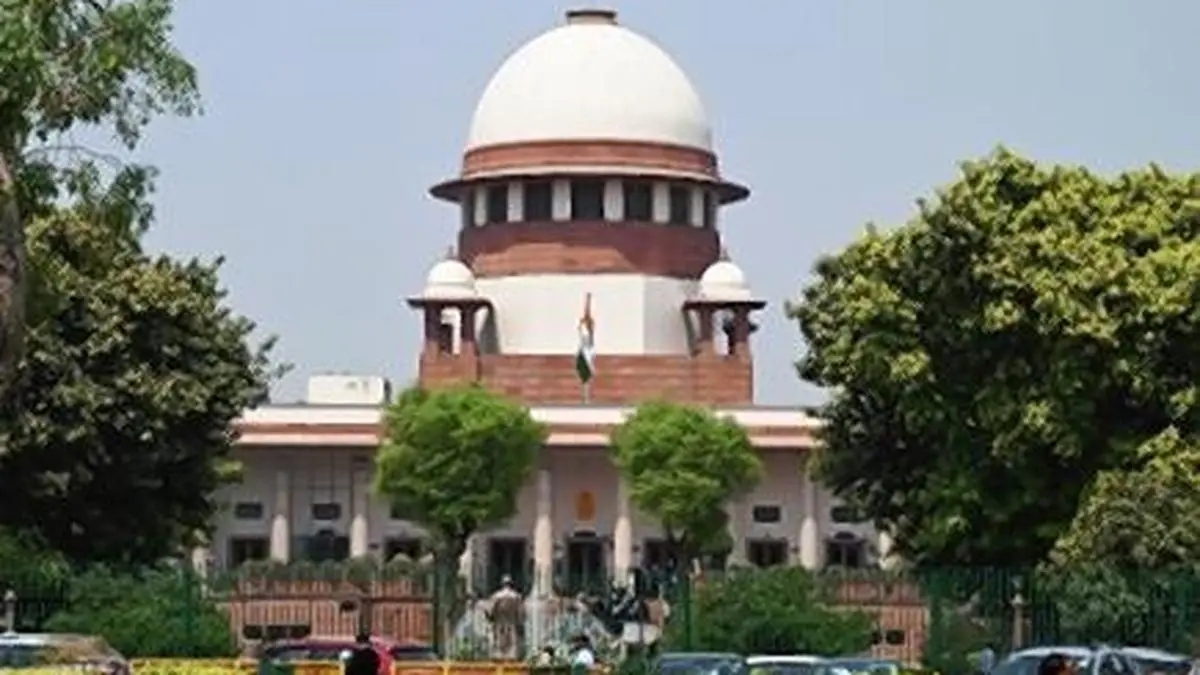
Calling the use of hallucinated case law the legal equivalent of the methyl isocyanate leak in the Bhopal gas tragedy, the same “invisible, insidious and catastrophic by the time anyone notices”, the court warned that unregulated AI poses a grave threat to the integrity of the justice delivery system
In a landmark ruling that could shape the use of Artificial Intelligence in India’s legal system, the Supreme Court on Thursday set aside judgments of the National Company Law Tribunal (NCLT) and the National Company Law Appellate Tribunal (NCLAT) after finding that they had relied on fake judicial precedents generated by AI.Calling the use of hallucinated case law the legal equivalent of the methyl isocyanate leak in the Bhopal gas tragedy, the same “invisible, insidious and catastrophic by the time anyone notices”, the court warned that unregulated AI poses a grave threat to the integrity of the justice delivery system.The bench also directed the Bar Council of India to frame norms in this regard. The case arose from insolvency proceedings involving Essel Infraprojects Ltd, where the NCLT admitted a lender’s plea under the Insolvency and Bankruptcy Code and the NCLAT upheld the decision. A division bench comprising Justices Pamidighantam Sri Narasimha and Alok Aradhe found that several precedents cited by the tribunals were either non-existent or contained fabricated passages wrongly attributed to genuine judgments, rendering both orders legally unsustainable.“A decision of a Court or an adjudicating authority based on material that is fake and hallucinated is no decision at all, and it amounts to subversion of the rule of law. Such a decision is unsustainable and has to be set aside at the earliest,” said the bench.The bench clarified that it was not dealing with the cause of hallucinations or the technical process for resolving them, which it said was for engineers and scientists to deal with. For courts and lawyers, the concern was the production of fake and non-existing material and its use as precedents in law. The bench emphasised that technology cannot replace human adjudication. It said: “AI... is not just an aid to assist us in our work, but is an alternative to our own thinking, reasoning and even decision making... unregulated use of AI will insidiously enter legal practice, the process of judicial decision-making and decision-making itself.”zero-tolerance modeThe bench called for adopting a zero-tolerance mode for producing, citing or using AI-generated precedents without verification. Accordingly, it directed direct the Bar Council of India, the apex statutory body, to constitute a committee and deliberate on this issue of members of the bar submitting such fake and hallucinated material before the Court as if they are precedents of law. “We... resolve to adopt AI technology in aid of adjudication, while at the same time asserting and declaring total and absolute control over adjudication, with a human in the loop at every stage,” said the judges.The judges said it is misconduct on the part of an advocate to cite judgments without verification. “Equally, it is a serious lapse if a judge relies on such a fake or hallucinated AI-generated material... Such a decision is no decision in the eyes of the law,” they said. The court further held that decisions must be set aside “even if an iota of fake or hallucinated material enters the decision-making process”.Published on July 2, 2026