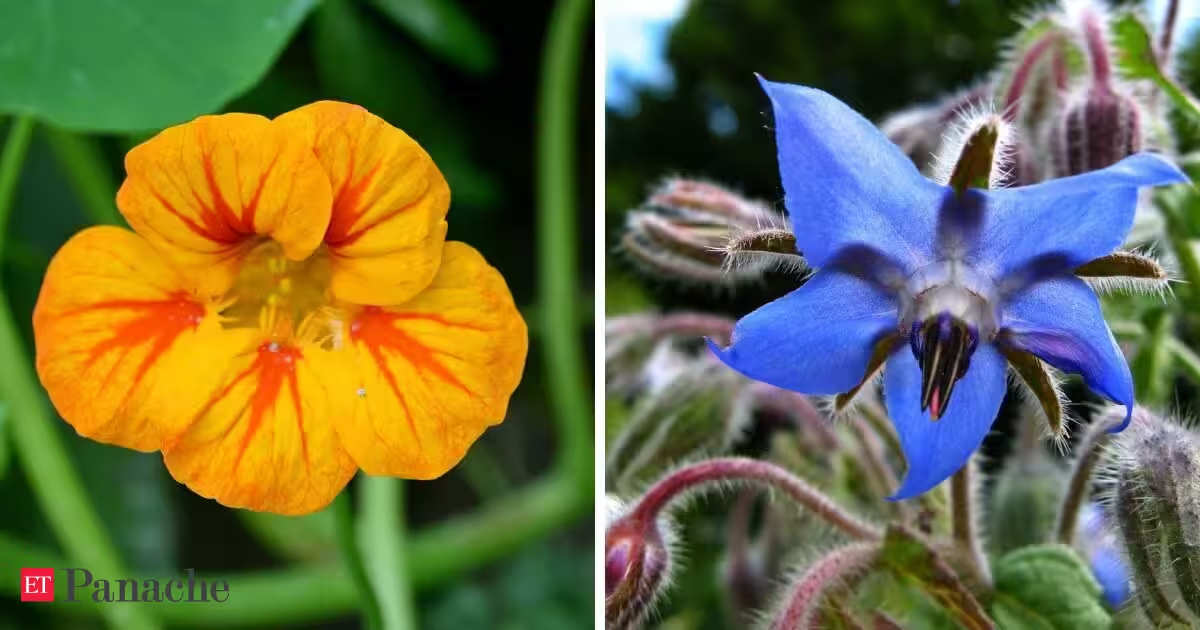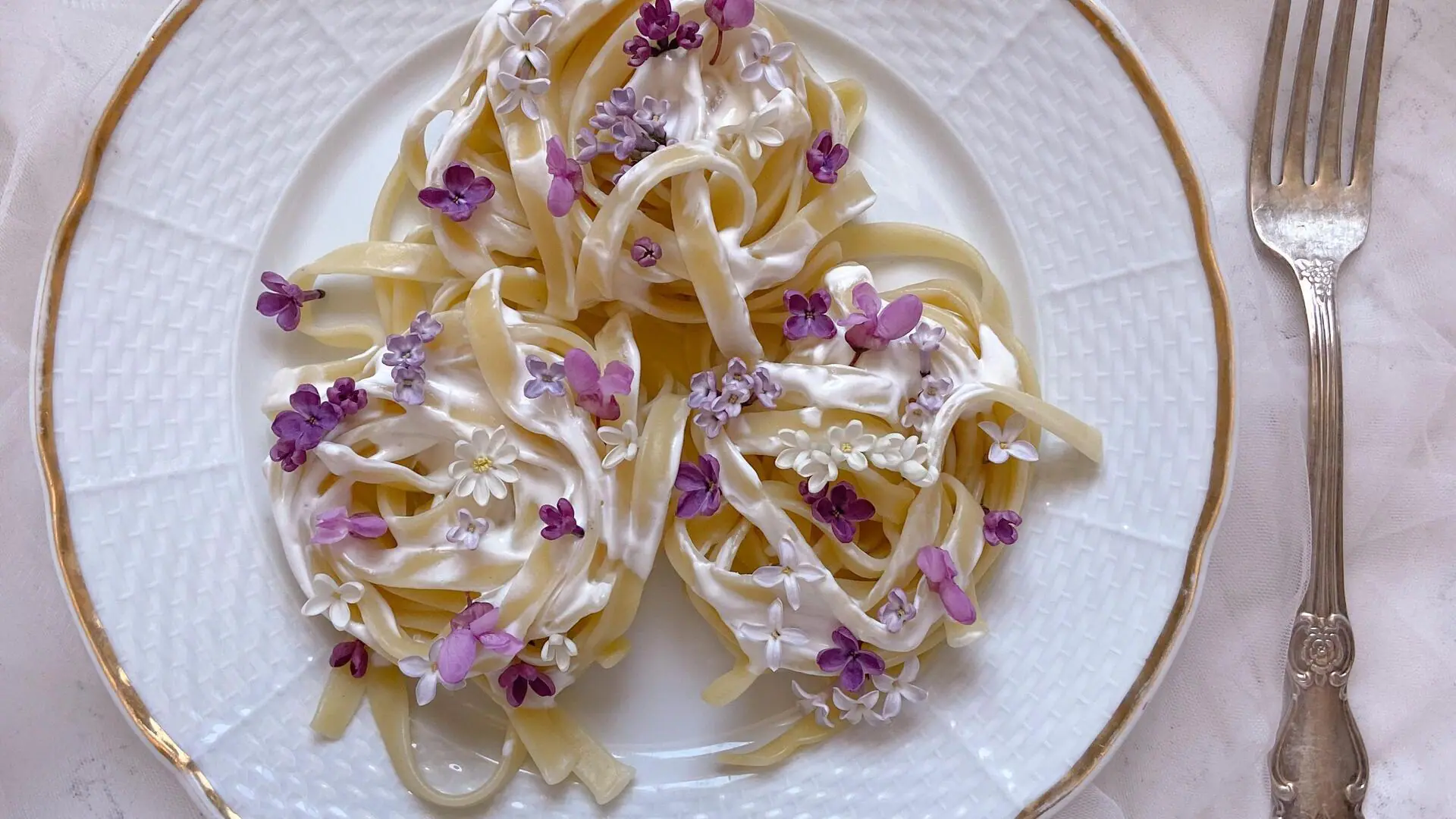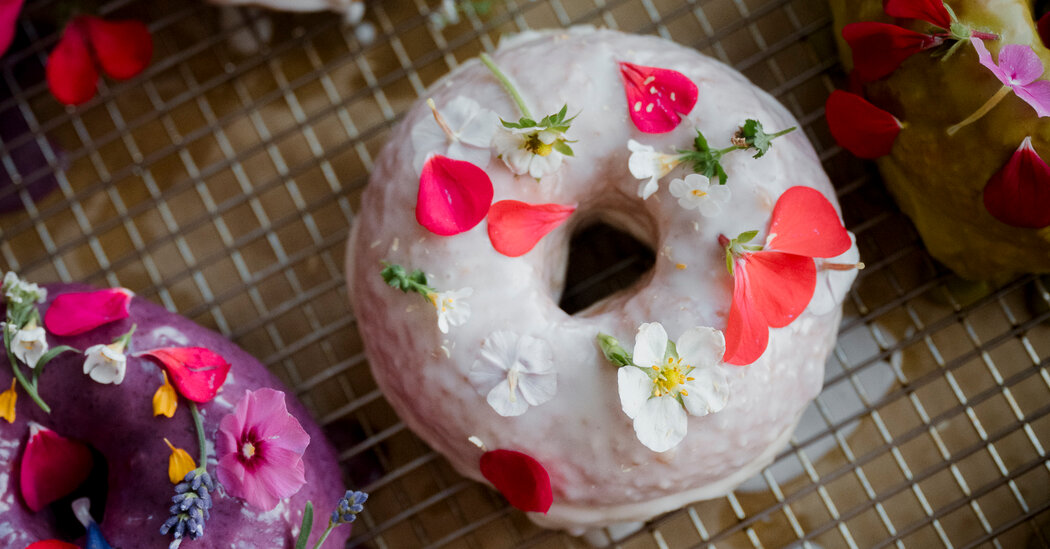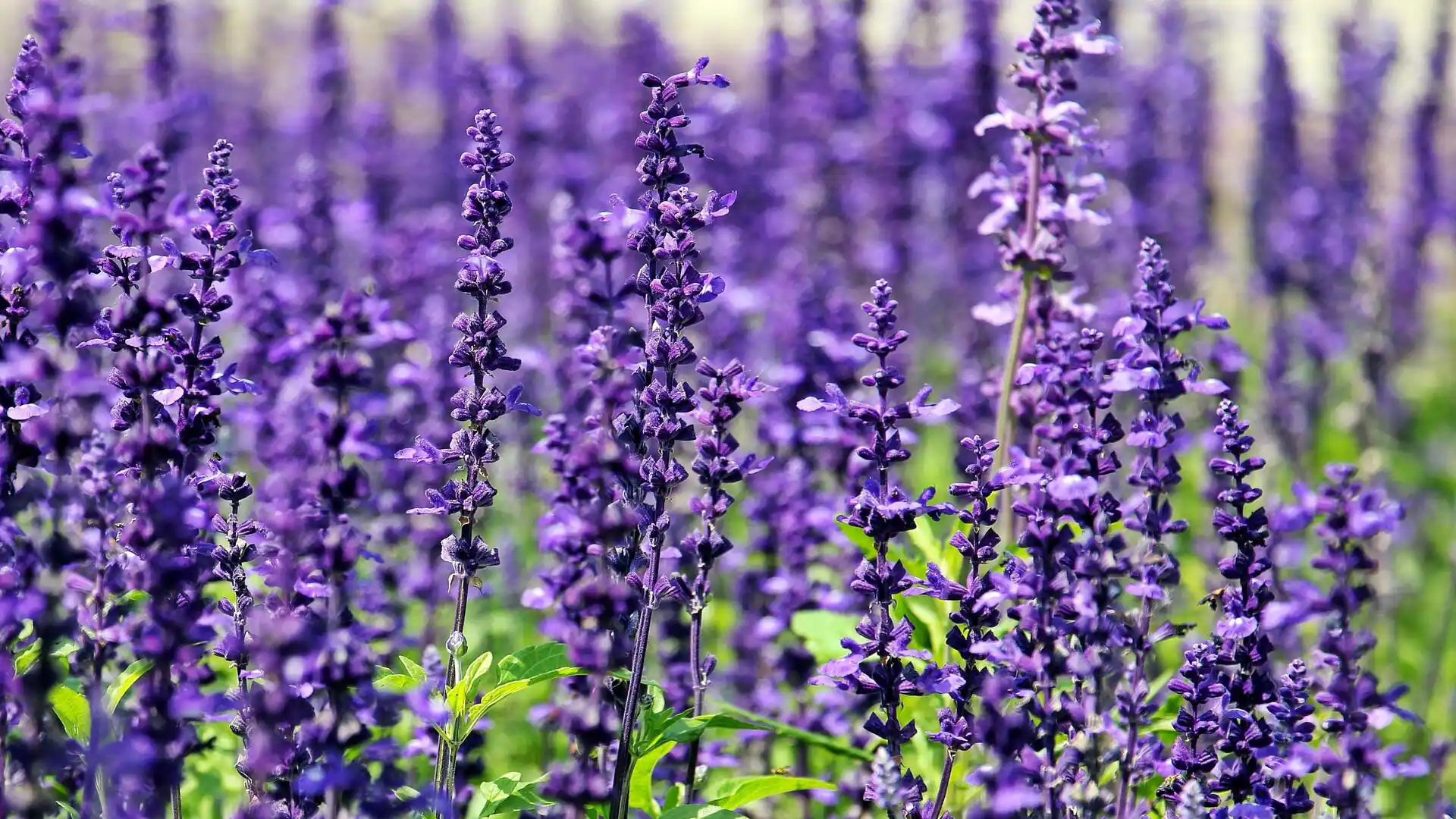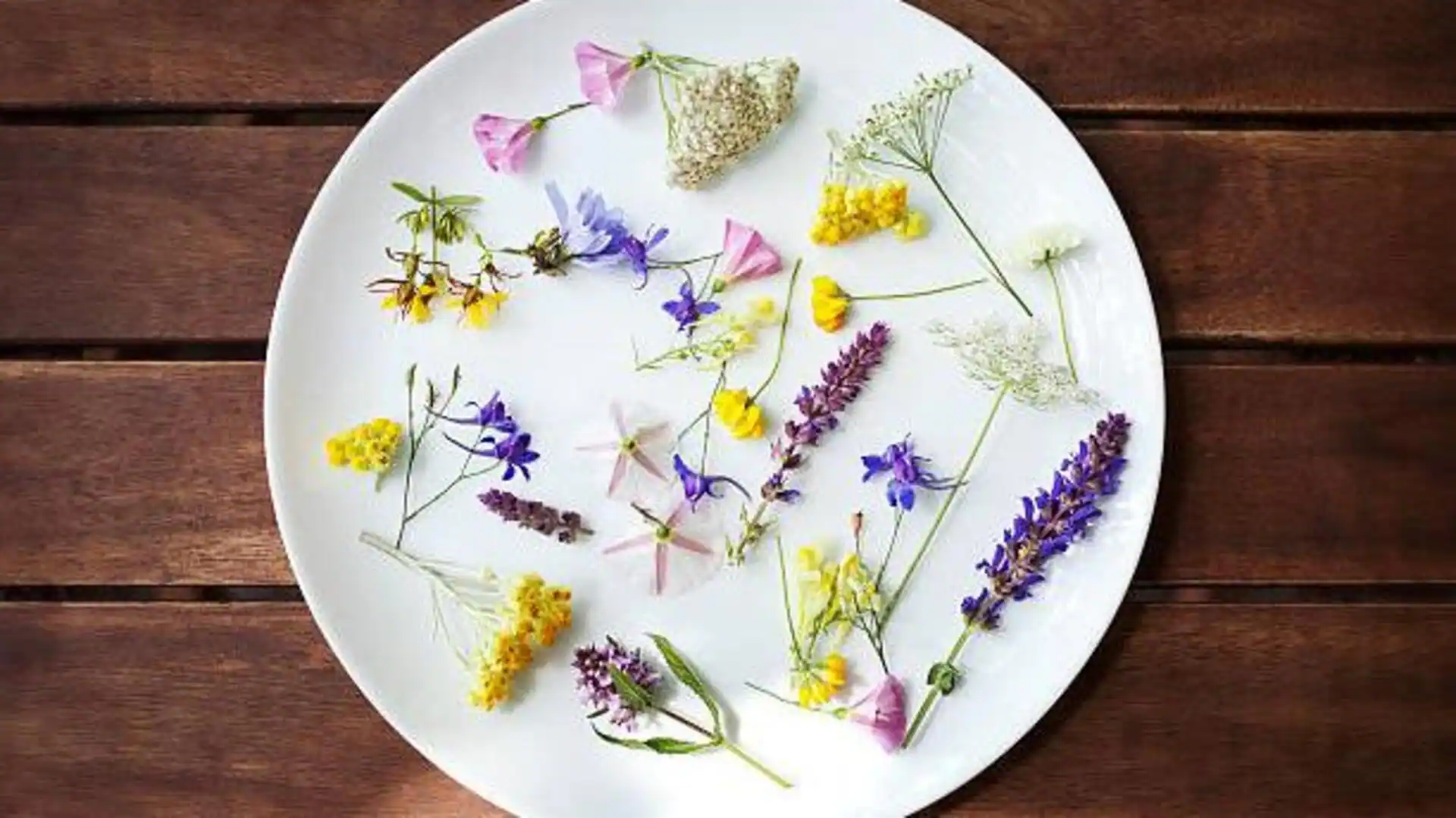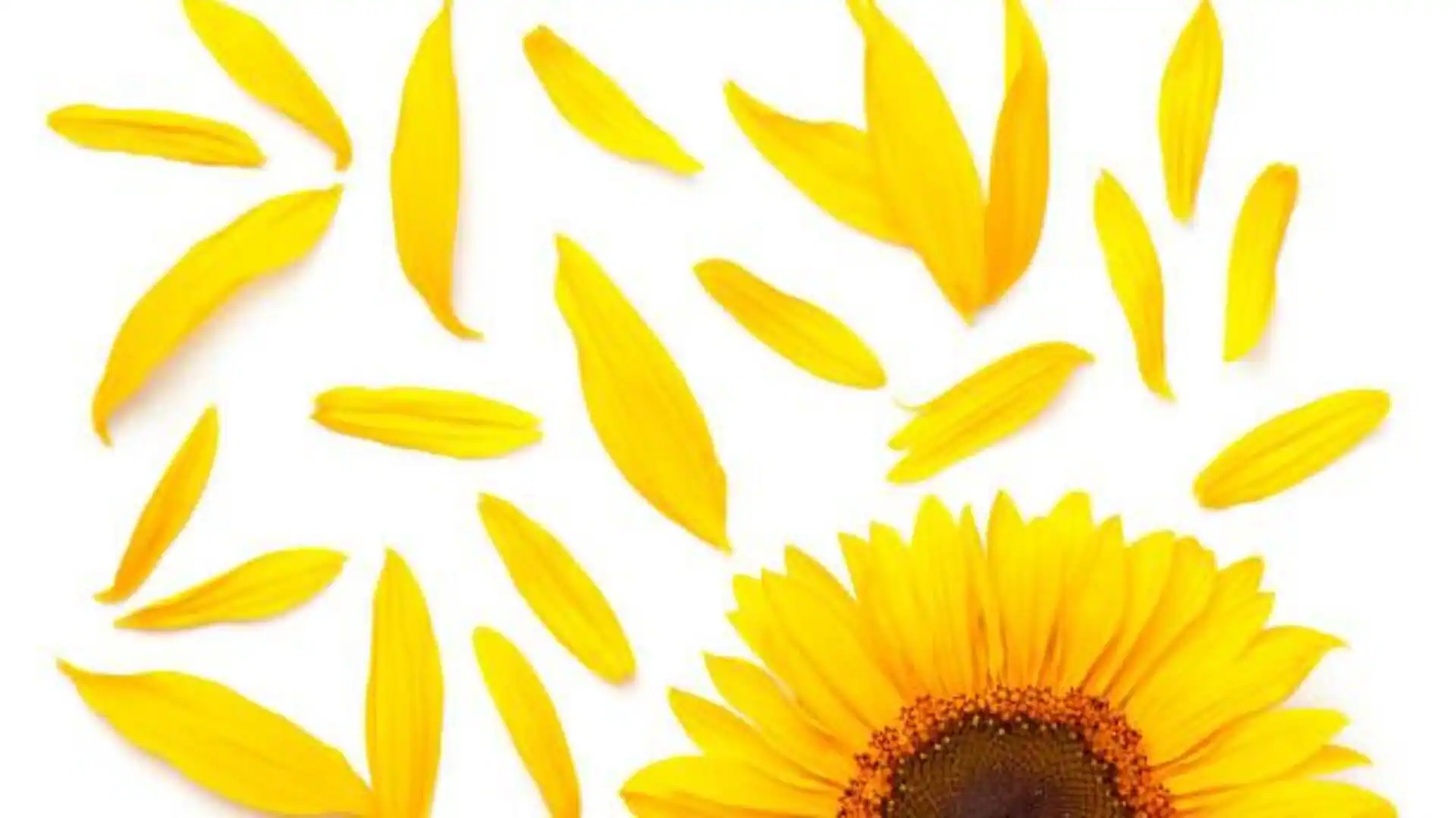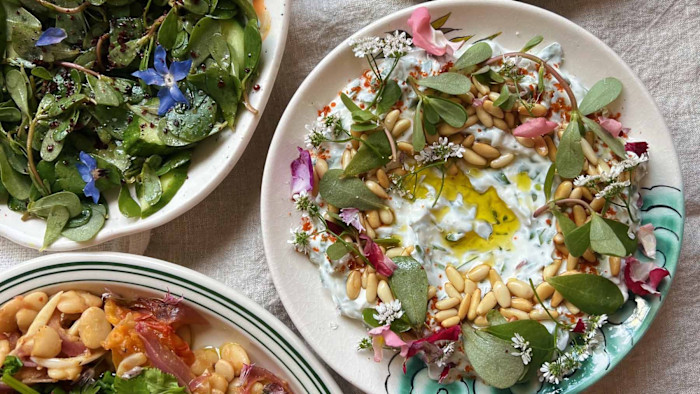
The common perception when you encounter flowers on a plate is that their purpose must be ornamental. This is often true. We eat with our eyes, after all. And there’s a lot to be said for zhuzhing up a baby butterhead lettuce salad with blue cornflower petals – as chef Chantelle Nicholson does at her Mayfair restaurant Apricity – or finishing a trifle with floral confetti in the style of New York-based cook Noreen Wasti. “In a world that’s all about efficiency and getting dinner on the table in 30 minutes, it’s nice to appreciate the beauty of food,” says Wasti.
Flowers also function as a natural food dye. The butterfly pea native to south-east Asia and Africa has electric-blue flowers that give Thai dishes such as chor muang (bloom-shaped dumplings) their distinctive violet hue. Hibiscus turns dishes bright pink or deep red. Marigolds have been favoured as a less expensive substitute for saffron.
Cake with gem marigolds, yarrow, borage, nasturtiums, snapdragons, dianthus, anise hyssop, flowering maple and mallow flowers by chef Noreen Wasti © Noreen Wasti
But flowers also enhance taste. “Rose and orange blossoms have been distilled for centuries in the Middle East to flavour sweets and coffee. The Aztecs used marigolds to flavour cocoa,” writes Monica Nelson in her compendium Edible Flowers (Monacelli Press, £24.95). “Today [the practice is] a growing force among restaurants that incorporate seasonal farming into their menus.”