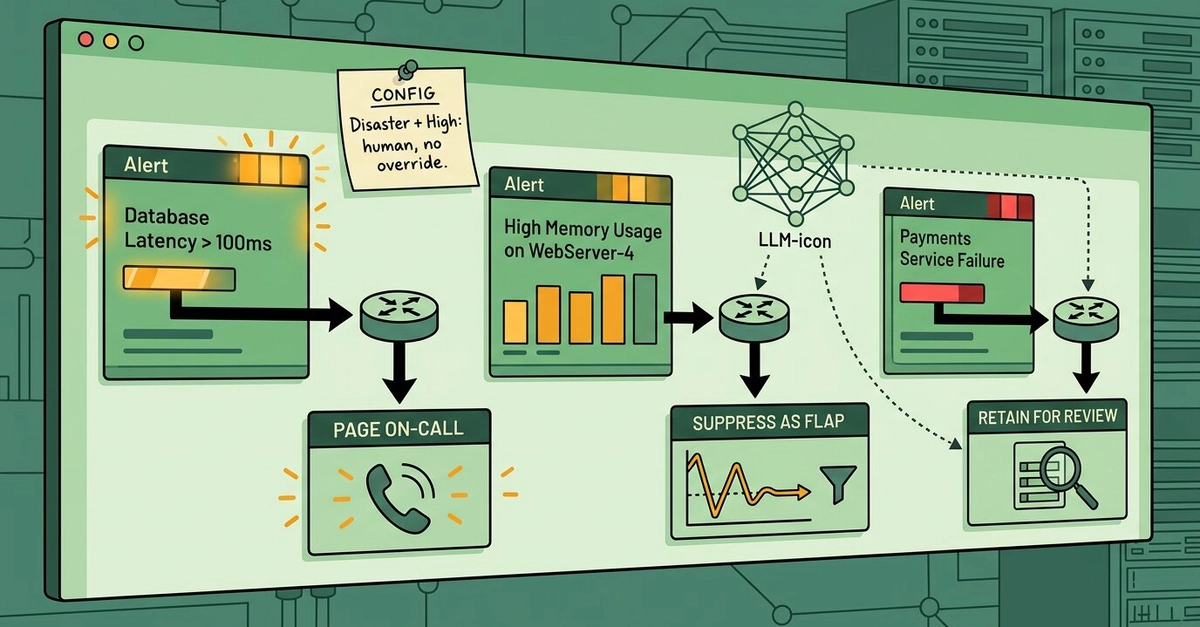
The ordinary failure mode I keep seeing in "LLM-assisted infrastructure" pet projects is the one a home-lab Zabbix operator sketched recently: the alert that arrives on the way home from work, on a phone, declaring that a port speed on a switch in the lab has changed and this is very-very important. Zabbix is doing exactly what it was configured to do. The configuration is the problem. Tuning the trigger thresholds by hand is the kind of work that never gets prioritised on a Saturday, and so the operator does what an increasing number of people in this position do: wonders whether to put an LLM in front of the alert pipeline and let it decide.
The naive version of that wondering — "I'll just hand the model my alerts and ask it to be smart about them" — produces predictable outcomes. The operator I'm reading walked through them up front, in a register I'd characterise as politely brutal about the limits of unstructured prompting. The takeaway, before they wrote a line of code, was that LLMs in this kind of pipeline don't replace engineers and don't hallucinate a coherent system into existence either. They amplify whatever architectural rigour you bring to the prompt — including the absence of any.