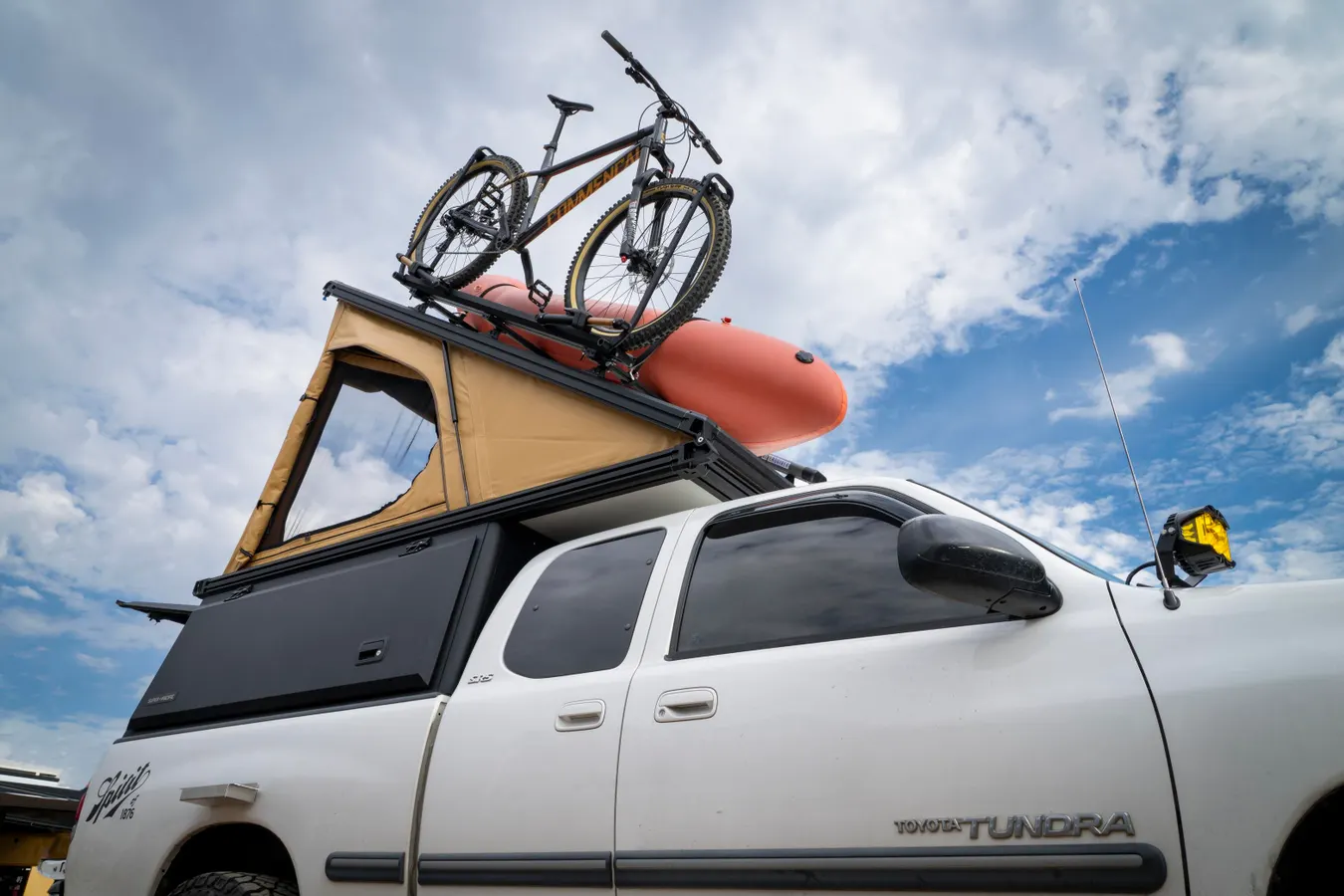
Loveland, CO, USA - August 22, 2025: Super Pacific X1 camper on Toyota Tundra pickup truck, roof tent opened with a mountain bike and packraft on roof racks.gettyHere is a number that should get every carmaker's attention. One of the world's largest automakers sells roughly $2,019 worth of accessories on every truck and SUV it moves in North America — floor mats, bed liners, roof racks, lights, recovery gear, the parts buyers bolt on to make a vehicle their own. Add that up across the lineup and the catalog earns about $350 million in gross profit a year for this automaker. That is close to a third of the profit the company makes on these vehicles. And it comes not from selling cars, but from selling the things people attach to them.For decades, accessories were an afterthought — the rack by the parts counter, nobody's real job. That is changing fast, and the timing is not an accident. Electric-vehicle programs have been scaled back. The promised flood of over-the-air software revenue has been slow and costly. Margins are under real pressure. So automakers are hunting for profit pools that already work — and the accessory catalog, especially on North American trucks and large SUVs, is the one hiding in plain sight.In my earlier pieces in Forbes I talked about the car's value moving inward — into scarce memory, into its wiring, into software and autonomy. This is the mirror image: value moving outward, to the parts bolted onto the outside.Why trucks, and why nowWhy trucks? Because in America, trucks and off-roading are culture, not just transport. Towing, overlanding, weekend trails, the instinct to make a vehicle yours — that is identity, and identity is the rare thing customers happily pay extra for. You cannot get a buyer excited about a wiring harness. You can absolutely get them to spend $4,000 turning a $48,000 truck into their truck. That is what makes accessories such a good business: the customer wants to spend more, and comes back to do it again.The scale of it surprised my team when we ran the analysis. This automaker's full-size pickup earns about $8,400 in accessory profit per truck, against roughly $1,428 on its higher-volume mid-size. That is almost six times as much on the pricier, lower-volume machine. The premium buyer isn't tired of accessories. The premium buyer is under-served.MORE FOR YOUThe part everyone gets wrongThe automaker that has perfected this treats its catalog as a five-step ladder: a headline "halo" package at the top, then premium upgrades, styling parts, everyday essentials, and low-cost impulse add-ons at the base. It looks like a luxury play — win the top and the rest follows. It is actually the opposite, and this is the most important thing to understand about the business.The eye-catching item is the $12,500 off-road package built for magazine covers. But almost nobody buys it. Those halo packages attach to just 1% to 6% of buyers, and their margin — around 32% — is the thinnest in the catalog. The real money sits at the bottom of the ladder. Everyday essentials — floor liners, bed mats, door guards — attach to 40% to 70% of buyers at margins above 54%. The cheap impulse items clear 63%. A $129 set of floor liners on seven of ten trucks beats a $12,500 package on one in twenty, every time.So what is the halo for? It builds the image that lets the cheap parts sell. Let the hero build create the legend; let the floor mats make the money.Treat it like part of the car, not an add-onThere is a second lesson, and it separates the winners from the merely enthusiastic. Accessories look like a soft, lifestyle business — pick some cool gear, sign a few partners, print a catalog. Run it that way and the money leaks to the dealership and the independent aftermarket.This market leader we studied does the opposite. It installs an estimated 55% to 60% of accessories at the port, before the vehicle ever reaches a dealer. Those parts show up on the window sticker, get financed with the truck, and are engineered and safety-tested alongside the vehicle itself. No second sales pitch, no quality guesswork, no aftermarket shop stealing the sale. That is the real advantage: treat accessories as part of the vehicle, not as something added later.Winners, losers, and the suppliers caught in betweenRivals are catching on. Stellantis runs Mopar as a full business — more than 1,000 accessory parts, dozens of partners, Jeep Performance Parts, and a growing push to install at the factory. It clears around $2.9 billion. Ford is aiming to factory-install half its accessories, on the sticker and financed with the vehicle. GM keeps its accessory unit tightly integrated and unusually visible to senior leadership, feeding its off-road AT4X and ZR2 editions.The losers are the automakers still leaving accessories to the dealer, where the margin quietly bleeds away.Suppliers sit in an awkward spot too. Brands like ARB, Warn, Thule, Yakima and Pelican give an automaker instant credibility and range. But in-house parts earn two to three times the attach rate and far fatter margins — so every part an automaker builds itself takes money back from a partner. And when one partner supplies half of a category, that is leverage that cuts both ways.Regulation is ending the free-for-allThe old aftermarket free-for-all is quietly closing. A bolt-on used to be simple. Today an accessory can affect crash-safety standards, driver-assist sensors, towing limits, and — once it is connected — vehicle cybersecurity. As cars get smarter, an untested part from a catalog becomes a liability no automaker wants to carry.So accessories are being pulled into the engineering department and installed at the factory, because that is the only way to keep them compliant. The same rules reshaping the car are squeezing the independent aftermarket out of the picture.The next frontierTwo big openings are still up for grabs.The first is the large premium SUV. This same automaker sells a $60,000-plus SUV with only about 100 accessory parts and a spending ceiling near $1,700 — even though those buyers will happily spend around $3,600 when given the chance. That is the clearest piece of unclaimed ground in the segment, and the first automaker to build a deep program for it will own that share before the rest wake up.The second closes a loop the industry has struggled with. Software subscriptions flopped because buyers resented paying for features they couldn't see or touch. Accessories work for the opposite reason — they are physical, personal, and theirs. The next step blends the two: connected lights, telematics-linked recovery gear, exportable power on electric trucks — hardware sold with software and a subscription attached. The bolt-on becomes the recurring revenue the software-defined car was supposed to deliver, and never did.The vehicle is becoming a commodity. The accessories are becoming the business. The automaker still treating its catalog as a parts-counter afterthought is handing away its most dependable profit — one floor mat at a time.This article was co-authored with Benny Daniel, Head of Automotive & Mobility Practice at MarketsandMarkets, drawing on proprietary MarketsandMarkets research into OEM accessory strategy and organizational benchmarking across the North American market.
How Automakers Are Raking In Substantial Profit From Selling Vehicle Accessories
Automakers are generating significant, profits in vehicle accessories, with one major carmaker earns $2,019 per truck/SUV in accessories in North America.
1,199 words~5 min read