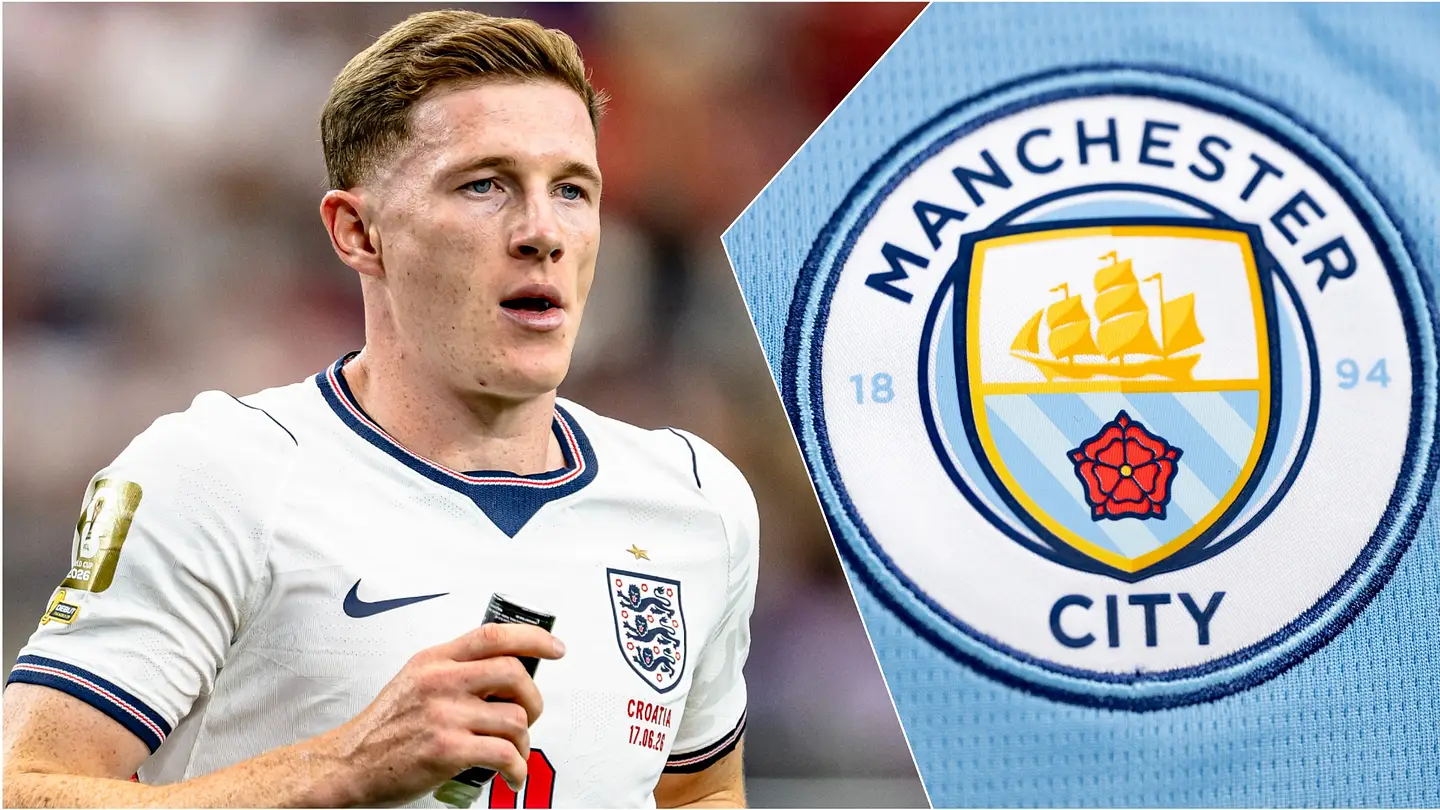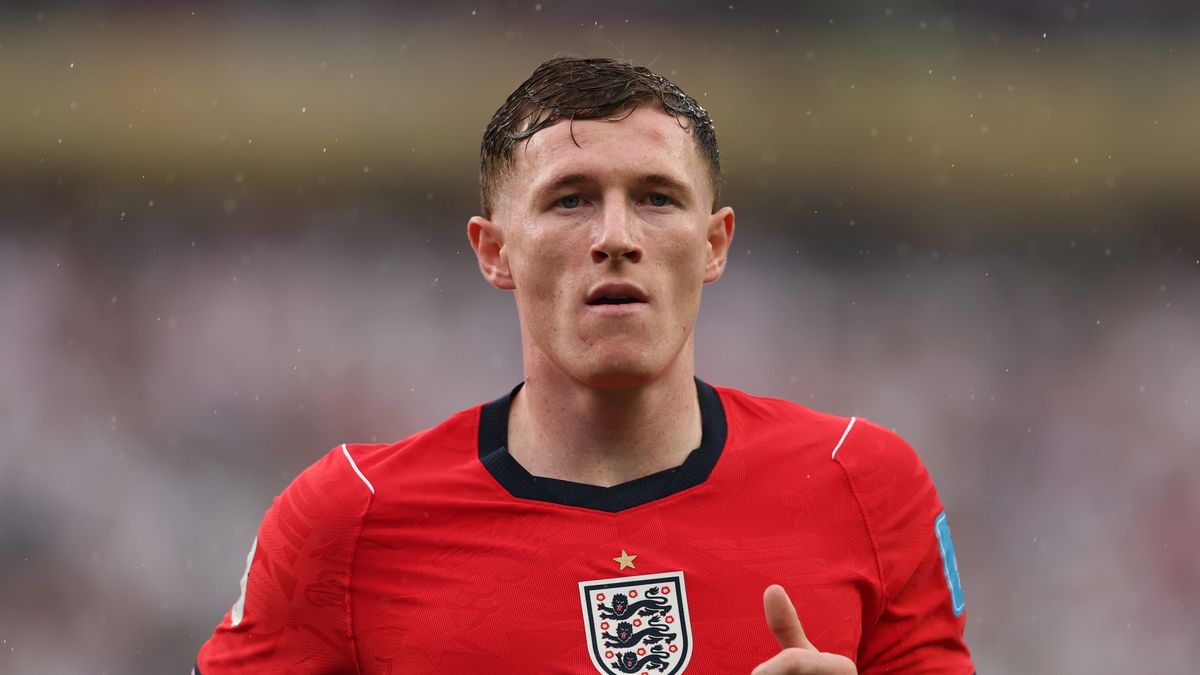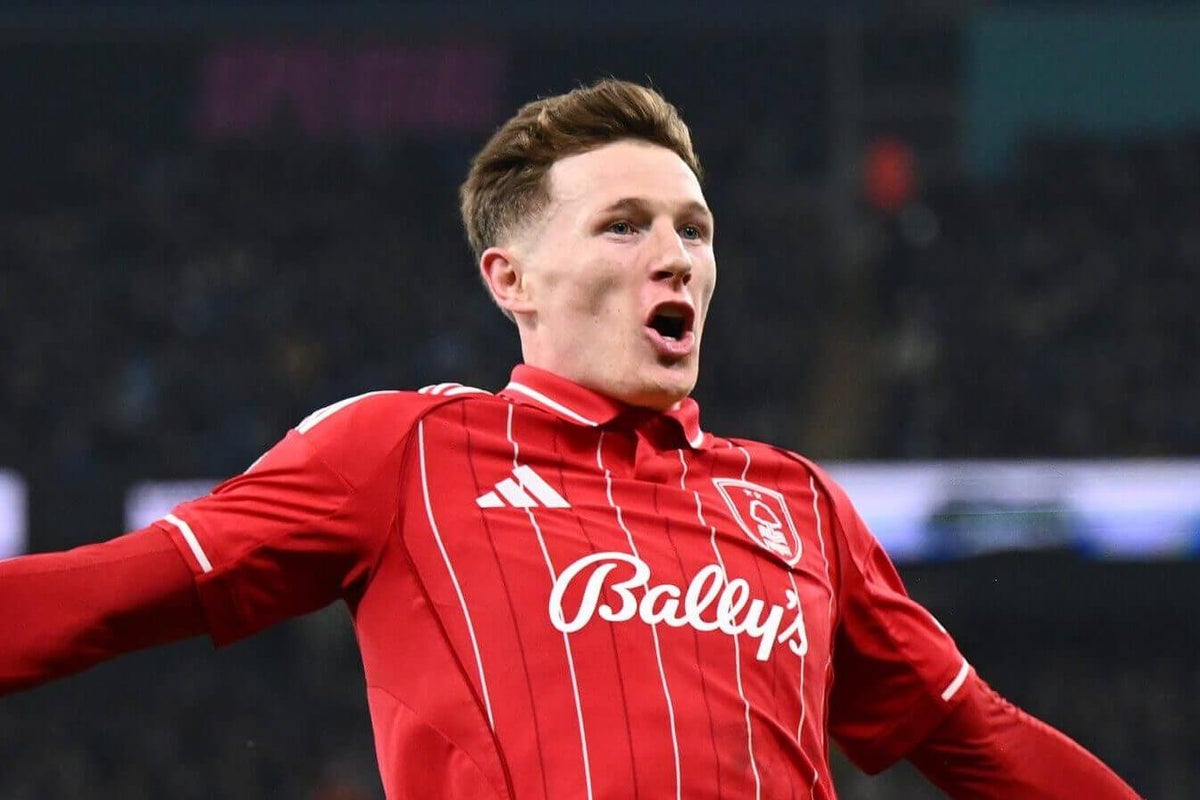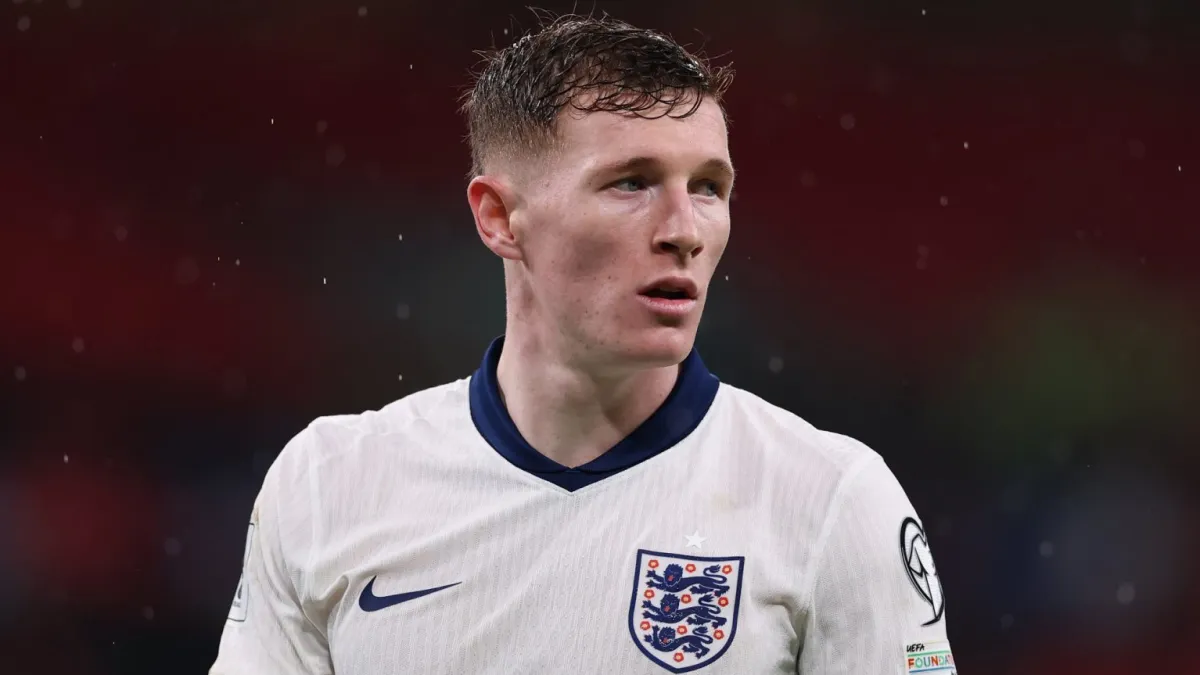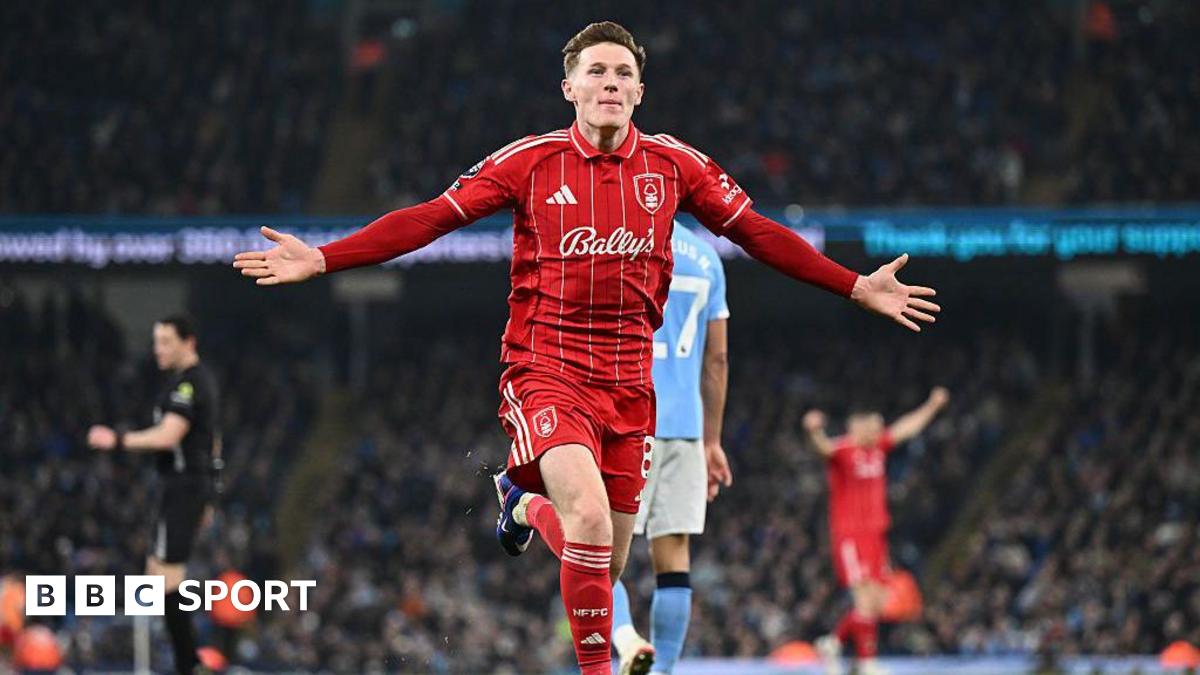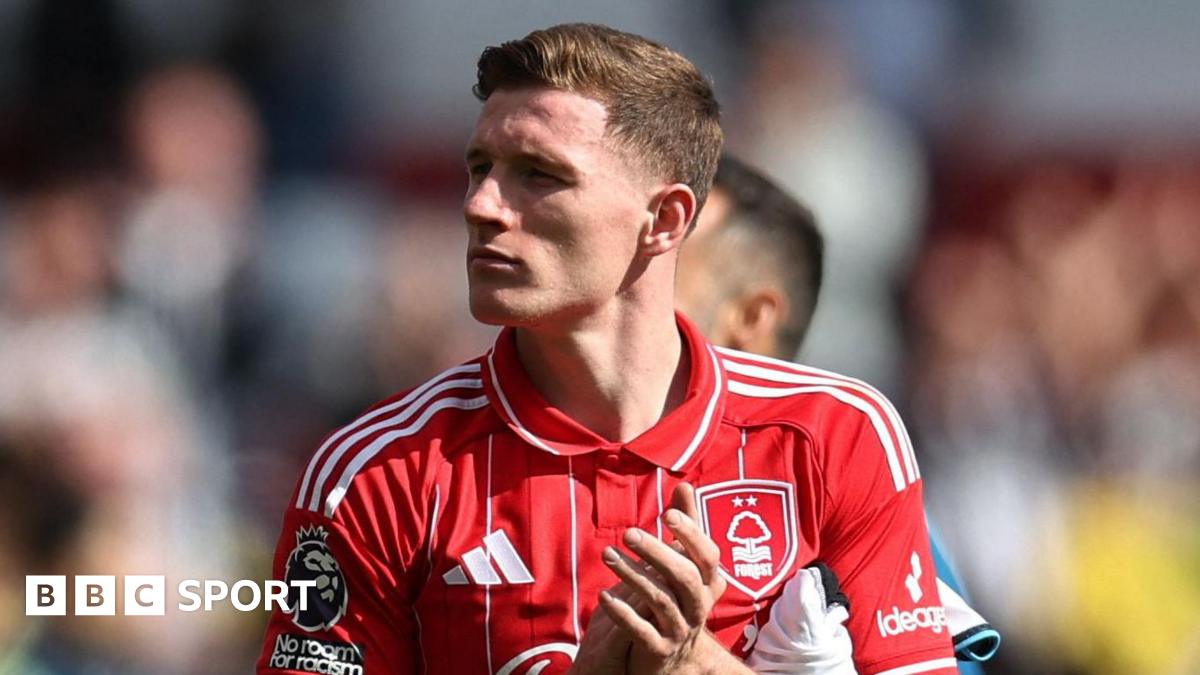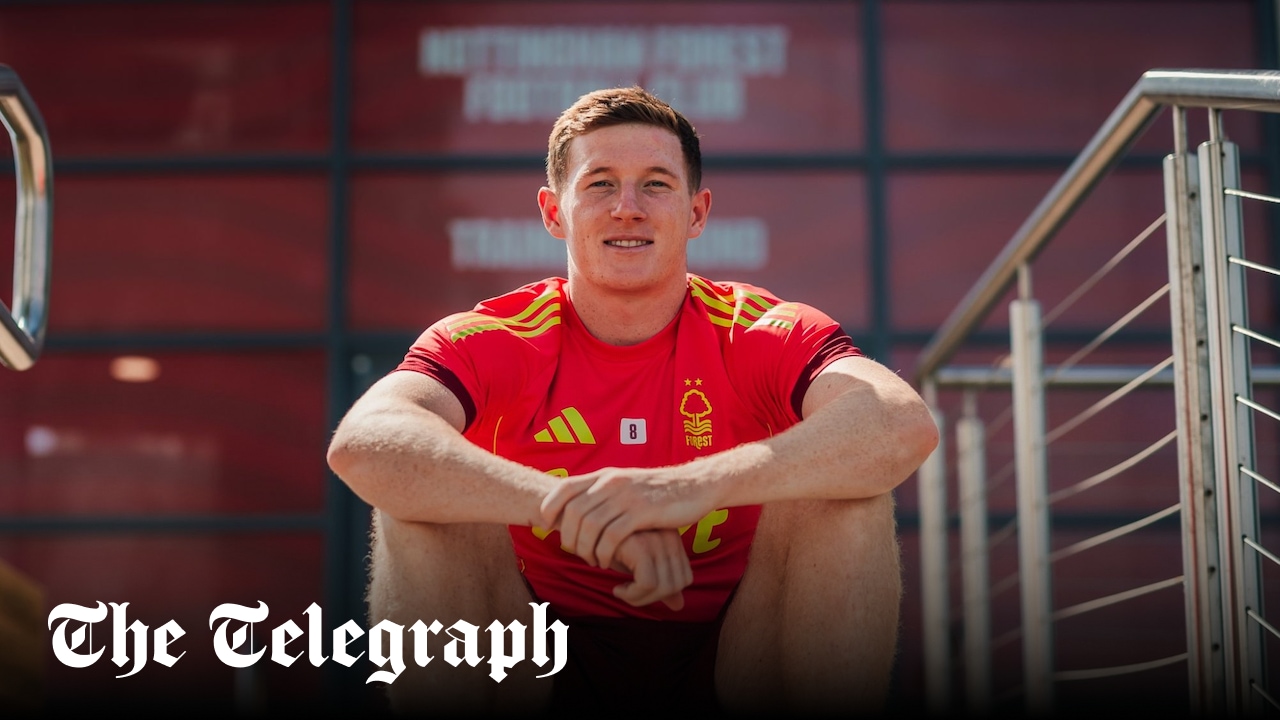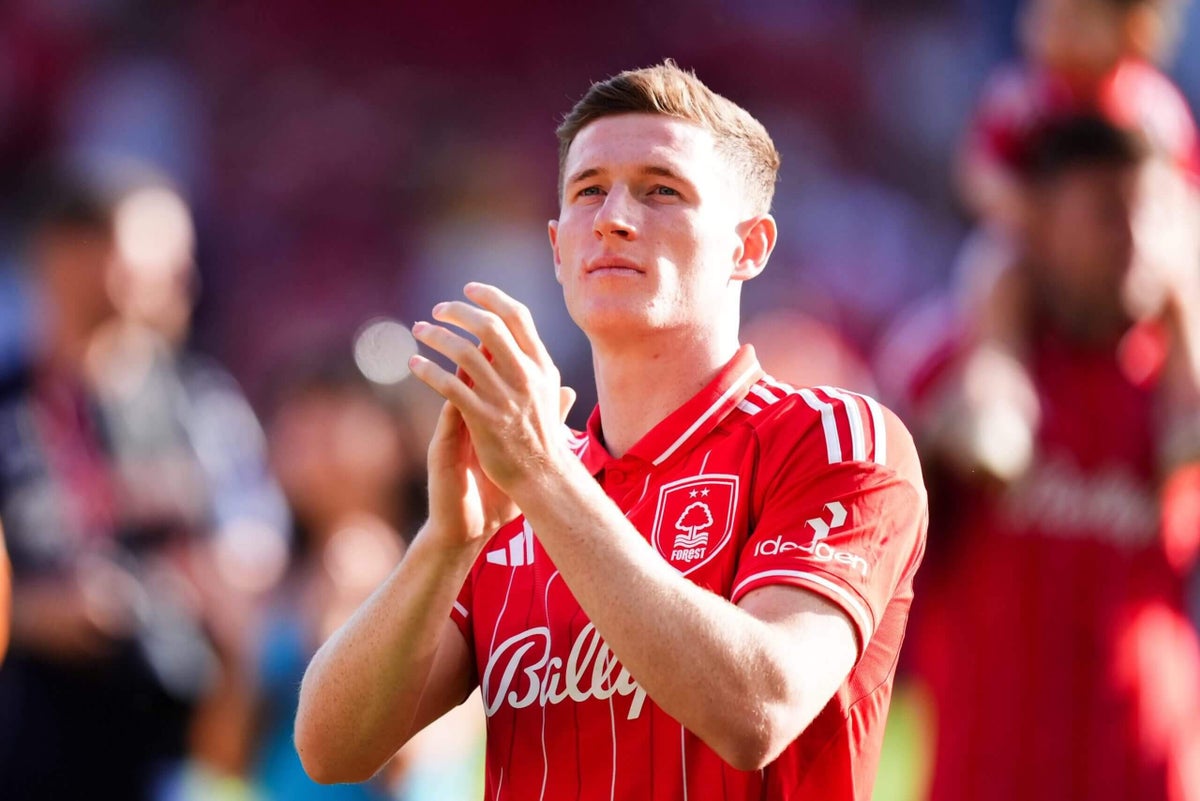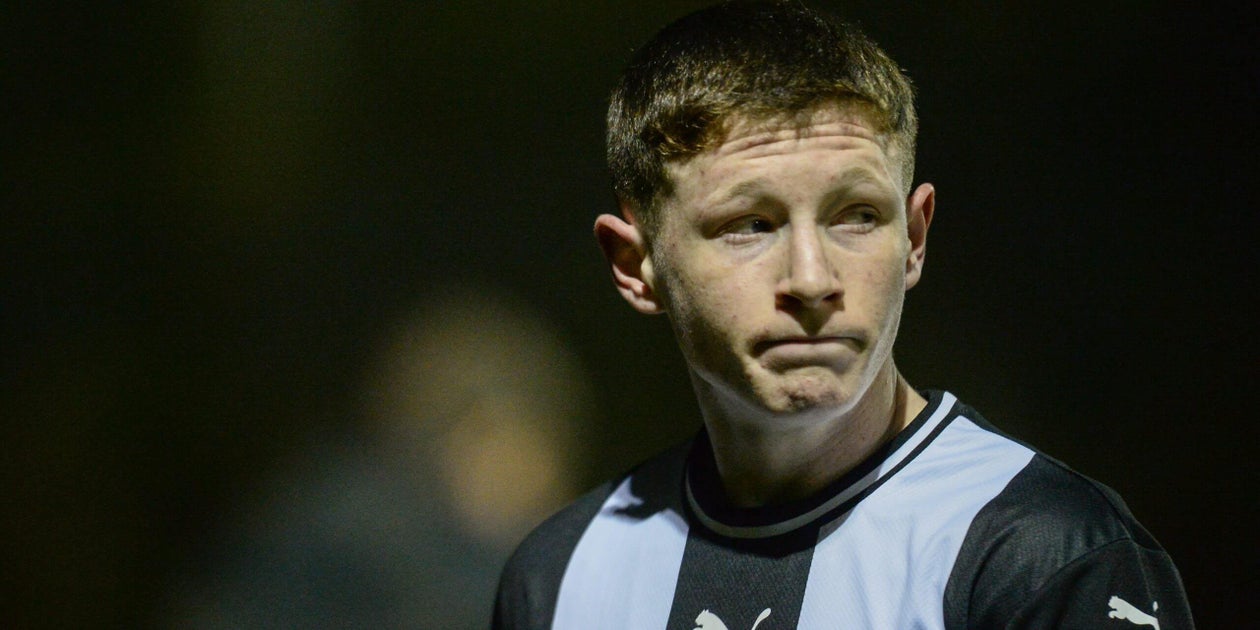
Coming through Newcastle United’s academy, Elliot Anderson was a quick learner and a late developer, a huge prospect in a diminutive frame. He would get knocked about in training but take it and never complain.“He loved the physicality of it,” Neil Winskill, one of his coaches back then, tells The Athletic. “He was small but didn’t think he was small. Like a puppy who thinks he’s a wolf.”Anderson has morphed again, into an English lion roaring at his first World Cup. He is joining Manchester City from Nottingham Forest for £116million ($153m), the most ever paid for a British player. It is his stage, his moment, which can only bring competing emotions on Tyneside, where he was nurtured as a cub and then (reluctantly) sold.Brought up in Whitley Bay on the north east coast, Anderson hails from a Newcastle family; Geoff Allen, his grandfather, played for the club in the 1960s. Inevitably, he had a ball at his feet from the moment he started walking. There was grassroots football with Wallsend Boys Club before he joined Newcastle’s academy at the age of eight. He signed his first professional contract in 2019.The people who worked with Anderson at the academy all paint a similar picture; he was little and quiet, but absolutely determined which, combined with a skill set that brought comparisons to Peter Beardsley, Diego Maradona and Billy Elliot, the fictional ballet dancer, marked him out as something special.“Technically, he was outstanding and, mentally, he was as good as I’ve seen,” Winskill says. Steve Harper, the academy manager, describes him as “grounded, focused, eyes on the prize. We provide the platform, but the fire has to be burning inside and with Elliot, it was”.“He’s really clear in his mind about where he wants to get to and how he’s going to get there,” Ben Dawson, another of his coaches, says. “He wants to be the best.”When Anderson left for Forest two years ago in a deal valued at £35m, it was for financial rather than footballing reasons, saving Newcastle from a likely points deduction as they scrambled to comply with the Premier League’s Profit and Sustainability Rules (PSR), but at a cost which now, more than ever, feels difficult to bear.“When it looked like he was going to go, my initial reaction was: ‘What, surely not – isn’t there anything else we can do?’” Dawson says. “Elliot was in the same position. He was saying, ‘I can’t believe this is happening, it’s my hometown club’. But it was also a chance to move and be seen as a senior player with an expectation to go and perform. He has thrived.”Anderson was made in Newcastle, where pride in their wolf and England’s lion is balanced by sharp pangs of pain.Harper and Winskill are sitting at a table inside the Elliot Anderson Room, at one end of the academy’s cafeteria. Beside it is the Lewis Miley Room, which looks across to the first-team training centre. The big idea is aspirational; Anderson and Miley, who recently signed a new six-year contract at the club, are the last academy graduates to have started a Premier League game for Newcastle and the rooms will be rotated and renamed when the next one comes along. A framed shirt above Anderson’s door features words instead of a number: “NUFC Who’s Next?”“Ideally, we want the sign-writer to be on speed-dial,” says Harper, the former Newcastle goalkeeper and the longest-serving player in the club’s history.The Elliot Anderson room at Newcastle United’s academy (George Caulkin/The Athletic)Winskill is the academy’s head of technical development, but has previously filled a variety of other roles, including head of coaching and working with the under-18s and under-21s. “The only tricky bit,” with Anderson, he says, was finding the right level of challenge for him, which meant continually putting him with older age groups; he made his debut for the under-18s at 15, played for the under-23s at 16 and was named as a substitute for the senior side aged just 17.In turn, that often meant tough treatment for a player whose quality outstripped his size. “He was small, wiry, creative, tough,” says Dawson. “He used to take a lot of hits and be involved in heavy challenges, but he would always bounce back up. When he was younger, he was picking up knocks almost every other week, but the thing that shone through was his mindset.”The game is littered with famous stories of great players who were initially rejected as kids because of being short for their age — Lionel Messi and Harry Kane among them — “which is why it’s important we have a great team of sports scientists who can predict this type of stuff,” says Winskill. “Look at how much Elliot’s grown and developed. You have to be patient with a boy like that.”During the Covid-19 pandemic and an extended close season, Anderson shot up from 5ft 5in to 5ft 9in, a growth spurt so dramatic that academy staff, who had asked him to measure and weigh himself at home, assumed it was a mistake. He also bulked out, training in a home gym every day with Louis and Will, his elder brothers. “When he came back, he looked completely different,” Dawson says.In any case, Anderson’s aptitude and attitude “made up for” his lack of height, Winskill says. “He had no fear whatsoever and he was easy to deal with. You could definitely tell with Elliot, the things he really liked doing, like one-v-ones or finishing drills, but you never felt he didn’t like doing anything. He always gave his best.”Anderson scoring for Newcastle’s U21s in an EFL Trophy match against Bolton in November 2020 (Charlotte Tattersall/Getty Images)“He was quiet and reserved, but he was also hungry to succeed and backed himself,” says Harper. “He was mentally resilient, he was driven and he was a good student, willing to learn and coachable.”“When you watch him playing for Forest, you can see him orchestrating things,” says Dawson, who was named head of academy coaching when Anderson was finishing his first year as a scholar. “But he was doing that in his under-16s team, moving other players around, telling them where to go and when to pass to him, so he can get on the ball in a better position to influence the game.”It was only a matter of time before Anderson was being asked to step up and test himself again. “Normally, when you tell a young player they’re going to train with the first team, you see it play out on their face. They’re over the moon and then it’s the reality of, ‘Oh, this is going to be hard’,” Winskill says. “Elliot looked like he was born for it.”“Kids can wait 10 years for an opportunity like that and then blow it in 10 seconds,” Harper says. “Elliot went up there thinking, ‘This is where I belong’.”Harper had worked as a goalkeeping coach at the academy before briefly stepping away. In late 2019, he returned to the club as a first-team coach under Steve Bruce, who was then the manager, with a brief to link the academy and the senior squad. “Other people here had done brilliant work with Elliot across multiple departments,” Harper says. “I was just their mouthpiece, the one who could shout about him and push for him to get an opportunity.”Yet the rejig and a clear pathway to the first team were important; Anderson, a Newcastle fan from birth, had been considering a move away for the betterment of his career.He made his first-team debut in January 2021, coming on in the 81st minute of a 2-0 extra-time defeat at Arsenal in the FA Cup. “It was a big ask to play in that game and it takes a brave manager to give a young player their opportunity,” Harper says. “I remember Steve walking past me on the way to the dressing room afterwards and he just said, ‘You were right about the kid’.”Nine days later, there was another cameo appearance away to Arsenal, this time in the Premier League. At the same time, Anderson was coming back to the academy at his own request to play Youth Cup matches, fitting straight back in, leading by example, no airs or graces. “What we want as a club is to create good people and good players and that’s Elliot all over,” Winskill says. “There was never any fuss. He just got on with it. He was an outstanding role model.”In a fifth-round tie against Watford, played at St James’ Park, Anderson scored from a wonderful free kick in the 120th minute. “Top corner, you couldn’t have placed it better with your hands,” Winskill says. “It was a brilliant moment and I’ve got a lovely photograph of me and him after the game.Neil Winskill with Elliot Anderson (Newcastle United FC)“We played Aston Villa, who went on to win the competition, in the quarter-finals, and they gave us a bit of a lesson. But I sat with Elliot in the dressing room after the match and put my arm around him and said, ‘Thanks for coming back down’. He was a man of very few words and he just said something like, ‘Oh, I’ve really enjoyed it’.“When I got back to my car, I saw he’d sent me a text message. It wasn’t the kind of thing you would expect to receive from an 18-year-old. It was so grown-up, saying how appreciative he was of my coaching. You think, ‘Yeah, that’s a good person, good values’. I can’t lie: there were tears.”There was a buzz around Anderson, but there always had been. Mark Atkinson is the academy’s head of football development, which means taking a “helicopter view” of players, looking at long-term progress and personal plans. It was something that Anderson benefited from, with Atkinson influential in determining when it was time to push him and when to hold him back.He first came across him much earlier, at an under-11s Premier League tournament when Atkinson was working for Sunderland. “Elliot was the stand-out player,” he says. “He was often two or three years behind some of the boys in terms of physicality, but he found a way to impact games.”Manchester United tracked him at youth level, as did England, even though Anderson had represented Scotland from under-16s upwards. Having filled out and then moved up, the next step for Newcastle was to send him on loan and see how he coped in a new environment and with regular, adult football.In four months at Bristol Rovers, Anderson scored seven goals in 21 games and the team were promoted to League One. Fans serenaded him as “the Geordie Maradona”, which also stuck as a nickname from his team-mates because of the way he dribbled past opponents. Others called him “Billy Elliot” because of the way he danced across the pitch, with his quick feet and close control.Anderson thrived during a short loan spell at Bristol Rovers (Harry Trump/Getty Images)“At that level, it’s three games a week, there are physical demands and the intensity is completely different from 21s football,” Harper says. “With him it wasn’t about sink or swim; he just absolutely flourished. He made a real statement. He smashed it out of the park.”Newcastle had been sold to a Saudi-led consortium in the autumn of 2021 and the club which Anderson returned to the following summer had a wholly different outlook. Eddie Howe, Bruce’s replacement as head coach, was a big fan; Anderson made his first start for Howe’s team in August 2022 and signed a new long-term contract the following month.Scotland were eager for Anderson to commit his international future to them. “Elliot pulled away and was saying, ‘It’s not really for me, I want to play for England’,” Dawson says. “I remember those chats. It was, ‘Right, OK, but you do realise that might not come? That you might miss out on an international career?’ And he said, ‘No, don’t worry, I will play for England’.”It was Howe who made the call to Anderson in late June 2024, telling him that in order to avoid a significant points deduction, Newcastle had no choice but to sell him. As The Athletic has previously reported, Anderson’s response was, “Do I really have to go?”; talks about another new contract had been progressing nicely.Howe understood the financial imperative, but was privately devastated. “It’s up there with his very worst moments in football,” says an associate, speaking privately to protect relationships. “Eddie was heartbroken.”Anderson had made 55 appearances for Newcastle in all competitions, but had yet to fully impose himself and was often played wide, which was not his natural home. Howe had a formidable contingent of midfielders and attackers to choose from, while the back injury Anderson suffered in 2023-24, which ruled him for more than four months, was particularly untimely given the squad’s desperate collection of fitness issues. Ironically, Miley was one of the players who benefited.Yet Howe knew what he had lost. The deal with Forest included Odysseas Vlachodimos, the Greek goalkeeper, moving in the opposite direction for a paper value of £20m, which raised eyebrows. Yet according to multiple people with knowledge of the situation, Howe was adamant that Anderson had been hugely undervalued. “Even then, Eddie thought he was worth £50m minimum,” one says.Much worse; Anderson and Miley were two young, local, outrageously gifted players who, in a different world, Howe could have built a team around. “It has to be mixed emotions,” Harper says. “Playing consistent Premier League football at Forest has been an incredible platform for him and he’s continued to raise the ceiling, but of course we would still all love him in a black-and-white shirt.”Anderson’s move to Forest wounded many at Newcastle, but has allowed him to blossom (Jon Hobley/Getty Images)“As academy staff, we still see Elliot as a Newcastle player,” Atkinson says. “Sometimes you’ve got to take a step back and think about what an achievement it is, a local lad who came through the academy system to play for England. He is an aspirational figure for all the boys here.”At Forest, Anderson was no longer the young lad. As Dawson puts it, he has become the “main man,” driving through central midfield, and sometimes – sadly – it takes a transfer to make that happen. He plays deeper now, a No 6 who can dictate the tempo of a match, but this versatility was also honed at Newcastle. Noticing that Anderson naturally drifted to the left, Atkinson suggested playing him on the right, a counterintuitive approach to individual improvement that takes buy-in from everybody.“We often talk about how the players of tomorrow can play any position,” Harper says. “Elliot and Lewis are good examples of that. And they both still have levels to go up.”Anderson remains eager to learn and stays in touch with his former coaches; when he was out of work last year, Dawson — who is now first-team coach at Brondby — sent him clips and analysis based around what Forest expected from him.And this, when it comes down to it, is who Anderson is: made in Newcastle, encouraged by a great support network, trusted and allowed to blossom at Forest, but self-made, too.“When he stepped onto the pitch against Croatia, everybody who has been involved in Elliot’s journey will have felt real pride,” Dawson says. “You think about all the experiences you’ve had with him, the difficult conversations. I’m probably more proud that he’s backed himself since day one. He’s done everything possible in his power to get there. It hasn’t happened by chance. It’s all been carefully mapped out in his head.”“It’s destiny,” Winskill says. And it is Manchester City’s gain.
The making of Elliot Anderson: ‘He was like a puppy who thinks he’s a wolf’
Anderson was made in Newcastle, where pride in their wolf and England’s lion is balanced by sharp pangs of pain
2,615 words~12 min read