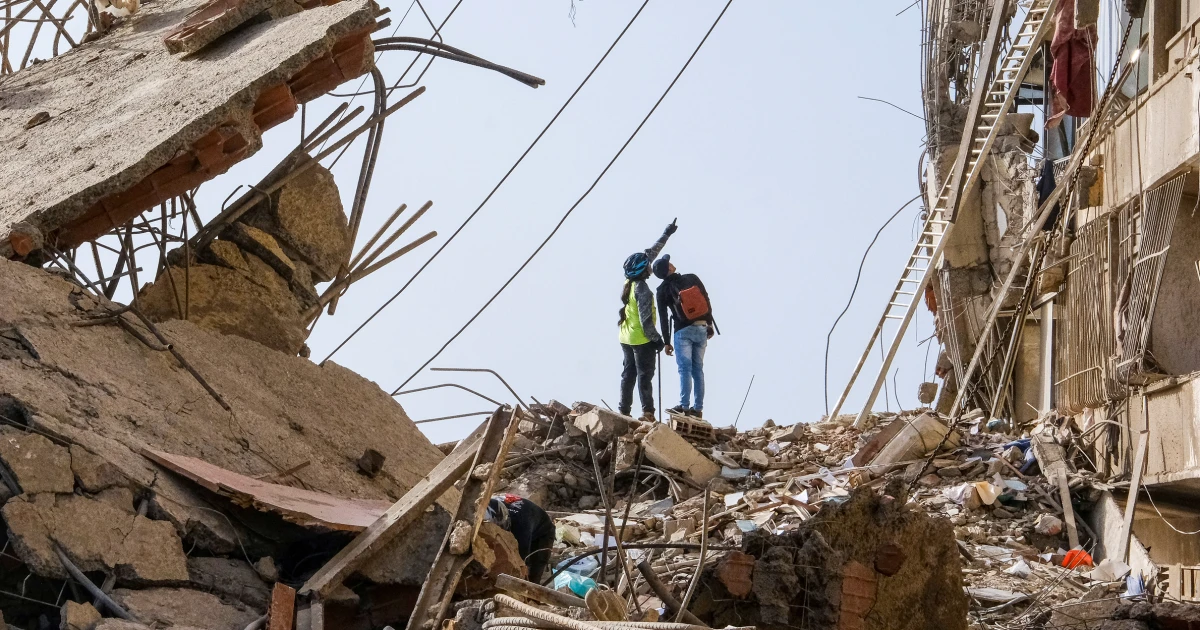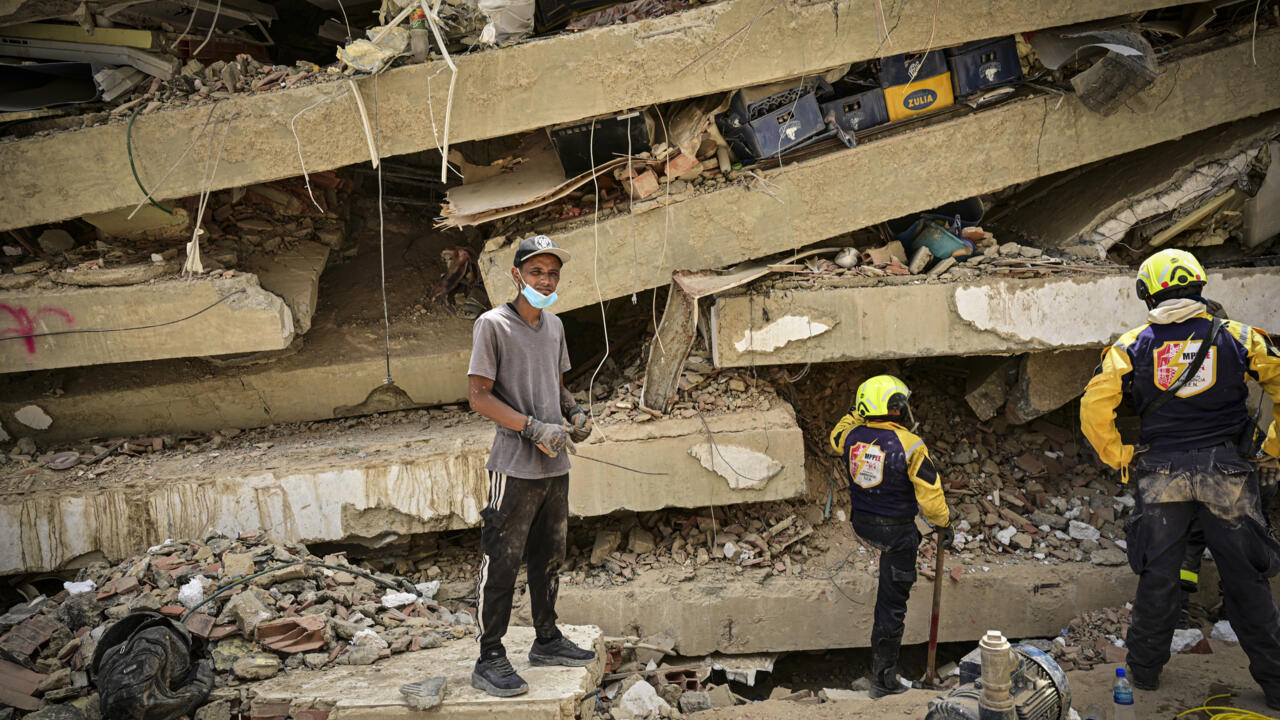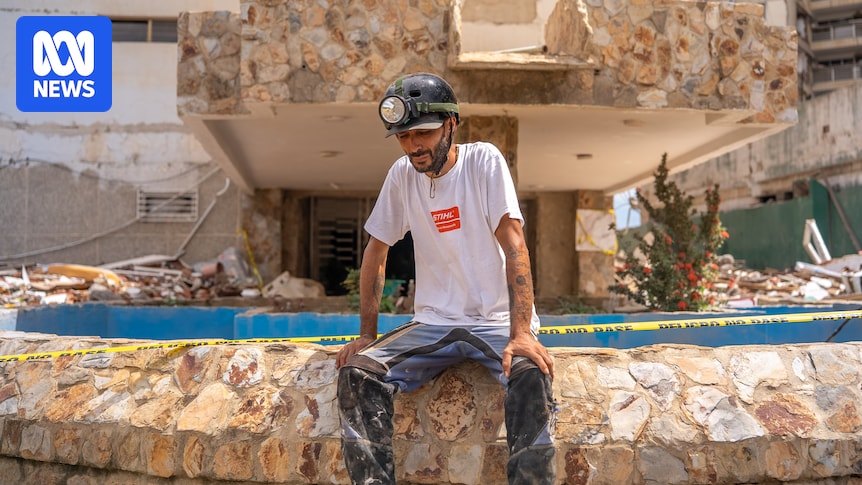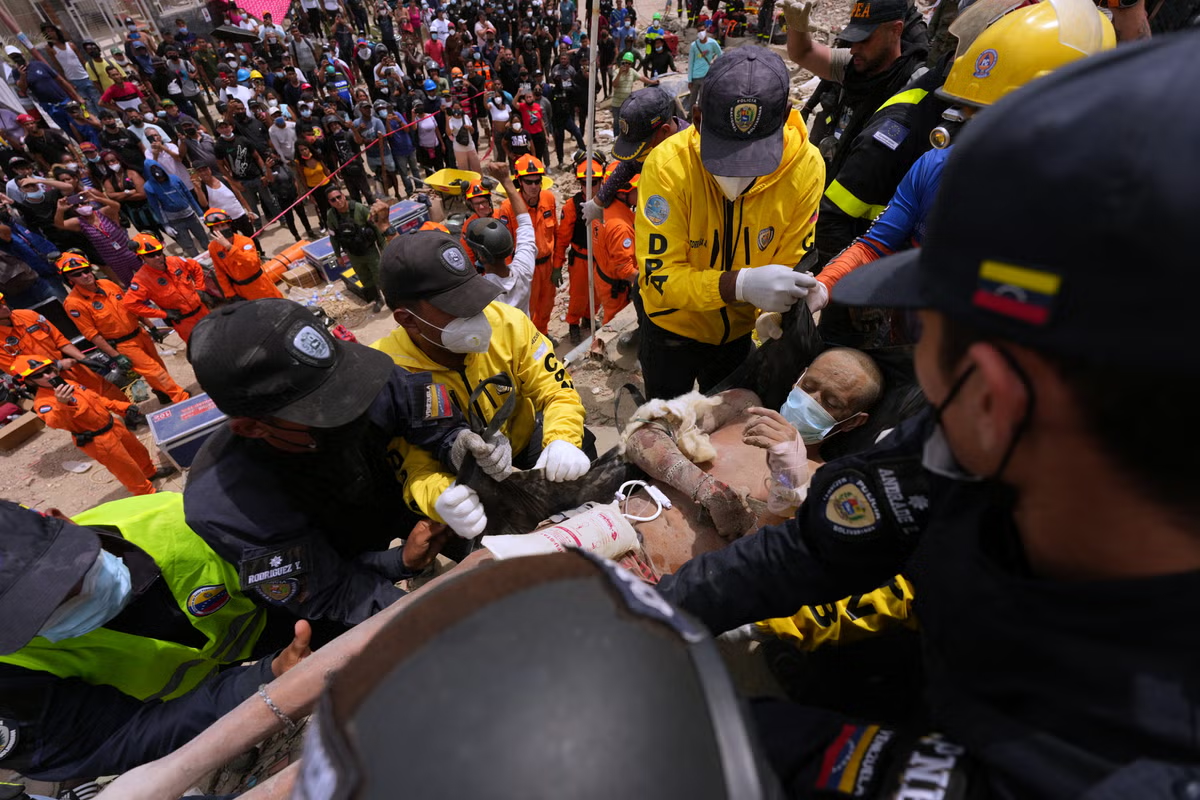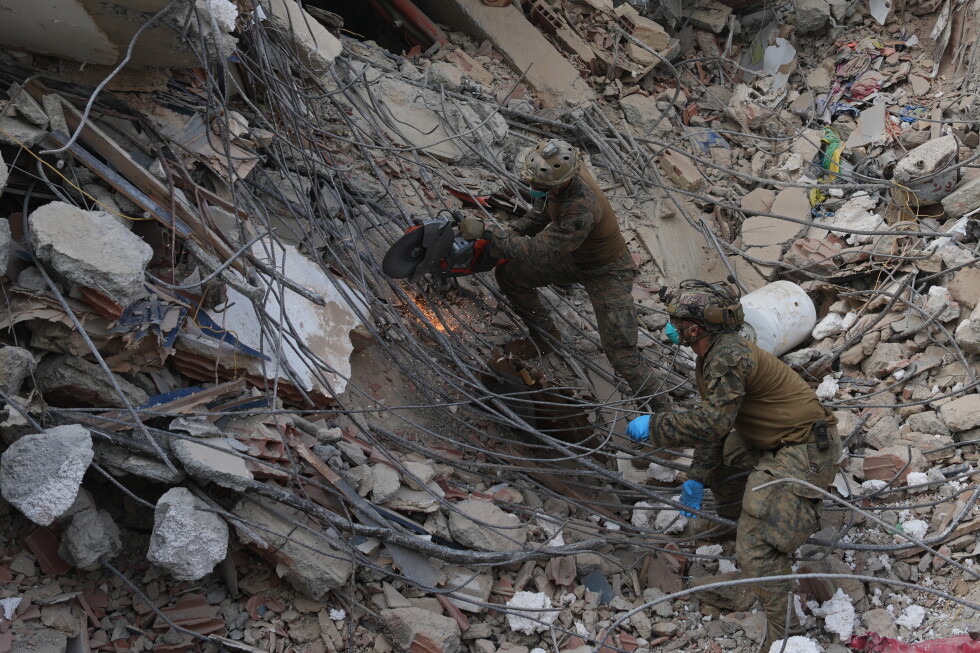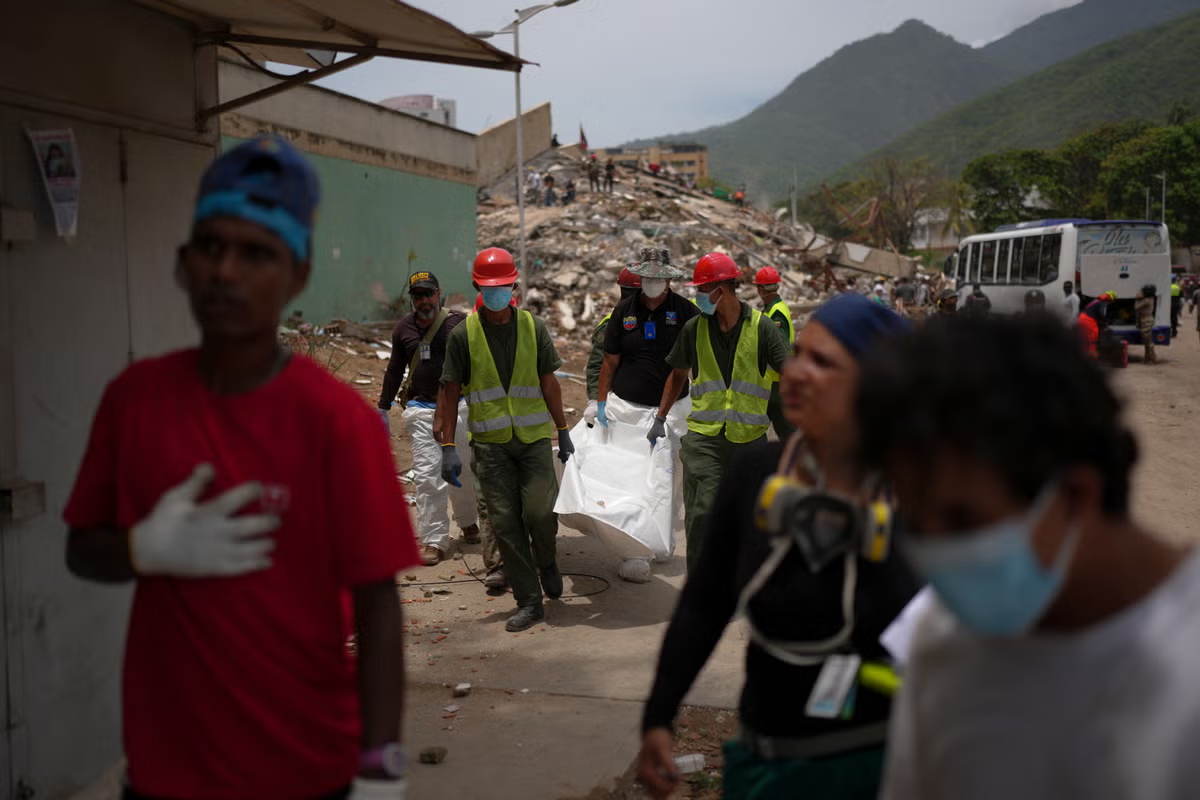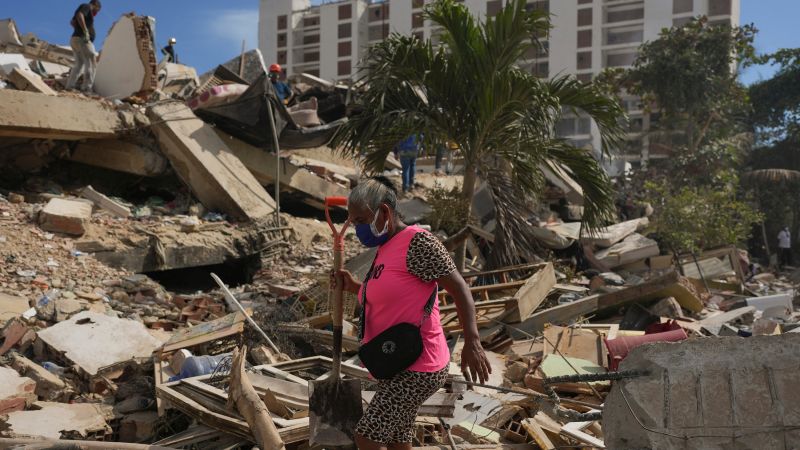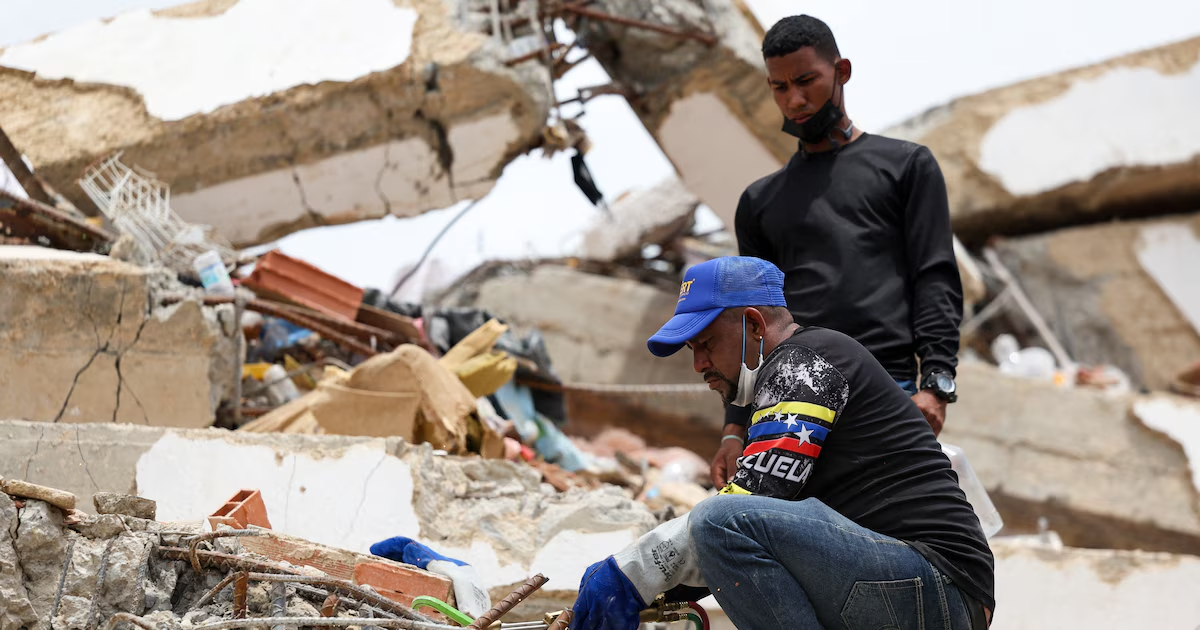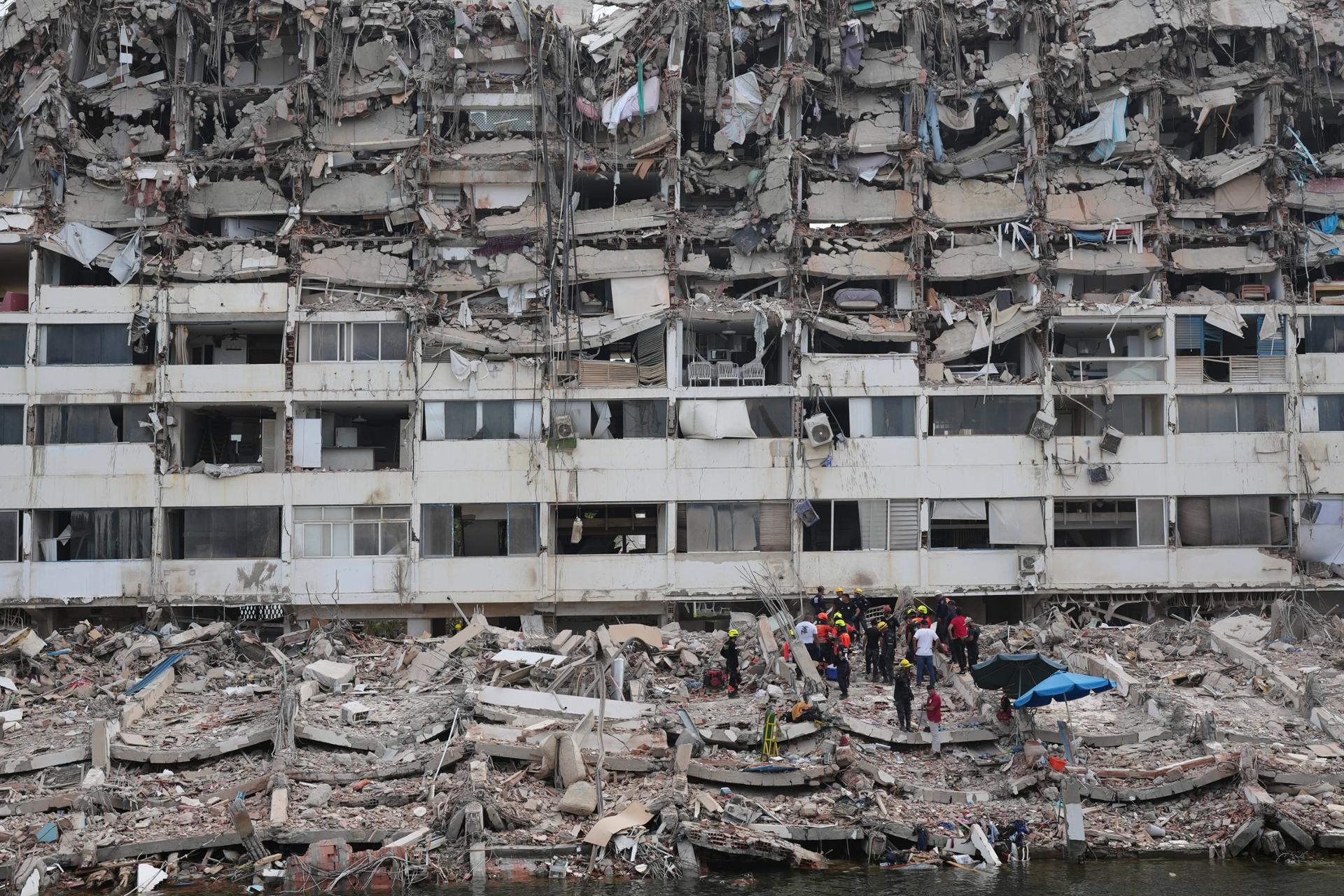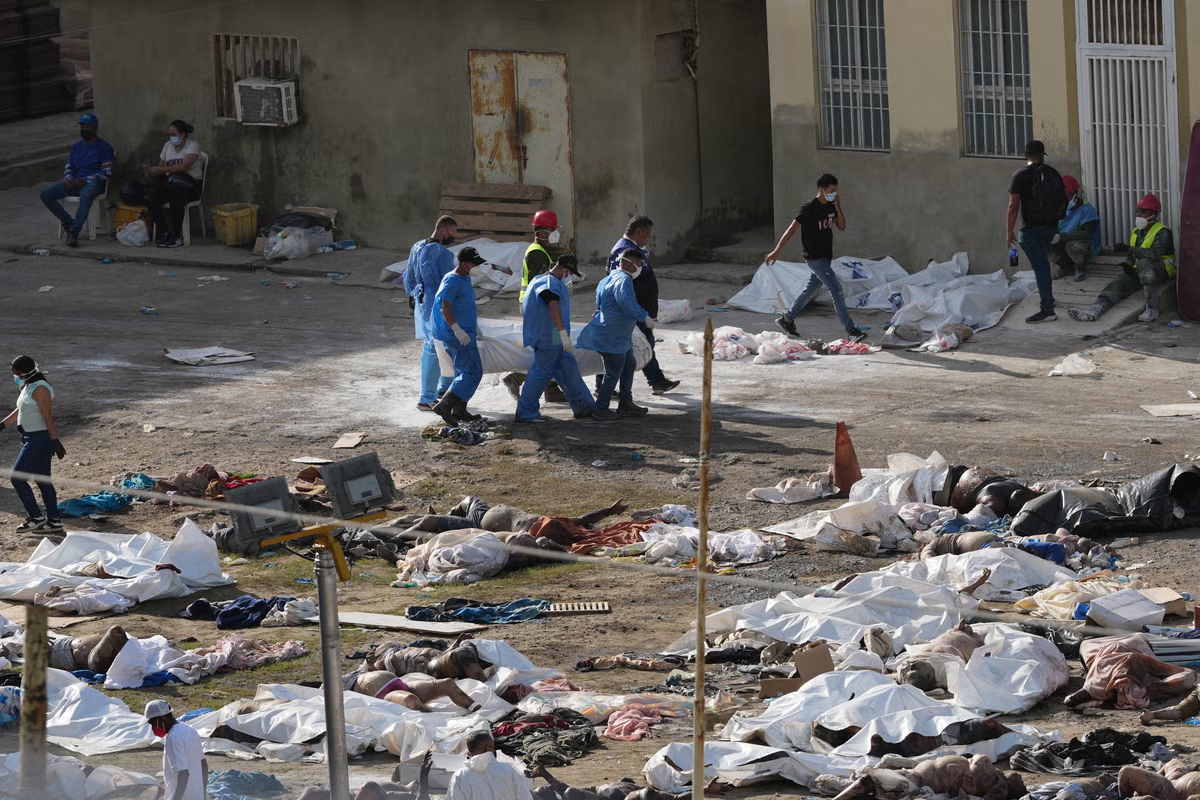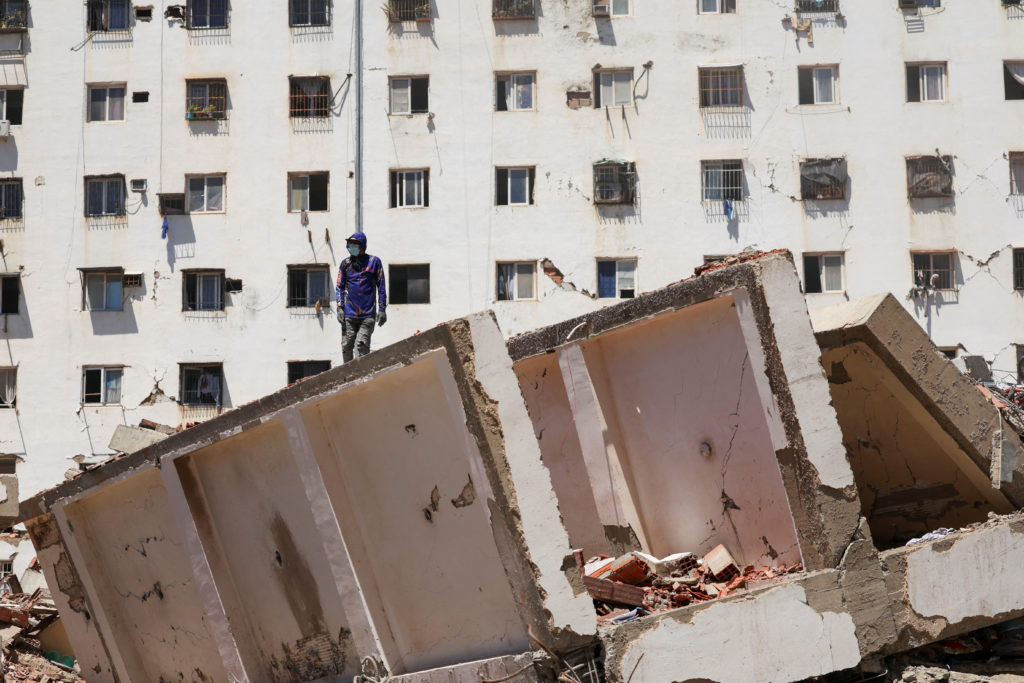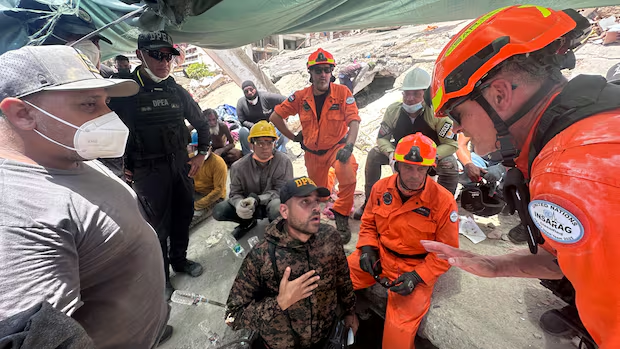
WorldWhen Carmen Luiza Diaz de Cumare heard shouts about a body being pulled from a mountain of crumbled concrete, she scrambled up and around the bent and twisted rebar and over the crevices where an apartment tower once stood in this central part of the coastal Venezuelan state of La Guaira.Families, friends digging out loved ones with little help from overwhelmed authoritiesJorge Barrera · CBC News · Posted: Jul 02, 2026 8:45 AM EDT | Last Updated: 1 hour agoListen to this articleEstimated 5 minutesThe audio version of this article is generated by AI-based technology. Mispronunciations can occur. We are working with our partners to continually review and improve the results.National Police officer Amir Haidar, centre, in hole, discusses plans with a search and rescue team member from the Netherlands, right, to try to extract the bodies of the children of Jose Campos, left, on July 1, in the Caribe district of the town of Caraballeda, Venezuela. (Jorge Barrera/CBC)When Carmen Luiza Diaz de Cumare heard shouts about a body being pulled from a mountain of crumbled concrete, she scrambled up and around the bent and twisted rebar and over the crevices where an apartment tower once stood in this central part of the coastal state of La Guaira.She has been searching for her 43-year-old son Jose Luis Diaz since powerful twin earthquakes shook parts of Caracas and a large swath of Venezuela's Caribbean coast on June 24, leaving thousands dead or injured. "Did you take someone out?" she asked a man with a ball cap and shorts. "Who are you looking for?" said Darwin Quiroz. Locals gather atop the remains of a 12-storey apartment building as the work to recover bodies continued on July 1 in the town of Caraballeda. (Jorge Barrera/CBC)Diaz de Cumare, 64, said she was looking for her son, but Quiroz said the body they pulled out was that of a woman. He said two families were working together to pull their loved ones out through a tunnel dug into the piled remnants of the apartment building. Several men were down in the tunnel, which resembled a narrow mineshaft and was protected from the sun by a tarp strung across four poles, creating a canopy. The pungent smell of decomposing human flesh wafted up through the shaft as the men worked to dig out a four-year-old boy — Quiroz's nephew. "We've been here since the first day, on our feet, battling," said Quiroz, 49. "It's been mostly family that have been digging their own out."Similar canopies dotted the undulating and shattered landscape where nine apartment towers once stood in the Caribe district of the town of Caraballeda. Throughout the early afternoon, a priest wandered from site to site, giving last rites."Give them, Lord, their eternal rest," said the priest. The Venezuelan government announced on Wednesday that the death toll had reached about 2,295, while tens of thousands remain missing. WATCH | Canadian volunteer talks about Venezuela's recovery efforts:Canadian volunteer worries Venezuela may never recover | Hanomansing TonightJune 30|Duration 6:16Vancouver resident Arnaldo Dos Santos is providing relief to Venezuelans after a business trip was upended by devastating twin earthquakes that ravaged the South American country. He worries about its ability to ever recover from the damage.Acting president Delcy Rodriguez declared seven days of mourning in a statement saying that "Venezuela had a torn soul" as a result of the deaths caused by the earthquakes. About 2,700 residents had lived in the complex of nine 12-storey apartment towers that had stood here, said Sabrina Carranza, 21. She escaped with her mother, but her four brothers and grandmother remained buried. She said about 100 bodies had been dug out so far, but that no one really knew how many were still under the rubble. "It was like a horror movie. People were shouting, 'Help me, help me!'" said Carranza.A priest gives last rites over rubble in the Caribe district of the town of Caraballeda on July 1. (Jorge Barrera/CBC)Fighting for one causeAt the summit of another mountain of rubbled concrete, beneath another tarp canopy covering another shaft-like tunnel, Jose Campos told a search and rescue team from the Netherlands through a translator how to get to the bedroom that fell on his two sons, aged eight and 13. "We will help you," said one of the team members. Some Venezuelans fear a dark and dangerous future in aftermath of twin earthquakesRescue workers in Venezuela race to free hundreds trapped in rubble as quake death toll climbs to 920National Police officer Amir Haidar, who had climbed into the tunnel, explained to Campos that he didn't have to go back down, that he should wait for the team to do its work. "Faith is the last thing you lose," said Haidar, in a separate interview with CBC News. "We are all brothers here, we are united, fighting for one cause — that is saving lives." Several men were down in the tunnel, which resembled a narrow mineshaft, trying to recover the body of a four-year-old child in Caraballeda. (Jorge Barrera/CBC)Haidar said he'd recently been involved in pulling a father and son from another collapsed building, and he believed there was a chance others may still be alive beneath the remains of the nine apartment towers. "We weren't prepared for this type of event, but there is nothing that humans can't overcome with the help of an all-powerful god," he said. Despite a week having passed since the earth shook, many here held out hope they can still pull people out alive. But throughout the afternoon there were repeated calls for silence, with searchers signalling with a fist in the air. There were also moments when shouts of "doctor, doctor!" would rise from one of the mounds. A sudden rush of people would follow, with paramedics and doctors running toward the shouts, only to find out no one knew where they had originated. Frustrations risingFrustration also boiled on the ground from residents who felt the government had largely abandoned their area, leaving families alone to complete the grim task of digging out the dead. "The common people are digging with their nails, their fingers, and [government people] are sipping whiskey, a beer with their machines," said Armando Urbina, 23. "The people should rebel."Carmen Luiza Diaz has been searching for her 43-year-old son Jose Luis Diaz since powerful twin earthquakes shook parts of Caracas and a large swath of Venezuela’s Caribbean coast on June 24. (Jorge Barrera/CBC)Prison Services Minister Julio Garcia Zerpa, who was put in charge of overseeing a shelter for people displaced by the earthquakes set up on a golf course in Caraballeda, said no state could deal with the fallout of earthquakes of the magnitude that hit Venezuela — 7.2 and 7.5 — by itself. "We are doing everything we can," he told CBC. "We haven't stopped since Day 1, I can tell you that."Zerpa said about 5,000 people have stayed at the shelter since the earthquake hit and that many people were volunteering to help out. The government was embracing that desire. "I think this has shown us the most beautiful part of being Venezuelan," he said. "I have seen it. People who have never in their life been in a cave or entered ruins … became search and rescue workers from one day to the next, risking their lives to pull people out."ABOUT THE AUTHORJorge Barrera is a Caracas-born journalist currently based in Mexico City for CBC News. He previously worked with CBC's Investigative Unit and CBC's Indigenous Unit. Follow him on X @JorgeBarrera or email him jorge.barrera@cbc.ca.Follow @jorgebarrera on Twitter
Venezuelans face grim and daunting task of recovering bodies from devastated areas | CBC News
When Carmen Luiza Diaz de Cumare heard shouts about a body being pulled from a mountain of crumbled concrete, she scrambled up and around the bent and twisted rebar and over the crevices where an apartment tower once stood in this central part of the coastal Venezuelan state of La Guaira.
1,262 words~6 min read