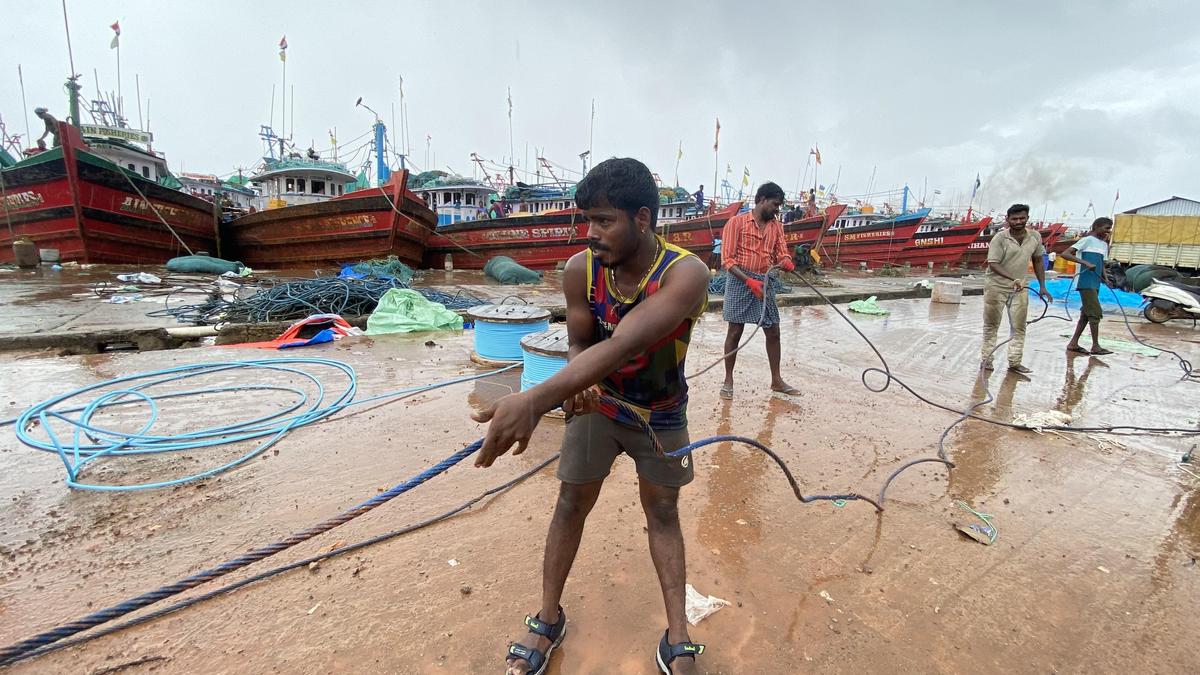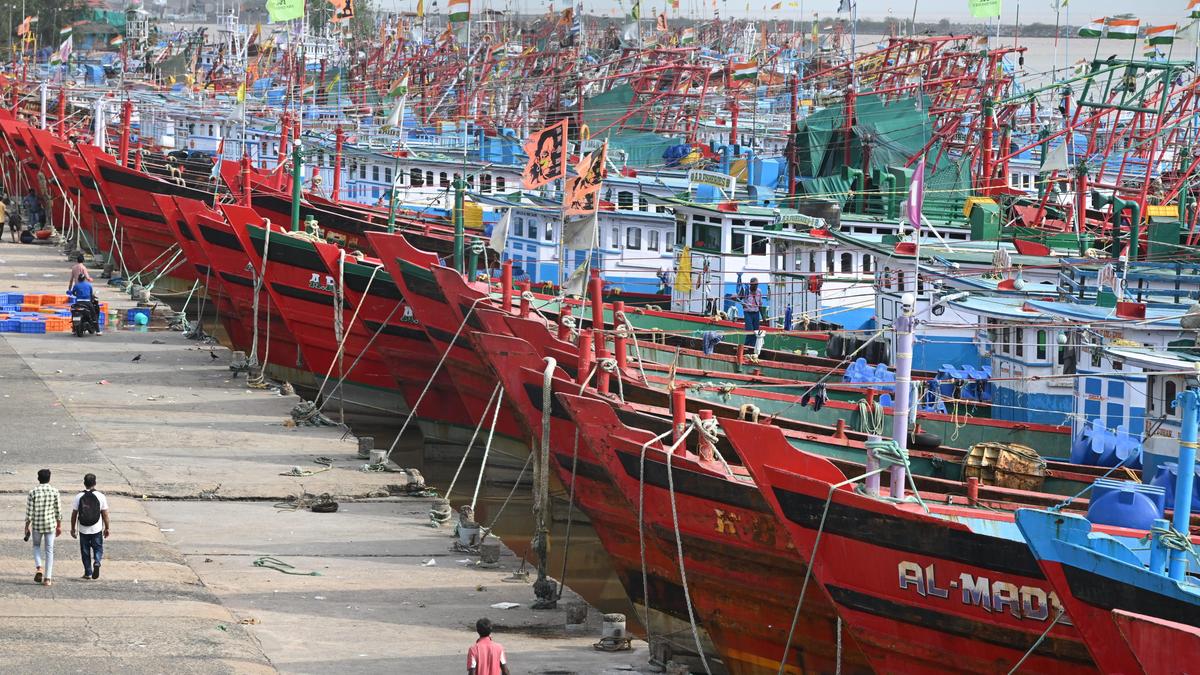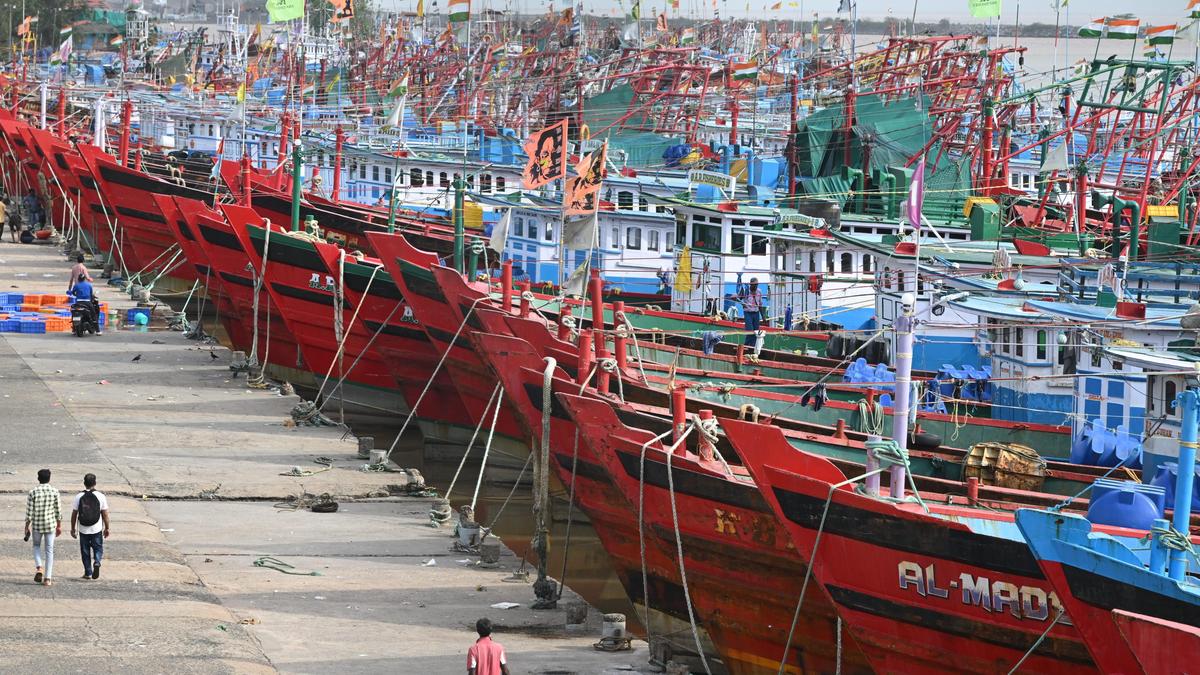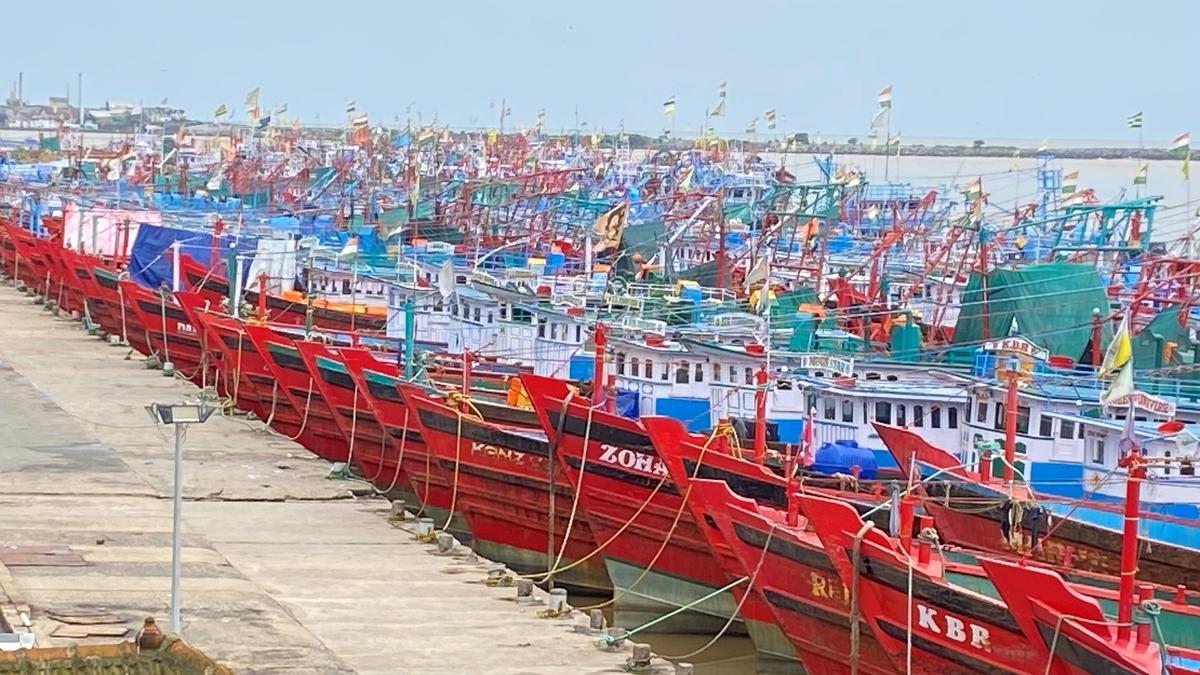
Fishing boats anchored at the Old Port in Mangaluru during the annual two-month marine fishing ban in June and July.
| Photo Credit: H.S. MANJUNATH
Karnataka recorded a 44% surge in marine fish landings in 2025 after a sharp decline in 2024, according to the ICAR-Central Marine Fisheries Research Institute (CMFRI).According to CMFRI’s annual marine fish landing data for 2025, released recently, Karnataka’s marine fish catch rose from 4 lakh tonnes in 2024 to 5.77 lakh tonnes in 2025.Incidentally, the State’s marine fish production had fallen from 6.94 lakh tonnes in 2022 to 6.03 lakh tonnes in 2023. Karnataka’s marine fish catch stood at 5.50 lakh tonnes in 2021.In addition to Karnataka’s 44% surge last year, Maharashtra also posted strong growth of 18% in marine fish landings, the CMFRI said.CMFRI Director Grinson George said: “Favourable environmental conditions played a crucial role in supporting the revival of small pelagic fish stocks during the period. This ecological advantage was further reinforced by regulated fishing pressure, leading to the necessary time and space for recovery.”Referring to last year’s landings, the CMFRI said Tamil Nadu surged to the top position in the country, overtaking Gujarat with 6.85 lakh tonnes, while Gujarat slipped to second place after a 15% decline, largely due to adverse weather, extended fishing bans and cyclonic disturbances. Kerala remained in third place, with a marginal 2% increase in marine fish landings.The Fishery Resources Assessment, Economics, and Extension Division of the CMFRI estimated the country’s annual marine fish landings through its online data collection system.The data showed that Indian mackerel remained the most landed resource in the country at 2.70 lakh tonnes, followed by cephalopods at 2.57 lakh tonnes and oil sardine at 2.53 lakh tonnes. Cephalopods and threadfin breams recorded growth of 25% and 55%, respectively, both reaching decadal highs. Pelagic fish dominated the catch with a 54% share, followed by demersal resources, crustaceans, and molluscs.Meanwhile, coastal states on the western coast are yet to reach a consensus on extending the annual marine fishing ban from the present two months (June-July) to three months (June-August).The main objective of the ban on deep-sea fishing is to protect fish wealth, as commercially important species breed during this period. It is also intended to prevent juvenile fishing and excessive fishing.Extending the ban by one more month will help boost fish production, stakeholders in the fisheries sector said. Published - July 02, 2026 06:23 pm IST