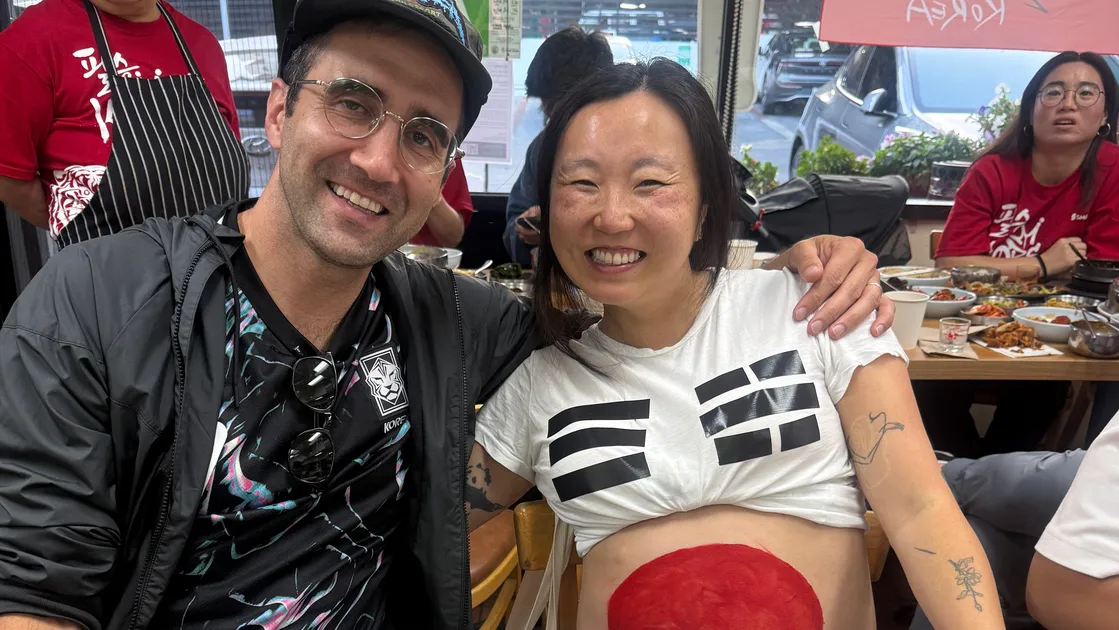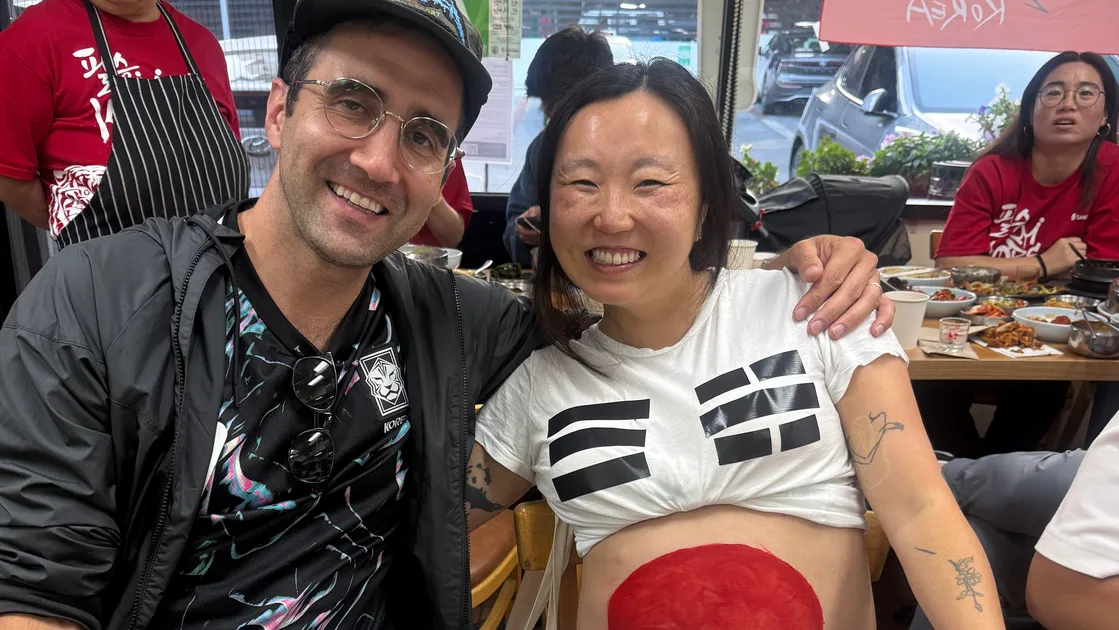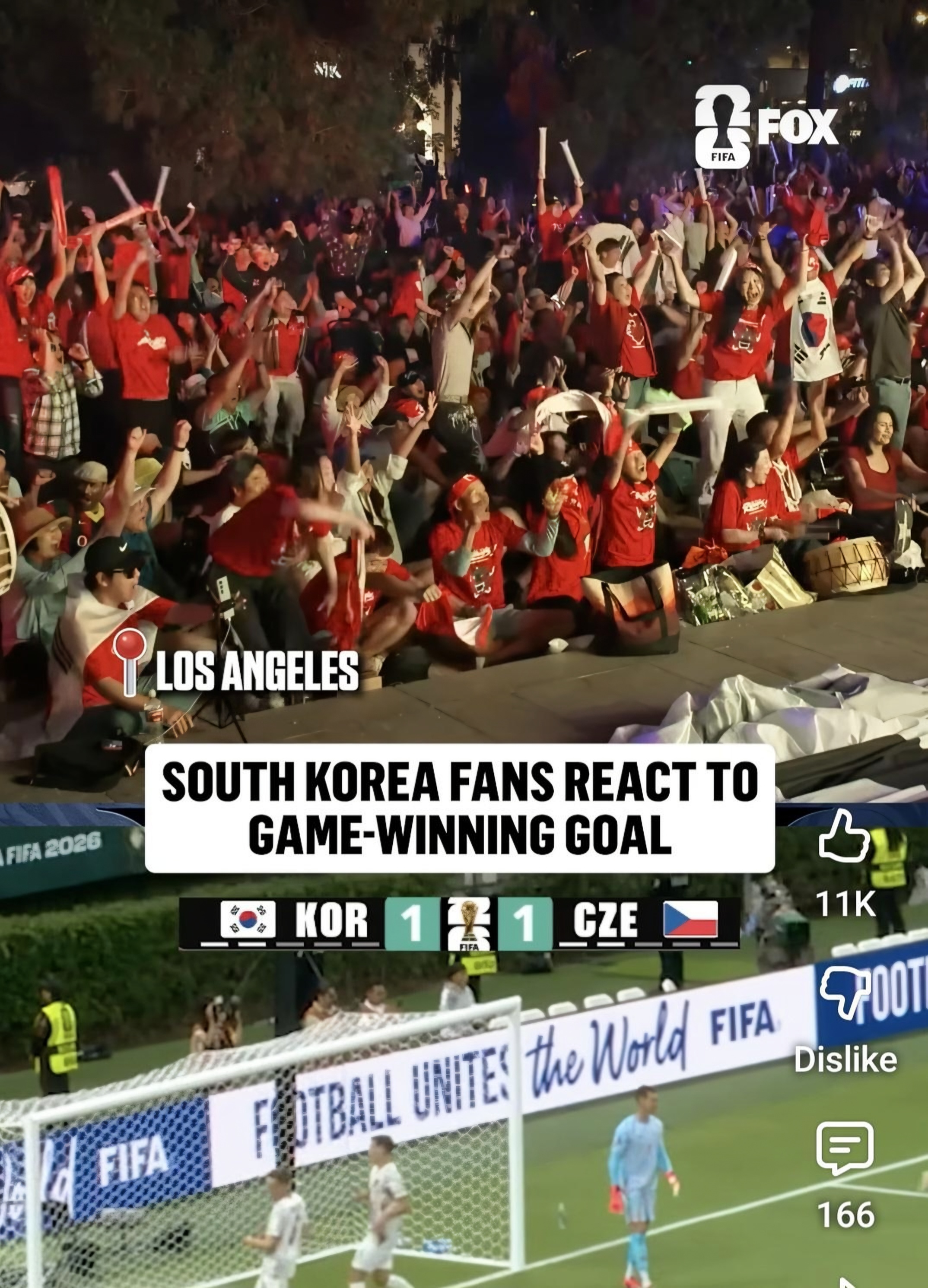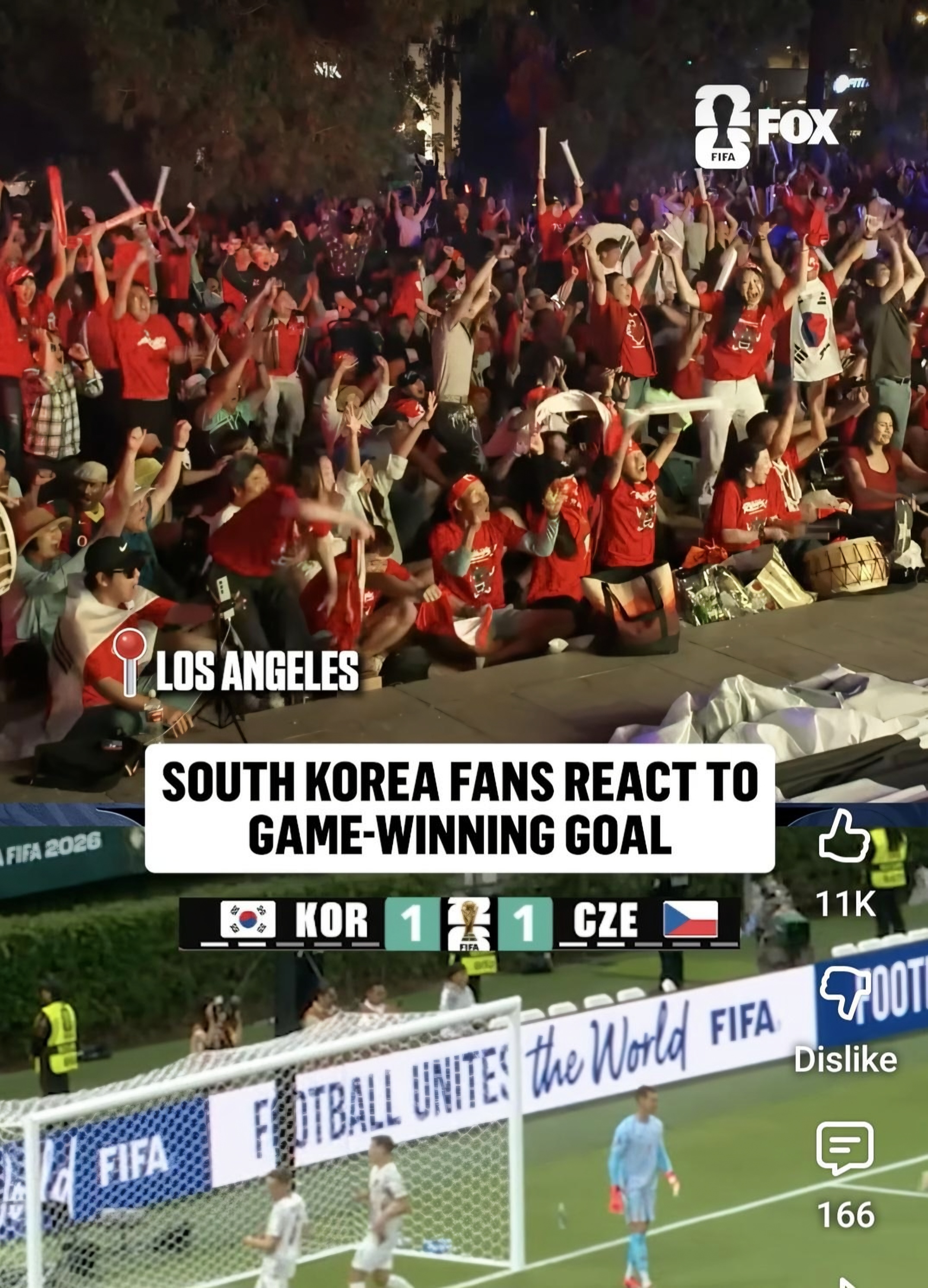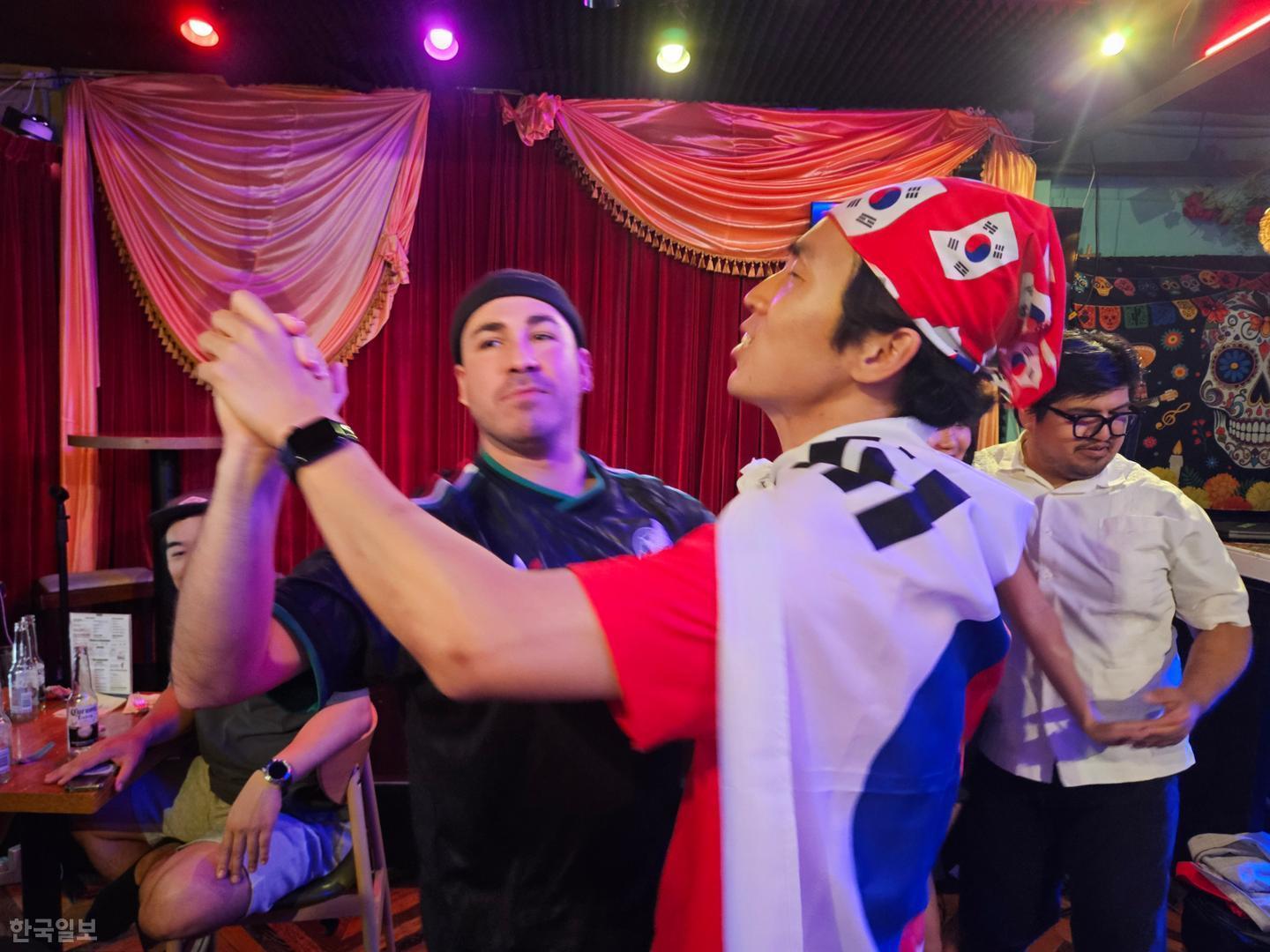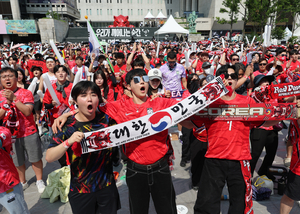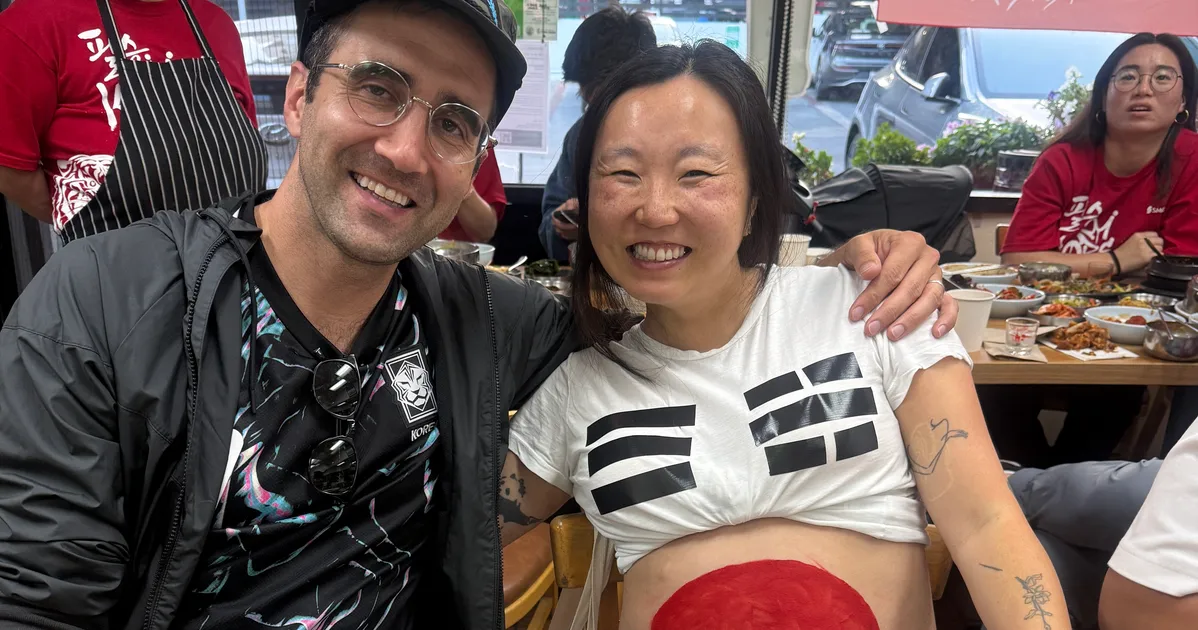
POP!... POP!... POP!I heard the sound while walking down the street in Koreatown, which was filled with Mexican and Korean soccer fans there to watch the South Korea vs. Mexico game at Seoul International Park. I figured some excited fans were lighting fireworks prematurely, a common occurrence during and after sporting matches in Los Angeles. I kept navigating through throngs of excited fans, trying to find my husband, who had dropped me off before parking the car. All of a sudden, the chaotic atmosphere turned into a different kind of mayhem. People started running from behind me, yelling, “He’s got a gun!” I panicked and froze for a moment, confused and disoriented. I instinctively clutched my pregnant belly. I was dressed as the South Korean flag, wearing a white crop top and shorts, my belly fully exposed and painted with the red-and-blue yin yang sign that serves as the flag’s centerpiece. My survival instincts finally kicked in, and I went into Mother Bear mode as I ran with the crowd, ducked between cars and tried to find cover. It felt like the longest 30 seconds of my life. I could imagine the classic American headline already: “Mass Shooting at a World Cup Watch Party.” I followed a group of people into the lobby of an apartment complex. There were 10 to 15 of us crammed into a tiny hallway, sandwiched between the glass front double doors, the elevator and the stairwell. I grabbed my phone and called my husband, terrified that he may have gotten caught in the crossfire. He picked up quickly, and I immediately felt relieved hearing his voice. “Are you OK?” I asked. “Yeah, where are you?”“There was a shooting. I’m hiding in an apartment lobby. I thought it was fireworks but apparently someone has a gun,” I said“It was definitely a gun,” a girl overhearing our conversation added. “Are you sure?” I asked. Her father replied. “Yes, it was a gun. I saw it. He was shooting into the air.”Speechless and terrified, I stayed on the phone with my husband while he tried to figure out where I was. After a few minutes, we collectively realized that we hadn’t heard any gunshots in a while. One by one, we slowly crept out of the building and onto the sunny street, where people continued walking, trying to get to the festival or to find their friends. Stunned, I tried to look for signs of safety. On the one hand, it looked and felt like nothing had happened. But then I saw a police officer with a giant assault rifle patrolling one end of the street and another blocking the other side of the street with caution tape. I heard the sirens of approaching police cars and then saw them trying to break through the crowd of people that had overflowed into the road. I wanted to move but couldn’t feel my legs. I stood on the corner of the street, watching the scene unfold.I had just narrowly missed a shooting. Somehow, what happened next was even more alarming. Everyone just went on about their day. It was like nothing had just happened. Fans in Mexican and Korean soccer gear continued walking to and from the festival, even stopping to ask to take a picture of me and my painted belly, which felt ridiculous at that point. Most of the crowd didn’t even know that a man had been shot and injured. This is how accustomed Americans are to gun violence.Just moments before, I had been an excited fan, ready to cheer for my team while representing my motherland. Strangers in the same spirit congratulated me on my pregnancy and asked to take pictures with me, including one in which I posed next to a Mexico fan who was also pregnant.One of my favorite parts about this World Cup has been the Mexican and Korean display of brotherly love here in Los Angeles. LA has the largest population of Korean and Mexican immigrants of any other city in the U.S. Even at this game, where we were technically enemies, all I could feel was love and mutual respect. We both wanted our teams to win, but we were also immigrants lifting each other up and wanting each other to succeed in this city we call home. Everything changed for me the moment a 19-year-old brought out a gun, his motive still unclear. I never saw the young man, but video evidence shows him screaming at the crowd while being arrested. He allegedly came to the event armed with a gun, ammunition, a satchel and a knife.Luckily, the incident’s impact was mitigated by the actions of a brave man, Luis Romero, 56, who protected those around him by confronting the shooter. While struggling to disarm the attacker, Luis was shot in the leg. Per his GoFundMe, he was rushed into surgery and is now recovering, looking at a long road ahead and unable to work. The United States has the highest number of gun deaths of any country in the world. In 2024, around 44,000 Americans died of gun-related injuries. California has some of the strictest gun laws in the country — including mandatory background checks, firearm safety certificates and a 21-year-old age requirement. Yet even here, this 19-year-old somehow acquired a gun and brought it to a family-friendly event.According to the American Psychological Association, a person’s likelihood of using a gun in a violent act is not determined by just one thing. Instead, violence is associated with the intersection of the individual, family, school, peer, community and sociocultural risk factors that interact over time during childhood and adolescence. Environmental and external factors such as a lack of access to basic needs, exposure to domestic violence, alcohol/substance use in the family and/or a history of criminal activity in the family can increase a person’s likelihood to engage in gun violence. Koreatown is famous for being home to a huge immigrant population — 53.7% of the population is foreign-born from Asia or Latin America. But 20% of that population also lives below the poverty line, and many of its residents are underserved and neglected. As a psychiatric social worker, I’ve been trained to view an individual as a person in their environment. I don’t solely blame this 19-year-old man whose frontal lobe isn’t fully developed. I blame the systems and circumstances that failed to protect this child, as he currently remains in custody in lieu of $1.1 million bond, facing felony counts of assault. My husband and I finally found each other a few blocks away from the incident. We walked away from the chaos and passed by a hole-in-the-wall Korean restaurant on our way back toward our car. I wouldn’t have known that it was open if it weren’t for the older Korean man by the door who gestured us inside. As soon as we entered, I was greeted by friendly faces and the familiar sounds of my mother tongue. “Ahn-nyeong-ha-say-yo! Look at you! Hurry, come and sit down.” One TV was displaying the game to the restaurant’s mostly Korean patrons and a pair of Mexican fans. I felt right at home. We spent the next 45 minutes cheering for South Korea, singing our songs, chanting our chants and groaning and sighing in unison when our goalie made an error that cost us the game. For a brief moment, I felt like I was in South Korea and safe again. In a country with high social trust and welfare, not even police officers carry guns, and we have one of the lowest rates of death by guns (0.01%) in the world. Ultimately, the World Cup is about celebrating the discovery and blending of cultures. Some Americans, including myself, have been faced with the ethical dilemma of whether it’s OK to cheer for the U.S. Men’s National Team despite the current state of our government. However, the World Cup has reminded me of some of the things that make America great, through the fresh eyes of our visitors from faraway places, who have found joy in the little things like ranch dressing, free refills, Texas barbecue, Costco and tailgates — American gems that we can still be proud of. It’s almost enough to make me forget that the U.S. is also the only country in the World Cup that doesn’t have universal healthcare or federally mandated paid maternity leave. But my experience proved I can’t forget about the sobering reality of gun violence in the U.S., and how the danger and fear of being shot in a community space is at the very core of American culture. There have already been three other World Cup-related shootings, in San Jose, California; Brockton, Massachusetts; and Kansas City, Missouri; and we are only halfway through the tournament. Every four years during the World Cup, I am allowed to be loud and proud about where I’m from alongside others who feel the same way. I’m grateful for the pockets of peace and connection I’ve seen during the World Cup celebrations. But as I sit here clutching my 7-months-pregnant belly, more than anything, I think of my baby — and the often-beautiful but still terrifying country that he will be born into.Sharon Kwon, LCSW, is a Korean American psychotherapist, psychiatric social worker and founder of Bodhi Aware Therapy. She specializes in working with BIPOC and immigrant populations struggling with racial and religious trauma, identity and family conflict. You can contact her at www.sharonkwon.com.Do you have a compelling personal story you’d like to see published on HuffPost? Find out what we’re looking for here and send us a pitch at pitch@huffpost.com.RelatedGun Violenceworld cup
I Was Thrilled To Celebrate My Culture At A World Cup Viewing Party. Then Shots Rang Out.
"Just moments ago, I had been an excited fan, ready to cheer for my team while representing my motherland."
1,607 words~7 min read